Fruit of the forest in your garden
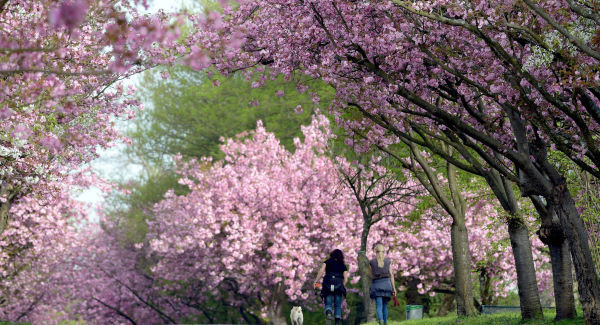
Prunus avium, also known as the gean tree, is widespread, though not common, in hedgerows and woodlands all over Ireland, although it prefers fertile, lime-rich soils.
It is a member of the plum and blackthorn family and, like most species in the family, it produces root suckers, so it often occurs in groves, particularly in a wood, one parent tree being surrounded by clones.
Many cultivated fruiting cherries are grafted onto wild cherry root stocks and these root stocks throw up suckers, so wild cherries can appear unexpectedly in gardens and orchards.
The other species is Prunus padus, or the bird cherry. Anyone with a smattering of Latin is likely to think that Prunus avium is the bird cherry, but it’s the other way round. It is a much rarer tree, mostly confined to limestone areas in the Midlands and West, and it’s much smaller. The commoner wild cherry can reach a height of 30 metres, though none appears to have in Ireland, where the tallest recorded ones are a little over 20 metres. Bird cherries never exceed 14 metres and most of the ones I’ve seen would be better described as shrubs than trees.
There are differences in the leaves, bark, and shape of the blossom cluster, but the most striking difference is that bird cherries are black when they’re ripe, and wild cherries are the conventional red and nicer to eat —though the birds, which normally get them before I do, relish them equally.
Cherry trees also produce wonderful timber, which darkens as it ages and can be polished to a mahogany colour. It was an alternative to briar root, for making smokers’ pipes, and it’s popular with furniture-makers and wood-turners. The bits they don’t want make excellent and aromatic fire wood.
If all these good qualities make you want to plant a wild cherry, they are easy to propagate by digging up root suckers less than a metre tall in the late autumn. However, Dr Charles Nelson, a leading authority, says that if you want your tree to produce cherries, you’re better off growing them from seed.
To do this, you first have to get the ripe fruit before the birds do. Remove the flesh immediately (preferably by eating it), wash the stones, and plant them singly in large pots filled with a mixture of peat and sand. When they germinate in the spring, leave them in the pot all summer and transplant them when all the leaves have dropped off in the autumn.
Cowslips, which are in full bloom, were once much commoner. They started to decline in numbers in the 1970s, due to changing farming practices and over-picking. Today, they are making a comeback, but more on road verges, canal banks, and unimproved grassland than in the pastures where they grew in huge numbers. The small, yellow-and-orange flowers are carried in clusters of between 10 and 20, on one side of a stout, hairy stem about 25 centimetres long, which rises from a rosette of primrose-like leaves. Cowslips and primroses are close relations, although the cowslip was a grassland flower and the primrose was found in woodlands. Primroses flower six weeks before cowslips, but in a late spring their flowering periods can overlap, as they have this year. This gives rise to a hybrid, the false oxlip, which has the tall stem of a cowslip and primrose-like flowers.
CONNECT WITH US TODAY



Be the first to know the latest news and updates