We can’t let politics get in the way of tackling climate change
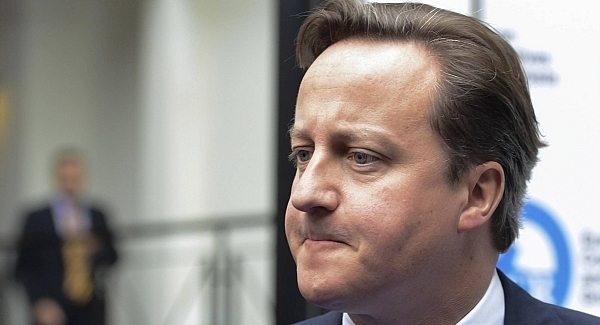
WE should be cautious of agreeing with UK Prime Minister and Conservative leader David Cameron on anything. When it comes to energy policy, we should steer well clear of him.

We can’t let politics get in the way of tackling climate change

It’s the sign of a fine newspaper that you can disagree with the editorials and stay hired. This is a fine newspaper and I disagree with the conclusion of Monday’s editorial that all windfarms should be off-shore “just as David Cameron’s government has decreed”. Cameron’s boast that he would lead “the greenest government ever” has been shown to be a total sham. His government’s failure to conclude the deal by which Ireland would export wind energy to the UK was about nothing stopping the UK Independence Party winning seats from concerned Tories in the shires — which is, come to think of it, something on which we should agree with David Cameron.

But as the latest report UN Intergovernmental Panel on Climate Change shouts from the rooftops that we need to triple or quadruple our output of renewable energy if we are to stand a chance of averting catastrophic climate change, Cameron’s government is reverting to business as usual. Two years ago the prime minister appointed a climate change sceptic as Environment Secretary, Owen Paterson, who opined only last year, “People get very emotional about this subject but I think we should just accept that the climate has been changing for centuries.”

Just last week the Conservative Party chairman, Grant Schnapps, said that wind turbines were no longer “environmentally friendly” and suggested pledging to curb them in the 2015 election manifesto. The Guardian newspaper warned at the weekend that this could “cripple” the ability of the Government to lower carbon emissions and lead to higher energy prices.

Locating every single windfarm offshore would be an economic nightmare, either here or in the UK. Onshore wind power costs around £90 per megawatt hour to generate, while offshore wind power costs £150. The UK Government’s real agenda on energy might be better discerned by considering the giant poster which the Department of Business, Innovation and Skills last year plastered across its ground-floor office windows: “UK oil and gas: energising Britain.”

Energy Minister Pat Rabbitte blamed the UK stance on pricing for the collapse of the plan to export wind energy from the Irish midlands into the UK national grid, but that’s no comfort. We can’t continue to think in national terms when it comes to energy policy. The cheapest and most efficient way of powering a zero carbon future is to construct international grids.

If the wind isn’t blowing in Ireland, it will probably be blowing in England, Scotland, Wales or somewhere in Scandinavia. This week’s IPCC report makes clear that climate change can’t be tackled without international co-operation, saying, “Effective mitigation will not be achieved if individual agents advance their own interests independently.”

Last month the EU Council of Ministers approved a policy of working together to invest in infrastructure and create an EU energy market. In the face of the possible destruction of our climate, not to mention growing international competition for the riches of the earth, no EU country should be dumping renewable energy it cannot store. Somewhere out there, another country needs that energy at just that moment.

All that’s needed is a good grid and a lot of diplomacy to sort the problem. That’s exactly what’s been missing from the mix in the UK/Ireland talks, whether on one side or the other, or on both. Given the track record of Cameron’s government, I’m prepared to accept that more of the blame lies with him than with us. But the timing of our Government’s withdrawal from the negotiations was politically-motivated. It had been agreed in Downing Street last month that a period of three months would be allowed to come to an agreement.

The announcement of the abandonment of the talks came after just four and a half weeks, two days before the protest march against wind turbines and pylons in Dublin on Tuesday and just weeks before local and European elections. If we had taken the same approach to our engagements with the UK over Northern Ireland my children would associate the place with bombs and murders, not the Titanic exhibition.

The most depressing part of our Government’s statement was Rabbitte’s that energy exports from the UK to Ireland are “inevitable” after 2020 — when he is 70 and enjoying a comfortable retirement.

My prayer for Holy Thursday is this: Deliver us from self-interest in our political parties. Here we are, falling between the electoral stools of the Conservative Party and UKIP, of the Labour Party and Sinn Fein and the anti-wind Independents, while the planet stands on the brink of disaster which can’t be averted unless we switch to renewable power.

Remember it was the threat posed by Joe Higgins to a Labour seat which caused Brendan Howlin to row back on a charge for water in 1997. A fair, consumption-driven charge back then would have clocked up millions which we could have used to build a state-of-the-art water system. “Fair” is the key word, of course, and I am in total agreement with this newspaper’s consistent line that communities asked to host wind turbines and pylons must receive an economic dividend. As the Director of Friends of the Earth, Oisin Coughlan said on Tuesday’s Primetime, 50% of Germany’s windfarms are in community ownership.

BUT that’s only part of the struggle to tackle climate change and energy security in a democracy. Our leaders must have conviction, passion and extraordinary powers of persuasion. Not just a mortal fear of losing seats. There is much hope invested by environmental groups in the draft Climate Action and Low Carbon Development Bill which fell off the agenda last Tuesday and is now due to be debated in two weeks.

It will be welcomed by anyone who wants to keep the planet from cooking, but in itself it may achieve very little because the final emissions reduction targets are in the distant future when today’s politicians are beyond blame.

We have EU targets and looming fines, but by what means do you enforce national targets? You can, of course. But the truth is that as our democracy is constituted, governments don’t have to if they don’t want to and they won’t want to if we don’t tell them to. How do I know that? Because since 2000 the UK has had the most comprehensive climate legislation in the world. It’s true that there was a drop in UK emissions due to an increase of 36.4% in the amount of wind power used last year, but UK emissions are still the same as they were in 2009, having risen in 2012 when David Cameron’s government had got its hands on the levers of power and cheap coal replaced gas in power stations.

Cameron has stopped supporting wind power in the run-up to next year’s general election. He doesn’t have to and he doesn’t want to and he doesn’t want to because those UKIP-leaning Tories in the shires don’t tell him to. They don’t need the Irish to back them up.

x

More in this section

Revoiced

Newsletter

Sign up to the best reads of the week from irishexaminer.com selected just for you.

Cookie Policy Privacy Policy Brand Safety FAQ Help Contact Us Terms and Conditions

© Examiner Echo Group Limited