Visual truth is staring LGBT groups in the face: They need to think Pink
When you set out to make a point, it’s all too easy for people to miss it if you’re not physically present. It is difficult to make a strong emotional argument by being absent from a colourful parade that involves a million people and goes worldwide through mainstream nd social media.

Visual truth is staring LGBT groups in the face: They need to think Pink

THEY are passionate. They are heartfelt. But as public relations, the calls from LGBT groups for a boycott of New York’s St Patrick’s Day parade because it won’t allow LGBT groups to march under banners identifying who they are are lousy.

The fact that they have won headlines here at home and a few features suggesting homophobia on the part of the organisers of the parade is all grand, as far as it goes.

The problem is that it doesn’t go far enough to be effective, longer-term.

Taking yourself off the stage by refusing to participate in the show is rarely the best way to achieve stardom.

That is why, down the years, I have advised countless individuals caught in the crossfire of controversy that, whatever else they do, they should not resign. At best, resignation is immediate release from acute misery at the expense of obscurity forever. Resignation is for the exhausted.

It may bring a certain amount of peace, but it also brings unsought public definition as a loser. “If he/she wasn’t guilty, why did they resign?” Three weeks after the resignation, the media caravan has moved on and the one who resigned is licking their wounds in bitter anonymity.

Even worse is when the resignation is accompanied by a clearly spurious statement of rationale, suggesting that the person resigning wants to spend more time with their family. Or that they’ve buzzed off because the continuing controversy would cause a distraction from the good work of their government or political party or commercial company or charity. Yeah, right.

Boycotts have a lot in common with resignations, and boycotts sometimes work.

Take, for example, the personal boycott by the mayor of New York, Bill de Blasio, who came out and said he wasn’t going to march in the parade because “I simply disagree with the organisers of that parade in their exclusion of some individuals in this city”. That worked just fine, because Bill de Blasio is a pivotal figure in the city whose withdrawal gets noticed — at least on this side of the Atlantic. People who are less well known, less centrally placed, cannot hope to have the same effect.

A boycott could work if it shamed the organisers into changing their minds or compromising on their beliefs. Or if it made a major commercial impact on those displaying their wares or brands on that day.

However, few of the industrial sectors or educational establishments sending floats or marching bands down 5th Avenue on Paddy’s Day are so dependent on the pink market as to be greatly endangered by such a boycott, and the organisers represent a fixed point in the interpretation of Irish nationhood which has allowed them to withstand a plethora of previous attacks.

Seeking to embarrass the Government into failing to send its top guys to the event is not going to pay off because the parade and surrounding events represent an international showcase for this country.

That said, calling for a boycott was not totally a mistake. In the short term, it generated a fair amount of media coverage.

The problem is the slightly longer term.

An LGBT boycott might possibly lead to that most frustrating of outcomes — an absence without much in the way of consequences. Bad enough, as an old song had it, to bring your harp to the party and never be asked to play. Much worse to keep yourself and your harp at home — and never be missed from the party.

When you set out to make a point, it’s all too easy for people to miss it if you’re not physically present. It is difficult to make a strong emotional argument by being absent from a colourful parade that directly involves a million people and goes worldwide through mainstream and social media.

TO avoid the “so what?” outcome, here’s some free PR advice to those at the sharp end of this issue. In fact, a five-point plan.

First of all, get over the anger. No good campaign was ever planned by people with steam coming out of their ears and their teeth ground down to nubbins in outrage at the effrontery of the enemy. Don’t get mad, get even. Or even better, don’t get mad, get rid of the cause of you getting mad.

Secondly, get over “getting it off your chest”. Giving out yards may be personally satisfying, and it keeps a lot of radio programmes fuelled. But getting something off your chest, while gratifying, does not necessarily change the societal reality that’s driving you crazy. Yelling “homophobe” at individuals has a poor track record of converting bigots into liberals. Lecturing the establishment tends to reinforce their position unless the establishment has an enormous amount to lose.

Thirdly, avoid unintended outcomes.

Before any public relations campaign is launched, the desired end result should be written in letters a foot high on the wall of the boardroom, with the words “Avoid Unintended Outcomes” written directly below.

The current situation involving an Irish Redemptorist priest is an example of unintended consequences following decisive action, in this case by the Vatican, which was disturbed by the dangerous unorthodoxy of Fr Tony Flannery (he says we should talk about the possibility of women priests).

When he wouldn’t agree to shut up, they gagged him and stopped him practising as a priest. Once upon a time, that might have reduced his influence to the square root of nil. What actually happened after the Vatican’s intervention was that, by removing him from relative obscurity in the west of Ireland, where he would continue to be heard preaching by a small number of churchgoers who are used to him and have yet to form a revolutionary brigade as a result of being inflamed by his teachings, the Vatican gave him a higher profile than ever, ensuring he would tour Ireland, reaching more people than he could ever have dreamed of influencing if they hadleft him alone. That’s a fair chunk of unintended consequence.

In the case of the St Patrick’s Day parade, one potential unintended consequence of a sourly righteous campaign would be to present LGBT people negatively, rather than as a shining, positive aspect of Irish life. Instead, the campaign should go for flair and humour. The world has a never- sated appetite for both. It should be possible for the creative gay brains working in advertising and technology in the US to come up with witty ways to subvert every section of the parade so that the point gets repeatedly and inescapably made but the fun doesn’t stop.

Fourthly, get LGBT people media trained to capitalise on step three on TV, radio, and online.

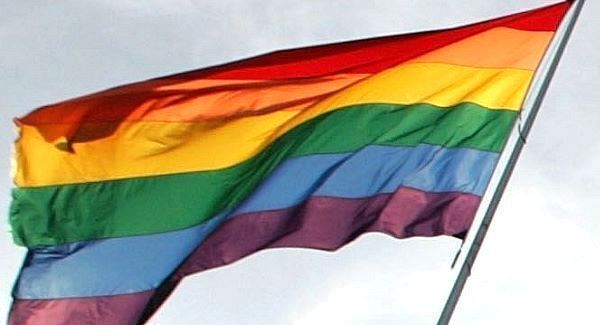
Finally, think and plan in pictures. The protesters who managed to state their case at the Winter Olympics hammered home what they feel about Russia’s homophobic government without ever using a word. That’s because they understand the value of the visual. The visual truth? It’s difficult to control a rainbow. And it’s impossible to prevent pink.

More in this section

Revoiced

Newsletter

Sign up to the best reads of the week from irishexaminer.com selected just for you.

Cookie Policy Privacy Policy Brand Safety FAQ Help Contact Us Terms and Conditions

© Examiner Echo Group Limited