Birds are full of surprises
But it’s an unnatural set up. It concentrates birds of several species together in a small area in a way that’s unlikely to happen in the wild.
But there is a plus side to this, at least for the person inside. Over a period of time you begin to notice things about the differences in character between the birds — maybe not individual birds, unless some of them have rings on their legs or other distinguishing features — but certainly between different species. I’m tempted to say that each species develops a personality, but personality is a dangerous word because it’s very easy to slide into anthropomorphism when you’re watching wild creatures.
The observations I make through the window are semi-scientific. I’m merely trying to satisfy my own curiosity about the natural world and I’ve no intention of producing a peer-reviewed scientific paper.
But my time spent looking through the window has made me modify some of my preconceptions. For example, everything I’ve read about robins suggests that they are a fiercely aggressive species, ready to fight to the death to defend their own patch. The robins that visit my feeders are probably the meekest of all the species, easily dislodged from a prime feeding position, even by birds that are considerably smaller. They lurk about on the fringes, waiting for a quiet moment when they can sneak in and grab a beak full.
In contrast the coal tits, which are among the smallest visitors, are quite fearless and will stand their ground against much bigger birds like great tits. But most of the time the coal tits are not eating the food I put out, they are flying off to put it in storage somewhere. So their visits are short, more like smash and grab raids. Blue tits are much more easily intimidated off the peanut feeder than coal tits.
Green finches are quite large and stocky and there isn’t much that will bully them. They will even oust goldfinches off the niger seed feeder, and that’s not easy, particularly as the goldfinches usually arrive in numbers and they’re a quarrelsome species, ready to pick a fight with anyone. The siskins and redpolls have to work hard to even get a look in when the goldfinches are around.
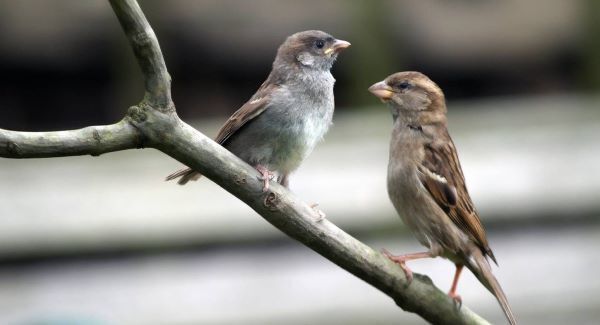
But the most truculent birds of all are the house sparrows, and they also tend to arrive in numbers and to squabble a lot. Occasionally I allow anthropomorphism free reign and imagine them as gurriers from some inner-city slum that have been let loose on the countryside — but that isn’t scientific.
CONNECT WITH US TODAY



Be the first to know the latest news and updates