It might be all over bar the shouting for Prof Honohan
The question arises after bizarre revelations about Gordon Brown’s first day as British prime minister.
A new book by Brown’s disgraced former spin assassin/attack dog, Damien McBride, recounts that Brown’s senior staff all shouted abuse at him as he rehearsed his first speech as premier. The abuse was to prepare him for hecklers.
Unable to deal with the verbal assaults and furious at being challenged, Brown broke-off from his text and shouted back at his staff, enraged by their mock abuse — his disaster-laden premiership unravelled from there on in.
Probably just as well he was out of power within three years, as the key thing British PMs do on their first day is write a secret note, instructing the captains of the trident nuclear submarine fleet on what they must do with the deadly payload at their command should London be wiped-off the Earth and communication with Downing St be lost.
Given the mood he must have been in after the peculiar In The Thick Of It-style shout-off with his staff, who knows where Brown would have directed the nuclear missiles?
Though, given the way Brown obsessively blamed his predecessor, as PM, for everything that went wrong when he was in office, it would probably not have been a good idea to be standing in the vicinity of Tony Blair when the nuclear balloon went up.
One of the few, printable nicknames for the former spin-meister responsible for unveiling this snippet is McBride of Dracula — such is the esteem he and his former boss are now held in by the party faithful, who had their annual conference this week somewhat overshadowed by the fall-out from the book.
The other talking point of the gathering was that Brown’s successor as leader so annoyed the Tory press, he was dubbed ‘Red’ Ed Miliband for daring to suggest that a market free-for-all might not be the best way forward, energy companies might need to stop fleecing customers, and governments should intervene in the economy to boost construction and job creation.
This column took some mischievous amusement in asking Labour TDs in the Dáil if they had heard of this amazing new idea, which Mr Miliband called “socialism,” and if they thought “socialism” would ever catch on in their own party.
That enquiry drew sheepish looks and embarrassed laughs from the deputies, as they stared into another austerity Budget with their right-wing buddies in Fine Gael.
One masterclass in why the market should not be left to run itself was given during the sorry appearance, at the Oireachtas finance committee, of Ireland’s top banker.
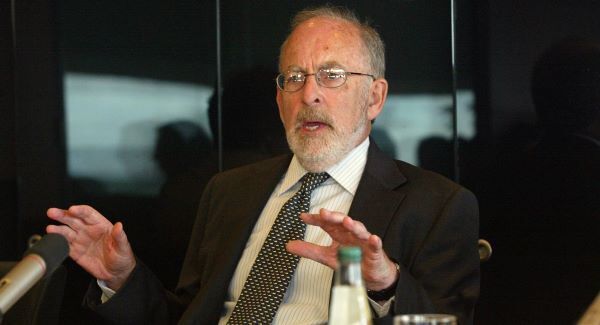
Central Bank governor, Patrick Honohan’s performance was not helped by the fact he has a slightly nervous giggle, which might come across as charming at a dinner party, but is quite disconcerting when he is giving evidence as to why his organisation has been so seemingly lax with the lenders it is supposed to be controlling.
But, then, Prof Honohan is the man who began an answer on national radio with the words: “I will say something reckless now....”
No, professor, please don’t say anything reckless, try say something reassuring, something that makes us believe you really have a grip on the unregulated casino capital cowboys who plunged us into this decade of misery.
Honohan seemed to offer multiple-choice answers to the committee, as those listening often appeared uncertain as to what he was actually saying.
He started off by endorsing the way the banks had belatedly begun to deal with the mortgage-debt crisis, then retreated under questioning and said he could not say whether it was working out well or not, until the Central Bank does an audit in November.
Worryingly, Honohan did not seem to have a problem with banks meeting their June target of viable solutions for 20% of distressed customers by issuing thousands of legal letters threatening repossession — hardly the “viable solution” those trapped in mortgage misery were hoping for.
When asked about the notorious Anglo tapes, and why he had decided not to press authorities to probe them, he began by stating he did not want to appear “facetious” — which is usually shorthand for someone saying: “I am about to be very facetious, indeed” — and thus he flippantly enquired whether the TD wanted him to hand a copy of the Sunday Independent over to the police, as that newspaper had first revealed the contents of the tapes that further shamed Ireland’s already battered business image.
It was hardly the performance of a thrusting regulator who now had the whip hand with the banks and who was determined to show the bailed-out institutions who was boss.
The surrealism of the situation was underlined by Honohan bemoaning that the banks had indulged in “wishful thinking” and had expected the mortgage crisis would “cure itself”.
What did they think would happen — a bunch of financial fairies would suddenly turn-up and pay off the debts of the 97,800 customers, who had often unsustainable mortgages thrust at them in the boom by banks that behaved like money drug lords pushing their tempting wares?
Honohan is supposed to be the one putting the fear of God — or, in this case, the hard-pressed taxpayer — into the banks, so his air of flippancy completely undermined public confidence that the ticking debt time-bomb can be dismantled before it explodes.
If Honohan is not the person capable of doing that, then the Taoiseach should put someone who will lead from the front into the pivotal role, someone who will bring a greater sense of urgency and authority to what they are doing.
If the powers that be fail to get a grip on the mortgage crisis, the abuse shouted at Gordon will be nothing compared to that hurled at Mr Kenny.