The timidity of our conformist TDs is truly unspeakable
WHAT is the point of speaking rights if you have nothing to say? The docile Dáil was all a-buzz at the news that booted-out Blueshirts and unloved-Labourites will actually be heard in the chamber to which they were elected.

The timidity of our conformist TDs is truly unspeakable

The rum bunch, of ousted lefties, thrusting Thatcherites, and a couple of spare parts who shunned the Independent block, will have 35 minutes per week to speak, which amounts to a whopping two and a half minutes each — not quite the “democratic revolution” promised by the Government on taking office.

At least the likes of Roisín Shortall and Lucinda Creighton actually have something to say — how different from the lobby sheep, whipped into bleating obedience by the party system all around them. They can speak out at will, but, unfortunately, are too timid to talk.

But they are probably taking their cue from the top, where Taoiseach Enda Kenny not only refuses to debate one of the biggest constitutional changes of recent times, the abolition of the Seanad, but ridicules those who dare call for it.

Mr Kenny flippantly told Micheal Martin he would not enter into a TV showdown with the FF leader, on the issue, because he did not wish to “embarrass” him.

The humour was probably intended as partly self-deprecating, but the uneasy feeling remains that it is the voters Mr Kenny appears to be laughing at.

That executive arrogance caused the Coalition to lose the referendum on restoring investigative powers to the Oireachtas, along the lines exercised in Westminster and the US Congress, after Mr Kenny and Co took the electorate for granted and refused to engage in informed debate.

The up-shot is the cobbled-together banking probe, which will satisfy no-one and deliver no proper verdict.

But, then, the cowed culture of Irish politics is so stuck in a fore-lock-tugging subservience to the executive in government, and party bosses in opposition, that the only time you hear a back-bencher say anything remotely controversial is when they ask a Dáil usher to open a window because it’s a bit stuffy.

What would happen if TDs actually grew a spine and demanded the role in parliament that voters elected them to have? Why, it would be the end of democracy as we know it — which would surely be a good thing.

Just look across the Irish Sea to observe the cut-and-thrust of a system not afraid to challenge itself and assert the role of the individual within the party machine.

Labour is castrated by coalition because it is terrified of looking out of synch with its bigger Government partner, for fear of the perception that it is rocking the boat.

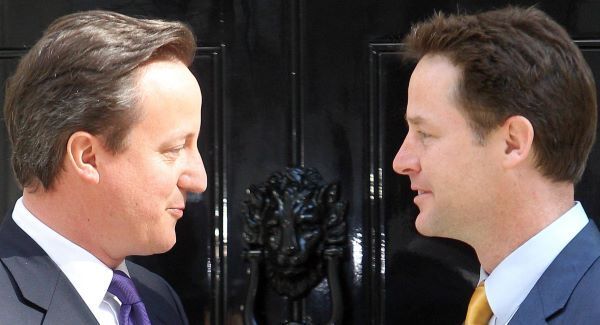
How different from Westminster, where the Tories and Lib Dems are often at each other’s throats and coalition backbenchers regularly humble prime minister, David Cameron — and, yet, the Government survives and is likely to see out its five-year term.

Here, Fine Gael and Labour pretend they are united in unbreakable union, and any whiff of dissent from deputies is stamped out with talk of a snap general election and a leap into the unknown.

How ironic that Britain’s first peace-time coalition for 80 years has shown up Ireland’s latest in 90 years for the weak, supine, often slightly pathetic thing it has become.

The Tories and Lib Dems clearly strongly dislike each other — as they should, given their very different political outlooks — but still work together in power without the pretence of affection.

Lib Dem leader, Nick Clegg, used his key-note conference address this week to list all the Tory policies he had blocked, such as giving employers the power to fire people at will and bringing back a two-tier education system. Imagine Tánaiste Eamon Gilmore doing that — imagine the boost it might give Labour’s collapsing poll ratings if he did?

Clegg became known as the Incredible Sulk when he boycotted Cameron’s statement to parliament, after the Conservatives served notice at an EU summit that they wanted a two-speed Europe — yet the coalition did not fall, despite the juvenility of the no-show, because they are all mature politicians and know, sometimes, a flash of defiance is necessary.

Government defeats are so common for the British coalition that it is just a factor of life.

Cameron could not get a majority of his own, Tory MPs to back him on his flagship stance of extending marriage rights to same-sex couples, which was only passed by Labour votes.

Cameron even survived being the first prime minister since 1782 to be defeated in parliament on an issue of war, when a rebellion that united right-wing Tories, left-wing Lib Dems, and the Labour opposition defeated a very mild motion condemning the Assad regime’s chemical attack of Aug 21, which had left more than 1,400 Syrians dead.

That vote — that preparedness to stand up to a railroading executive — changed the course of recent global events.

US missiles, along with a few from British and French submarines, there to give international cover to a non-UN-sanctioned show of force, were set to rain down on “regime targets” — with the inevitable civilian casualties — within 48 hours of the Westminster vote, but MPs’ refusal to be lobby fodder made front-page news in the US and forced the Obama administration to recall Congress.

And only when the White House realised that it would probably lose a vote of its own did it accidentally stumble upon the face-saving compromise of getting Assad to agree to giving up his chemical weapons.

We don’t know what the outcome of that process will be, if it will produce the hand-over, or, perhaps, even a peace breakthrough, just as we don’t know if the US military action against the regime might, indeed, have done more good than harm and hastened a settlement, however fragile and fraught, with the fractured Syrian opposition.

But we do know it was the British parliament’s refusal to prostrate itself that triggered what followed.

While Irish TDs would never be able to wield such influence on a globally significant event, the fact that they refuse even to squeak over the domestic ones they can influence makes democracy here seem even more dysfunctional.

It is time we, as voters, adopted a policy of ‘say no to no-say’ when choosing our TDs.

x

More in this section

Revoiced

Newsletter

Sign up to the best reads of the week from irishexaminer.com selected just for you.

Cookie Policy Privacy Policy Brand Safety FAQ Help Contact Us Terms and Conditions

© Examiner Echo Group Limited