Gilmore and Labour paying a high price for being in government

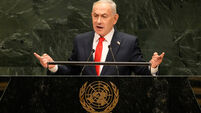
YOU might forgive Eamon Gilmore if he didn’t want to fly home from New York.

Gilmore and Labour paying a high price for being in government

What a difference for the Tanáiste between swanning around at the United Nations, being treated as some kind of Very Important Person, and coming home to Dublin, where being leader of the Labour party is an ever-increasing trial of patience and will and where a host of problems, many self-inflicted, may be incapable of satisfactory resolution.

Roisin Shortall really hit him hard on Wednesday, not just by her resignation as a junior minister, but from the Labour parliamentary party and by her method of doing it: apparently resigning by email when he was out of the country showed a degree of contempt for her party leader and undermined him greatly.

It may have been something of a cheap shot on her part if that’s what happened without prior warning, but it is understandable that her patience snapped.

Gilmore seemingly had put government unity ahead of party loyalty by the way in which he had sided with Fine Gael deputy leader James Reilly in his row with her over Reilly’s behaviour as health minister. Gilmore’s desire to keep the cabinet united in advance of a potentially politically ruinous budget is understandable, but in facilitating the harmony of the marriage with Fine Gael he makes it harder to contain passions within the Labour family.

Such is often the fate of the leaders of junior partners in coalition. His future is made worse by the situation of the country and his seeming inability to derive any benefit for Labour in trying to deal with it. Gilmore has discovered that his pre-election posturing as to what Labour could achieve in government is now the petard by which he will be hoist, made worse by further inappropriate sound-bites during his time in power. His pre-election beauty of “it’s Labour’s way or Frankfurt’s way” is now in danger of being surpassed by his unwise end of June declaration that an EU council of ministers statement to review the funding of bank bailouts was a “game-changer” for Ireland.

In office Gilmore now understands the near impotence of whatever government holds the reins and of the constraints placed upon it by our lenders and the real powers of Europe. Beneath him, however, he has people who are engaged in the same political wishful-thinking in which he indulged until he got into government.

Shortall may have given him only a foretaste of the horrors that await. In temperament, she does not seem not too far removed from his party deputy leader and cabinet colleague Joan Burton, a woman scorned when it came to cabinet selection last year. She wanted the job Brendan Howlin got, but her consolation prize at the Department of Family and Social Affairs gave her significant budgetary clout.

As a result Burton remains the internal ticking time-bomb within the cabinet (and by extension, within Labour). She is set on a collision course with Fine Gael when it comes to the forthcoming budget. Burton wants to push the provision of sick pay for the first four weeks to employers, to reduce the burden of spending at her department. Fine Gael’s Richard Bruton in particular, with his responsibility for enterprise and employment, thinks that this is ridiculous: he fears the implications for employers if they have to meet the costs of funding four weeks sick pay (before the State then takes over responsibility) and of hiring a temporary replacement. Just who will Gilmore support?

And if the budget targets social welfare cuts will his party backbenchers rally behind him or Burton, particularly if she makes it clear she is against any cuts? Will she use the chance to prepare for a run at the leadership, to restore old Labour at the expense of a former Workers Party man? (who in turn took leadership from another)?

Gilmore faces all of this at a time when Labour’s standing in the opinion polls ranges between 9% and 15%, depending on which poll you believe. The key point is that in all polls Labour is behind both Fianna Fáil and Sinn Féin, both of whom are profiting from the populist opportunism that opposition allows. That’s some comedown for a party that two years ago was at 32% in the polls, when Gilmore was the most popular party leader, and which dreamt of leading this government, with Fine Gael as a junior partner.

The loss of popularity looks as if it will be almost impossible to reverse, particularly as Labour tears itself apart. The general election result last year looks as if it was the worst of all possible worlds. It would have been better for Labour, once it had fallen (far) short of its dream of leading this coalition, had Fine Gael secured the overall majority that was possible had Enda Kenny been capable of the required final push.

Labour would be building its base massively now had Gilmore been able to lead the opposition again. Instead Sinn Féin is taking ownership of the left. If there was to be an election tomorrow Labour would probably suffer a near wipe-out, which means it is weakened greatly in its negotiations with Fine Gael about the budget. But the combination of having to follow the constraints imposed by the troika and of its own junior status in government means that it will implement many things that it does not want to have to do, and which the electorate will subsequently hammer it for.

Many voters are not understanding of the great difficulties Labour inherited, no matter how often Labour ministers, led by Gilmore, decry what Fianna Fáil left for it to clean up. They elected the Government to be different to the one it replaced, even if in many respects that was going to be impossible. It is true that the previous government committed this one to reduce the current deficit by at least another €3.5 billion in this budget, as part of the infamous four year plan “agreed” at the time the loans that keep the country going were advanced by the lending troika. The rough breakdown between tax increases and spending cuts was set out too, as was the commitment to introduce a property tax of some kind, no matter how unpopular it proves to be.

BUT the Government has choices when it comes to deciding what type and level of tax increases it introduces and what spending cuts are chosen to satisfy the overall target. Now this Government has to take responsibility for, and bear the consequences of, the decisions they take in office. And having mocked and denigrated the outgoing government for its surrender to the trio of lenders made up of the International Monetary Fund, the European Central Bank and European Commission, the new Government has sought to make a virtue of following its demands to the letter. The continued repayment of all bank bonds, secured and unsecured, is the lowest point of that strategy, even if again there may be no real alternative.

Recently Pat Rabbitte told me during a radio interview that he hoped that the Government would “survive” the budgetary process. I expect that it will, because Labour does not want to be eviscerated by an early election and fears that a sufficiently large section of the public would not appreciate it bringing down a government to apparently save us from a harsh budget, knowing that any subsequent budget by a new government would still be as bad.

Talk about being caught between a rock and a hard place, because whenever the next election comes Labour will be decimated. The dye is cast. Gilmore should enjoy the trip to New York as best he can while he can.

* The Last Word with Matt Cooper is broadcast on 100-102 Today FM, Monday to Friday, 4.30pm to 7pm.

More in this section

Revoiced

Newsletter

Sign up to the best reads of the week from irishexaminer.com selected just for you.

Cookie Policy Privacy Policy Brand Safety FAQ Help Contact Us Terms and Conditions

© Examiner Echo Group Limited