Grandparents, life and soul of species
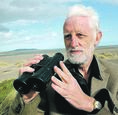
Her article ‘The Evolution of Grandparents’ is subtitled ‘Senior citizens may have been the secret of our species success’.
Tooth quality is a good indicator of a person’s age. The first, second and third molars erupt from the ages of six, 12 and 15 years respectively. The teeth wear steadily from then on and by carefully examining them, it’s possible to tell with reasonable accuracy how old their owner was when he or she died.
From wear on the teeth of 768 individuals, Caspari derived ‘old to young’ ratios for pre-hominid and ancient human communities. She then compared these with ratios for our more recent ancestors. The teeth of our cousins, the Neanderthals were also examined. For the more ancient groups, the ‘old to young’ ratios were tiny; few people, long ago, reached the age of 30.
Our pre-hominid ancestors were the australopithecines, the most famous of whom was Lucy. Part of her skeleton was unearthed in 1974 and analysis showed that she lived around 3.2 million years ago. Almost none of Lucy’s contemporaries, Caspari found, lived long enough to see their grandchildren. The earliest members of the genus ‘homo’ arrived on the scene around two million years ago. They fared a little better in the longevity stakes than the australopithecines.
The earliest remains of our own species, Homo sapiens, have been dated to just under 200,000 BP. Survival rates over the next 170,000 years, although slightly better than for earlier hominids, remained exceedingly low and were similar to those of the Neanderthals.
About 30,000 years ago, things changed dramatically; there was a huge jump in life expectancy. This did not occur, however, among the Neanderthals. For every 10 of our ancestors who died between the ages of 15 and 30, there were 20 others, 30 years old or more. Among the Neanderthals, there were only four such oldies.
Humans begin reproducing at about the age of 15. At 30 years of age, therefore, a person can become a grandparent and, in ancient times, they generally did so. Around 30,000 years ago, therefore, grandparents became, for the first time, a significant component of the human population.
This was also a time of huge cultural and technical advances. Traditions of cave drawing and bone carving already existed and even the Neanderthals tried their hand at such activities. However, the artefacts created 30,000 years ago, and immediately afterwards, are much more sophisticated than those of earlier times. There were also huge developments in tool and utensil construction.
The fact that such an artistic and technical upsurge should take place just at the time when grandparents arrived on the scene prompts an intriguing question; was the presence of this older generation responsible, at least in part, for a great cultural shift, or was it a result of it?
Caspari inclines to the former view. Older people, she argues, would have made invaluable contributions to their communities. In an age before the invention of writing, they were the holders of communal memory. When times were hard, or the community was threatened by natural disasters such as droughts or floods, old people might recall previous such events and the lessons that had been learnt dealing with them. Such information could be crucial to survival. At a more mundane level, older people might be able to identify useful plants or have become particularly expert at tool construction or basket weaving. Moreover, a granny in her 30s could still produce offspring, adding to the growth and vitality of the community.
Caspari’s paper is interesting but her argument seems somewhat circular; there’s a chicken and egg element here. The presence of grandparents in the community could not account for the initial change in longevity; they had to be the result of it.
But this raises another intriguing question; why was there no similar increase in longevity among the Neanderthals? What prevented them from developing a grandparent pool?
CONNECT WITH US TODAY



Be the first to know the latest news and updates