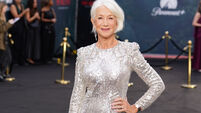
Queen has succeeded and survived simply by being herself
THE queen (yes, that queen) turned 85 last week. But as she prepares for the wedding of her eldest grandson and perhaps the most constitutionally loaded “foreign” visit (under the terms of the 1949 Ireland Act, the Republic is not a foreign country), it is an appropriate time to reflect on the changes which have taken place over the course of her nearly 60-year reign.
Elizabeth Alexandra Mary Windsor was born in central London in the difficult aftermath of World War I. Back in 1926, it seemed unlikely she would ever ascend the British throne. No one at the time could have predicted that her uncle, Edward, would abdicate to marry the twice-divorced Mrs Simpson leaving Elizabeth — to her horror, by all accounts — in line to succeed.
Besides, just 12 days after her birth, Britain was convulsed by the General Strike and appeared momentarily to be on the verge of revolution. Who would have laid large bets on the “universal hallucination” of monarchy, as George Bernard Shaw dismissed it, enduring into the 21st century?
Moreover, memories of the fall of the Romanovs less than 10 years before were still fresh. Her grandfather, George V, fearful of the industrial working class’s attitude to tsarism, had abandoned Nicholas II to his fate at Ekaterinburg.
As a teenager, Elizabeth did her bit to fight Nazism, training to be a mechanic in the women’s section of the army and driving a supply truck.
The Windsors, who had watched the stock of monarchies diminishing after European wars, had acquired highly developed antennae for survival. The Franco-Prussian War of 1870 had led to the fall of the French imperial throne. By the end of World War I, the crowns of not just Russia but Germany and Austria-Hungary too lay in dust. The 1939-1945 conflict was to destroy the thrones of Italy, Albania, Bulgaria, Romania and Yugoslavia as well.
But if her reign could be said to be accidental, it could never be said that the queen is accident-prone. Whatever else happens when she visits Ireland next month — and there is worrying talk of a terrorist attack by the imbeciles in the so-called Real IRA — of one thing we can be sure: the queen herself will not put a foot wrong. She is the ultimate professional.
She has succeeded in spite of a key difference between her own reign and that of her predecessors: the development of an increasingly powerful and intrusive media.
When her father died in February 1952 while she was in Kenya she was greeted with rapture, even adoration, in Britain and beyond (this part of Ireland being a very notable exception). Her coronation was watched not just by most British people — in many cases their first experience of television, but by most adult Americans too.
Although not Empress of India, she briefly enjoyed a status not unlike that of a pre-modern Japanese emperor. All that solemn (un-televised) anointing with oil by the Archbishop of Canterbury had been taken quite seriously. She might not have had any divine right to rule, but a divine right to reign? Well, many Brits seemed to think so.
The veneration did not last. When Britain over-reached — and, many would say, over-stepped the mark — at Suez, every aspect of public life came up for scrutiny, the monarch included, seen by many as a symptom of a wider malaise. Her high-pitched voice and throw-back accent were widely mocked. Private Eye began calling her “Brenda”.
The monarchy ploughed on, clinging to the image of the family on the throne first established by Elizabeth’s great-great-grandmother, Victoria. But it was apparent the media had to be engaged, not merely endured. TV documentaries depicting the royals doing terrestrial things like enjoying a laugh over the breakfast table intrigued the British public.
They lapped it up and wanted more and more. The silver jubilee — my earliest memory — was celebrated widely and wildly. But, like drug addicts, the Brits needed ever-greater fixes. Not content with carefully choreographed images of family barbeques, they wanted access to the royal bedrooms. The queen was to be almost undone by the very family image she had done so much to cultivate: her children and their spouses became media fodder in increasingly vicious circulation wars.
When Diana Spencer arrived on the scene in the summer of 1980, Prince Charles having previously been linked with her elder sister, Sarah, the royal house and the media embraced her, even if Charles himself seemed reluctant. For the tweedy royals and the tabloids alike, Diana spelled glamour. And every part of Ireland took an interest. I recall once being in a bar in a faintly republican village in Co Louth — Gerry Adams’s new constituency — one Sunday afternoon: every patron was glued to the TV special on one of Charles and Diana’s overseas tours.
When the marriage began to crack apart, the whole court and even the queen herself were accused — wrongly in her case — of cruelty to the woman Tony Blair posthumously described as “The People’s Princess”.
The break-ups of Charles and Diana and of Andrew and Fergie, combined with the public outcry at the thought that taxpayers should stump the bill for the fire at Windsor Castle, made 1992 the Queen’s “annus horribilis”. Five years later, on Diana’s death, there was more than a sniff of tumult in the air when the queen, very late in the day, lowered the flag over Buckingham Palace and returned to London from her Scottish estate. Fishwives on Belfast’s super-loyalist Shankill Road declared the queen persona non grata.
BUT the republican moment soon gave way to criticism of the media itself and the paparazzi in particular. Above all, every person who had pored over Diana’s ubiquitous image had cause for some soul-searching.
Since the events of 1992 and 1997, the queen has regained her position in the British people’s affections. The death of the queen mother and the golden jubilee in 2002 evoked popular expressions of loyalty which took most cynical commentators, notably in the BBC, by surprise.
The queen has succeeded simply by being herself, a model of discretion, pragmatism and dedication to service. She is above party and transcends the national boundaries of Britain unlike, say, Mrs Thatcher (too English) or Gordon Brown (too Scottish).
True, the awe she inspired has gone. The one time I ever met her at Hillsborough Castle, she seemed refreshingly human, a very dignified — if surprisingly petite — lady with a wide open smile. I noted wryly the number of devout nationalists who at least nodded, if not quite bowed, when introduced to her.
Things change. Old attitudes give way. The decline in the Brits’ affection for royals and royalty is as nothing compared with the collapse in respect for their elected representatives. So it would not be a surprise if they turn out in their multitudes next year to celebrate the diamond jubilee of the woman who stands, for most people in these islands, as the ultimate symbol of the stability in a turbulent world.
I fancy after 59 years of waiting, she is dying to get a glimpse of this part of Ireland. More than a few Irish patriots, I suspect, are secretly dying to catch a glimpse of her too.

CONNECT WITH US TODAY



Be the first to know the latest news and updates