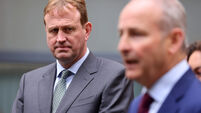
Pressure on Cowen to nominate a woman commissioner
However, currently each country is finalising its nomination and word from Dublin is that Taoiseach Brian Cowen has turned his attention to the next Irish commissioner. His thoughts on the matter are known only to a very few at this stage, but we do know that he is under pressure to nominate a woman.
Commission president Jose Manuel Barroso, in an effort to practise the equality the EU preaches, is attempting to have his college of commissioners representative of the general population with the same number of men as women.
He has apparently intimated that countries sending well qualified women will be assured of decent portfolios. Ireland needs to consider what portfolio it wants.
There are lots of options, especially as Mr Barroso intends to reconfigure the jobs, creating new ones and amalgamating others.
The watchword five years ago was keeping big business happy, but now with the economic crisis and unstoppable climate change, the emphasis is a little different and his Commission will reflect this no doubt.
One idea doing the rounds among the Irish in Brussels, anxious to see the country benefit from the Yes in the referendum and secure a raft for the stormy waters the country is riding, is a job called Innovation.
It’s the latest buzzword that has invaded all kinds of areas and is seen as a lifebuoy in these troubled times. But it captures a lot of different strands necessary to not just rescue Europe’s economies, but to create a new, young economy fit to do battle with and take its place in a world of new, young, hungry states such as India, China and Brazil.
It should not be difficult to make the case for Ireland to head up theinnovative arrowhead of Europe. A young population, educated, sophisticated with some of the arrogance knocked out of them, thanks to recent events, is a good starting place. Add to this the ability of a small state to adapt and successfully create growth, thanks in part to its links with big corporate interests.
The fact that the country is on its knees with an inability to help its own should be seen as an added incentive for its people to grasp every opportunity and illustrate just how the EU’s chest of funds for innovation can be used to best advantage.
The days of structural funds and agriculture subsidies are fast ebbing and the union’s budget is instead being ploughed into training, upskilling, encouraging entrepreneurs, and SMEs, and into research and applying its results to creating growth.
The criteria for getting this funding suits Ireland very well, as evidenced by the larger share of research funding already won by the country’s corporations, academia and SMEs.
To ensure the portfolio of Innovation is a real job and not just a talking shop, it would have to include at least some of the science and research budget and structural funds. This could prove a real driver of the EU’s recovery and growth.
However, having come up with the plan, Ireland would then need to come up with someone capable ofdelivering, whoever she may be.
If that should happen, hopefully someone in the Government will produce an innovative plan to fill the criminal holes in Ireland’s ability to compete in the modern world – such as internet connectivity.
CONNECT WITH US TODAY



Be the first to know the latest news and updates