If you go down to the woods today...
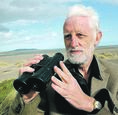
Richard Collins on the big cat scare in the mountains of Munster

If you go down to the woods today...

THE monastery at Mount Melleray in the Knockmealdown mountains, between Tipperary and Waterford, is a place of security and peace. People go there to heal their troubled souls. But now, it seems, there’s a dark presence the area, not a demonic spirit but a creature of tooth and claw, a panther.

Gardaí, it’s claimed, have told walkers to “exercise great caution” but their press office denies that any such advice was given. Just what caution you might exercise on encountering a panther in the forest is not at all clear. It’s no use racing up the nearest tree; panthers are excellent climbers. Turning and fleeing would be the most dangerous response of all; predatory animals instinctively chase anything which runs from them. The best strategy is to stand one’s ground, smile at the cat and bid him the time of day.

Claims that big cats are roaming the countryside are nothing new; at least a dozen such beasts are said to be on the loose in Britain. The evidence for the existence of any of them is meagre. With more than 60 alleged sightings, a few hazy photographs and a shaky video, the Beast of Bodmin Moor is the most prominent of the monsters. When the skull of a large carnivore was found on the moor, ‘conclusive proof’ of the existence of the beast seemed to have been obtained. The Natural History Museum in London identified the skull as a leopard’s.

The skull also rattled when shook. An object inside turned out to be the dried out carcass of an insect, but not one found in this part of the world. The creepy-crawly could only have entered the skull following the leopard’s death, in Africa.

Are monsters in the woods a projection of ancient folk memory? In the Middle Ages, people feared devils, goblins and werewolves. Fashions change; in the 19th Century, the demons had become Lough Ness monsters, ghosts and poltergeists. Then came the Abominable Snowman, Bigfoot and flying saucers. Nowadays the great terror is radiation from nuclear facilities, mobile phones and power lines.

But the Melleray Monster might be roaming the Knockmealdowns and the Comeraghs, courtesy of the illegal trade in exotic animals. A panther cub could have been brought to the area. A kitten may be easy to keep but, unfortunately, won’t remain a baby for long. What can the owner of a large, and increasingly dangerous, cat do when his pet starts to eat him out of house and home? If he calls the vet to have the poor creature put down, and he’ll have some explaining to do. So there’s a temptation to take it, in the dead of night, to some remote location and release it.

But could a big cat survive in an Irish forestry plantation? The leopard, the black form of which is the panther, is the world’s most widely distributed wild cat. A highly resourceful creature, it can eke out an existence in habitats as varied as jungles and arid deserts. The hills of south Tipperary and Waterford could hardly get the better of such a beast but it might have to kill sheep to survive.

On the other hand, leopards never colonised Europe. There is something about this part of the world which doesn’t suit them and so the jury remains out on the survival prospects of the Melleray Monster.

But is there a threat to humans? Big cats, generally, keep their distance; they have learned to give us a wide berth. Occasionally, however, an individual gets a taste for human flesh.

Usually, it’s an animal which has been injured by hunters, or has a large thorn lodged in an infected paw. Partially disabled, it is no longer able to catch wild prey. People are easy targets, so it starts to eat them. The most notorious outlaw leopards were the Rudraprayag and Panar man-eaters of northern India in the early 20th century. Between them, they killed 525 people before they were shot by famed Britsh hunter Jim Corbett.

There is another unknown factor at play here, however. If this mysterious beast has lived in captivity, it may lack the hunting skills it needs to survive in the wild. More ominously, however, it probably has little fear of people.

More in this section

Revoiced

Newsletter

Sign up to the best reads of the week from irishexaminer.com selected just for you.

Cookie Policy Privacy Policy Brand Safety FAQ Help Contact Us Terms and Conditions

© Examiner Echo Group Limited