Carney comments - Issue must be carefully considered

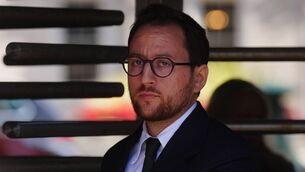
Mr Justice PAUL CARNEY’S remarks in relation to victim impact procedures focused on extremely sensitive matters.

He did not specifically name anybody, but there was no doubt he was referring to Majella Holohan’s statement at the trial of Wayne O’Donoghue, who was convicted of the manslaughter of her 11-year-old son Robert in Midleton in January 2005.

The judge has a reputation for diligence and hard work, and he has been passionate about his job. In this instance, he should be commended for having the courage and commitment to raise the matter.

Mr Justice Carney was not advocating any particular course, nor calling for any specific changes in law. Rather he outlined a set of circumstances that were causing him serious concern. He clearly believes it is in the public interest that there should be a considered debate on the issues.

As a senior member of the High Court and the presiding judge of the Central Criminal Court, Mr Justice Carney has responsibility for the administration of justice.

The fact he presided over this specific court case was all the more reason he should speak out, and his address to the Law Society at University College Cork, where he is an adjunct professor of law, was an appropriate occasion to initiate such debate.

Everyone should feel for the Holohan family in having these issues raised again, because they inflame wounds that will never heal.

Majella Holohan felt strongly enough to raise the issue in the manner in which she did in court at the sentencing of her son’s killer.

In fairness to the Holohan family as well as everybody else, the issues involved need to be considered in a fair, rational, and dispassionate way. But this is a case that touches raw nerves.

The problem in this victim’s impact statement was an unscripted addition lasting less than 30 seconds.

The tabloid press exploited this and “stirred up such hatred for the accused that he has no future in this country when his time is served”, said Mr Justice Carney. “This was not the intention of the sentencing judge.”

He knows that better than anyone, so he was right to raise the issue.

There are aspects to the arguments on this matter on which no side has a monopoly of virtue. The rights of victims and the accused must be paramount, but the rights of society — and thus the media, which helps inform the public — are also fundamental.

Normally if people make unfounded allegations they can be sued for defamation, and the media can be sued for libel if defamatory allegations are published or broadcast. However, in the court setting there is absolute privilege that overrides the laws of defamation.

It would be dangerous to accord victims unqualified privilege to say anything they wish in a victim’s impact statement. Obsessive grief may well distort the judgment of victims, and compassion dictates there should be understanding.

Hence the whole issue needs to be considered carefully in the interest of everybody.

More in this section

Revoiced

Newsletter

Had a busy week? Sign up for some of the best reads from the week gone by. Selected just for you.

Cookie Policy Privacy Policy Brand Safety FAQ Help Contact Us Terms and Conditions

© Examiner Echo Group Limited