Missing days remain a mystery
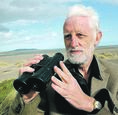
AN EXTRAORDINARY claim was made recently in a BBC report. It concerned a mountaineering accident and its consequences.

Missing days remain a mystery

On October 7, 2006, 35-year-old Mitsukata Uchikoshi was climbing Mount Rokko in western Japan, when he decided to abandon the attempt. Leaving his companions, he began his descent.

On the way down, he fell and injured himself. “I lay down,” he said, “... in a grassy area, which felt good in the sunshine, and eventually fell asleep.”

Mr Uchinikoshi remembers nothing from that moment until October 31 when, 24 days after his fall, rescuers found him. Miraculously, he was still alive. His pulse was extremely weak and his body temperature a mere 22°C. Rushed to hospital, he was revived and regained consciousness. His mental faculties returned and he seemed to be none the worse for his experience.

Hypothermia is lethal. A drop of even a few degrees in core body temperature soon causes irreversible brain damage followed by multiple organ failure and death. Apart from the effects of cold, dehydration would soon have killed Mr Uchikoshi. So how did he manage to survive? At a loss for a plausible explanation, some scientists have begun to think the unthinkable. Could his body have gone into hibernation?

Many creatures sleep through the winter but true hibernation is confined to small animals such as bats and dormice. Contrary to popular belief, squirrels don’t hibernate. Nor do badgers, although they sleep a great deal, and may stay underground for long periods, during cold spells. The largest Irish hibernator is the hedgehog, which allows its body temperature to fall from 31ÂșC to about 10ÂșC, not much higher than that of the surroundings, at least during daylight. The heartbeat slows to a few cycles per minute. The amount of energy saved by reduced body functions is enormous; demand can be as low as 10% of normal.

For large animals, lowering the temperature of the body, and getting it back up again in the Spring, would take too long and full hibernation is not an option. In any case, big creatures usually carry sufficient fat to tide them over cold periods and most of them are able to trek to warmer regions when the weather deteriorates. Male polar bears don’t hibernate, but females seek out a cave in which to spend the winter. They sleep for about three months during which time they don’t feed or expel wastes. Bears, however, are not true hibernators. They merely go into a torpid state, which allows the body temperature to fall to about a third of normal and the heartbeat to slow to half its usual rate.

“Dormancy” is also found, very rarely, in birds. The swift is the only Irish species which exhibits it; baby swifts go torpid in the nest when prolonged bad weather prevents their parents from catching enough insects for them.

It is not suggested that Mr Uchinikoshi went into full hibernation; a torpid state would have sufficed for his survival. But dormancy is unknown in humans. We are a tropical species, which evolved in East Africa in a warm climate where there would have been no need to hibernate. Nor has tropidity been recorded among our immediate relatives, the great apes and monkeys. There is, however, a reason to suspect that the ability to go torpid is, if you’ll forgive the pun, dormant within primate genes.

The lemurs of Madagascar are distant relatives of ours and, among their 32 species, there is one which exhibits torpid behaviour. The dwarf lemur eats vegetation which is not available throughout all of the year. It stores fat in its tail when food is abundant and when supplies are no longer available, it goes into a torpid state relying on these fat deposits. Dormancy is therefore a feature of primates and this raises the possibility, however remote, that it might be possible for humans.

Space scientists are particularly interested in the subject. One of the great difficulties of travelling to other planets is the enormous distances to be covered and the long time needed to make such journeys. Torpidity might offer a solution to the problem but, so far, human hibernation has only featured in science-fiction novels. Arthur C Clarke’s 2001 A Space Odyssey, memorably filmed by Stanley Kubrick, is about a voyage to the region of Jupiter to locate the source of a mysterious radiation. The spacecraft takes two years to complete the mission. To reduce the demand for oxygen, water and food, and to avoid the boredom of the journey, the passengers are put into a torpid state and kept in cold storage, their vital functions monitored by Hal, the super-intelligent computer.

If humans are to travel to remote planets such a system will have to be developed.

But torpidity has an application closer to home. It might help to save the lives of patients awaiting organ transplants. If patients could be rendered dormant, they might survive until an organ becomes available. There is another possibility; patients suffering from incurable illnesses might hibernate for decades, until a solution to their problem becomes available.

But the question remains. Did Mr Uchinikoshi really enter a state of dormancy or is he perpetrating an elaborate hoax? The jury is still out.

x

More in this section

Revoiced

Newsletter

Sign up to the best reads of the week from irishexaminer.com selected just for you.

Cookie Policy Privacy Policy Brand Safety FAQ Help Contact Us Terms and Conditions

© Examiner Echo Group Limited