International cyber-security threat: Attacks are a wake-up call to tech hacks
The real enemy, and the most tangible threat to the welfare of this country, lies offshore and it is invisible.
While Ireland has, so far, been spared the worst of the cyber-attack which has claimed 200,000 victims in at least 150 countries, we cannot afford to be in the least complacent. The most widespread and public malware outbreak for many years has managed to infect a huge number of large organisations.
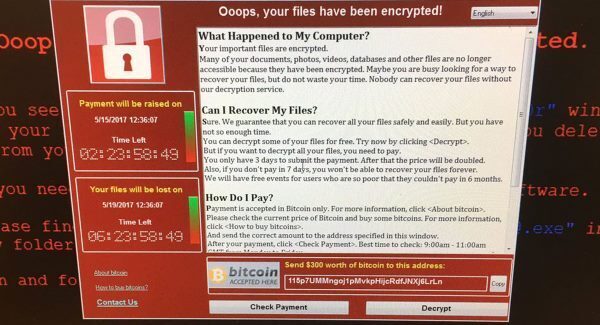
We are facing the global spread of a ransomware attack which is a type of malicious software that blocks access to data until a ransom is paid.
This is extortion on an unprecedented scale and there are fears that this number will grow as people return to work today after the weekend and turn on their computers.
Rob Wainright, the head of Europol, the European Union’s police agency, put it in the most stark terms which cannot be ignored: “The global reach is unprecedented. At the moment, we are in the face of an escalating threat.”
So far, the virus has stopped car factories, hospitals, shops, and schools, and it could wreak fresh havoc this week. Hundreds of hospitals and clinics in Britain’s National Health Service were infected on Friday, forcing them to send patients to other facilities. German rail operator Deutsche Bahn said some electronic signs at stations announcing arrivals and departures were affected. French car manufacturer Renault has had to halt production at some of its plants.
Russia and Spain have been the hardest-hit countries while, in Asia, some hospitals, schools, universities, and other institutions have also been affected.
While this cyber-attack is all about extorting money, it could easily cost lives. Many hospitals use computer-controlled robots to carry out operations. It is unthinkable what might happen if those robots failed to function at a critical moment.
The employers’ organisation, Ibec has, naturally, advised extra vigilance regarding cyber security on the part of all organisations and their employees.
But, more tellingly, it has pointed to the lack of resources given to the National Cyber Security Centre. It received more money in the last Budget but, considering the threat we now face, that funding needs to be substantially increased.
The scale of this latest attack may, finally, wake up industries, governments, and individuals to the fact that there must be an end to the casual approach to tech security and tolerance of outdated systems.
When the dreaded millennium bug failed to materialise at the turn of the century, most people became complacent and thought that a global computer meltdown could never happen.
Now we know it can. In that respect, this latest cyber- attack may be the best thing that could have happened.