More farmers suffering 'massive amounts of anxiety, worry and burnout'
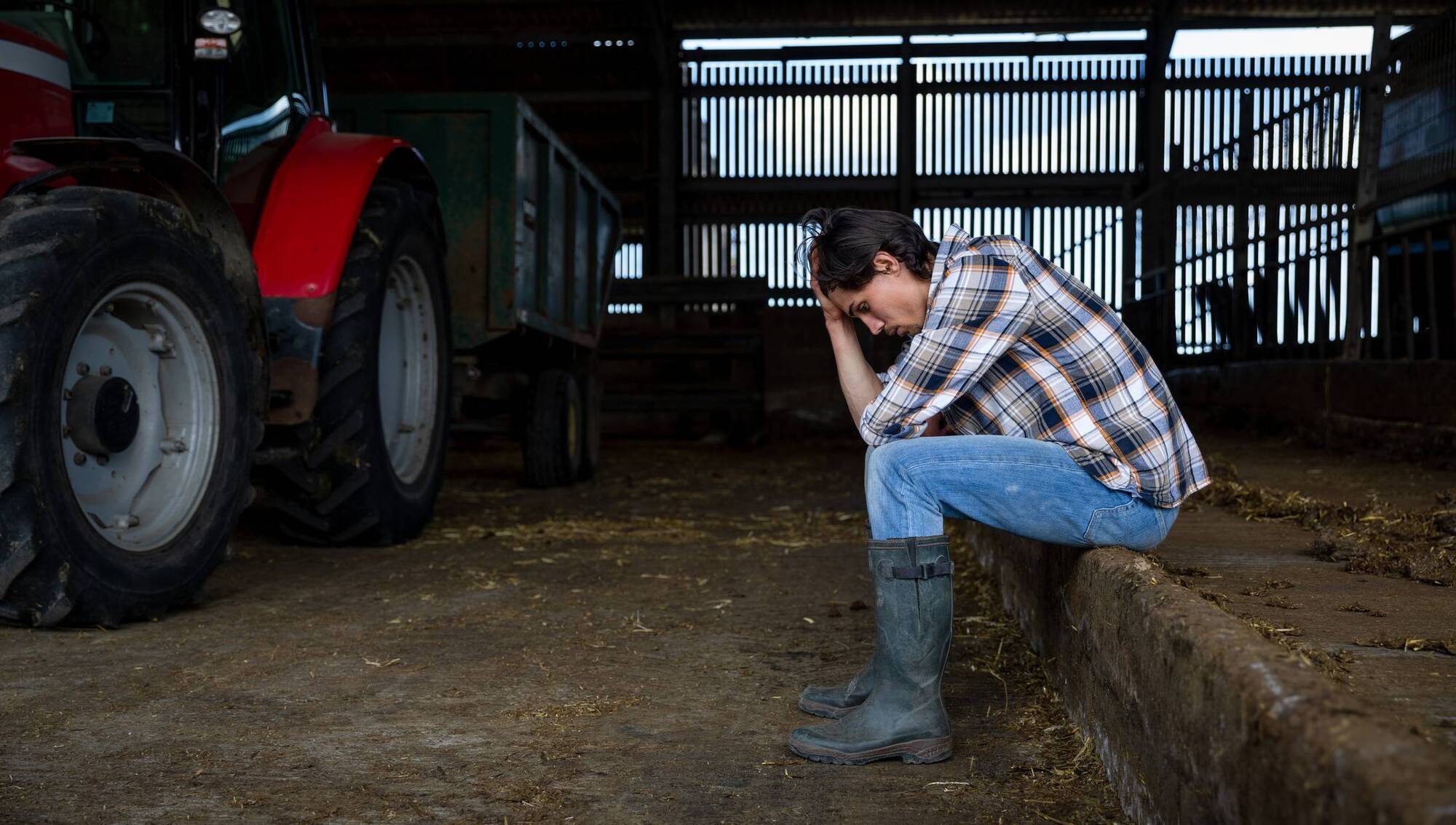
Various aspects converge to create challenges for the mental health of farmers the world over: the loneliness of the work, the intensity of the gruelling daily tasks, the uncertainty of income due to weather and price fluctuations. File photo
Around 15 years ago, Wexford sheep farmer George Graham was in Norway near a town called Vadsø, close to the Russian border.
The father of five and professional sheep shearer goes twice a year to Norway, and in the autumn and winter the daylight dwindles down to just two hours of light a day.
For months before making the trip he said he was struggling with his mental health, and even though he had friends and family he could turn to, he did not stop and worked harder “to cover up my problems instead of talking about it”.
“You don't have to do much talking when you're shearing, so it suited me fine,” he said of the trip from New Ross to northern Norway.
“This racing mind is where you're all over the place. You're just gone, you just can't put the brakes on it. This mind just going, going, going, and you can't stop it, and that drains you, and wears you out.”
He said one day, he asked the wife of the couple he was staying with, a nurse, to help him with translations with a new customer.
“That wasn't what I wanted to say to her. I wanted to say to her ‘I'm in the depths of depression. I'm in an awful way. I don't know what's wrong with me. Can you do something for me? Can you help me? Can I talk to you?’ But no, typical man, you can't do that.”
He said that the woman “gave me a lifeline” because she said he could call her anytime and that he knew he could turn to her “in my darkest moment”.
“That was my first step. That was also the time I made up my mind that if I could get out of Norway in one piece, that I would look for help.”
Various aspects converge to create challenges for the mental health of farmers the world over: the loneliness of the work, the intensity of the gruelling daily tasks, the uncertainty of income due to weather and price fluctuations.
The isolation is worse now, farmers say, due to the pandemic, technological advances, the shortage of labour and farm succession issues. Diseases, such as TB and bluetongue, can see a whole herd or flock culled, which can take a mental toll on a farmer and their family.
There are also around 4,500 farm accidents a year, some of which result in life-changing injuries, and almost 40% of all workplace fatalities are on farms, despite farmers representing just 6% of workers.
To add to those constant pressures, this year farmers faced a waterlogged winter and drought in the summer, which have affected fodder supplies and tillage farmers the most.
Many are also concerned about changes to the EU’s key agricultural subsidy, CAP, which are due to take effect in 2028.
All of these factors mean that farmers are more stressed this year than in previous years, according to Teresa Roche, the chair of the Irish Farmers’ Association’s Farm Family and Social Affairs committee.
Roche, a nurse and dairy farmer from Galway, carried out free health checks at the Ploughing Championships, in collaboration with the heart and stroke charity Croí, and found that more farmers, both men and women, were approaching them looking for mental health support when compared to the previous two years.
“Many people who have been heavily stocked on feed would have been severely impacted,” she said, adding that this has added to the “exhaustion” among farmers, which have an average age of 59.
Asked about the issues raised by farmers at the health check-ups, she said: “Massive amounts of anxiety and worry and burnout to the point of where they're actually closing the door and walking away from their farms, or they're not able to cope with the pressure, pure pressure in their heads — particularly for men.”
Nicola Byrne, chief executive of the mental health charity Shine, said farmers are listed as one of the groups they wanted to focus on this year due to additional stresses from the drought and rising costs.
“The evidence that we're seeing points to sustained occupational pressures, limited access to appropriate support, and a culture in which people may feel they must keep going until they reach a crisis point,” she said.
“For us, mental health promotion is important, but we can't ask individual farmers to become resilient enough to withstand structural problems.
“There's a lot of things that we need to be thinking about, like financial insecurity, extreme weather, isolation, excessive workload, and gaps in rural services that require structural responses.
“If the farm is struggling, farmers might feel that it's a judgement on them, and that it's not merely a business problem, so it can be hard to get them to reach out for support because they might feel embarrassed about the issues that they're affected by.”
She said it is also important not to forget farmers struggling with serious mental health conditions, such as depression, bipolar disorder, psychosis, and substance use.
There are concerns about drug use among a minority of farmers, which can lead to issues including addiction and drug debt.
Graham said he knows of cases where farms were sold to pay off drug debts.
“I also know of cases of funerals, where people have come up to sympathise, and the sympathy was, ‘that money was still owed, that debt is still there’,” he said.
“There’s no little boreen with the grass growing up the middle of it where there’s not drugs going up or down at some stage, this is how serious it is. The only way to help is that everybody is going to have to work together and say no.
“It’s very easy to get involved, very difficult to get out of.”
Roche said that while the availability of drugs is widespread in rural Ireland, support services, awareness and education around drug use and how it can affect families “isn't there”.
“It's in every sector of society, and farming is no different,” she said.
“They say it's quicker to get a delivery of cocaine than it is pizza in rural Ireland because there's so much widespread carrying of drugs.”
Roche said there is a need to speak about mental health issues with the same urgency that road deaths are viewed.
She said the issue is not being highlighted enough by the HSE and other agencies because of a lack of mental health services and supports, particularly in rural Ireland.
“They need to take these services out of the cities and bring them into the community, and give people the support exactly in that setting, in the environment that they need, that they feel that they can trust the people.”
She called for a model similar to the Northern Ireland Agri-Rural Health Forum, which promotes better health and wellbeing among agri-rural communities, and said the IFA is working with the chair of that forum, Dr Rebecca Orr, and the Ulster Farmers’ Union.
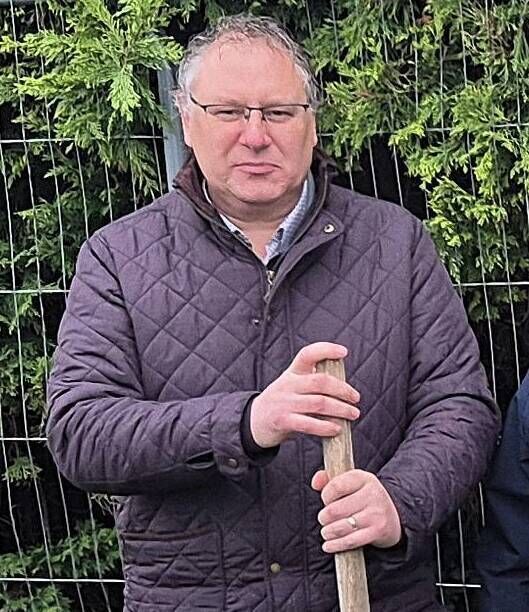
“That's what I'd love to bring down here,” she said.
At a webinar to discuss mental health issues facing farmers, Enda Egan of Irish Men’s Shed Association said they thought sheds were “maxxed out” at the end of the pandemic, but said they have opened around 25 per year since.
He said instead of the NHS-style Sláintecare model providing community-led health and care services, the number of men’s sheds across Ireland will have grown to almost 500 by the end of 2026, which he said shows they are “fulfilling a real need”.
“Men generally won’t sit down and talk face to face,” he said:
“The most important tool in the shed is the kettle.”
Graham added that farmers and people living in isolated areas may go out for a coffee or tea at a garage or cafe with the hope that they might meet someone with whom they can speak — and it is both up to the person who needs help to open up to someone, and for others to look out for signs that someone might need to talk.
“It's the only thing I know you don't need a prescription for — a cup of tea.”
If you need help, here are some resources:
- Samaritans: freephone 116 123, available 24 hours a day for confidential, non-judgemental support.
- Text About It: text HELLO to 50808 for free, anonymous support from a trained volunteer, available 24 hours a day.
- Pieta: call 1800 247 247 or text HELP to 51444.
- For immediate danger, call 112 or 999 or attend the nearest emergency department.
- You can also contact your GP, out-of-hours GP service or existing mental health team.
- Information about HSE mental health services is available at www.yourmentalhealth.ie

CONNECT WITH US TODAY



Be the first to know the latest news and updates