Financial woes of UL's student union the latest in series of governance crises at university
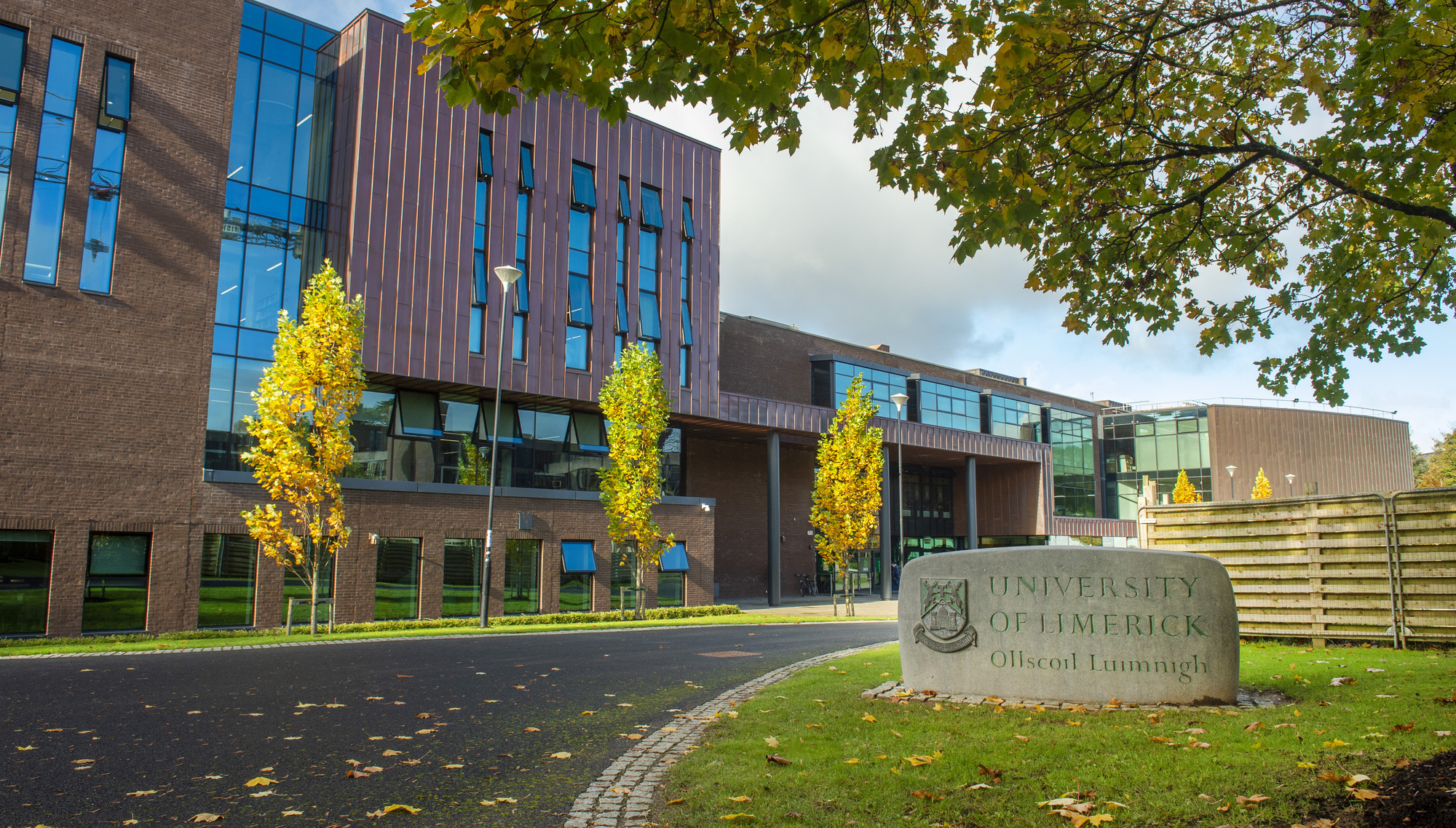
The University of Limerick has been plagued by controversies in recent years. Picture Dan Linehan
It has been a truly tumultuous 10 years for the University of Limerick.
Between 2018 and 2024, the university, or more accurately, its governance processes, were put under the microscope.
There were whistleblower allegations, scandals over the maintenance of student records, bullying claims, and umpteen court cases.
Then there were the property transactions. The acquisition of the old Dunnes Stores building in Limerick city in 2019 for €3m more than it was worth after insufficient due diligence had been performed.
The purchase of 20 houses at Rhebogue for €5.2m more than their value in late 2022 became a transaction that led to something of a reckoning for the institution, the straw that broke the camel’s back, as it were.
In 2024, in the aftermath of the Rhebogue fallout, the university’s president, Kerstin Mey, resigned. A new chancellor was elected in Brigid Laffan, one with no ties to the recent past. The current president is law professor Shane Kilcommins.
The Higher Education Authority set up camp on campus and froze UL’s capital funding — a situation that remains in place today.
Mentions of UL in the media have been more muted recently, but what has been going on at Student Life — UL's student union entity — would suggest when controversy raises its head, the university struggles to abandon its muscle memory for such awkward situations — to hope it all goes away.
Last month, the Irish Examiner reported UL had commissioned an emergency internal audit review of Student Life after the union requested an extension of its student levy in order to cover unforeseen costs relating to the development of its new €34m student centre.
This week, we revealed the union, apparently unbeknown to the university itself, had got itself into financial dire straits in recent years, racking up losses of close to €1.6m in less than 36 months.
Read More
For most of us who attended third level at one stage or another, the student union is a sort of vague entity — present on all campuses, there if you need advice or help, and making lots of noise around election time each March.
Many of the academic unions around the country operate in a bespoke fashion, unique to themselves.
Student Life is no different. Since its inception, it has been a separate legal entity to the university it was founded alongside.
However, despite operating as a separate body, the union is overwhelmingly funded via UL’s annual student capitation fee, to the tune of more than €1.2m a year.
The recent woes of Student Life — as the union became known in 2018 following a rebranding — appear to have their roots in a decision by its board, allegedly at the behest of its non-student executive, to incorporate its main company into one limited by guarantee in 2022.
The union’s board is made up of six elected students — including the president and deputy-president — and up to four external directors.
However, its main company in 2022 had in the region of 30 staff, headed up by a general manager, reporting to the board, whose job was to administer the union and to guide its young, elected student officers through the complexities of managing what amounts to a medium-sized business.
The argument for incorporating Student Life appears to have been it would indemnify all union members from any potential legal action taken against it. Something of a far-fetched reason, but you can see why young students might think it reasonable.
From there, things get distinctly opaque. At the same time the company was being incorporated, the financial controller of the union was made redundant in 2021.
Meanwhile, in incorporating the company, its annual general meeting was done away with to be replaced by a student forum for academic engagement, which meant financial results were no longer to be presented as a matter of course.
We now know:
- That the union’s two companies ran up losses of close to €1.6m between 2023 and 2025;
- That no mention of those difficulties was made to UL’s governing authority in that time, despite Student Life’s president being on the authority itself, and having a remit to update the university on all matters of note at each of its meetings;
- That at some student forum meetings, financials were presented with the figures redacted;
- That no financial estimates were presented to the board for nearly two years, from October of 2023;
- That the €650,000 loss incurred in 2023 was estimated at being just over €30,000 at the time, some 16 months before audited financial statements for the year were finally produced;
- That financial statements for Student Life’s second company — ULSU Trading Limited — were not presented to the board at all;
- That no queries were raised at the union’s board meeting in October 2023 regarding Student Life’s financial position.
None of these details came to light before the governing authority commissioned the internal audit review — itself an extraordinary action given Student Life is a separate entity not subject to UL’s own functions — in September 2025 and found things had gone deeply awry.
There are certainly questions to be answered at Student Life itself. Neither of the union presidents between 2022 and 2025 — Maeve Rutledge and Ronan Cahill — who were responsible for updating the governing authority at the time, responded to queries.
The general manager of the union of 12 years' standing, Martin Ryan, meanwhile, resigned in August 2025, one month before the internal audit was commissioned, and likewise did not respond when contacted.
But above all that is the university itself. In October 2024, Ms Laffan told the Oireachtas Public Accounts Committee the emergence of any further scandal at the institution would be "utterly disastrous".
A loss of €1.6m over three years may not be quite at the same level as what happened at Rhebogue, but it is still far from ideal.
In a way, the governing authority cannot be blamed for this one.
While it may be somewhat strange the university lies separate to a company it funds, that is the case.
The institution relied on the union to keep it appraised of any matters of concern. When it didn't, the university's executive simply was not aware of what was going on.
But that excuse rings a little hollow when one considers the sheer scale of scandal UL has gone through over the past 15 years.
In the wake of Rhebogue and the Dunnes transaction, the university surely should have made it its business to know what was going on at Student Life. That it did not is something of an asterisk to be attached to UL's claims of having finally turned over a new leaf.
That is particularly so when one considers the internal audit, and UL's public response to it to date.
The report itself, produced last March, has been released under Freedom of Information, redacted to the point of pointlessness, citing reasons such as the presence of "commercially sensitive information relating to... a non-FOI third party organisation ", that being Student Life.
The use of such excuses for non-release is standard among FOI departments around the country; in this case, however, we are dealing with an organisation that pledged to be better, to be more transparent, to not repeat the mistakes of the past.
The audit, even in its redacted form, is choc full of caveats. The authors note "the review is limited in scope".
Meanwhile, the deficit at Student Life is repeatedly waved away as having been contributed to by the fact the capitation fee did not rise with inflation between 2008 and 2024. That does not explain why the deficit more than trebled in 2023, nor why the same deficit was so heavily underestimated by the union's executive.
The audit made 36 recommendations, the majority of them redacted. Surely the most obvious suggestion should be that the union is brought fully under the university's aegis, at least while it depends on the college for funding.
UL's official line, meanwhile, has been instructive. Asked about the large deficits at Student Life, the understating of those deficits, the depletion of reserves, and why the internal audit was commissioned in the first place, the college's consistent line has been to underline that the union is an independent, legally-separate entity responsible for its own financial reporting, and that the two bodies have worked together to "implement corrective actions" surrounding Student Life's "financial challenges".
Granted, when those deficits were being run up at Student Life in 2023 and 2024, UL had enormous issues of its own to contend with, so a little leniency regarding its oversight of its union is probably warranted.
But in 2026, in the cold light of day, stressing the two bodies have nothing to do with each other does not really cut it. In the court of public opinion, UL long since ran out of excuses.
It has said, repeatedly, it is committed to transparency and accountability. Giving a full airing to what happened at Student Life is a litmus test for the strength of that commitment.


CONNECT WITH US TODAY



Be the first to know the latest news and updates