Mick Clifford: Ten years after Brexit vote, hopes have faded in former Leave stronghold

Ten years after Brexit, residents of Nelson in Lancashire talk to Mick Clifford about broken promises, economic decline, immigration and Britain's political future
The Station Hotel is the only pub left in Nelson.

The Station Hotel is the only pub left in Nelson.

Kath Blackhurst sums up in four words what Brexit means to her. 

“The money never came,” she says. “We were promised all this money that would be no longer going to Europe, the £400m for the NHS and the like. And it never came.” 

She is behind the bar in the Station Hotel, the only pub left in Nelson. 

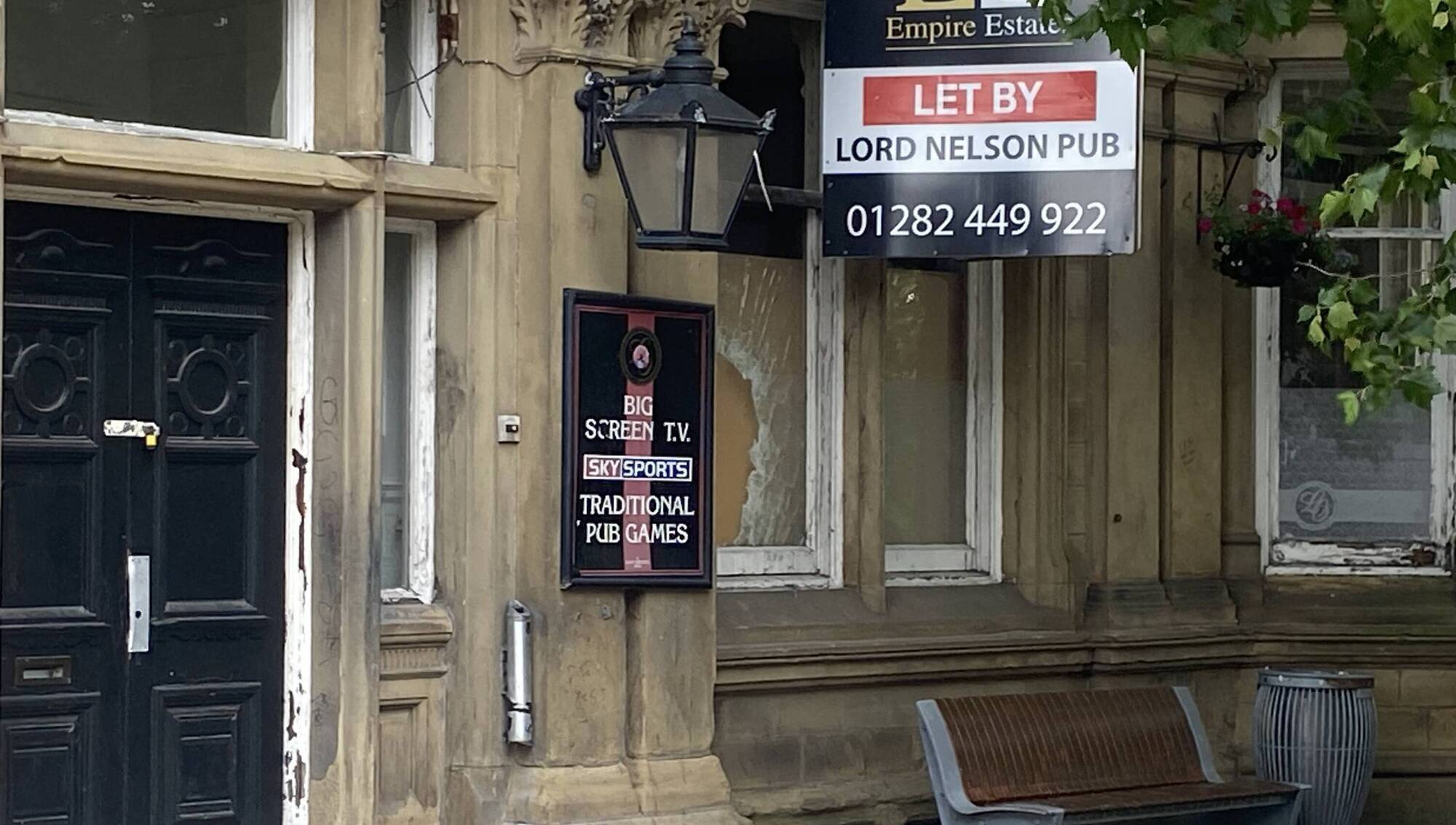
She used to work in the Lord Nelson, but that closed last year. There is a rumour it will open again soon, but no longer as a pub. 

“A cafe,” she says. “Them Asians don’t really drink in pubs so it will be cafe.” 

When asked would she vote for Brexit again, Kath demurs like she knows it was a con but that doesn’t mean it didn’t have to happen because something had to be done about the level of immigration as far as she’s concerned.

Ten years on from Brexit, and Nelson, an hour out of Manchester, doesn’t seem to have noticed much change. The town is, like others, particularly across the north of the England, in long-term decline. It is also riven with racial issues.

Nelson is in the heart of Lancashire’s old cotton mill country, four miles from the bigger town of Burnley. 

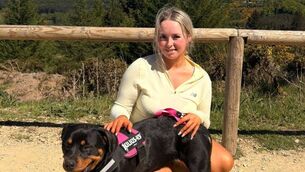
Kath Blackhurst behind the bar of the Station Hotel. She voted for Brexit.

It sits at the foot of Pendle Hill overlooking an old canal that was dug to transport the cotton south. The canal is no longer used for commercial purposes and the train service is poor.

Nelson then

In 2019, ahead of the general election that was to usher in Boris Johnson, the man who would “get Brexit done”, the Irish Examiner visited the town.

In the porch of the local Pendle Rise shopping centre, a kindly retiree by the name of Mike Sutcilffe was manning a stall supporting war veterans. 

About a third of the centre’s retail units were shut down at the time. Twenty years previously, it had been a hive of activity and colour, with celebrities visiting regularly. In 2019, Mike reckoned the good times could be recaptured.

“I want my country’s independence back,” he told me. He said he thought once Brexit was done, it would improve life for the town’s 30,000 inhabitants.

Decline walks hand in hand with racial tension, which is where a political entrepreneur like Nigel Farage makes hay. 

“Yes it will,” he said. “I have to believe in something. If the dream comes through, if we can now have free trade with whomever we want, then it can only benefit us. You don’t have to be a scientist to work that out.” 

Today, the shopping centre is boarded up. Hoarding runs right around it advertising it will reopen soon in the future. 

The government is providing investment here and across the north of England in an attempt to level things up. Nobody is holding their breath for the day when the centre will reappear, Phoenix like, with bells and whistles.

Meanwhile, traffic is clogged up the town centre’s main artery over construction work to redo the roads. 

Everybody is that bit cheesed off, as if they hadn’t enough to be going on with while this latest attempt at sorting things out is making life more uncomfortable.

Tesco had a large store at the entrance to the town. That is also gone. The notion that, once freed from the shackles of Europe, Britain would soar like an eagle, trading as Britannia had once ruled the waves, has been quietly shelved. 

Nelson now

Right now in Nelson, a decade down the line, nobody thinks much about Brexit one way or the other anymore. 

That would appear to be the attitude in large parts of the UK. Don’t mention that war. What’s done is done.

If an alien landed in Nelson town centre, he might be confused as to where in the world he was. The influence of the Asian community is clear to be seen.

In 2011, the census recorded Nelson was 42% Asian. By the 2021 census, this had increased to 52%.

Originally, Pakistani workers came here to work in the cotton mills. As time went on, it became a favoured destination.

Today, according to locals, those from Asian extraction who grow up here might go south, or to Manchester for a while, but they are inclined to come back. Not so the white British townies.

All of that might be manageable if there survived an economy that served the community. 

In these post-industrial times, that isn’t happening. And decline walks hand in hand with racial tension, which is where a political entrepreneur like Nigel Farage makes hay. 

He was the man with Brexit in his eyes, and today he is telling the public he can sort out the mess with his own bright new shining version of an even harder Brexit.

Kath isn’t sure about him, but she does know what might improve things locally.

“We need more white people on the council,” she says. “We’re not being properly represented.” 

Russ Payne joins us at the bar for a refill of his pint of choice. (“Payne by name, pain by nature,” he says). He doesn’t think much of Brexit one way or the other, but he likes Farage. 

“He looks the part, don’t he,” Russ says. “He can talk to people.” 

Nigel Farage the flavour of the decade

Farage remains the flavour of the decade round these parts, his Reform UK controlled Lancashire county council, having won 53 out of the 84 seats in the local elections last month.

For eight years prior to that, the Tories had control, at a time when they were promising getting Brexit done would sort everything. 

These days, Reform UK are making the big promises.

The effect of the party is seen even in council agendas, in one particular item that has a faint echo in this country. 

At the entrance to City Hall in Nelson, a notice from the last county council meeting recorded a motion “to remove St George flags from streetlights around the borough”. 

This was rejected. “LCC will only remove flags if they are a hazard to road users,” the council ultimately ruled.

The notion that, once freed from the shackles of Europe, Britain would soar like an eagle, trading as Britannia had once ruled the waves, has been quietly shelved. 

One councillor who isn’t buying that is Mohamad Igbal. He is the son of Pakistani immigrants from the town. In 2019, when we met him, he was wearing the traditional native dress and speaking with a broad Lancashire accent. 

He was worried then that anti immigrant sentiment was finding voice in the post-Brexit Britain. 

Today, he doesn’t see much change in that respect.

"Traditionally we all got on well in Nelson but the rise of Reform is challenging that again over the last 12 months. There is hostility even to my generation and younger. Reform are blaming all the problems on immigrants."

He sees the real reason for decline in the cuts imposed by the Tories following the 2008 crash and then Brexit acting as an accelerant.

“Socially and economically, since Brexit we have been on a downturn. There have been some shoots of recovery in the last year with government investment in the town centre, but that will only go so far.

People I meet now said they would vote to rejoin if they could. They know that Europe is our largest trading partner and what we have lost because of all this.

Iqbal himself, to some extent, symbolises the changes at political level in the UK. 

In 2019, he was leader of the Labour Party in the borough. Since then, he and six other members left the party over its stance on Gaza. They got re-elected last month and now sit as independents.

“One of the problems at the moment is that both Labour and the Tories are now chasing Reform, trying to out-reform Reform and I think that’s unhelpful.

“We saw this before in Pendle with the rise of the BNP [British National Party] in the early 2000s, and now we have Nigel Farage trying to divide people and the other two parties are just chasing that for votes.” 

Anti-immigrant sentiment

The immigrant theme recurs with others in Nelson. 

One middle-aged woman who will only give her name as Steph says there is a direct connection between the economic hard times and the rise, as she sees it, of the population in the town who are Asian or of Asian extraction. 

'For most people, Brexit and all it brought is not impacting daily lives, but it has contributed to the increased challenges around poverty, unemployment and health issues.' 

There is absolutely no evidence of such a contention, but it echoes the kind of politics that is now spreading through Farage, and another entity, Restore UK, which is even more hostile to immigrants.

One Asian man who is standing outside his shop has no interest in talking to the media. A couple of Asian women in the traditional dress merely smile and move along at the faster pace.

Racial divide is not universal in the town. Sarah Millcrop arrived in the town from the south more than 30 years ago. She works in social services and has seen many changes, but doesn’t view them through a negative lens.

“It would definitely have changed demographically,” she says. “When we first moved in, it was English and Pakistani. Since then, people who have migrated to this country have been pushed out of London because it’s so expensive and you can hear many accents here now.” 

She hasn’t changed her mind of Brexit. She thought it was bad then, and she’s seen nothing to give her pause since.

There was a lot of animosity towards people who did vote to stay in Europe but now everybody can see what has happened.

“I don’t hear much about it now and I don’t hear much about having a vote to rejoin. Unpicking what has been done might be horrendous. But they do need to find a way to ease things a bit for people.” 

In 2019, when the Irish Examiner spoke to Paul Hartley, he was worried about the anti-immigrant sentiment that Brexit has set loose. 

Paul Hartley of Building Bridges: 'For most people, Brexit and all it brought is not impacting daily lives, but it has contributed to the increased challenges around poverty, unemployment and health issues.'

He works for a local community-based organisation, Building Bridges, that attempts to break down racial and class barriers.

Seven years down the line, he’s still fighting the good fight, railing against losses, cherishing the odd win.

“Things have definitely got more challenging,” he says. “There is no doubt about that. For most people, Brexit and all it brought is not impacting daily lives, but it has contributed to the increased challenges around poverty, unemployment and health issues.” 

He welcomes the investment the government is making in the town’s infrastructure, but worries about prospects for young people in particular.

“It’s really felt in public services, stuff like youth clubs where young people have somewhere to go that they feel safe. We are trying to fill those kind of gaps that are growing and we are nowhere near where we were in terms of those kind of services 10 years ago. So there are massive struggles.” 

The future remains unclear in the UK. Should Farage come to power, all bets are off. The only alternative is to tip toe back to the place it was striving to be before this bright idea about taking back control touched so may like a brilliant fantasy.

x

More in this section

Lunchtime News

Newsletter

Get a lunch briefing straight to your inbox at noon daily. Also be the first to know with our occasional Breaking News emails.

Cookie Policy Privacy Policy Brand Safety FAQ Help Contact Us Terms and Conditions

© Examiner Echo Group Limited