Irish aid to Ukraine all the more crucial amid Russian attacks on hospitals
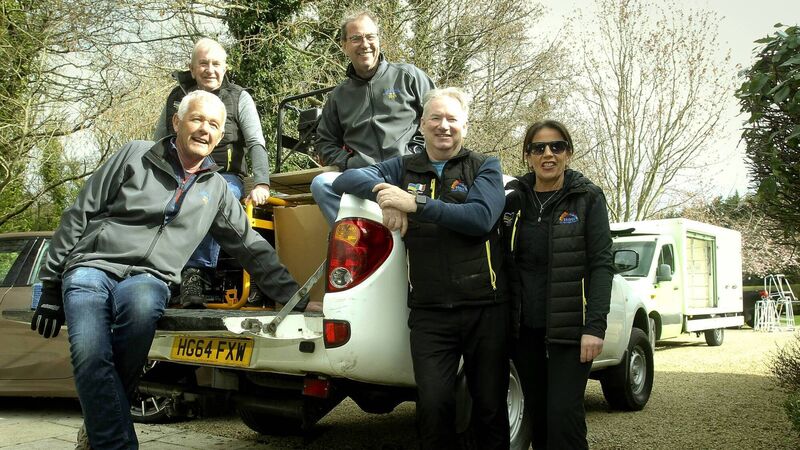
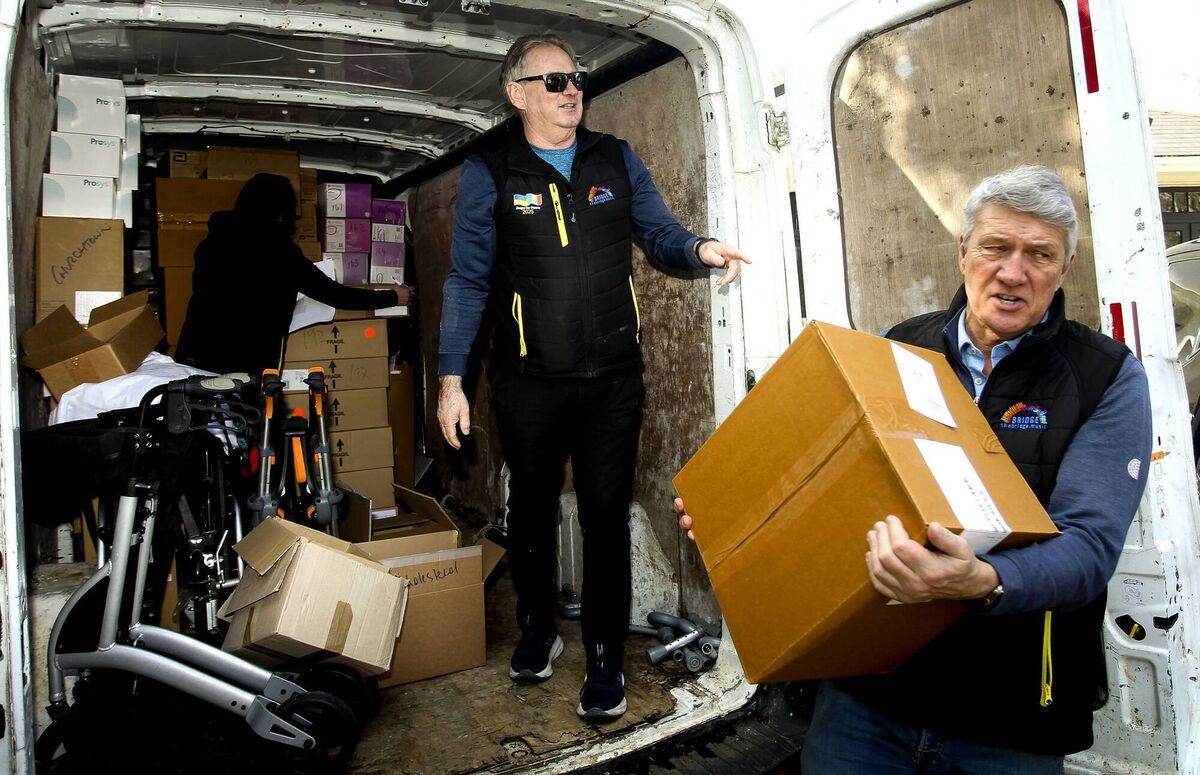
Finola and Stephen Byrne with Eddie Byrne, Daragh Cafkey, and Paul O'Grady who undertook a mission to deliver four 4x4s, medical supplies, and a refrigerated truck to Ukraine. Picture: Garry O'Neill
Attacks on Ukrainian healthcare centres and hospitals by Russian forces have increased in frequency and intensity, which makes medical aid delivered from Ireland all the more crucial.
Ukrainians have praised the generosity of Irish donors but have also noticed an "ebb and flow” of support as the war moves into its fifth year and attentions has turned to other global conflicts.
The World Health Organization warned that attacks on healthcare facilities in Ukraine increased by 20% last year, saying hospitals and clinics are now "routinely attacked”.
Irish volunteer Stephen ‘Sammy’ Byrne has been part of regular medical aid deliveries to Ukraine since 2022, as the founder of the not-for-profit foundation, the Peace Bridge Foundation.
“People are suffering incredibly in Ukraine," said Mr Byrne.
Read More
"A big takeaway for me, the last time I was there, was seeing that all the golden wheatfields are now just weeds.
“You can see a lot of the farming and food supply has been badly disrupted. It’s because all of the young boys are on the frontline or in the graveyard. It’s sad, very tough.
“Every graveyard we went into has doubled in size in a year.”
Despite this, Mr Byrne said Ukrainians remain defiant.
"That’s one thing you see, the resilience is incredible.”
Last September, the Irish volunteer group drove over with €1m of medical supplies, including 20 mobile ultrasounds as well as 10 4x4 vehicles, two ambulances, and a mobile kitchen.
They partner with Jeeps for Peace to ensure donations go where they are needed.
Some of the consignment of medical supplies went to a disability centre, while other equipment was delivered to an amputee rehabilitation centre.
On the latest trip last week, there was a special request from a frontline chaplain for more off-road vehicles. Mr Byrne said:
“They try to out-run the drones. The Jeeps are just getting blown up at a rapid rate, so we’re bringing over four of them. And we got a request for a refrigerated van so they can collect the bodies and return them to their families with a bit of dignity.”
On average, each donated 4x4 lasts around 90 days before it is blown up or damaged beyond repair.
Irish companies in the medical-technology and catering sectors have been key supporters of the Peace Bridge charity
“We’re community-to-community, helping ordinary people. We rely on the wonderful generosity of ordinary people and businesses here,” he said.
“It’s outrageous our own government is so badly broken they can’t figure out how to get supplies to people, supplies they might be throwing out here.”
Donations have been steady since 2022, but Mr Byrne said: “There is some fatigue. Some people are generous once, twice maybe, but you can’t keep going back to the same people."
This week, the charity took part in the St Patrick's Day parade in Greystones to raise awareness of their work.
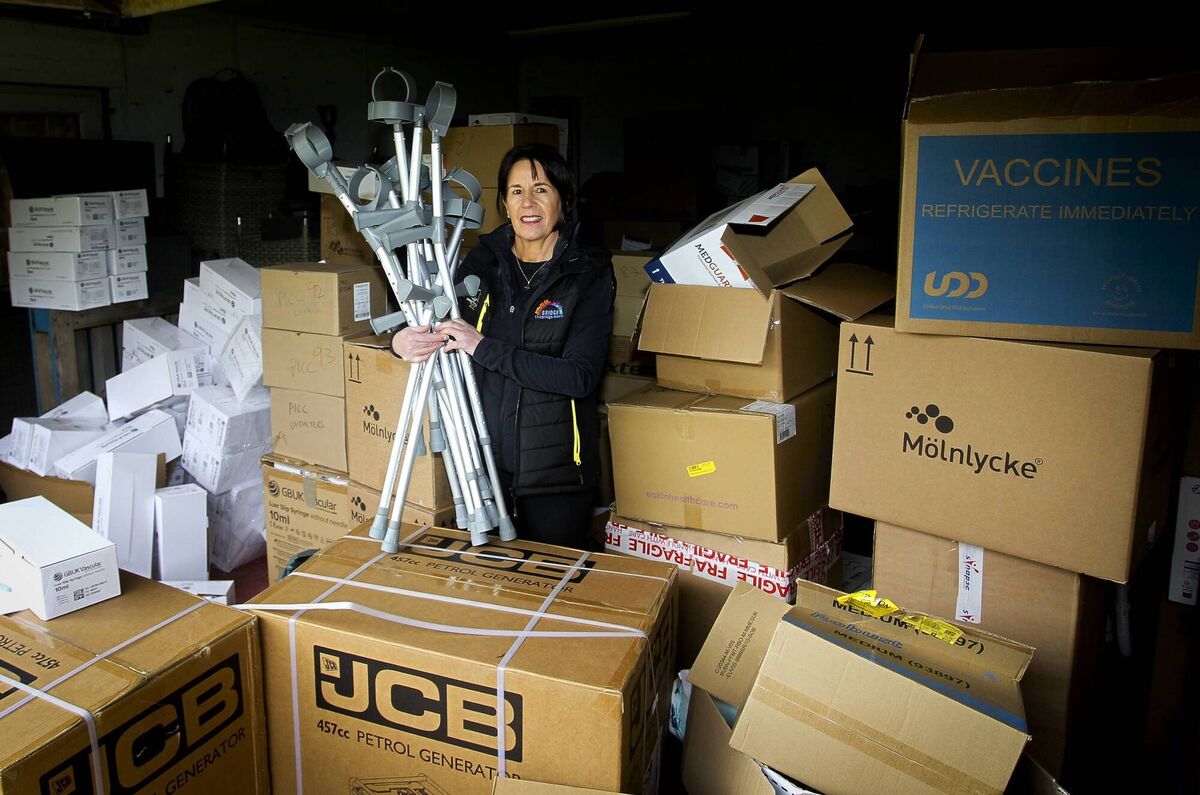
“We had an ask for 600 crutches, that just shows you the depth of suffering and injury that’s taking place. Every crutch means someone can walk a bit better or allow them have some form of a life,” he said.
In 2022, Ukrainian Action in Ireland was formed to help refugees here, but over time, this has also evolved into arranging medical aid for Ukraine.
It recently shipped two more ambulances following a fundraising drive.
Anatoliy Prymakov, director of the charity’s board, estimated they have sent over 50 ambulances to Ukraine as well as over 130 4x4s and other supplies.
“This takes time to put together,” he said.
“If you’re looking for 10 used ambulances, you can’t just walk into a shop and say, ‘hey I’ll take 10'.
"You have to source them, make sure they’re in good condition and agree a price. The same with the pick-up trucks.”
Its partner, the Gurtom Foundation, manages distribution of the aid in Ukraine.
In one illustration of the challenges, the charity lost a truckload of Irish humanitarian aid and its warehouse in the Kyiv region last year; destroyed in a Russian drone attack.
“The first ambulance we ever bought got blown up in a week, but it saved five people in that time,” he said.
“So can you put a price on that? The aid does make a difference but it might not make a help for a long time.
"If it saves one life, then that’s mission accomplished because that’s what ambulances are for. Unfortunately that’s the nature of war.”
The charity also sends pick-up trucks for paramedics, saying roads are often impassable for ambulances due to years of bombing.
It also responds to power outages which leave hospitals without electricity.
“We donate power generators and power banks,” he said.
“This winter Russia really stepped up attacking the electricity plants across Ukraine.”
The power outages are a crisis for patients, including diabetics storing medicines in their homes.
“They will go to the hospital or medical centre because it will have a fridge to store the insulin, so if that goes out of action as well they’re in a lot of trouble,” he said.
The charity, based in Dublin, in run by volunteers.
“We have partners down in Cork, we try to work with anybody really who would like to work with Ukrainians.”
He feels the personal connection many Irish people now have with Ukraine through meeting refugees or “opening up their homes” helps to keep the support going.
“There is goodwill but it ebbs and flows,” he said.
“Some want to help Ukraine, some know somebody, some hear a touching story. What’s key is the personal connection.
“There is a lot of goodwill in the communities, but there’s just so many crises around everywhere now, it’s hard maybe for people to see where they can make a difference.”
Last year, the HSE donated a container with 299 items of medical equipment to Ukraine. This includes monitors, ultrasound equipment, scopes, and hospital trolleys. The overall value was €471,800.
This was sent as part of an ongoing agreement with Gurtom Charity Ukraine on behalf of the Ukrainian health ministry.
The HSE also funded the University College Dublin's Ukraine Trauma Project, which offers advanced training to civilians, military medical personnel, or paramedic staff in Ukraine.
In 2024, it supported training of 286 emergency medical personnel in Kyiv.
- Niamh Griffin, Health Correspondent


CONNECT WITH US TODAY



Be the first to know the latest news and updates