Middle East crisis exposes fact that Ireland is one of Europe’s most energy‑insecure countries
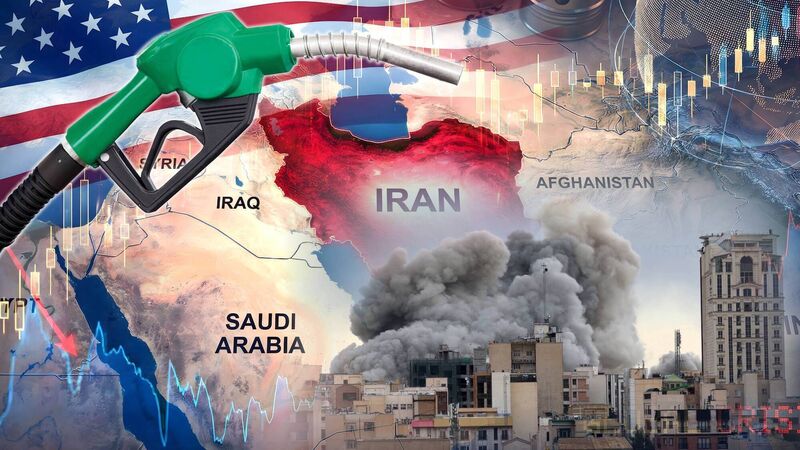
Oil, the lubricant of the world economy and much more, is largely to be found in a region that is wholly unstable.
Whether it was God or evolution, whomever or whatever was responsible for making the world threw a spanner in the works.
Oil, the lubricant of the world economy and much more, is largely to be found in a region that is wholly unstable.
Every so often, something happens in the Middle East that elicits a crisis with far reaching consequences.
Often that instability has been manufactured, or at least amplified, by western powers.
Read More
Oil production is stopped, or supplies withheld, or other actions taken in which the liquid gold is used as a bargaining tool, and rest of the world frets and forks out.
Today, the developing crisis is attributable to Donald Trump. How long oil supplies and prices will be affected is probably down to the US president’s attention span or his deference to world markets.
In the past, crises blew up in response to the flaring of ancient or religious quarrels.
The first of the modern era occurred as a result of the Yom Kippur War in 1973, between Egypt and Syria on one side and Israel on the other.
The two Arab states attacked Israel on the Jewish holiday, attempting to recapture territory the Israelis had annexed in another conflict six years earlier.
The support that the Jewish state received from the west, and particularly the USA, prompted the Arab states to cut oil supplies by 25%.
Arab states, in a gesture of solidarity with Syria and Egypt, raised the price of oil, cut their production and imposed a US embargo.
The price went from $3 a barrel on the international market up to $11. The shock was felt around the world.
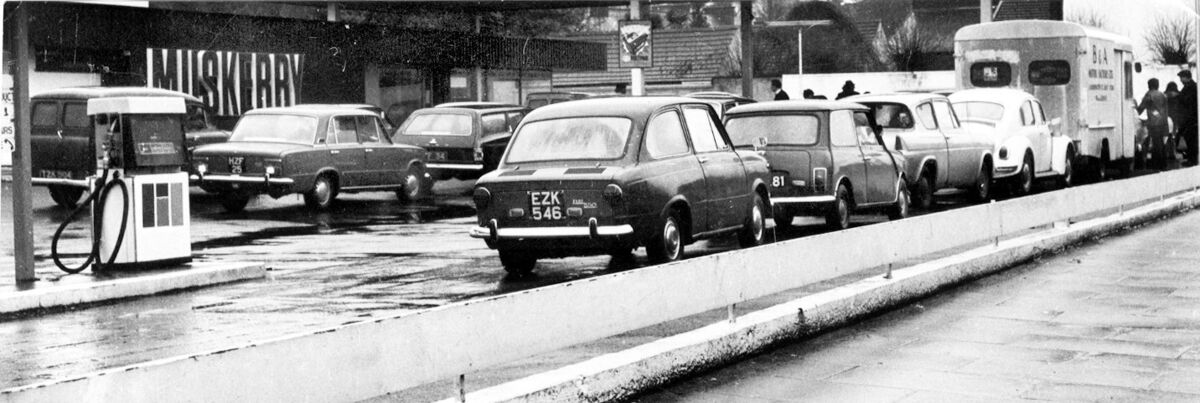
At the time, 90% of this country’s oil was imported from the region. The effect was immediate and long lasting.
Restrictions were placed on petrol supplies. A process was introduced where application forms had to be compiled for coupons.
Queues for petrol stretched back miles and the country effectively came to a standstill. Full normality was only restored in May 1974.
The next crisis hit five years later with the overthrow of the Iranian dictator Mohammad Reza Pahlavi, known as The Shah.
The Islamic revolution deposed him and installed Ayatollah Khomeini as the supreme leader of the country.
The religious regime immediately had an anti-Western and particularly anti-American tone and supplies were disrupted.
Supplies in this country were cut by 10% and the queues at the petrol pump came back.
Regulations were brought in to restrict motorists to £5 of petrol. The days when that sum could fill the family car were fast disappearing.
Petroleum retailers were brought into government buildings for talks. Afterwards, a spokesperson for the group was approached by RTÉ for a comment.
“We haven’t got the precise figures on the cutbacks,” he said. “I don’t think there is any need for panic or panic buying. You may have to walk a little bit more than you did before.”
The combinations of the two shocks in that decade did prompt some countries to attempt to reduce their reliance on oil.
In the US, a new department of energy was created with the aim of the country being self sufficient by 1985. That wasn’t met but it was a good start.
Japan began launching solar technology. The country also introduced a dress code of no tie and short sleeves in order to cut down on reliance on air conditioning.
Similar small gestures, designed to awaken the public to the importance of the issue, were launched in some European countries.
Car free Sundays were introduced in Holland, Denmark, Switzerland, and Germany. There were campaigns to get householders to turn down the thermostat.
In this country, the ESB did promote the idea of customers using less energy but there was nothing brought in that might discommode anybody.
As is so often the case it was decided to largely leave things as they were until a crisis struck and then tell the public that severe restrictions were required when there was no way around it.
The Middle East threw up another oil crisis in 1990 when Saddam Hussain invaded Kuwait. The US and its allies made it known immediately that this would not be tolerated.
Within months of the invasion, prices doubled from $20 to $40 a barrel and another drawn out crisis seemed imminent.
Predictions of doom were quickly revised in February 1991 when the US invaded Kuwait and ejected the Iraqis.
That was a short, sharp shock but there was more of it again in 2003 during the Second Gulf War as it came to be known.
In more recent times, and for once removed from the Middle East, the invasion of Ukraine by Putin’s Russia, caused further ructions in the global market.
The current crisis could persist and escalate most particularly because Iran appears to be in a position to stop all oil shipments through the strait of Hormuz.
All that is required is the threat of attack to ensure that one fifth of the world’s supply of oil is stopped from being shipped through the strait.
From an Irish perspective, the looming crisis highlights once more a complete failure to divert energy away from fossil fuels.
According to the Sustainable Energy Authority of Ireland the country is now using 58% more oil than was the case in 1990 (these figures are for 2023, the most up-to-date).
Much of that is down to transport as there are around four times as many vehicles on the road as their was 35 years ago.
We, as a country are also using more oil to heat homes than historically was the case.
The big difference between encountering an oil crisis today and that which was experienced back in the 1970s is that we actually have alternatives. In theory, at least.
Hannah Daly, professor of sustainable energy at UCC says the crisis highlights some home truths.
“We are far more reliable than other European countries and therefore vulnerable to this and we are further behind in our climate targets. In that respect we are outliers in Europe,” Ms Daly says.
“The alternatives we have are cost effective and make sense. Even in an area like transport, we can’t electrify all cars straight away but we can make a start.”
This is where the prevailing politics would appear to come into collision with the reality of geopolitics going back half a century.
The non fossil fuel measures are seen exclusively through a climate change lens.
And right now, right across the western world, climate change politics is being thrashed, led by Donald Trump who appears to have some obsession with obliterating what he calls “windmills”.
“These measures are not just a solution to climate,” Ms Daly says. “They are also the way towards energy security and affordability.”
“We’re spending money on shoring up fossil fuels when we should be getting out of fossil fuels.
“We have to come to terms with the fact that Ireland is one of the most dependant and one of the most energy insecure countries in Europe.”
Moving off fossil fuels in the immediate term is not going to solve the current crisis. However, changing a mindset in which fossil fuels are considered to be a viable alternative to sustainable energy is long overdue.
Whether there is a political will, or any kind of appetite for that among the public, remains to be seen. Form suggests that the long term, and all the mortgaged futures therein, will just be considered somebody else’s problem.


CONNECT WITH US TODAY



Be the first to know the latest news and updates