Éamon O'Shea: Overseas, home is no longer a place, it’s a feeling
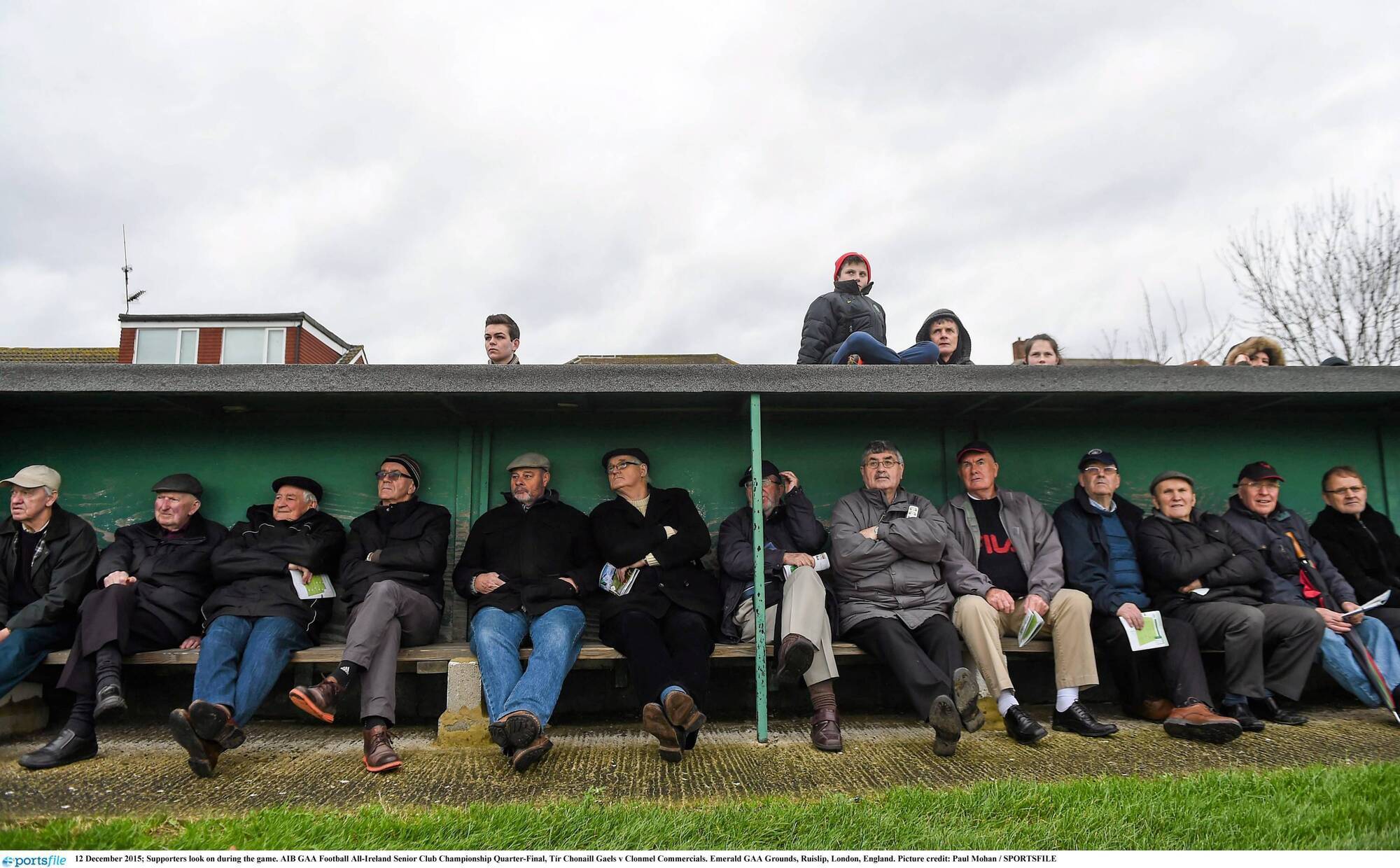
Supporters look on during a game at Emerald GAA Grounds in Ruislip. Pic: Sportsfile
RECENTLY I spent a Saturday night in London's Hop Pole in Wandsworth at the launch of South West Gaels' new identity, having formerly traded as Croydon Camogie.
I was there as guest, maybe less as guest and more by familial decree, but it was a brilliant experience and stellar example of the power of the GAA in bringing Irish people together in cities all over the world.
Not that everyone at the function knew I had any involvement in the GAA. They did not need an excuse to welcome me or talk to me, other than I was somebody’s dad. Over here you can leave your past behind – good, bad and indifferent. Although one player felt that I must have done something of note or notoriety and kept repeating how wonderful it was to meet me, without providing any evidence that she had any notion of why it might be wonderful to meet me.
I am generally used to a certain vagueness in relation to my presence at events. People seem to know that I had some involvement with Tipperary hurling but, for some reason, the conversation turns quickly to Kilkenny and how hard they are to beat before cascading to the Hawkeye decision in the 2014 All Ireland Final. I have learned to keep moving, so much to explain otherwise.
But back to the buzz in London. Speeches, presentations, endless chatter, laughter, spot prizes, Irish telly in the background and spontaneous music, but nobody was living in the past here. This group was more concerned with connection and communication in the present than any maudlin feelings about people they had left behind in Ireland. The Hop Pole and venues like it is for living in the now with your new friends, not ruminating about the past and the places of your early years. In fairness, the place was so wedged that to deviate from the now was an act of self-harm in that someone could take the very spot you were standing on!
It was uplifting to meet a confident group of young women navigating life in a cosmopolitan environment, career-driven and outward looking, but equally all very happy to find haven and refuge for brief periods during the week with their friends in the camogie club. Meeting friends in London is a choice, such is the vastness of the place and the travel involved – Clapham, Tooting, Mitcham, Streatham, Balham making up the local geography, but some travel even further.
The morning of the launch, 33 players participated in an A vs B internal game in a public park, beginning the season with an initial sorting out game to blow away winter cobwebs. I am sure you would be hard-pressed to find such commitment in many a club back in Ireland in February. Next week, three teams from the club will head to Birmingham to participate in a national sevens pre-season competition as the preparation for the UK camogie championship begins to gather pace.
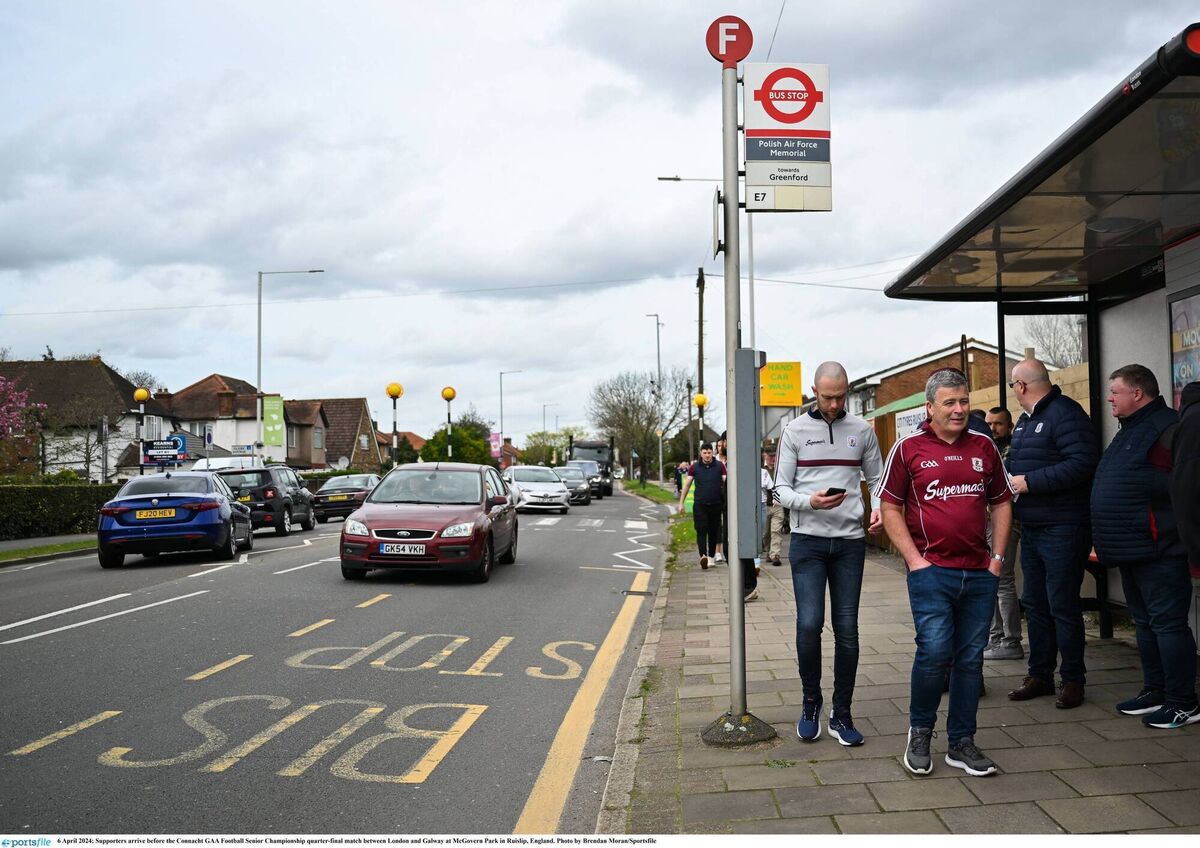
But nobody comes to London to play camogie. They come for work and/or adventure, some to figure out stuff and others for personal growth. The vast majority like to talk (and then some more) and to connect with like-minded people who don’t require much explanation about anything. Once the simple, but important, question of ‘where are you from?’ is asked and answered, the road opens and connections begin. Not having to explain much takes a lot of pressure off conversations in foreign parts. And it gives more time for fun, which is central to the lives of these young women and others like them.
Even if some occasionally pine for home, most could return in an instant from London if required and many do anyway, shuffling across borders in an easy manner. Moreover, the smartphone is always humming, sending pictures home, documenting day-to-day life, mainly for Mammy who seems to be always part of the conversation. On the contrary, Daddy is left oblivious to almost everything, except big questions such as likely All-Ireland winners or the chances of the local team in the county championship.
Home is no longer a place, it’s a feeling. It needs to be topped up regularly with connections to people in similar situations and that is what the GAA abroad does – it is a docking station for tribal energies and a renewal platform for Irishness. Not everyone needs it, but those who do, value it.
I thought of the women of South West Gaels the day after the launch as I cycled down the Fulham Road to Craven Cottage to watch Fulham play Tottenham in the Premier League. Attachment and belonging are not confined to emigrants or to Irish people. As I passed Putney Bridge station, hundreds of Spurs fans were crossing the road, mostly young men this time, coming to see their team play. All well behaved and singing ‘Oh when the Spurs go marching in’. It was clear that south-west London for these young men was almost like being in another country, where they had to stand together to make some sense of their lives, even though they came from just across the river in north London.
Inside the ground, I sat very close to the away end and watched them throughout the match singing their support for the players in the face of accumulating evidence that their team was nudging closer to the precipice of relegation. And to the reverberating sound of the local support singing ‘say hello to QPR’. Tribalism is always local and QPR are Fulham’s nearest neighbour and a tier below them, to where they would also like Spurs to drop.
At the end of the game, the Spurs players came over, having lost, and applauded their fans support. And then the away fans left. Back to where they came from, fearing the worst. For the 90 minutes of the game, however, no explanations were needed – they could sing their support and, for a while, express themselves as plural rather than singular. They belonged to something and were from somewhere, just like the South West Gaels women the night before.
And then I waited and watched the Spurs players troop off the pitch, their heads bowed and their eyes vacant, trying to make sense of another loss. A team made up of players from many countries including Italy, France, Romania, Netherlands, Brazilian, Argentina, Senegal, Sweden, Uruguay managed now by the Croatian, Igor Tudor, and I wondered what they would give to have a common docking station.
A place where they don’t need to explain much, where they fit in without fuss and where they can be easy with each other. Sure the money they get paid helps, and maybe it’s all transactional and they don’t need anything more, but their faces say otherwise – maybe they need a night out in the Hop Pole or the equivalent in North London.
Expressions of identity is not a novel idea, and we have made it a national pastime in Ireland, making sure people know precisely where we are from. But this was not always the case for Irish people, especially in Britain. When I studied at the University of York in the early 1980’s I kept my head down and my identity in my back pocket. It was not a time to be confident and certainly not a time for revealing much, if anything, about yourself. Explanations were always needed back then. If you opened your mouth you needed to be ready to say more.
That is no longer the case. But you still need the battery recharged and that is what the GAA identity and infrastructure does for many people living outside the country. For all its faults, including recent criticisms about sponsorship, it’s reach for its own people remains strong, vibrant and important.
CONNECT WITH US TODAY



Be the first to know the latest news and updates