Sarah Horgan: Stained glass artist learned from the medieval masters
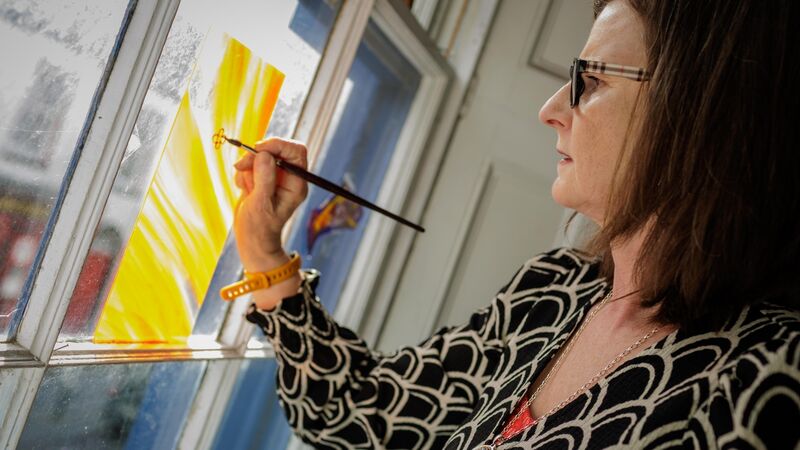
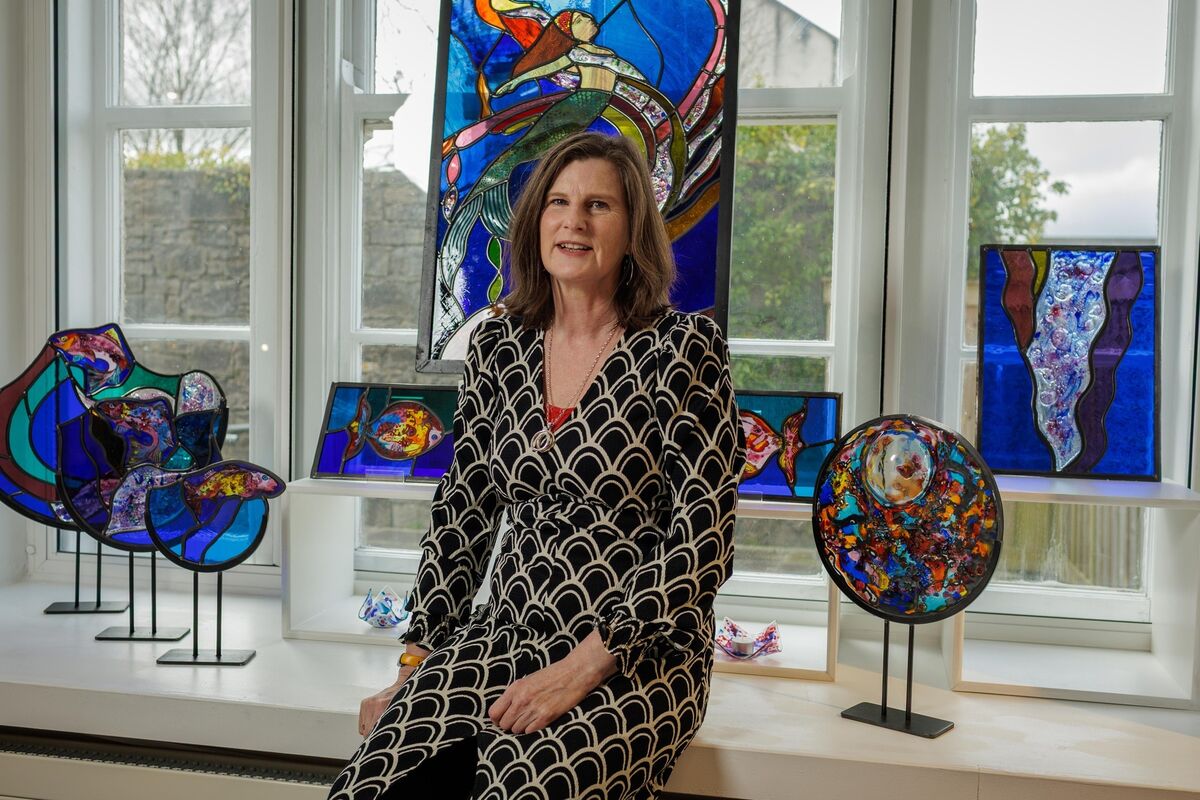
Stained glass artist Colette Langan whose exhibition, ‘Fragile’, continues until Friday at Leitrim Design House at The Dock Arts Centre, Carrick-On-Shannon.
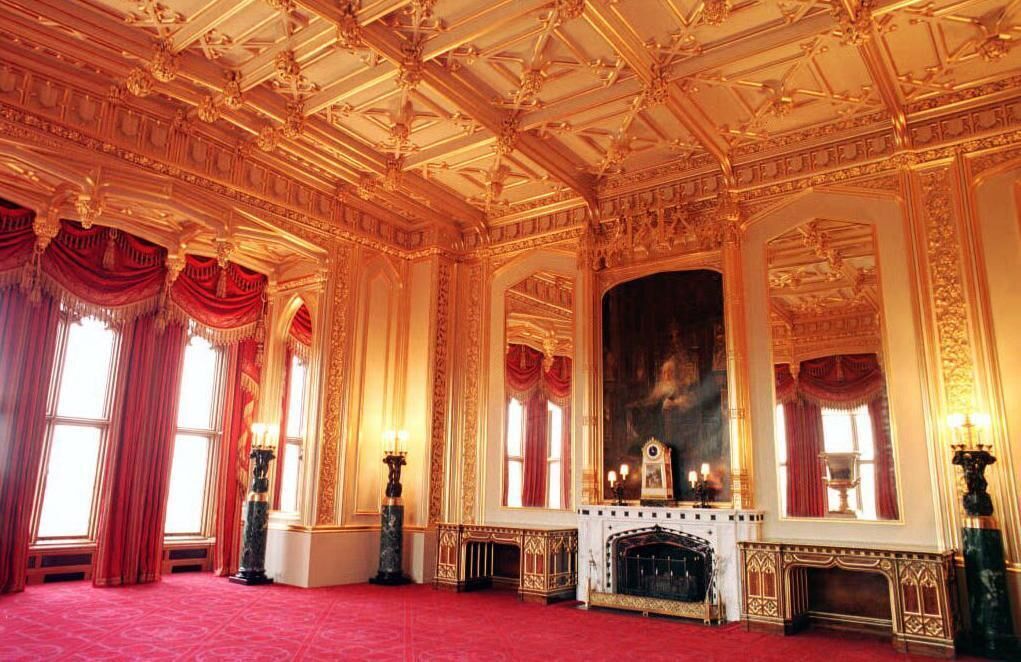
She’s an artist whose work features in some of the world’s most iconic buildings, from Windsor Castle to the Tower of London. And yet, the discreet nature of stained glass expert Colette Langan’s job has allowed her to stay largely under the radar.
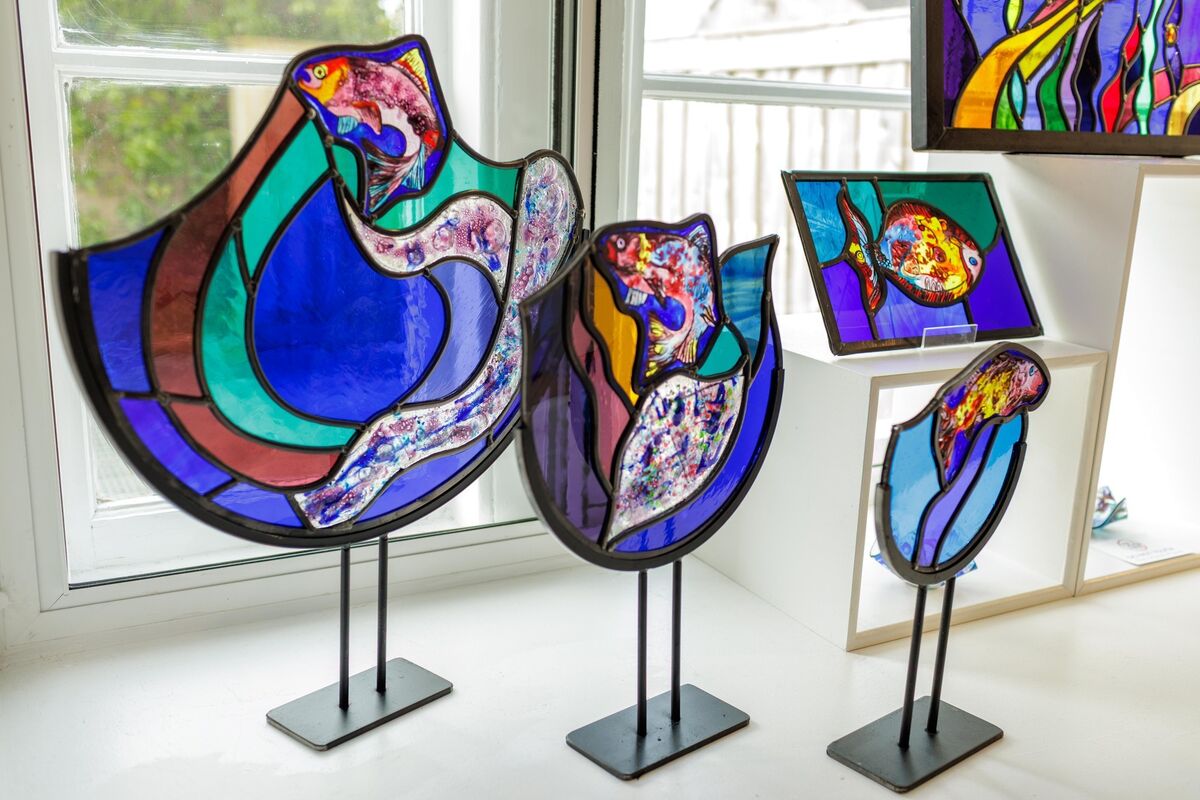
Now, an exhibition of her work at the Leitrim Design House in Carrick-on-Shannon until March 20 is shining a spotlight on her very specialised craft. The event offers an insight into her main exhibition piece, Treasures of the Riverbed.
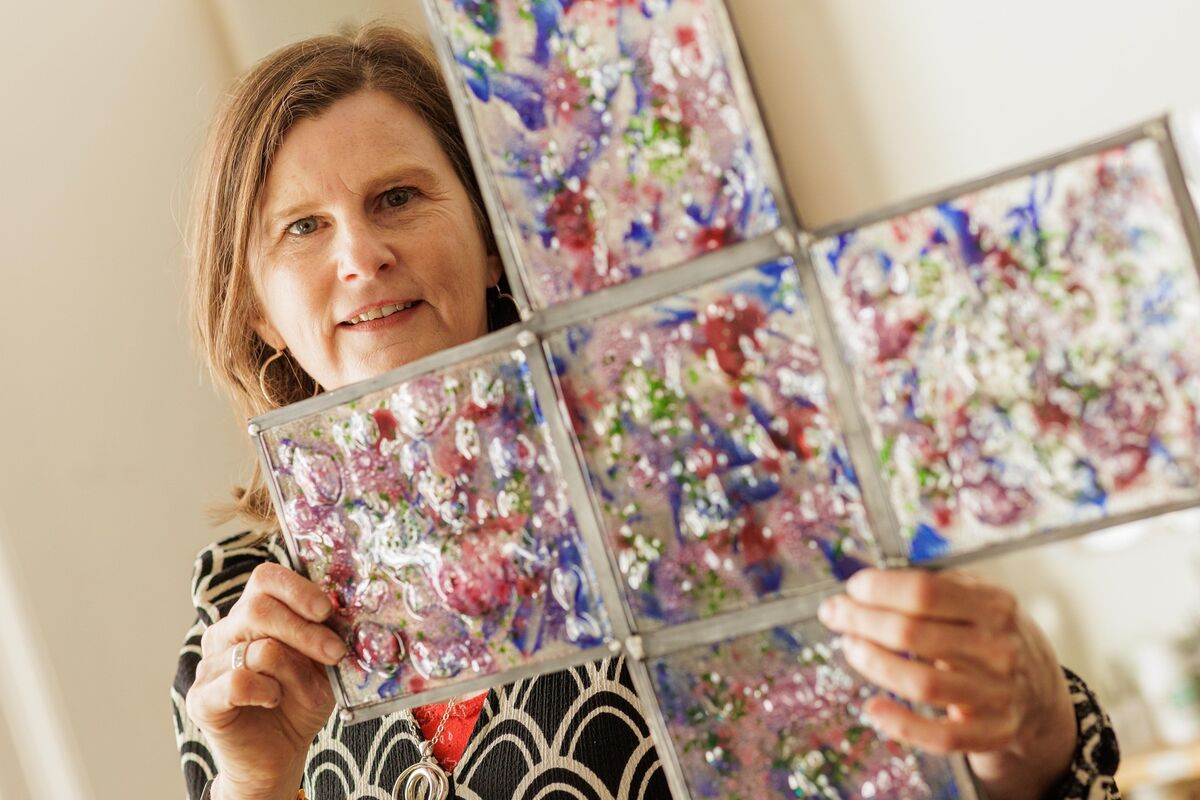
Inspired by the River Shannon, Colette’s pieces consist of mouth-blown glass, much of which has been sourced from defunct factories.
Born in London to Roscommon parents, Colette returned with her family to Carrick-on-Shannon at the age of 13.
“Even as a teenager I remember sitting in church and staring at the stained glass windows,” she says.
“I used to be really baffled at how they fit in and where, because there were no frames. It never occurred to me that you could make a career out of stained glass.
“In those days I wanted to be an air hostess when I left school because it seemed like such a glamourous job.”
After moving back to London in the late 1980s, Colette signed up for night classes at the Hampstead School of Art to learn the art of stained glass production.
Read More
She secured a job in a studio which, at just 19 years of age, offered her the opportunity to conduct restoration work on some of the UK’s best-known landmarks, including Westminster Abbey.
“I got to work on lots of projects over the years but Windsor Castle was probably one of my biggest ever disappointments.
“We were working on this panel with stained glass. I was supposed to be going with the team to fit it. However, being Irish, and with everything that was happening at the time, I couldn’t get clearance. I ended up working on it in a studio.
“My dear colleagues were trying to reassure me and told me there would be other times but there never was. There was never an opportunity like that again. Ironically, I actually did a lot of work on the churches that had had been bombed.”
Fortunately, the Tower of London proved a more enjoyable experience.
“We were down there for about a week, installing and putting back glass that we had taken out to be restored.
“Like a lot of young people, I was totally fearless. If it was today I would have a conniption at the thought of having to work on such large-scale projects.
“I was so young at the time that I look back now and marvel at myself. However, back then it was just another day at work. I suppose it’s similar to those who work with celebrities. After a while they are not fazed by their fame.
"It was much the same with me and the buildings I worked with. Funnily enough, some of my best work isn’t located in the well-known locations, but rather in the small churches that many wouldn’t have known about.”
She recalled the tough working conditions.
“I was constantly being told by the boss that I was so lucky to be doing what I was doing. In reality, it was very difficult because we were being paid so poorly. There were people coming in offering [to work] for free, which doesn’t help when you’re already trying to seek a pay rise.”
Colette says her professional life began with a baptism of fire.
“My first day of work involved working on glass at the Lincoln Cathedral. I worked in the medieval department, so we did all glass restoration.
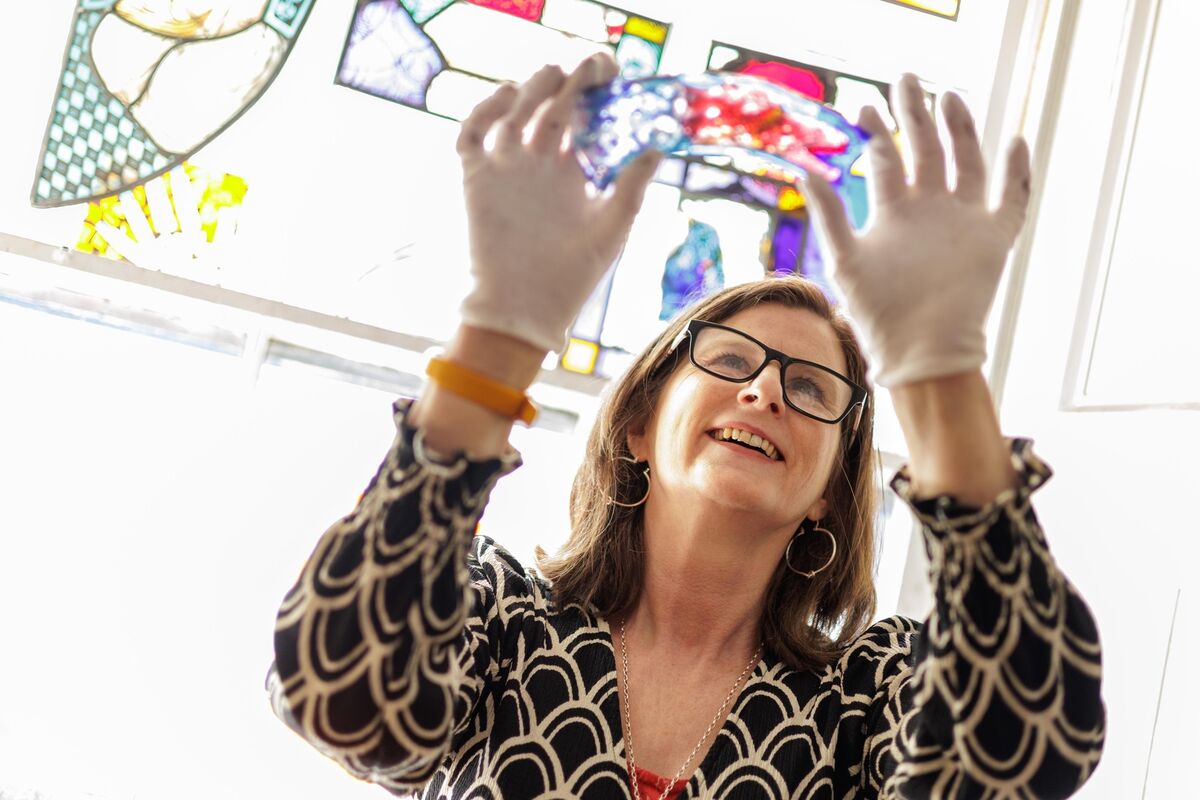
“I very quickly realised this was just too niche and that I wouldn’t really be able to do much with it, so I persuaded my bosses to let me learn how to do glazing, which is also known as leading. Medieval glasses can be extremely complicated. This is a complex process as the pieces are maybe over 600 or 700 years old. They have been altered as a result of the extensive restoration work undertaken over the years.
“Getting the windows to read right can be very challenging as they can get quite distorted. It’s all about trying to put everything back how you found it, despite the changes you have made. Technically, that’s very difficult but I love it and I was always really good at it.
“I feel hugely privileged to be doing what I am doing. In many ways I feel guided by the people who came before me. These medieval craftsmen are my teachers.
“I really feel like I am being trained by them.”
However, she says fewer people are entering the industry.
“It’s a dying art for a combination of reasons. Firstly, it has gone out of fashion. Religion has gone out of fashion. The churches most likely don’t have the kind of money they had at one time.
“Stained glass is very expensive, but it’s always been that way. It’s only now that I’m starting to get comfortable with the fact that it’s expensive. When I take into account the hours I’m devoting to this, it works out an average wage.
“A lot of the time people don’t realise what’s involved in something like this.”


CONNECT WITH US TODAY



Be the first to know the latest news and updates