Mick Clifford: Alan Kearney case has all the hallmarks of a miscarriage of justice
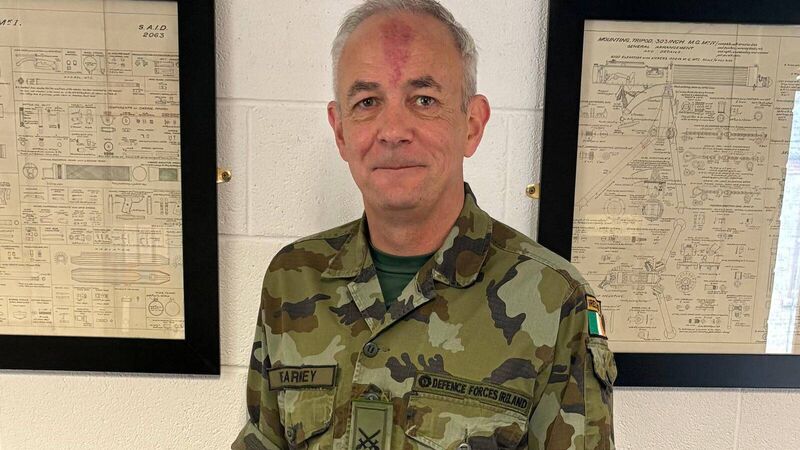
Alan Kearney had a meteoric rise in the Defence Forces to the rank of captain and was in line for a further, prestigious promotion when his world began to fall apart in 2021. Out of the blue, he was told he was under suspicion.
There appears to be a general rule in government with regards to inquiring into wrongdoing: If there is a political or public storm, come out immediately and assure everybody that we, the State, will get to the bottom of it.
Otherwise, keep the head down and hope this moment passes.
The latter appears to be the fate of the case of Alan Kearney which has all the hallmarks of a miscarriage of justice.
Alan Kearney did the State a lot of service.
Read More
He had a meteoric rise in the Defence Forces to the rank of captain and was in line for a further, prestigious promotion when his world began to fall apart in 2021.
Out of the blue, he was told he was under suspicion.
The charge was that he did not properly account for ammunition in his role as overseer of the ordnance base technical stores in the Curragh, the largest weapon repository in the force.
He was, at that point in his 30-year career, on the cusp of being promoted to commandant and appointed to the prestigious role of Captain of the Guard for the Houses of the Oireachtas.
There was a suggestion that some ammo could be missing.
After much protracted investigation it was found that nothing was missing.
There was also interest expressed in WhatsApp communications he had with a former member, who had gone on to join An Garda Síochána.
This individual made a series of protected disclosures in 2019 about what he saw as malpractice in the armory section of An Garda Síochána.
Many of his allegations have since been proved to be accurate.
He contacted Kearney in 2020 about what he was seeing, asking for advice.
The gardaí investigated this, but never interviewed him.
There was nothing nefarious or hinting of criminality in the messages, but somebody in the Defence Forces thought that further investigation was required.
Whether this move was prompted or suggested or mooted by anybody in An Garda Síochána has never been established.
So began the pursuit of Captain Alan Kearney.
Kearney’s home was raided by the military police in 2022.
They found nothing.
Later, there was an admission that the gardaí had asked for the search to be conducted.
No reason was ever given for doing so.
And crucially, Kearney was not under investigation by An Garda Síochána.
He lost the Captain of the Guard job.
As he was under investigation for alleged criminality, he didn’t pass security clearance.
Later, Defence Forces Ombudsman Alan Mahon examined the whole affair and pointed out that for two years, Captain Kearney, as he was, had been subjected to a series of criminal charges.
Apart from that, the investigation into his alleged crimes was sloppy and unprofessional, nearly as if the authorities were going through the motions.
For some unknown reason, a few gardaí maintained interest in the case as it progressed for well over two years.
Such was the interest that one senior garda, who had been named in the protected disclosures from Kearny’s former colleague, actually showed up at the scheduled court martial in July 2024.
Once it was established that there was no probative evidence against Kearney, he agreed to plead to a minor issue — which was described by the military judge as an “administrative matter” — in order to bring the ordeal to an end.
If that administrative matter was the only issue Kearney was facing from the off, it wouldn’t even have merited a full investigation, not to mind a court martial.
He would have been promoted and gone on to the job at the Houses of the Oireachtas.
After the court martial, the ombudsman recommended his promotion be effected and backdated two years.
The military authorities resisted. Eventually, they agreed to the promotion but would only backdate it six months.
“In civilian life, even after a file goes to the DPP, a flawed Garda investigation can be examined by an independent watchdog,” Kearney told the .
After he was finally promoted, Kearney left the Defence Forces completely disillusioned about what he had been subjected to.
He now works as an international security consultant.
There are myriad questions about the whole affair. Why was he charged?
What, if any, influence did any member of An Garda Síochána have on the decision to pursue Kearney?
Why was the standard process not followed?
Was there something more to it than a high level of incompetence and a cavalier attitude to the career of an officer who had given 30 years of unblemished service?
The investigation was so sloppy that evidence — ammunition that Kearney was being accused of failing to destroy — actually went missing.
This was reported to the gardaí who investigated.
Six months later, the Defence Forces found that it hadn’t gone missing at all but was in the same room it had been stored in but moved aside by about 5m.
Kearney made another complaint to the ombudsman about the whole thrust of the case that was brought against him.
Mr Mahon conducted an inquiry but found that, legally, he was not empowered to conduct the kind of investigation that the complaint merited.
“In my case there was clear documentary evidence of investigative failings,” Kearney says.
“Yet no independent body was permitted to examine them. That would be unthinkable in civilian policing. And it is happening at the very moment the Defence Forces are assuring the public they have changed.
“An organisation asking people to join, while insulating its senior officers from scrutiny, sends a message — whether intended or not — about who accountability applies to.”
Cases like that of Alan Kearney highlight two separate issues.
The first is that of a dearth of accountability for a powerful entity like the Defence Forces and the effective filleting of the character of a senior officer for what looks like expediency.
The other issue is the loss to the State of the service of a man who had a decorated history and represented the country both home and abroad to the highest standard.
A spokesperson for the Defence Forces told the it does not comment on individual cases.

CONNECT WITH US TODAY



Be the first to know the latest news and updates