Diary of an autistic prisoner: 'I only had two showers in four weeks'
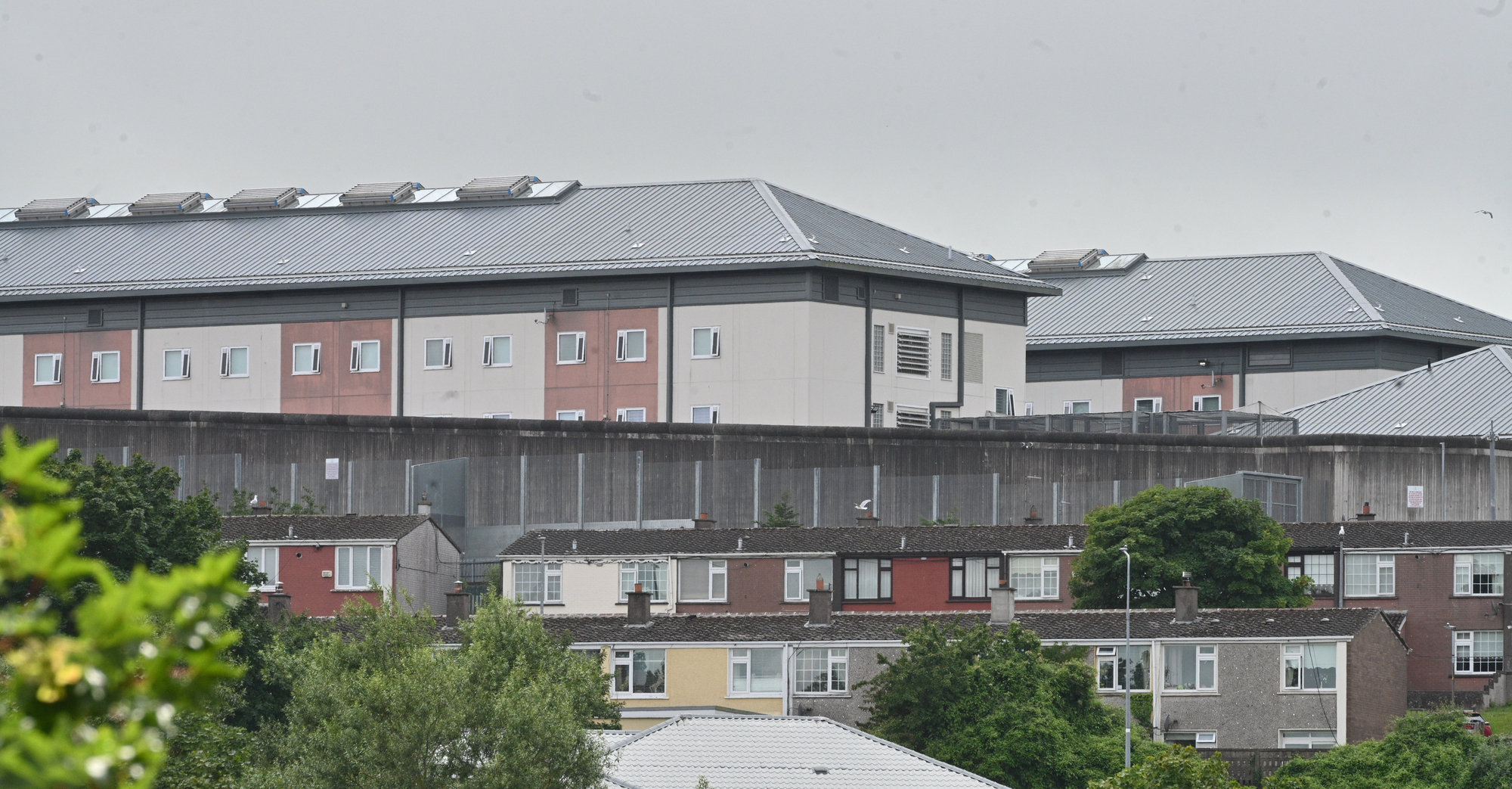
'Owen' had been incarcerated for 27 days in Cork Prison. File picture: Larry Cummins
Owen (not his real name) was asleep when the four armed gardai came through his bedroom door.
His bedroom would have more in common with that of a young boy than the 34-year-old man he is. On the walls are posters of tractors and cuddly toys.
The gardaí got him out of bed and handcuffed him. They told him he was being arrested in connection with threatening emails he had allegedly sent. There were more armed gardaí outside. He was put into a squad car and taken to a garda station in Cork City. This occurred on the morning of December 20 last year.
At the district court appearance later that day, he was charged with offences related to sending the emails which threatened violence. Owen is autistic and suffers from severe anxiety. The HSE has accepted that his care required an autism-specific residential setting, but a placement abroad fell through.
The gardaí objected to bail on the basis that the alleged offence was such it was highly likely it would be repeated were he allowed home. The judge said she did not want to send Owen to prison but her hands were tied.
Read More
He was remanded to Cork Prison to appear again two days later in the hope that the HSE might find a residential setting for him.
On December 22, he was brought before the court again. The judge reiterated that she did not wish to impose a prison sentence. The HSE representative stated there was nowhere suitable for Owen to be placed and he was returned to Cork Prison.
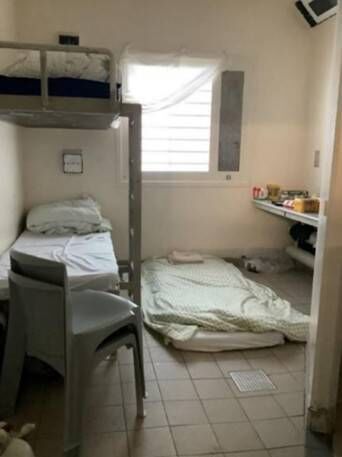
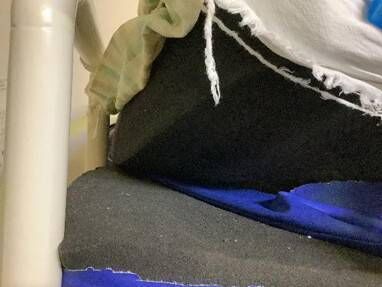
In the last week of December 2025, Cork Prison hit record levels of overcrowding. There were 404 men incarcerated in a facility that had 296 beds. A quarter of all inmates were sleeping on mattresses on the floor, often in close proximity to the cell toilets.
The overcrowding heightens danger in facilities which house some impulsively violent individuals and a cohort who, like Owen, have serious mental health difficulties which limit their capacity to think and act rationally.
The only way out was to apply to the High Court for bail. Due to the time of year, it was unlikely there would be any appearance before, not to mind result from, the court until after Christmas.
Owen managed to keep a diary about what he saw and heard. He wrote it as a letter to his mother.
"The first 2-3 nights I shared with 2 people. There were a bunkbed and a mattress on the floor. I was on the floor, then someone moved to Sligo so I got a bed. Another person came in and slept on the mattress. They were in their 40s. They all smoked the whole time so my eyes were nearly dried out. The smoke in the cell was so strong so I thought I would get cancer. The person who moved to Sligo had a glass eye and he was autistic. I got emotional when he was moved out. The other person had broken High Court bail so was back in prison. I promised myself that I would never break High Court bail."
Owen can’t be identified because he is a ward of court. His autism was diagnosed before his fifth birthday and he attended a special school in the Cork area for his primary and secondary education.
He had access to a multi-disciplinary team, that included a psychiatrist and a psychologist. In that environment, he managed to keep on an even keel. The transition after leaving school was difficult. Some services were available but he no longer had access to the range of services his condition required.
His mother managed to get him a job in the hospitality sector — it was thought he might be suited to it. It went well for a while, but then one day at work he was criticised for some duty that he didn’t perform to the standard expected.
Owen lost it. He threw things around and was fired. He hadn’t been equipped to deal with what he had encountered.
Not long after that, the covid pandemic hit the country. People like Owen were disproportionately impacted by the lockdowns, their routine gone, services severely curtailed, and fear permeating society. His mother believes he never really recovered from that period.
"On a night before Christmas, I moved into another cell with C. I was on a mattress and he was on the bed. He made me feel worse because he was so negative and stressed about everything. He had severe OCD and made me wash my hands all the time. He washed his hands for 30 minutes every time and did not flush the toilet. He didn’t eat anything and didn’t sleep at all. He had the same socks for 3 weeks and when he took off his shoes the whole cell stank.
"Our toilet got blocked so C couldn’t use it as there was water on the floor after I flushed it twice. We were moved into another cell after that. That cell was not very clean, the top of the toilet was dirty and there were tobacco papers under the bed. The shower was not clean as the drain had hairs and fluff on it. The mattress on the bed was stained and so worn so the metal could be felt through it. C refused to sleep on that bed so he got a brand-new mattress for the floor. I had the bed. C didn’t want any pillow or blanket because they were stained so I took his."
In 2022 Owen was made a ward of court. His parents thought this would lead to him getting the treatment he needed. Two psychiatrists at the time opined that he required a residential setting. Since then, three other psychiatrists, retained by the HSE or the family, have concurred.
In April 2025, the HSE organised for a placement with St Andrew’s Healthcare group in Northampton. It took a while after that to get a High Court order under the Mental Health Act for Owen’s detention, and the equivalent from the UK courts.
By then, St Andrew’s had its own troubles, with allegations of misconduct and malpractice, that led to police investigations which are ongoing.
The current HSE position is that they hope to still get Owen a place once the UK’s equivalent of Hiqa give the all-clear.
"On Christmas Day morning we got a fry with sausages, black pudding and hash browns. The only thing I could eat was the hash browns and I ate C’s too as he didn’t eat anything. I had potatoes for Christmas dinner as the turkey had gluten in the stuffing. I got Miwadi from the tuck shop to drink. All the other mornings there was milk and Weetabix for breakfast which I couldn’t eat. The nicest food was a chicken breast that I got some days. I got pork chops twice and ice-cream/yogurt sometimes."
"One day, officers put biscuits and bottles of water in a bag on the floor in the cell. C didn’t want to touch it because it was on the floor. I couldn’t eat the biscuits because there was gluten in them, but I wanted to keep the water (for the Mywadi). C wanted me to throw out the water and grabbed it so it spilled all over the desk. Then he pushed me off my chair. I hit and kicked him then so he pressed the alarm button. The officers came in and moved him to another cell after that. I felt really bad that I hurt him but the officers said he was a prick. I was very emotional the next day and cried when you visited me. I told the officers that I’m not a violent person and that I was very worried about my bail. They told me not to worry. The Governor came the next day and asked how I was."
Owen treasured the weekly visit from his mother. She is an academic, who has given up her work in order to care for her adult son. She contacted the prison, told them about Owen’s condition that rendered him with the emotional age of a child.
She was allowed extra visits as a result. On one visit, before she went into the appointed room, she used the bathroom. Following that, the x-ray machine detected that there was traces of narcotics on her clothes. The machine is highly sensitive to any trace of drugs, irrespective of how easily it has been acquired. She was not allowed in.
“Thankfully, we had scheduled another visit for the following day and I got in then because if it wasn’t for that he would have had a long time without any visit and I don’t know how he would have coped,” Owen’s mother says.
"Another man moved in when C moved out. He had been out for 3 days but was back again because he had broken High Court bail. He smoked a bit but not too much so it was OK. He missed the tuck shop so I gave him half of my club orange to drink. He liked watching soccer so we watched Nigeria and Marocko (sic: Morocco) playing. Marocko won.
"I watched whatever C liked to watch too. A lot of Western films. That was the only thing to do, watch TV. I was sitting on the chair all day watching TV.
"I didn’t like going out in the yard because it wasn’t much bigger than the cell and it was cold.
"A Polish nurse came and took me to the library every day and we played Snakes and Ladders. She tried to shave me one time with an electric razor but her hand was shaking and she told me to wash my face. I didn’t want to do that because the towels made my beard go very fluffy. The officers wanted to give me a blade so I could shave but the nurse said no. In the beginning another man, I’m not sure who he was, gave me a shave but it wasn’t until three weeks later that he came back and shaved my head and beard with an electric shaver that he got from the tuck shop. I had a shower afterwards to get rid of all the loose hair. I only had two showers in 4 weeks.
"I got a book from the library, 25 chapters. I finished reading that on the Wednesday (24th). It was called by Jessica Day George."
That was the only book suitable for Owen in the prison library. He asked his mother to bring in one of the Wimpy Kid books, which are a favourite of his.
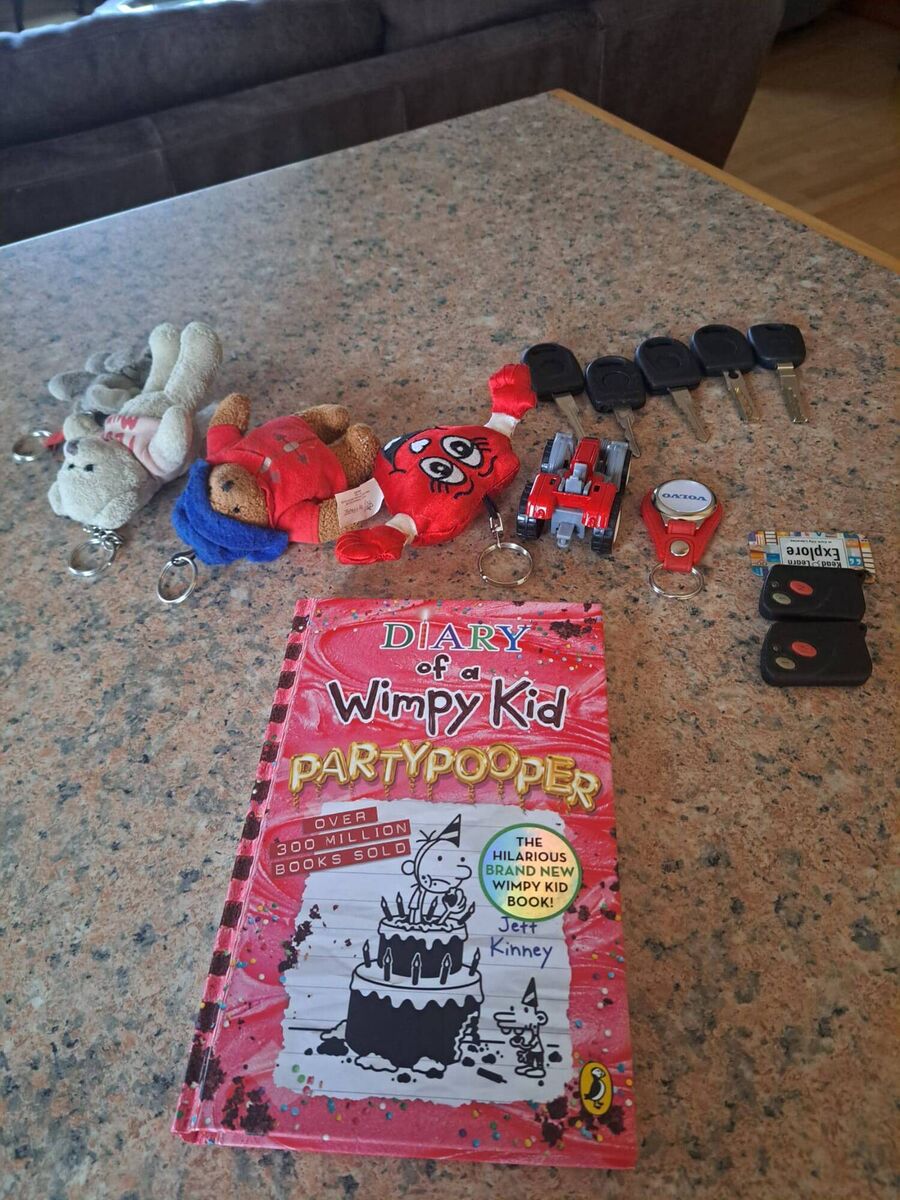
Normally, books can’t be left in for security reasons to do with drugs. Owen’s mother handed it over at the visitor centre and it was put in a locker for Owen, but he never got it until he was leaving.
On January 6, it became possible to apply to the High Court for bail for Owen. A hearing was set for January 15.
"I told the chaplain that I was very grateful for his support. He got me Miwadi. I had a headache one day and I was given a paracetamol first but it didn’t go away so I got ibuprofen. They also looked at my ankle and foot and thought it looked red so I got antibiotics for a week. And a doctor flushed out my right ear after they put drops in it for a week.
"I had one seizure one night but C didn’t notice.
"The worst thing in prison was when the officers slammed the doors and all the noise. On New Year’s Eve I jumped every time I heard the fireworks. It sounded as it was right outside the window. I only coped because of talking to you on the phone and your visits."
His mother was allowed three visits over the time her son was locked up in prison. She was refused entry for the fourth. Owen was also permitted two phone calls a day of a duration of six minutes and four seconds each.
On January 15, the High Court granted bail for Owen on strict conditions. He was to be allowed no access to the internet and his parents had to care for him 24/7, ensuring he didn’t go online.
The following day, once everything was cleared, his mother collected him at Cork Prison. He had been incarcerated for 27 days.
Since returning home, he regularly gets nightmares about armed men bursting into the room. His mother estimates these occur probably every second night.
He is due before the court to answer the charges which led to his imprisonment on remand. As for the treatment he desperately requires, there is little further enlightenment from the HSE.
His parents live through quiet desperation, feeling completely abandoned by a State that claims to espouse the basic tenets of a republic.
“It has destroyed our lives,” Owen’s mother says. "We have lost complete trust. We are now effectively under house arrest to look after our son and keep him away from the internet.
"My son isn’t dangerous. He needs help and we were told he would get it. Instead, they put him in prison and there is no help.”
A spokesperson for the HSE said it is aware of the findings of a report into St Andrew's that was published by the UK Care Quality Commission.
“The HSE is aware of the findings outlined in the recent inspection report published by the UK Care Quality Commission,” the spokesperson said. “The safety and wellbeing of those in care remains our primary concern.”

CONNECT WITH US TODAY



Be the first to know the latest news and updates