Kneecap’s political rebellion runs into the limits of global tolerance
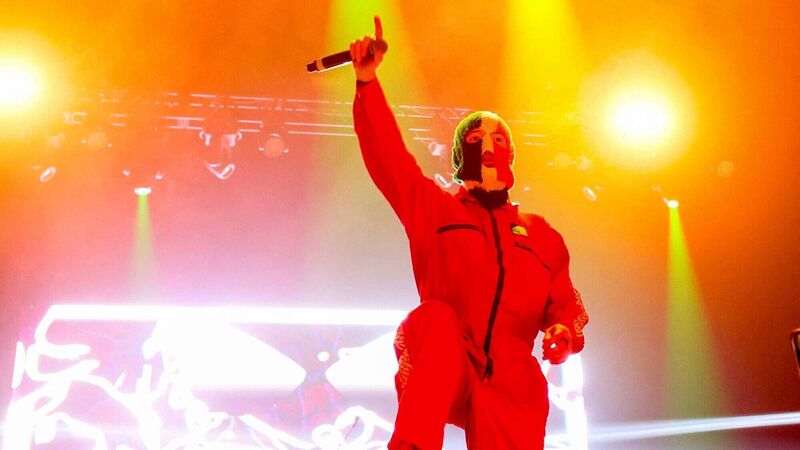
DJ Próvaí, of Kneecap, performs onstage during Coachella on April 11, 2025 in Indio, California. Picture: Valerie Macon/AFP
During a week of Kneecap living dangerously, it was another artist with Irish connections who came to mind. Back in 1989, Elvis Costello released his album , including a song that was a powerful attack on Margaret Thatcher.
Costello snarled out the six minute , which included the lines: “When England was the whore of the world, Margaret was her madam. And the future looked as bright and as clear as the black tarmacadam.”
The excoriating thrust of the song was to declare that the singer will be so happy when Thatcher dies, he will tramp the dirt down by dancing on her grave. It was released when Thatcher was still in her pomp as Britain’s prime minister.
To that extent, it was an example of snarling to power. In a society which had starkly divided views on Thatcher, Costello was voicing the pure hatred from those who fervently believed she had destroyed society as it was known.
is an undervalued gem in the canon of protest songs, bristling as both a plaintive requiem and a venom-filled denunciation.
Some 36 years later, Thatcher features in Kneecap gigs. At Coachella a few weeks ago, Kneecap led the audience in a chant of “Maggie’s in a box” — a clear reference to Thatcher, who died in 2013.
This is a common feature of the band’s set. The chant was spat out, but the vast bulk of the audience most likely hadn’t a bull’s notion who this Maggie was.
They certainly wouldn’t have associated her — as Elvis Costello did — with trickle-down economics, the evisceration of the public sector in the name of private enterprise, and the economic division of England.
The “Maggie in a box” routine fits into Kneecap’s veneration of so-called republican mythology.
Through deploying satire and irony, it remains unclear whether the band unequivocally subscribes to the retro republican chic that deigns there was no alternative to the Provisional IRA’s violence. But Kneecap certainly like to give the impression of doing so.
Thatcher, through the lens of retro republican chic, was an evil person who cared nothing about human beings — particularly Irish people. Her role in the 1981 hunger strikes — nearly two decades before the Kneecap members were born — ensures that she has retained a place at the gates of hell in republican circles.
Hence, Kneecap — a contemporary hip-hop band speaking to and often for a generation of twentysomethings — manage to find a place of derision for her.
As a piece of political activism, it is akin to dancing on a grave rather than snarling to power. It’s a similar story in one of the matters that this week landed Kneecap in the foul stuff.
Following the furore kicked up after the band displayed a screen saying “Fuck Israel. Free Palestine” at Coachella, footage from a London gig in 2023 surfaced.
One of the group’s members is recorded telling the audience: “The only good Tory is a dead Tory. Kill your local MP.” Again, the reference appears designed for retro republican chic.
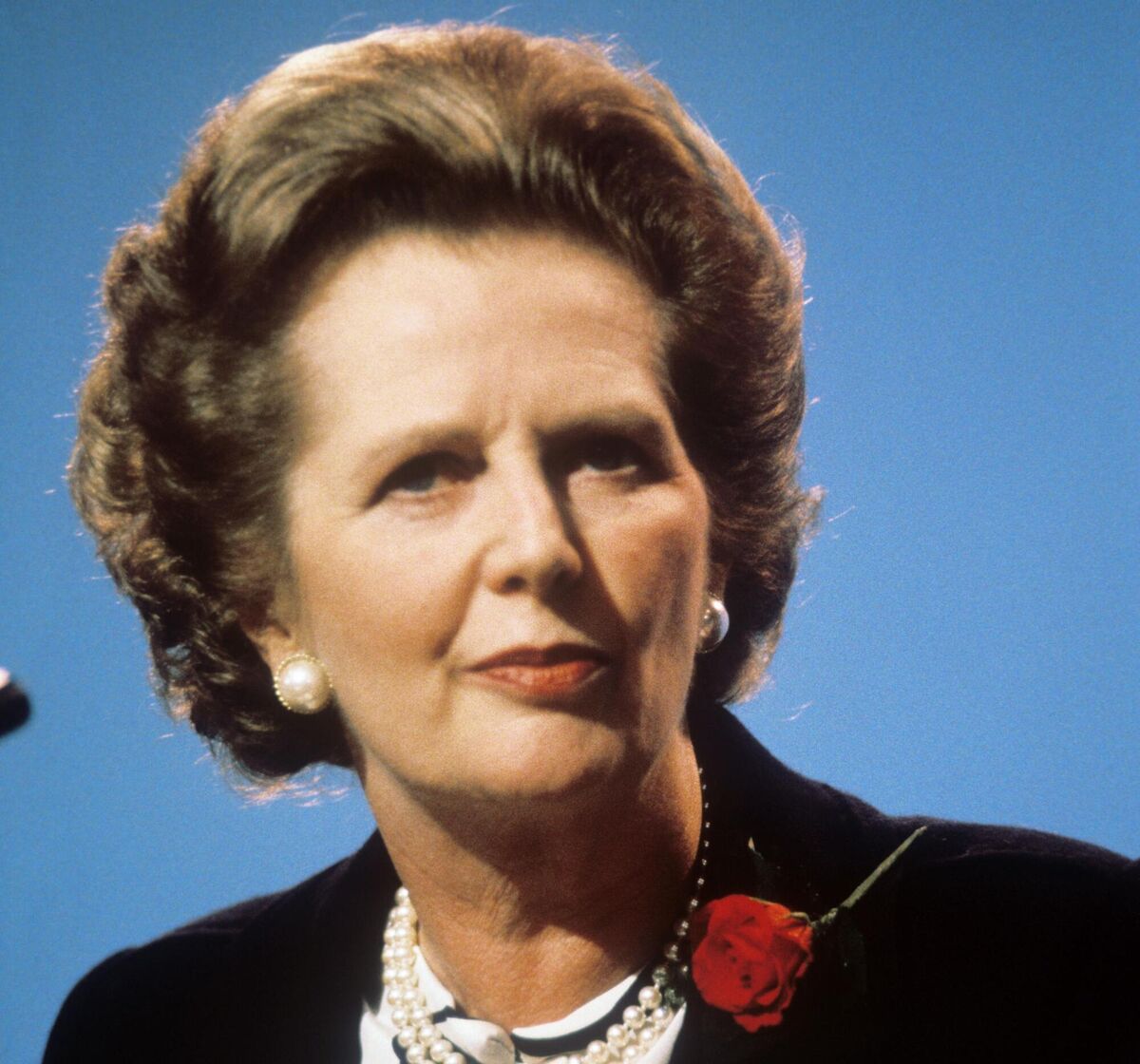
For a twentysomething audience, the Tories do not represent anything like they did in Thatcher’s Britain. The Tories, the Labour Party, and latterly Reform, all occupy much the same positions of indifference or contempt from a youthful British audience.
For Kneecap, the Gospel according to republican mythology is that the Tories were the Provos’s primary enemies. As for killing them, that was attempted to spectacular effect at the Tory conference in Brighton in 1984 — with a bomb designed to murder Thatcher and as many other Tories as possible. Five people lost their lives in that attack.
So much for nods to the past by accident or design. Unfortunately for Kneecap, Tory MP David Amess was murdered by an extremist in 2021 and MP Jo Cox — albeit from the Labour Party — was murdered 2016.
Last year, Kneecap achieved a major breakthrough as a band. The eponymous biopic movie was a critical and commercial success — a rare achievement.
Usually, a band is long over the hill — and all its secrets and lies washed in public — before there is a ghost of a chance of such success.
Kneecap’s origin in an Irish-speaking enclave of West Belfast, the band’s bilingual and highly articulate rap, and an actual talent for acting provided the rare success.
The ability of the threepiece, Mo Chara (Liam Óg Ó hAnnaidh), Móglaí Bap (Naoise Ó Cairealláin), and DJ Próvaí (JJ Ó Dochartaigh), as performers and songwriters began to flourish.
Having served an apprenticeship of around six years, the band was armed and ready to take on the world. And the world welcomed Kneecap with open arms.
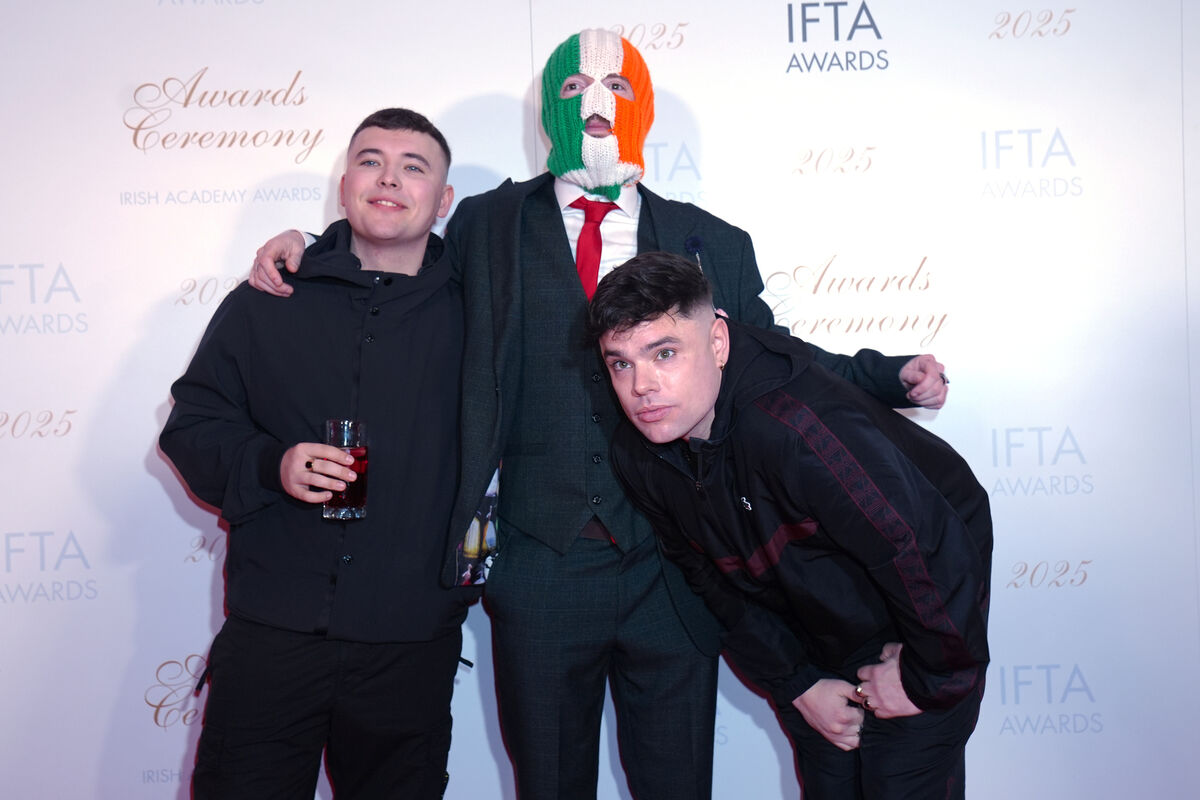
It was, and still is, a refreshing presence, funny, and anarchic. The activism Kneecap espouse, whether it be highlighting the slaughter in Gaza, hitting out at racism in the North, or emphatically rejecting sectarianism sounds genuine but not preachy.
Kneecap manage to simultaneously appear as if it is out of its tree on success, yet retaining feet firmly on the ground and perspective always within reach.
Along with Fontaines DC, the band is at the forefront of a new wave of Irish talent.
In February 2024, Kneecap appeared on
Contrary to an earlier agreement, the band members displayed pro-Palestinian shirts in the middle of the interview — demonstrating their resolve not to be silenced.
Elsewhere, Kneecap were vocal in hitting out at rioters in Belfast last year who were targeting immigrants and throwing missiles at the police.
“They’re turning their anger at the wrong people,” Ó Dochartaigh told
“A state that starved communities of funding should be the target. They should be aiming up … and not at these immigrants. It’s not long ago that the Irish were treated the exact same way whenever we went to England and other places around the world.
It’s also the case that, up until last week, the band was indulged.
Nobody, bar a few unionists, paid much attention to Kneecap’s brand of retro republican chic — irrespective of how off-key some of it was.
Any issue raised was dismissed and failed to get traction. And, to be fair, the three lads made an effort to emphasise they had no time for sectarianism, irrespective of what some unionist politicians attempted to portray. All of that may explain, to some degree, what befell the trio at Coachella.
As with all Kneecap concerts, there was a shout-out in solidarity with the nightmare being experienced in Gaza. Except, the US is not Ireland as far as the Middle East is concerned.

What is viewed here as savage war crimes at the least, and quite probably an example of genocide, is considered through a different lens in America.
A recent poll in the US, conducted by the Brookings Institute, showed that just 9% of respondents believe a genocide is taking place, 27% opine that a major war crime is at issue, while 31% think Israel’s actions are justified as self-defence. Nearly a quarter replied they didn’t know whether Israel’s actions were acceptable.
For people under 30, the numbers differed — with 17% classifying the actions as genocide, 37% as a major war crime, and just 14% as Israel’s actions being justified. What emerges is a country deeply divided on the issue — and not just on demographic lines.
That is in contrast to Ireland, where a significant majority believe that the Palestinian people are being murdered at a frightening and indiscriminate rate however the killing is classified.
“Fuck Israel. Free Palestine” is a term that leaves open to partisan opinion an interpretation that it advocates for the annihilation of Israel with all the territory to be handed back to Palestinians.
At the very least, it provides ammunition for the entirely bogus claim that being opposed to Israel’s actions amounts to antisemitism.
Perhaps if Kneecap’s distasteful references to Thatcher and other symbols of the Troubles had not been tolerated up to this point, a little more care might have been taken with the Yanks.
Others have tread this path. Sinéad O’Connor tore up a picture of the pope on in 1992.
She got savaged for a gesture that, back home at that point in history, might have prompted offers to buy her a pint.
Much earlier than that, Bob Geldof landed in the US with the Boomtown Rats. He boiled with punk sensibility, giving two fingers to the various power centres in the US music business, as he had up until then on the other side of the Atlantic. The response was: Thanks, but no thanks Mr Geldof, get the hell out of here.
By contrast, U2 have always been cognisant of how things work stateside. Bono, through his activism in fighting Aids, opted for the quiet ear, putting up with politicians with whom he had little in common in pursuit of his bigger goal.
He has been criticised, particularly for his vocal timidity on Gaza, but a case can be made that his approach has a better chance of impacting on power centres stateside and across the world.

Kneecap don't do quiet or diplomacy. All it took after the display at Coachella was for Sharon Osbourne to kick up, and suddenly Kneecap was in the doghouse.
A retrospective view of the band’s statements and declarations back in Britain took flight.
Apart from the “Kill Tories” quip at a 2023 gig, another from 2024 when one of the band shouted out “Up Hamas, Up Hezbollah” was hauled out.
A raft of their sold-out shows in the US were cancelled, as was a scheduled appearance at a festival in Cornwall and more gigs in Germany.
The British anti-terrorism police are investigating the comments. It would appear that where once Kneecap were indulged in whatever the band said, now the trio are getting hammered way beyond what might be considered reasonable.
In a statement released on Tuesday, Kneecap made plain that the band doesn’t support any terrorist organisation: “Let us be unequivocal: We do not, and have never, supported Hamas or Hezbollah. We condemn all attacks on civilians, always.”
They also apologised directly to the Amess and Cox families, but the response to that has been lukewarm at best.
The band’s manager, Daniel Lambert, told RTÉ he believes Kneecap is being held to a higher standard than politicians, adding that much of the outrage is orchestrated to divert attention from the systemic slaughter in Gaza.
He has a point, but it will be a while before the fallout and the capacity for the band to recover becomes apparent.
Long before he set his pen on Thatcher, Elvis Costello had an episode that could have ended his career stateside. On an early US tour, he got into an argument with members of another band in a motel, where he referenced Ray Charles as a “blind n******”.
He was drunk at the time but, when it got out, he came under severe criticism. He was young and bolshie, but nobody really believed he was a racist and he survived.
It’s a moot point as to whether he would have survived in today’s less forgiving environment. However, there is always a way back and from the work so far, Kneecap is too good to fail.


CONNECT WITH US TODAY



Be the first to know the latest news and updates