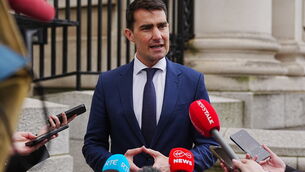
Ukrainian soldier Maxim Martynenko recalls the horrific day he begged his comrade to use him as a human shield after being paralysed by a Russian machine gun.
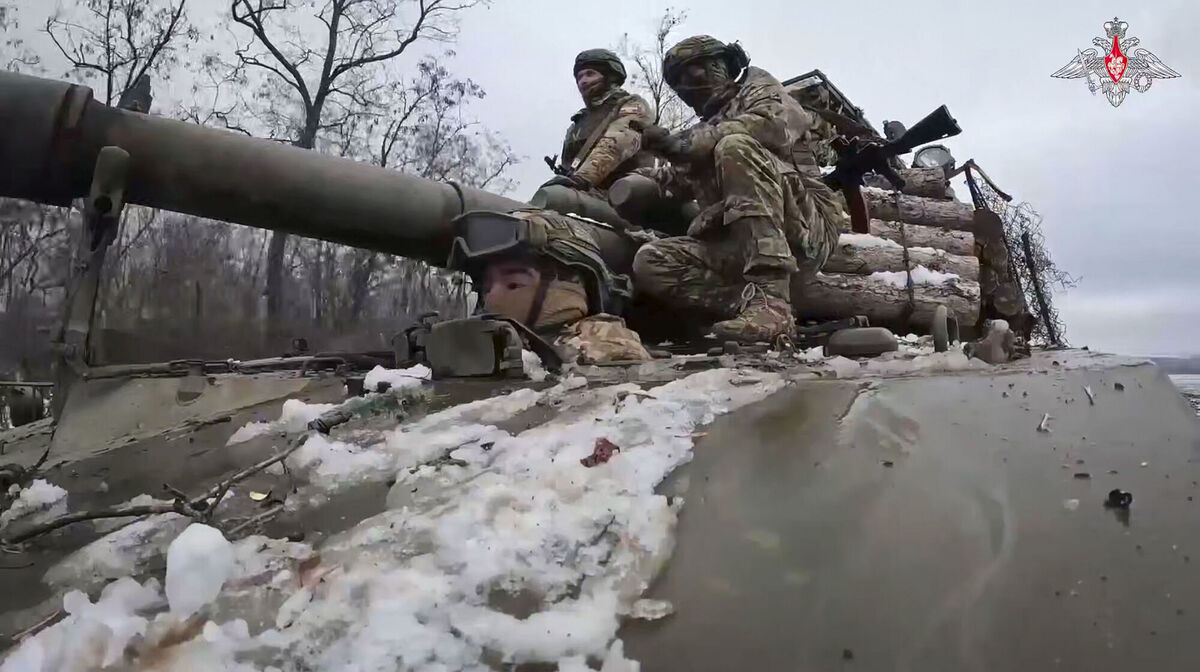
He does so in a chillingly matter of fact way while speaking to the Irish Examiner during a visit by Cork humanitarian Fiona Corcoran.
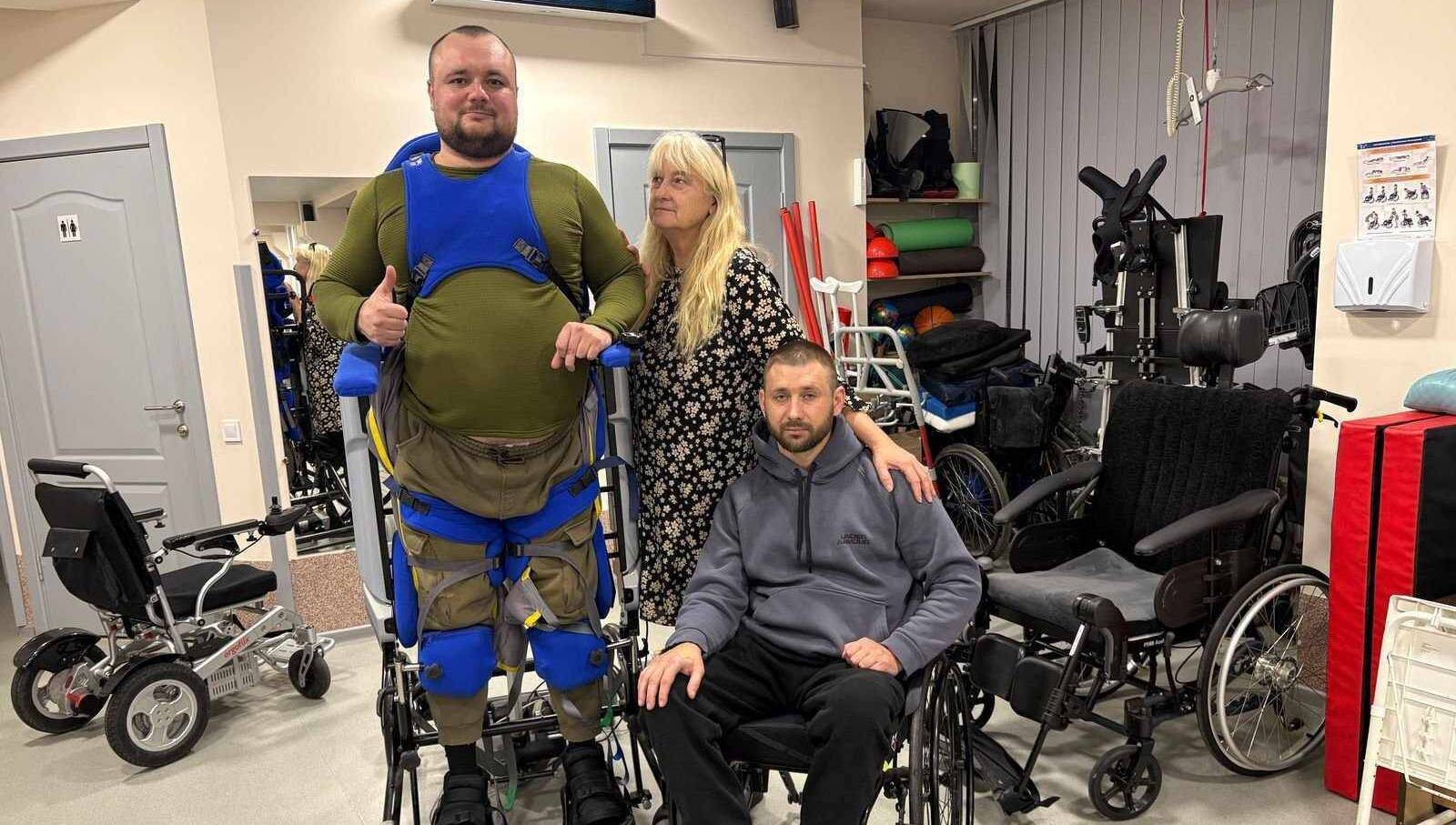
The charity worker, who heads the Greater Chernobyl Cause, is by his side as he completes a litany of daily exercises at Rert Rehabilitation Military Hospital in Kyiv.
Maxim has been staying there for a month after spending time in 10 different hospitals due to life-changing injuries sustained on November, 4, 2023.
While shocking to the uninitiated outsider, the combat horror stories dominate everyday conversation at the facility. Maxim is determined to master a standing aid.
The 35-year-old explains that he never had a family of his own. He lives for his mum, dad, and sister. His hope is to return to frontline duties and “finish the fight” from his wheelchair.
The director of the hospital and military doctor, Olexy Mikhayloe, had been struggling to generate funds to supply vital medical equipment for his patients, prompting Fiona Corcoran from the Greater Chernobyl Cause to step in.
Over the course of the last few weeks, she has been visiting orphanages, pre-schools, and care homes ravaged by war.
Fiona says that many of the street children who were initially helped by the charity several decades ago are now war veterans in their 30s.
Maxim has only recently been supported by the charity, and he is grateful to them for their assistance and for highlighting injuries suffered by Ukrainian soldiers who have been defending their homeland since Russian forces first invaded three years ago.

As his last battle ended more than two years ago, a new one began that saw him fight for his life in numerous facilities. His surgeries included the reconstruction of a lung — which now operates at a 43% capacity.
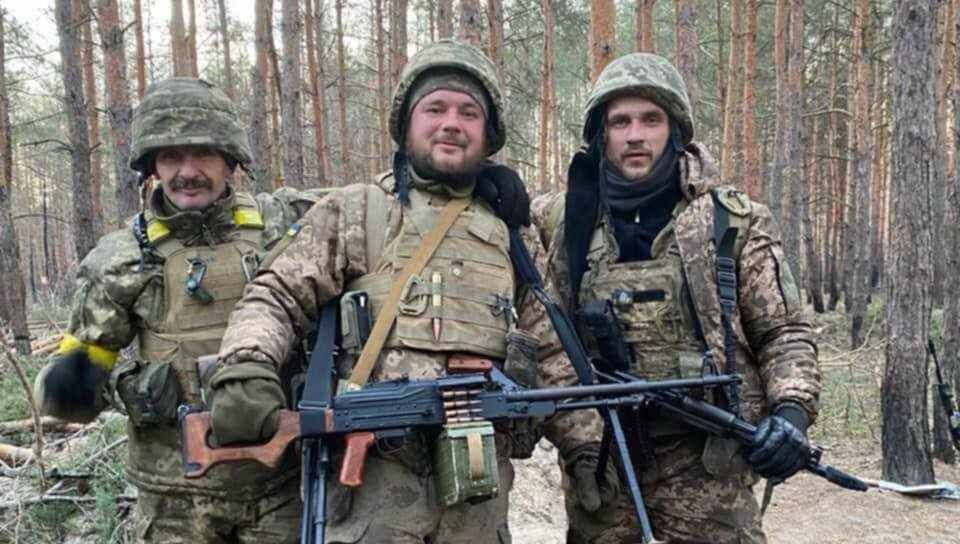
“My troop was appointed to Bachmut, which is where the Russians were occupying. They were in the forests.
“They were at the entrance and exit of the city. Our job was to get them out of those territories. That was when the injury happened.
“My comrades and I could see the Russian troops being dropped only five or six feet away from us. There was no warning. They just started using all their weapons.
“My lungs were ripped open at that point. I had a good bullet proof vest and a helmet that helped. There were two Russians attacking me, and I managed to kill one. The other Russian came at me from behind and shot me in the back with a machine gun. That’s when I received the spinal injury. My liver was also damaged.”
Maxim remembers believing he would die.
My comrade and I were in the trench. When I first received the bullet from the machine gun in my back, my first thought was ‘I’m dying’
“I learned some basics in the army. One of them was that if you couldn’t feel the tips of your toes, then that was a very bad sign.
“When my brain gave a signal to move my feet, and I couldn’t move them, I realised how bad things were.
“I refilled my gun with bullets and threw the weapon over to a friend.
“I then managed to throw myself in front of my comrade so he could use me as a human shield. I believed at the time that it would have meant the end for him otherwise. He killed the Russian soldier who shot me.”
Maxim said he was so badly injured that he considered ending his life by detonating a grenade, but his comrade intervened and told him an evacuation team was on its way.
“He said: ‘You are still alive. There is still hope. I’m calling the evacuation team for you.’
“It was then that I started thinking, not only about myself and my misery, but my mum, dad, and sister too.
“They wouldn’t receive any supports if I die. The pain was excruciating, but my senses became so sharp.”
He praised the evacuation team for their professionalism and working in a combat zone
“They were able to administer first aid in the moment I was dying. As soon as we got into the car, it was severely attacked. It barely made it out of that zone to the ambulance.
Purchasing military equipment
Having served in the army as a younger man, Maxim said there was never any doubt that he would volunteer when the Russians invaded.
“I was born in Brovary, Ukraine. Before the war, I lived in the Czech Republic and worked for a pharmaceutical company. When the full-scale invasion began in February 2022, I put all my necessities in a bag to fight in the war.
“I had collected some funds to purchase military equipment to bring to Ukraine. I had eight duffle bags when leaving for Ukraine.
“I had friends who were no longer living in Ukraine. Each one of us shared this great desire to fight for our country.
“We all decided simultaneously that we wanted to come back and fight in this war. We communicated by phone from three different countries — including France, Poland, and the Czech Republic. When we arrived back to Ukraine we didn’t know what to expect.
“Things were changing every day, every minute. It was so difficult to know whether we could be together."
We wanted to stick together, fight together, but none of us knew what unit we were going to be appointed to
With pressure coming from the US on Ukraine and its president to agree a ceasefire deal with Russia, Maxim says he is urging the people of Ireland not to forget the struggles of the Ukrainian people and those fighting on the frontline.
“If the rest of the world could hear my message, I would ask for continued support. This is the end of resources when it comes to strong soldiers with the mental capacity needed on the frontline. There is less motivation for people to go and learn to fight, which is a challenge for Ukraine.

“I don’t support Trump’s decisions and demands right now. I wish the world could see us as people who still need support. There are not enough people fighting and we have less weapons. We still need help. I don’t have much to live for. My only goal is to get into better shape with all the help that I have here. Then I will go back and finish the fight and see my country free.”
The director of the Rert Rehabilitation Military Hospital, Olexy Mikhayloe, says that some soldiers are unable to return to the frontline after their injuries.
“I am playing a double role, because I am also trying to help people find a new way of life after they endure this.
“Most do not continue in the military after such an injury. Some start drinking and behave in an anti-social way. Finding a proper job to earn money is also very difficult. Psychological help is very important to help a person get motivated. To help people become motivated, you need to show them light at the end of the tunnel.”
Arthem Ruden, who lives in Kyiv, is also a patient at the facility.
“In July 2022, I received an injury that damaged my ribs on one side,” he told the Irish Examiner.
“I also received several injuries in my back while on the frontline in Donetsk.
“They resulted from the debris of shelling.
In Ukraine’s civilian, military, and even private clinics and rehabilitations centres, they tell people that this is the end for them
“If your condition has been stabilised at the hospital and you’re referred to a rehabilitation centre, they are working with your arms and not your legs. Even if there is slight movement in your toes, they don’t react to that. It is easier for everyone to put you in a wheelchair, and help you understand how to live that way, than doing all the hard work by getting your legs back up and running. This place is different.”
'Don't take hope away'
The 33-year-old said he has come a long way since the start of his rehabilitation.
“They say that if for two years there is no tingling in your legs and feet, then that’s it.
“Two years of therapy and I am starting to recover and get back on my legs. This is one out of few rehabilitation centres that don’t take hope away from people.
“I am trying to prove doctors wrong and show soldiers with spinal injuries like me that there is hope and you don’t give up.
“This is only the beginning. I know that I may be able to walk again.”
Fiona is trying to raise enough funds to purchase a total of six medical beds and rehabilitation equipment for the centre through the charity.
Initially started in response to the Chernobyl disaster, the Greater Chernobyl Cause has been supporting victims of war since the Russian invasion began.
She has been visiting Ukraine on a frequent basis to liaise with people and organisations desperately in need of help and financial support.
Ms Corcoran’s most trip to Kyiv came during Russia’s most significant drone attack since the war’s onset.
“Our adopted nursing home at Prybirsk, where Russian soldiers trapped 30 residents, is still suffering from radiation sickness without proper food, water, or heating. The Russians have left a trail of devastation in their wake.
Two villages were completely wiped off the face of the Earth by airstrikes, leaving hospital staff in shock
“Prybirsk’s care home was devastated, with residents suffering from organ dysfunction and constant pain.
“We have transformed the place into a real care home, purchasing specialised beds, bathing wheelchairs, and therapy equipment. We also purchased an ambulance to transport the patients to the capital, where they can get the highly specialised treatment they require.”
The Cork woman described the other horrors she witnessed.
“In the Chernihiv region, the kindergarten was totally demolished. The children were terrified and confused about what had happened to their nursery. The eerie feeling of walking through rubble is contrasted with the solemn names and pictures of children adorning white boards, in a place where they will never see their smiling faces or hear their laughter at their playground.”
- To support the Greater Chernobyl Cause visit www.greaterchernobylcause.ie

Cancel anytime
CONNECT WITH US TODAY
Be the first to know the latest news and updates