Seaweed, sabotage, and how Ireland could benefit from a sustainable crop under the sea
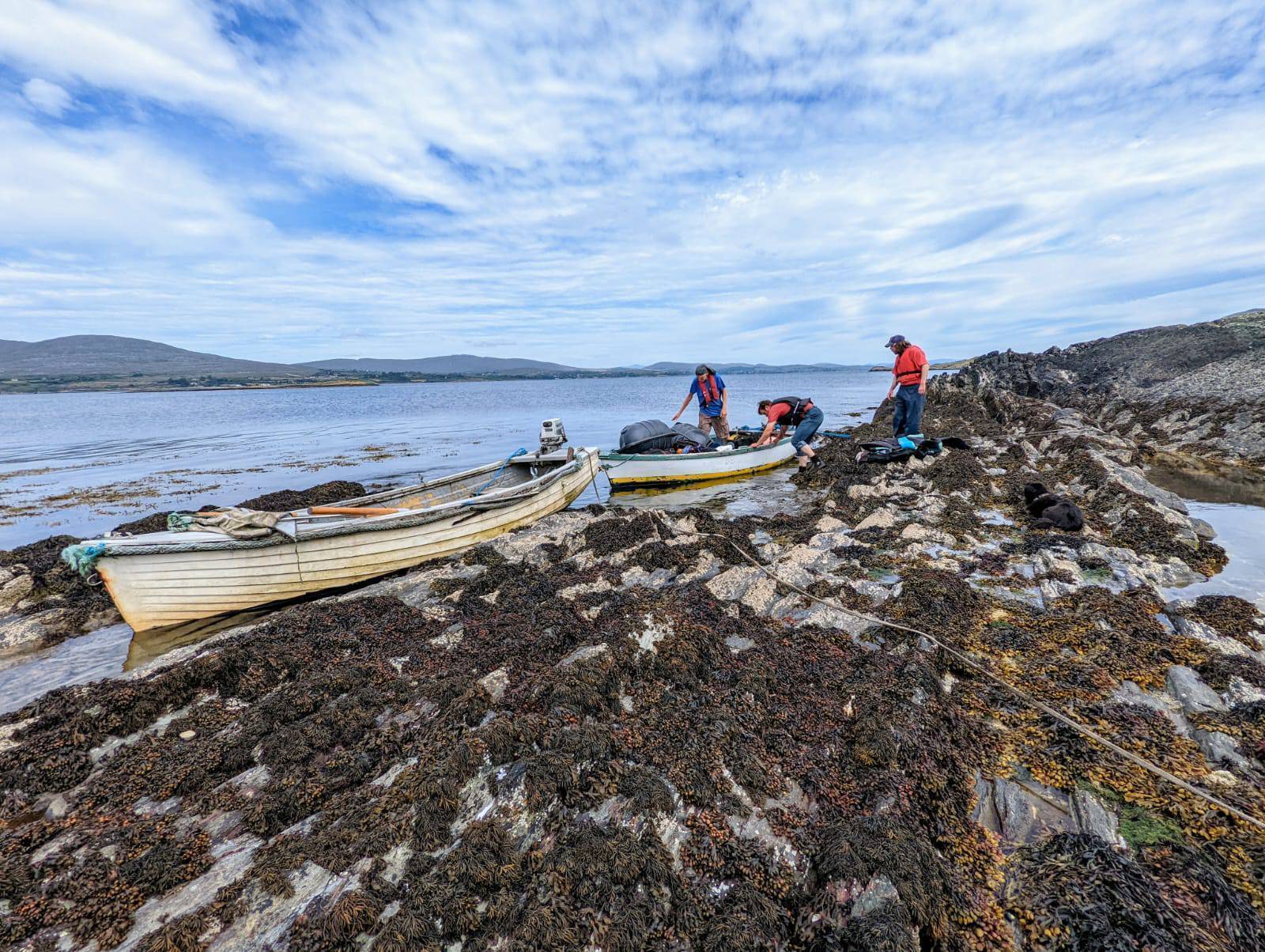
Roaring Water Sea Vegetable grows seaweed in Dunmanus Bay, West Cork. Because the seaweed is growing on lines which hang in the water moored to buoys, there is no disruption of the delicate marine ecosystem of the seabed involved in harvesting the farmed product. Picture: Paul Cobb


“I never looked back. I thought: ‘yeah, this is what I want to do’.”
On top of the seasonal work being at a time of year when other local work — in tourism, fishing, and farming — is in a lull, Paul says he was drawn to seaweed farming because it is environmentally benign, even beneficial.

“Ireland was really at the forefront in Europe at that time, pioneering the techniques of seaweed farming, and it took a bit of tweaking to get it right.”
Having quite literally learned the ropes, Paul ended up running Roaring Water Sea Vegetable Co-op for nine years. A Bord Bia introduction led to Paul connecting with a Japanese client seeking top-quality culinary grade edible seaweeds, attracted by the pristine waters of the west of Ireland.

Seasonally, Roaring Water Sea Vegetable will employ up to four people at harvest time, when seeding new lines at the start of the season, or during processing.
The life that Paul Cobb loves is not always without its trials and tribulations. Last year, he experienced a disastrous setback that his business is only just recovering from.

He is not willing to speculate on who the culprits may have been, but fears there may be a misunderstanding about the nature of seaweed farming and that someone locally may have been under the misapprehension that it is environmentally harmful.
Paul was one of a number of West Cork residents to spearhead a campaign against the mechanical extraction of kelp from Bantry Bay over the past few years.

For minimal additional running costs, new markets in seaweed could be met by the fully renewable resource of seaweed harvesting, rather than mechanically extracting virgin kelp beds on the sea floor, he argues.
Since seaweed farming research was first conducted at Roaring Water Sea Vegetable Co-op, seaweed farms have been founded at other sites on the west coast, with Paul estimating that there are around 12 small businesses now up and running.

But he says the full potential of Irish seaweed farming remains untapped and under-resourced, with early funded research in Ireland now stalled and other EU countries overtaking Ireland’s early lead.
At present, each seaweed farm is operating in isolation like a small cottage industry, dealing with the challenges of drying and processing their product on an individual scale.
He believes pooling resources and investing in a centralised seaweed processing refinery is the only thing that can take Irish seaweed farming to the next level.
He’d like to see a model like that of the dairy industry of the past, he says.
“There used to be lots of little creameries, and farmers would send their milk by horse and cart,” he says.
“With seaweed, we could be turning it into a green slurry and that could be like a chilled milk tanker on the quay, and then the tanker could go to the refinery. That is what I am hoping will happen.
“We need a central marketing board and a fixed price and more collaboration and shared resources.”
Hand-drying seaweed in the Irish climate is a difficult process: Paul uses traditional lines to dry his culinary seaweeds, and has polytunnels he can turn to when the weather is bad, and dehumidifiers that can finish the process.
“For top-end culinary seaweed, the Japanese want it hand-dried, but it’s another reason why we need refineries with industrial facilities that can just take the wet product and deal with it,”
A refinery has just opened in Pembrokeshire where they are using methane from local farms to dry the seaweed. These possibilities exist.
“There has been no major investment in collaboration, while other European maritime countries have raced ahead and had massive government investment. We’ve just fallen to the back.
“I find that so sad: We have such great water for it, so many bays, possibly the cleanest water in Europe and I think there is massive potential for rural employment on the west coast.”
Read More
A collection of the latest business articles and business analysis from Cork.