Colin Sheridan: Cillian Murphy's Oscar win the latest in Ireland's many 'Italia '90' moments
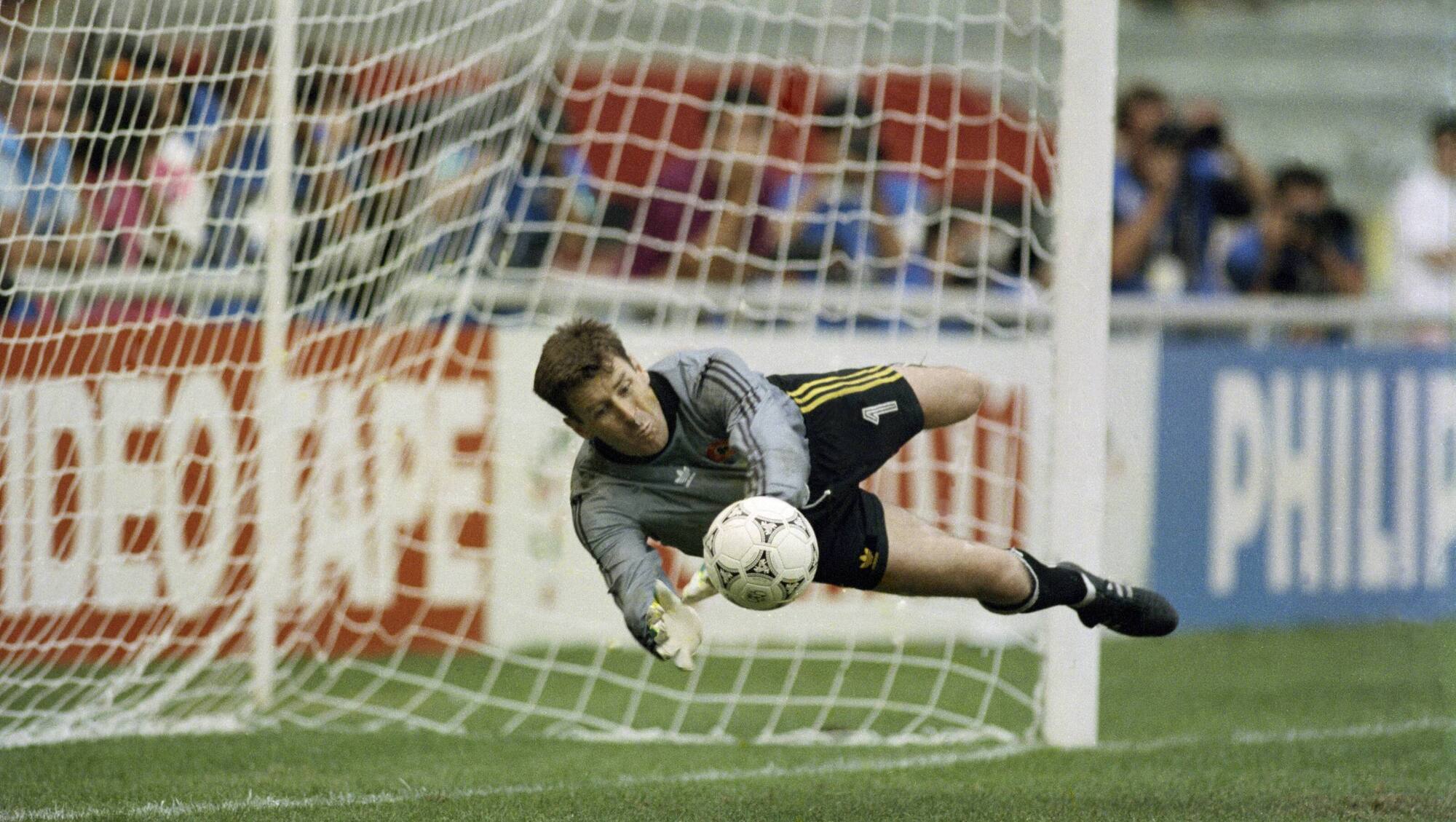
Italia '90: Packie Bonner saves a penalty to win the match and put Republic of Ireland into the quarter-finals and a match against the hosts Italy. Picture Inpho/Billy Stickland
Perhaps the most surprising thing about Cillian Murphy’s Oscar win for best leading actor was how little of a surprise it actually was.
As soon as he was cast by Christopher Nolan as J Robert Oppenheimer, Murphy was installed as a prohibitive favourite for whatever year the movie premiered. It’s an unusual position for an Irishman of any discipline on the global stage to find himself in. The Favourite.
There is something in our DNA that precludes us from assuming ourselves to be the best at anything, save for self-deprecation and labelling ourselves at not being the best at anything.
Murphy’s triumph may well be a sign of a tipping point in our collective self-consciousness, but even he admitted what a big deal his win felt like, telling Element Pictures supremo Ed Guiney: "It's a bit like Italia 90, isn't it?"
It was an astute observation that revealed a giddiness becoming of Murphy’s phenomenal achievement, and one that begs the question, what is an Italia 90 moment, exactly?
Is it as straightforward as a “where were you when?” moment in time? Or something that brought the country to a collective standstill, closing schools and rescheduling Mass?
There have been a few of those down through the years, but when revisiting them, there was literally only one place to start:
Despite qualifying for Euro '88 in Germany, the 1990 World Cup was a journey into the unknown for the Republic of Ireland football team, their supporters, and the entire country.
Expectations were low. Ish. Many booked their first-ever foreign summer holiday — to Palermo of all places — uncertain of where they were going or when they’d be coming back.
There was no online banking, no mobile phones, and no legalised divorce. This was a leap of faith for a nation that had been holding its breath since the foundation of the State, craving a reason to emote after decades and decades of emigration and existential certainty.
It took the gentle touch of Jack Charlton, the giant hands of Packie Bonner and the unconditional forgiveness of a number of credit unions, but for June and July of 1990, the country was prisoner to more than a moment, but an evolution in our psyche.
In Galway, they hung out the windows of buildings, and when they saw him he was bigger than the Beatles. When John F Kennedy came to Ireland in 1963, he was arguably the most famous man on the planet.
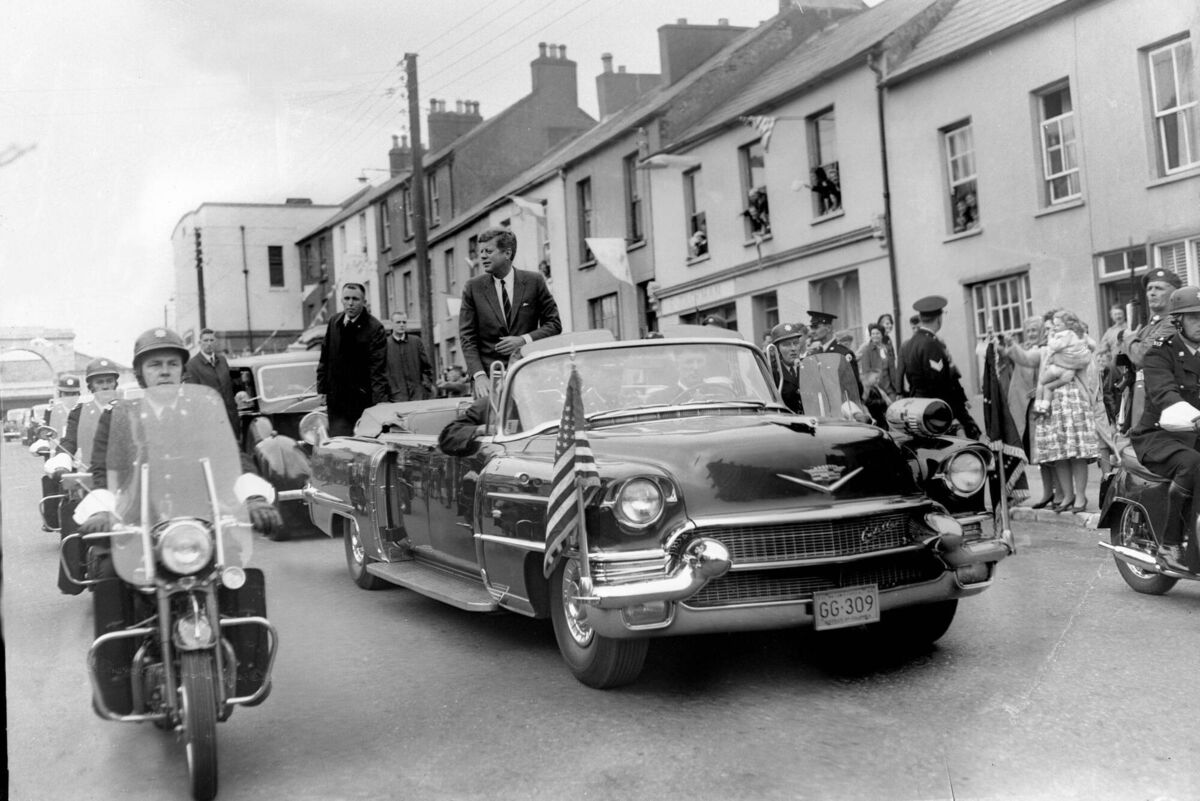
In two full days and two half days either side, months of advance planning guided JFK on a whirlwind tour: Dublin, New Ross and nearby Dunganstown to revisit relatives, Wexford Harbour; a garden party at de Valera’s residence; a stop at Iveagh House for a high-level dinner with taoiseach Seán Lemass and politicos. Additional visits to Cork City, Arbour Hill and Leinster House for a televised address to the Dáil, Dublin Castle to receive honorary degrees from National University and Trinity College. And, of course, his rockstar cameos in Galway, Limerick and Shannon Airport in Co Clare for departure. Kennedy’s visit was a validatory gesture for a country still finding its feet. The country understood its significance, and reciprocated.
A little like her fellow Corkonian Murphy, Sonia O’Sullivan was an incredibly rare athlete and personality who eschewed the national stereotype of perennial underdog, and embraced her reputation as a giant of world athletics.
In the summer of 1995, O’Sullivan ran 22 track races and won 21 of them. It was the summer of the World Athletics Championships in Gothenburg and her 5,000m gold medal run inside the Ullevi Stadium was an exercise in strategic perfection, and personal redemption.
Two summers previously, she had been ambushed by a trio of Chinese athletes and made look a fool, although it didn’t take any of us too long to decode the science that likely drove them.
Heartbreak in Atlanta would follow in 1996, before a final redemptive run for silver in the Sydney Olympics four years later. But in Gothenburg, O’Sullivan was truly in her pomp. The best female track athlete in the world. She brought Irish people to their televisions for Diamond League meetings in Helsinki on random Tuesday nights. She literally stopped traffic. A beloved icon. So good, she was probably taken for granted. And she was from Cork.
Hear me out. Putting Johnny Logan and Sonia O’Sullivan in the same breath may seem a stretch, but we'd never seen an Irishman in a white suit before, never mind one with the voice of an angel like Johnny.
We pulled the curtains. We parked the Ford Granada around the side of the house so no one would call, and we sat and watched Johnny sing before the Cuban Missile Crisis levels of tension that came with the vote counting.
It was like a home fight, but like Sonia O’Sullivan before her, Katie Taylor held the hearts and breaths of the country in her fighting fists as she faced-off Russia's Sofya Ochigava in her gold medal bout in women's lightweight final at the ExCel Arena in London.
As mentioned, the tag of bookies favourite is a cross Irish athletes and actors are typically unaccustomed to. Taylor had been so dominant in women's amateur boxing for so long, anything other than a final appearance would have been considered a failure.
With thousands in London cheering her on, and millions at home glued to their TVs, the Wicklow woman fulfilled the prophecy, and claimed gold for Ireland. For that one night in London, it was a home Olympics.
For those who lived through the Troubles, both north and south, the sight of Gerry Adams and the Reverend Ian Paisley sitting together in the same room and smiling warmly could only mean one thing: Peace in our time.
Some 30 years of violent conflict in Northern Ireland claimed the lives of more than 3,500 people. Generations of Catholics and Protestants in Ulster had grown up, divided and disenfranchised.
The signing of the Good Friday Agreement was the single most important act of progress in this country since the formation of the State. That it happened at Easter, when people could pause across the island and celebrate something many though impossible, was a rare and wonderful thing.
Who knew referendums could bring so much joy? The referendum on May 22, 2015, that amended the Constitution of Ireland to provide that marriage is recognised irrespective of the sex of the partners.
In doing so, Ireland became the first country in the world to do so by popular vote in a move hailed as a social revolution and welcomed around the world. Tens of thousands of people partied on the streets of Dublin in a moment reminiscent of VE day. A day not to be forgotten, especially in the context of the power of social activism.
Growing up, and for a very long time after growing up, Irish golfers were fun to watch, but won very little. A win on the European tour was a lead story on a Sunday bulletin, and would make a dent into the following week. Then, Pádraig Harrington came along.
The Dubliner was a well-established force in world golf in the Tiger Woods era, but had a reputation of being a nearly man. That all changed on a damp July day in Carnoustie. He did it in the most Harrington way possible — do the hard work to win it. Throw it away. Then do the even harder work to win it back, crushing the petulant Sergio Garcia with a stare so steely you’d believe it launched the careers of a young McIlroy and Lowry, who would later spring through the door Harrington opened for them.
Though the former would go one better in Tokyo four years later, Paul and Gary O’Donovan’s 2016 Olympic silver in Rio took rowing out of Skibbereen and into the national consciousness — along with their unique interviewing style and “pull like a dog” mantra.
For the entire Rio games, they embodied two things all Olympics should be about: excellence, and sheer boyish wonder at where they were and the company they were keeping.
There was more to 1987 than the Tour de France win for Dubliner Roche — he also added the Giro D’Italia and World Championship to match Eddy Merckx.
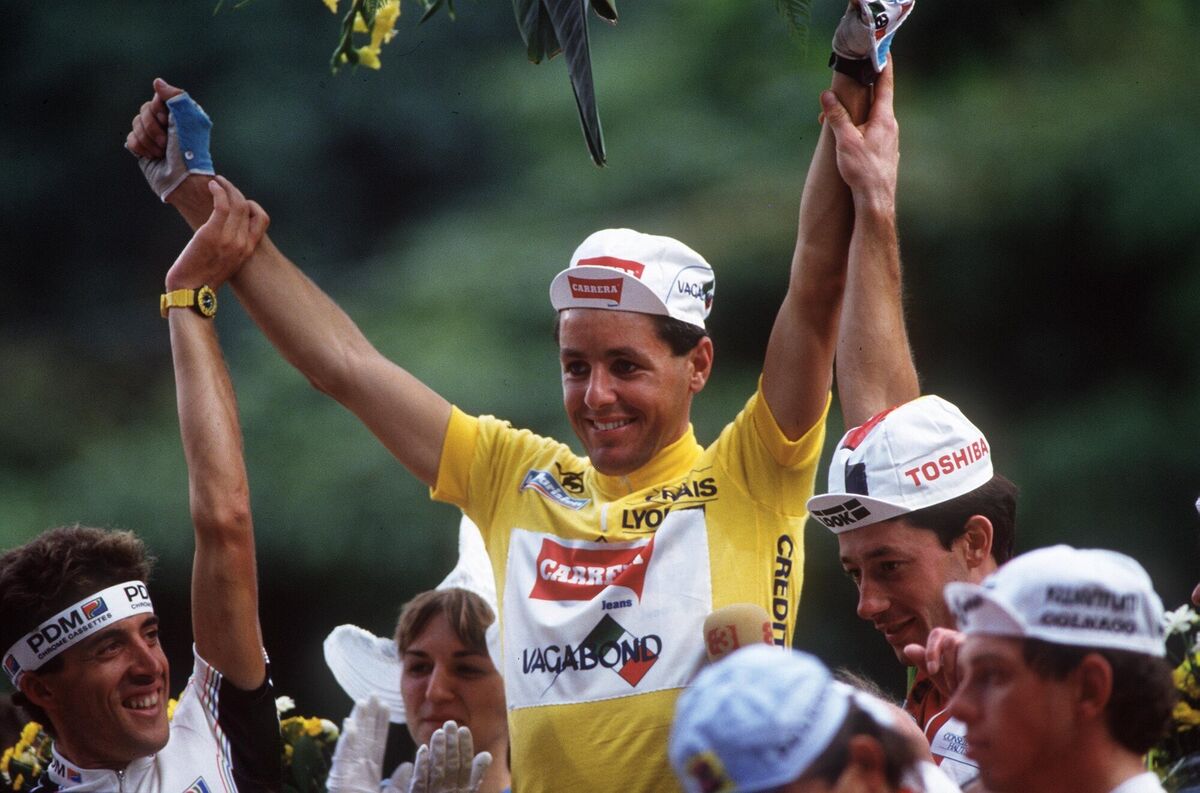
In an event brimming with stand-out moments, Roche was filmed after collapsing with exhaustion following a stage in which he reeled in rival Pedro Delgado as he ascended Mount Ventoux.
Roche won the Tour De France by just 40 seconds, and was greeted on the Champs-Élysées by taoiseach Charlie Haughey before going on to a Dublin homecoming and finally, the Triple Crown. It was a victory that had us all on our bikes.

CONNECT WITH US TODAY



Be the first to know the latest news and updates