Protests against LGBTQ+ events and books in Ireland are imports from far-right in the US
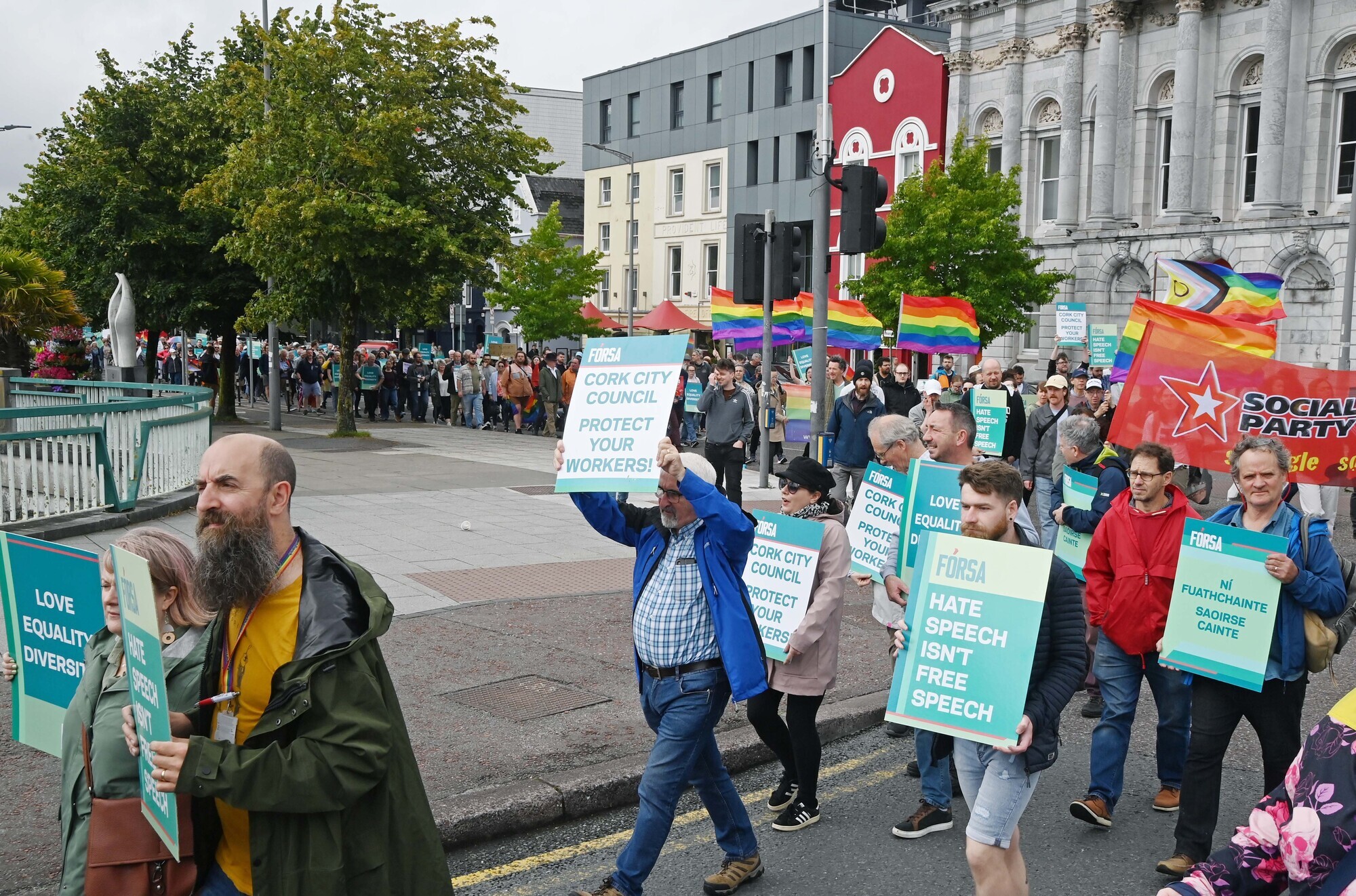
June's FÓRSA solidarity rally in support of Cork City Library staff who were abused for including several LGBTQ-inclusive titles in their children’s section. Picture: Denis Minihane
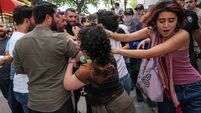
Days after a group of protesters shouldered their way into a daytime Drag Story Hour event at Tralee Library, filming volunteers, attendees and performers and shouting that the event constituted the “grooming” of children, many of the same faces showed up at Drogheda public library last week to protest the inclusion amongst their titles of LGBTQ+ inclusive books for a variety of age ranges.
These are just two recent examples of an emerging pattern of increasingly confrontational protests in Ireland, with close links to similar movements originating with Christian fundamentalist and right-wing groups in the US.
Libraries are often the target: in March, this newspaper reported that Cork City Library staff had faced harassment and abuse for including several LGBTQ-inclusive titles in their children’s section, including teen sex education title This Book Is Gay.
Several figures spearheading the Irish protests have embarked on something they describe as “the sovereign voyage to protect children,” travelling the country by waterways: their social media accounts say they will next travel from Limerick to Leitrim in early August.
Irish protests are even feeding back into the US, spreading misinformation as they go: when protesters stormed the Drag Story Hour event in Tralee Library on July 13, shaky footage of the incident was shared online. Days later, InfoWars, the website of US conspiracy shock-jock Alex Jones, posted the footage with the headline “Epic Video: Tightly Guarded Drag Queen Grooming Event Exposed By Outraged Father.”
The video went viral across social media, with Elon Musk posting a cryptic exclamation mark under the shared footage.
In reality, two female-to-male drag kings dressed in bowler hats were reading to children: both performers have complete Garda vetting and the book, Kingdom Pride organisers told the , was Prince and Knight, a fairy tale aimed at the 4-8 age bracket which contains no references to sex at all.

Event organisers, performers, library staff and volunteers were so intimidated by the invasion of their event that they don’t want to speak to the press: the incident is currently being investigated by gardaí. “We will not be commenting further until the investigation is completed,” a spokesperson said.
Social media hashtags, such as #protectchildren, are being used to garner support for the causes online. But those who have been harassed by them say that their actions are the exact opposite of protecting children.
Cork drag queen Candy Warhol says the protest at Tralee Library was not the only such incident at the Kingdom Pride celebrations this year. A drag brunch Candy was performing at three days later on the closing day of Kingdom Pride, an event with no children in attendance, generated a solo protestor of its own.
“We had a protestor pay for a ticket to come in,” Candy says. “She sat there, waited until we got on stage and then started protesting. She was going table to table and calling everyone a disgrace, asking why they were there, saying they were encouraging us. A table complained and she was taken out by security and she was kicking and screaming and throwing things off the tables.”
In July of last year, Candy was embroiled in a protest at a Drag Story Hour in Tertulia Bookshop in Westport, Co. Mayo, one which she believes marked a turning point in the intensity and frequency of the anti-LGBTQ+ protests. Alongside fellow queens Annie Queries and Panti Bliss, Candy found herself confronted by protesters outside the reading event.
“I was in shock,” she says.
“I’ve been doing drag for 12 years and I’ve never experienced that before. It was so aggressive and intimidating, not just for the performers but for the parents and children. I think that was the moment that kicked everything off and it seems to have ramped up from there.
“All these protesters are saying we’re the ones sexualising children, but they were screaming profanities and screaming about sex acts, at children. It was crazy.”
Ciarán O’Connor is a senior analyst at the Institute for Strategic Dialogue, where he investigates and researches online misinformation, hate and extremism. He says the pattern of increasingly confrontational tactics, such as storming events in libraries or staging the destruction of copies of books, are part of a strategy that first emerged in the US.
“It's a tactic of US groups like Proud Boys, the far-right group, to show up at libraries and to target Drag Queens and LGBTQ+ events aimed at children,” he says. “In the US, we’ve seen traditionally Christian groups, but also increasingly explicitly right-wing communities, co-opting this suspicion of LGBTQ+ people.
"The use of the word ‘groomer’ and the very damaging, serious claim that LGBTQ+ communities are somehow fostering a societal tolerance for paedophilia originated with a lot of US groups with a particular tactic of appearing at libraries and bookstores.”
When Ciarán has posted on social media about the US origins of the protests emerging in Ireland at present, one big counter-claim he receives in comments is that Drag Story Hour events are themselves a US import. Drag Queen Story Hour, now known as Drag Story Hour, began in San Francisco in 2015 and now holds performances in over 30 US cities.
“I can’t deny that Drag Story Hour events originated in the US,” Ciarán says. “But those protesting these events are ignoring the fact that attendance is not mandatory. These events are hosted in libraries and it’s up to parents to decide whether or not to bring their children.”
Ciarán says the aggression used in the protests is all about gaming social media algorithms and creating dramatic, shareable video that will generate engagement.
“Social media algorithms are geared to the sharing of sensationalist, highly emotive content and the organisers of these campaigns lean into that to expand the reach of their campaign. That’s core to potential recruitment opportunities and also monetisation: you’ll frequently see them posting links to donation platforms when they share video.”
For Candy Warhol, being a drag queen is all about being highly visible, but while she is well used to being filmed in public, cameras shoved in her face during the Tertulia Bookshop protest left her feeling “violated and intimidated” and particularly concerned for the young people and teens in attendance.
“You can feel it when someone is taking pictures and video in a nasty way,” she says.
“They’re hoping to get footage of us reacting that they can then edit and manipulate and post online. For a young queer kid or a volunteer or a bystander, to see themselves used in these people’s video streams? That’s not ok.”
Candy runs Mockie Ah, a Drag Haus that arranges performances and events all over the country. She says the knock-on impact of the escalation of protests has caused her to fear for the safety of performers.
She wants the government to do more than pay lip service and condemn attacks in speeches and says increased Garda action is needed.
“I’ve never had to warn all the Queens before to be careful, to not walk home from events on their own,” she says.
“Unfortunately that confidence that we were getting to do things like walk between venues on our own is being damaged because these protests are giving people with casual homophobia and transphobia permission to act.
“This is going to ramp up: we’ve seen it come throughout waves in history. Now, for the first time, queer people and trans people are being seen in a positive light in the media and that is freaking these people out. But we’re not going to live behind closed doors any more. We’re going to be ourselves."