'Everyone along the food chain, from producers to consumers, can play a role in preventing food waste'
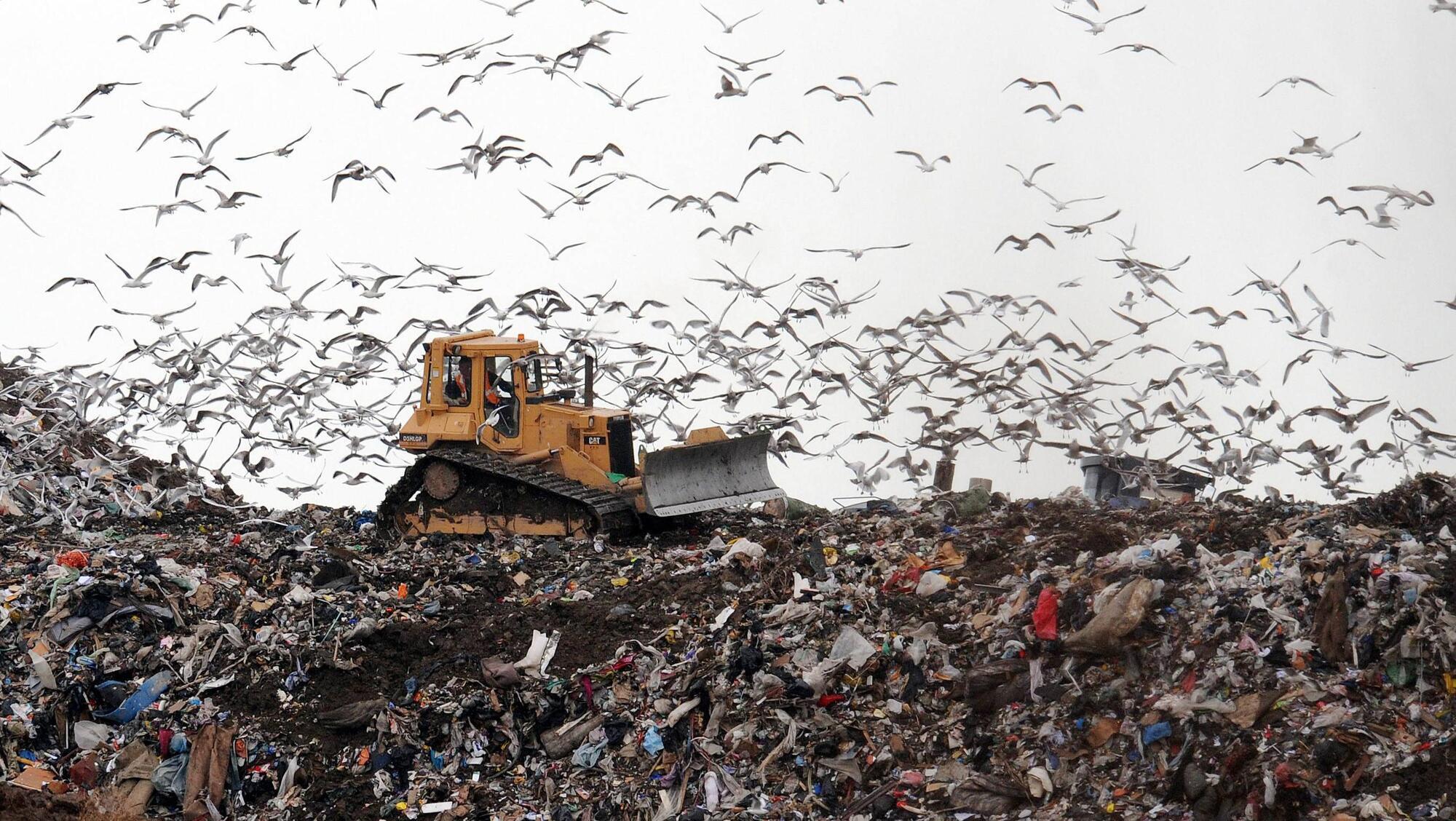
If carbon is the head of the household when it comes to emissions, then methane is the wayward family member that brings explosive trouble on a regular basis
'Everyone along the food chain, from producers to consumers, can play a role in preventing food waste'

'Sadly, the bulk of landfill globally is poorly managed. There have been substantial improvements nationally. But we still do have methane emissions from our landfill inventory.'

As challenges go, it is one of the steepest and most ambitious of all — reducing our collective waste of food by 380,000 tonnes a year by the end of the decade.

Food waste is a burgeoning problem throughout the Western world, and Irish people are as culpable as any when it comes to throwing things away because they’ve bought too much, or let items go bad.

There is another side effect to all this needless waste.

The national discourse has tended to centre around agriculture emissions, specifically methane, and how it is a major contributor to Ireland’s carbon output.

Agriculture remains by far the largest contributor to overall emissions in Ireland, at 37.5% of the total, according to Environmental Protection Agency (EPA) data in July.

Beef and dairy cattle are among the biggest contributors to greenhouse gas emissions, with cows mainly generating methane through digestion and waste.

If carbon is the head of the household when it comes to emissions, then methane is the wayward family member that brings explosive trouble on a regular basis.

Methane is a much shorter-lived entity than carbon, but it is also hugely powerful in warming. It needs sharp focus and attention to bring levels down.

However, merely putting the burden on farmers and agriculture to do all the heavy lifting is the wrong approach.

Ireland's carbon budgets, which allocate emissions ceilings to the likes of motorists, households, farmers, businesses, and industry in five-year cycles, aim to reduce emissions by 4.8% per annum from 2021 to 2025 under the first block, while the 2026-2030 budget will increase that annual reduction to 8.3%.

Agriculture was assigned a target of reducing greenhouse gas emissions by 25% by 2030 under the negotiations.

However, data show that food waste is a major culprit in methane emissions and our carbon trail.

According to the Environmental Protection Agency (EPA), it is estimated that food waste generates about 8% to 10% of global greenhouse gas emissions.

As food rots, it is deposited in landfills, emitting methane as it breaks down.

Professor of Geography (Climate Change) at Maynooth University, Peter Thorne said landfill is a huge problem if we want to keep 1.5C alive.

The 2015 Paris Agreement set the 1.5C temperature increase limit goal that scientists say is necessary to avoid the worst fallout from climate change.

Prof Thorne, a former lead author for the UN-backed Intergovernmental Panel on Climate Change (IPCC), said the methane issue arises because the breakdown of matter at that scale is an anaerobic process.

Well-managed landfills have processes for gas to be captured, stored, and used to replace fossil fuel gas while burning the waste for heat and power avoids the methane emissions, albeit controversially, he said.

“Sadly, the bulk of landfill globally is poorly managed. There have been substantial improvements nationally. But we still do have methane emissions from our landfill inventory,” he said.

People at home can take action that will make a difference, he added.

“At a more practical local level for Irish Examiner readers who have a garden, composting their personal waste avoids the bulk of the methane emissions. And for all readers, trying to buy only what you need and not producing waste in the first place has clear economic as well as climate and broader environmental benefits,” Prof Thorne said.

The Government is trying to grapple with the problem, announcing lofty goals to reduce emissions from food waste by 2030.

If the EPA’s latest data is anything to go by, the challenge is massive.

Food waste across the entire supply chain has been calculated to be over 770,000 tonnes, it said.

The average Irish household generates around €700 in food waste each year — roughly €60 per month.

The Government has committed to reduce food waste by 50% by 2030 in Ireland’s Climate Action Plan and Waste Action Plan for a Circular Economy (CE Waste Action Plan), in line with UN Sustainable Development Goals and EU targets — that is around 380,000 tonnes.

EU member states are obliged from 2022 to annually report the amount of food waste generated at the different stages of the food supply chain.

Latest figures from the European Commission's data analysis wing Eurostat show that households are the biggest culprit, being responsible for more than half, or 70kg per inhabitant — a similar weight to a fully-grown adult.

The remaining 45% was waste generated upwards in the food supply chain, in areas such as manufacturing and processing, Eurostat said.

In the EU overall, the total food waste measured in 2020 nearly reached 57 million tonnes of fresh mass. Household food waste represented more than 31 million tonnes, Eurostat said.

Legally binding targets

It is clear that food waste is not just an Irish problem, but a global one.

Despite the bleak picture, some EU countries are obfuscating on targets in a worrying trend, according to Europe’s biggest environmental civic organisation collective, the European Environmental Bureau (EEB).

Its analysis of EU states and their food waste strategies revealed that Romania, the Netherlands, Luxembourg, and Estonia are “leading the world” by expressing support for the introduction of legally binding targets for member states to reduce EU food waste by 50% from farm to fork by 2030.

Other member states like Austria, Denmark, the Czech Republic and Croatia also expressed support for legally binding EU food waste targets, but for now stopped short of clearly back 50% farm to fork reduction by 2030, the EEB said.

In contrast, Poland, Malta, Slovenia and Portugal currently oppose the setting of any legally binding food waste targets for EU member states, it claimed.

Greece and Latvia also currently oppose setting targets at 50% or farm to fork, preferring lower targets for only limited parts of the supply chain.

Many other member states are currently remaining neutral or undecided, the analysis found.

The EEB said that the amount of wheat wasted in the EU is equivalent to approximately half of Ukraine’s wheat exports and a quarter of the EU’s other grain exports.

An estimated 20% of EU food production is currently wasted. An estimated halving of EU food waste by 2030 would save 4.7 million hectares of agricultural land, it added.

In 2015, EU countries committed to meet the UN Sustainable Development Goal 12.3, to halve food waste by 2030.

An analysis by environmental organisation Feedback EU in September shows that food waste also costs EU businesses and households an estimated €143bn a year, and causes at least 6% of the EU’s total greenhouse gas emissions.

Executive director at Feedback EU, Frank Mechielsen said: “We want to praise countries like Romania, the Netherlands, Luxembourg, and Estonia for their leadership in supporting legally binding targets to halve EU food waste from farm to fork by 2030.

“At a time of high food prices and growing climate crisis, while the EU is potentially throwing away more food than it’s importing, it’s vital that the Commission and other EU countries follow their lead. It’s shameful that countries like Poland, Malta, Slovenia and Portugal currently oppose targets on food waste. We urge countries who are still undecided to get behind this common-sense legislation.

“Halving food waste across the supply chain by 2030 is a huge opportunity to tackle climate change and improve food security and setting a weaker target would be planning to fail to meet (UN) Sustainable Development Goal 12.3. And opting for a retailer-and-consumer-only food waste target would mean that between 38-75% of total EU food waste, including from farms, processing and food service, would be excluded.” 

Ireland’s roadmap towards reducing food waste was launched in late November, following a public consultation earlier this year.

It outlines how Ireland will establish its national baseline data on food waste from which we will achieve a 50% reduction by 2030, and an approach to interim milestones and targets on the way to that 2030 target.

The Government claimed it “will ensure a robust national system for food waste measurement and reporting is established in order to meet Ireland’s reporting obligations and to monitor Ireland’s progress in meeting its UN and EU commitments over the next decade”.

'Food waste happens at every stage of the food chain'

Minister of State for the Circular Economy, Ossian Smyth said: “Tackling food loss and food waste is one of the key steps we can all take to help combat climate change and support Ireland’s transition to a circular economy.

“Food waste happens at every stage of the food chain. It doesn’t make sense and it’s something we have to tackle if we are to reach our overall emissions targets. It’s also something that we know people want to see addressed from our consultations.

“Everyone along the food chain, from producers to consumers, can play a role in preventing food waste in the first place, and then dealing with excess food that might occur in a more sustainable way than just throwing it away as the first and only option.”

x

CLIMATE & SUSTAINABILITY HUB

More in this section

Lunchtime News

Newsletter

Keep up with stories of the day with our lunchtime news wrap and important breaking news alerts.

Cookie Policy Privacy Policy Brand Safety FAQ Help Contact Us Terms and Conditions

© Examiner Echo Group Limited