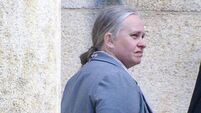
Catherine the Fake: The fraudster being hunted by gardaí who left a trail of destruction
Buttevant woman Catherine O'Brien has had many guises, but they all have one thing in common — an ability to make people believe they can make money with her
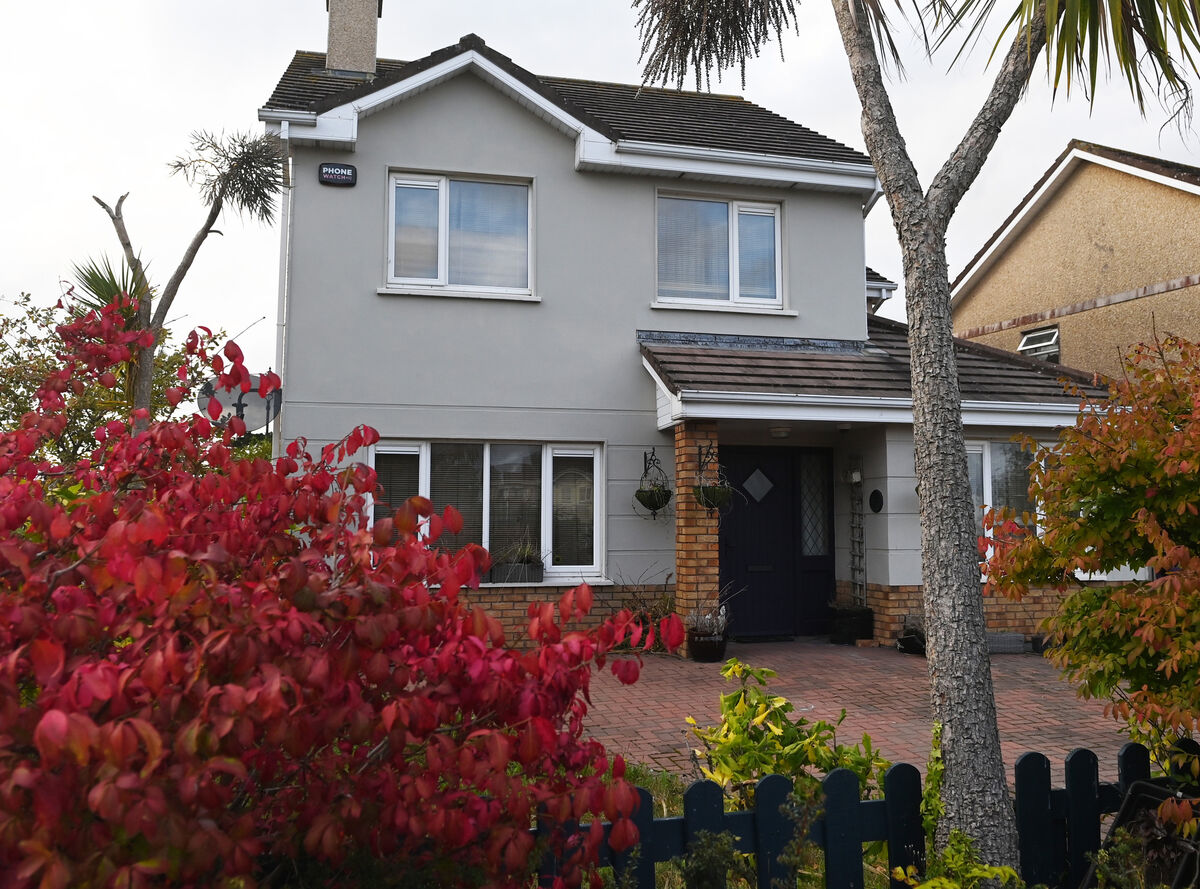
Nestled away in a busy estate on the edge of Dungarvan, the house barely merits a second glance.
It seems to be just another home lying empty during the day while its occupants are out at work. But this is not the home of any ordinary nine-to-five employee. This detached house at An Grianán in Ballinroad is the home of “businesswoman” Catherine O’Brien.
In a built-up area of uniform houses, there is one subtle indicator of the passions of the person who lives here – a name plate with the number of the house nestled between two horses. However, that is the only sign of pride at the house now.
Hanging baskets and planters outside the door and along the front of the house contain plants which have not seen attention for many months. Along the side of the house, behind a timber gate, are five rubbish bins of various colours, slightly hiding a bicycle parked against a timber railing. Along the paling that runs parallel to the gable end are old tyres painted brightly in pinks and purples, also holding dead plants.
There are some indicators at the property of normal life in suburban Dungarvan. But there are also clear indicators that life as Catherine O’Brien knew it has come to an abrupt end. These include utilities such as the electricity supply having recently been disconnected.
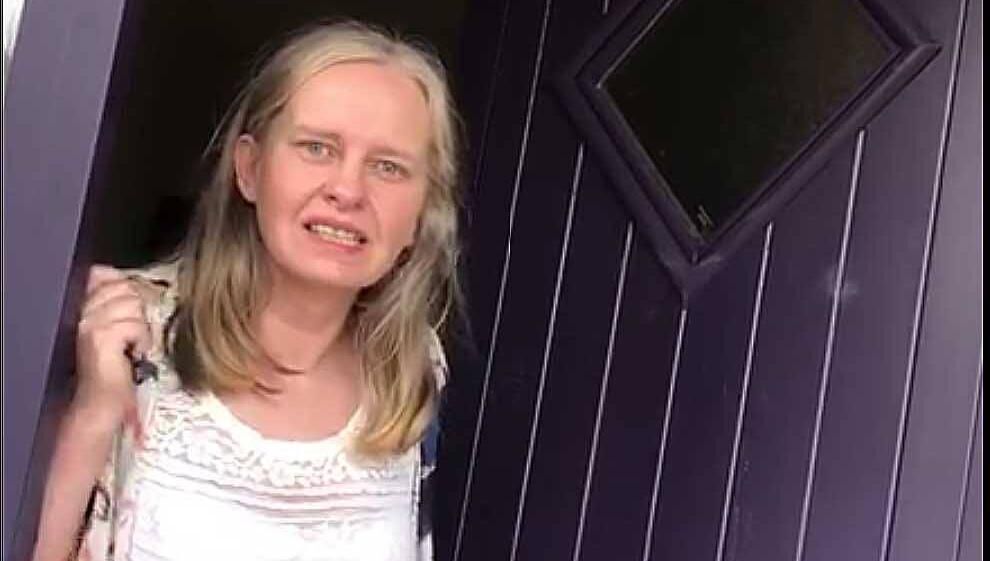
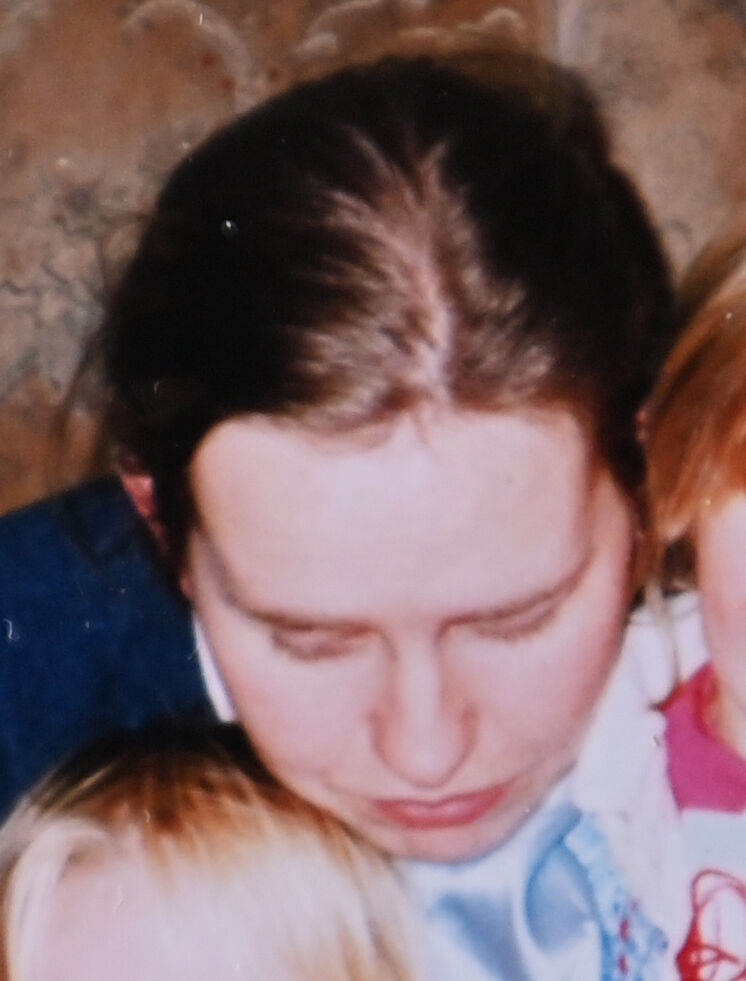
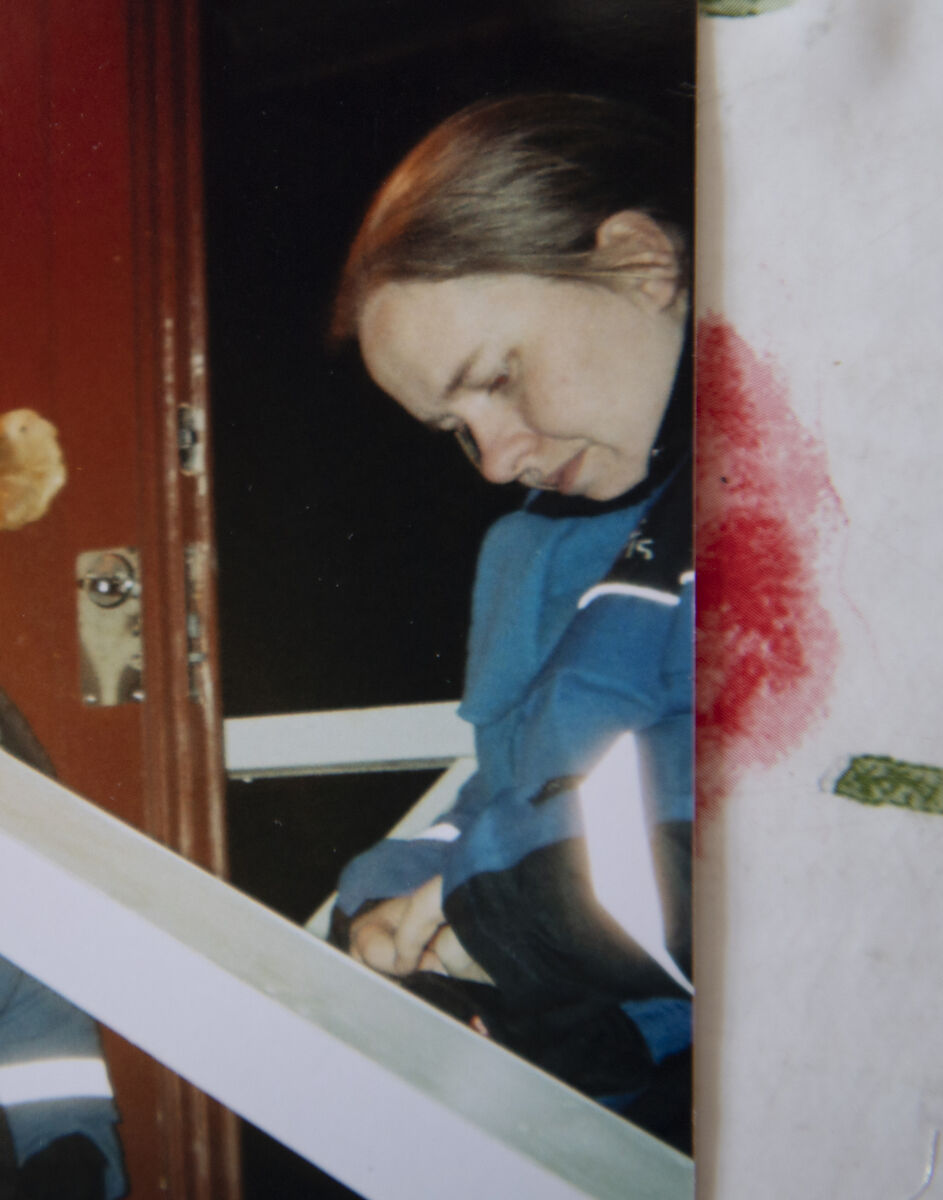
There is nothing ordinary about Catherine O’Brien, a woman described by neighbours as someone who kept herself to herself, and who did not mingle with others in the estate. She is known to many as Catherine, while those who thought themselves close to her call her Kate or Katie. She is ultimately a Walter Mitty-type character, someone with many different personas.
One neighbour, who has been living just a few doors down from Catherine’s for two years, says she has never seen her. Another who knows her vaguely says she has not been seen for several months.
He says gardaí have also been looking for her and says that there have been people in and out of the house in the months since Catherine was last seen. They include an older man, and two women.
In a house a few miles outside of Dungarvan, a man who knew her well says he has not seen her for “five or six months” and says he does not want to talk about her. The more you talk to people, the more you find out that people who once thought they knew her well never really knew her at all.
But one person who thought he knew her pretty well said:
Currently the whereabouts of Catherine O’Brien are not known. But she is a wanted woman. Many people are convinced that she is lying low, with just a few trusted people knowing of her whereabouts.
Given that the plaque on the wall outside her front door shows two horses, there is a certain irony in the fact that horses have helped played a role in her downfall.
The Buttevant native is currently the subject of a bench warrant issued at Gorey district court in June of last year, following her conviction on 34 counts of animal cruelty under the Animal Health and Welfare Act 2013. This related to the seizure of thoroughbred horses in a malnourished state in Ballygarrett in Wexford in 2019.
The horses included two seven-year-old bay mares, a four-year-old bay filly, and a Dun miniature stallion. A six-week-old colt was also among the seized animals.
The animals were thoroughbreds and the seizure shocked people, with photos of the animals showing them in an emaciated state. The judge opted not to sentence her in her absence when the case was in court over a year ago, and the bench warrant remains live.
Catherine, who has two grown-up daughters, also failed to turn up in court in February for a Proceeds of Crime hearing in the High Court in Dublin. A decision was made in favour of the Criminal Assets Bureau, allowing the retention by the State of a 2015-registered Land Rover Discovery.
She appealed the decision by Mr Justice Alexander Owens and it was listed for directions in the Court of Appeal in Dublin on June 24. However, a spokesman for the Courts Service said the appeal never actually went in for hearing. Instead, it was struck out, subject to an ‘Unless Order’, on July 15.
There is a certain irony in Catherine having been the subject of high-profile legal cases, given that she herself once studied law for a period. Although she did not go on to become a solicitor, she has previously let people believe she is a solicitor or legal mediator, even providing legal advice to some.
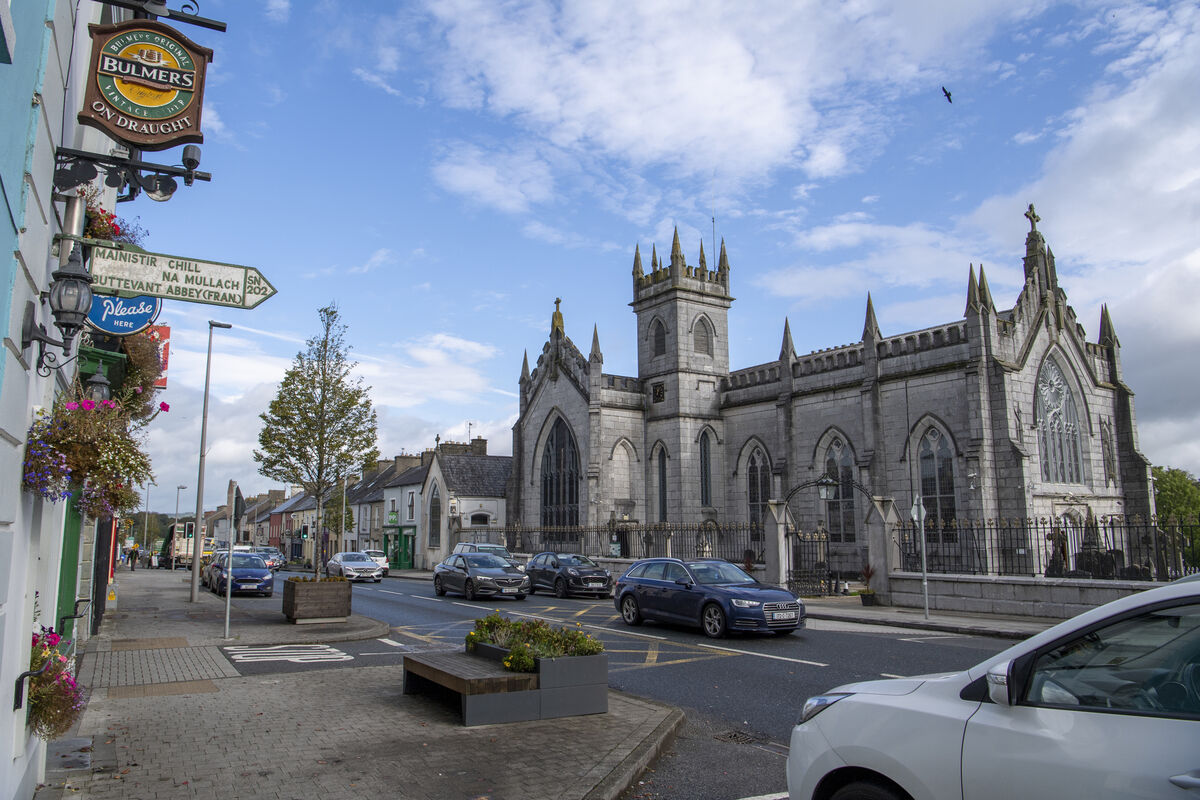
In her home parish of Buttevant, people are no longer amazed by what they hear about Catherine O’Brien from Boherascrub. Her name is the stuff of legend in the area, bringing some people to laughter. Some remember attempts by her to open a veterinary business in her hometown but say she is rarely seen there now. One person recalls seeing her driving a top-of-the-range vehicle in the area on one of her visits home some years ago.
There is a deep respect in the community for other members of her family, including one of her brothers, Monsignor James O’Brien, who served for a number of years in the Vatican in the Congregation for Divine Worship, during the papacy of Pope Benedict XVI. Monsignor O’Brien did not want to talk about his sister when approached by the .
One family who knew Catherine as a teenager and in her early 20s recall their experiences of her involvement in their lives on condition of anonymity. A member of their family is listed on company documents relating to both a pub, and a genealogy company called Emerald Roots. The man and Catherine were both named directors for both companies. Both businesses had a residential address in Mallow as their registered offices. The address was where Catherine was living at the time, in rented accommodation.
The company for the bar was set up in February 2001 and dissolved in 2005. The Emerald Roots company was more short-lived — also set up in February 2001, it was dissolved in January 2004.
One of the family describes Catherine: “She is like an eel – moving around and nobody can catch her.”
The family say that while cars were important to Catherine, clothing and other material trappings did not appear to be. The son says: “She was never dripping with jewellery or fancy clothes.”
This family recalls when Catherine moved across the Cork/Waterford border to relocate to the quiet little village of Stradbally on Waterford’s copper coast. Leafy trees, picture postcard-type thatched houses and a spotless square make the friendly village almost other-worldly. It has had many successes in the National Tidy Towns competition, as well as in the international Entente Florale competition.
It also has a mystery lurking in its heritage – the disappearance of postman Larry Griffin from Kilmacthomas who disappeared on Christmas Day 1929. He had been on his rounds in the beautiful area around Stradbally and his bicycle was found a short distance away the following day. However, efforts to establish what had happened to the father of three failed and his body was never found.
Ten people were charged with murder, but all were acquitted. They included two gardaí, a teacher and a publican. The case against them did not proceed after the chief witness in the case withdrew his evidence. A plaque commemorating Mr Griffin was unveiled at the post office in Kilmacthomas village three years ago, as a lasting memorial to the missing postman.
And in this little corner of west Waterford, another mystery lurks - the legacy of Catherine O’Brien, whose shadow falls long over the area even though she only lived there for a very short time.
But it is where she once had a floristry and landscaping business, which she registered with the Companies Registration Office as Stradbally Garden Centre and Celtic Landscapes, on the first day of January 2003. It is also where she built close links with people who later came to rue the day their paths ever crossed with the Buttevant native.
Following her move there, she opened a number of florist businesses in Dungarvan, Stradbally and Kilmacthomas. The location of one of them, in a residential area of Ballinroad, on the outskirts of Dungarvan, raised eyebrows at the time, given that it was not a typical setting for a business.
One person in Dungarvan explained: “Why would there be a florist in or around that neighbourhood? It made no sense at all. It was even way less populated than it is today. The corner shop next door made sense, but having a florist there made no sense whatever.”
The nature of the business in Stradbally was described as a garden centre, landscaping and florist, the latter being something she would be well-known for around both Stradbally and Dungarvan. Called Farlito flower shop, the business address was given as Stradballybeg on the company documents, and her occupation was listed as landscape architect.
She cited the historic Stradbally House overlooking the village green as the business address on a number of documents in her early years in business. Ironically, the location of the florist business was on one half of the ground floor of Stradbally House, while the local garda station was located on the other half of the same floor.
The picturesque west Waterford village is also the location of the magnificent Woodhouse estate, the former home of the Marquesses of Waterford. It is the setting for two properties which a member of the Anglo-Irish family associated with Woodhouse estate lost to banks after mortgaging the properties to help Catherine O’Brien set up businesses.
Indeed, one of those properties was Stradbally House, the upper two storeys of which were home to Nicola Beresford Minihan, formerly of the splendid Woodhouse.
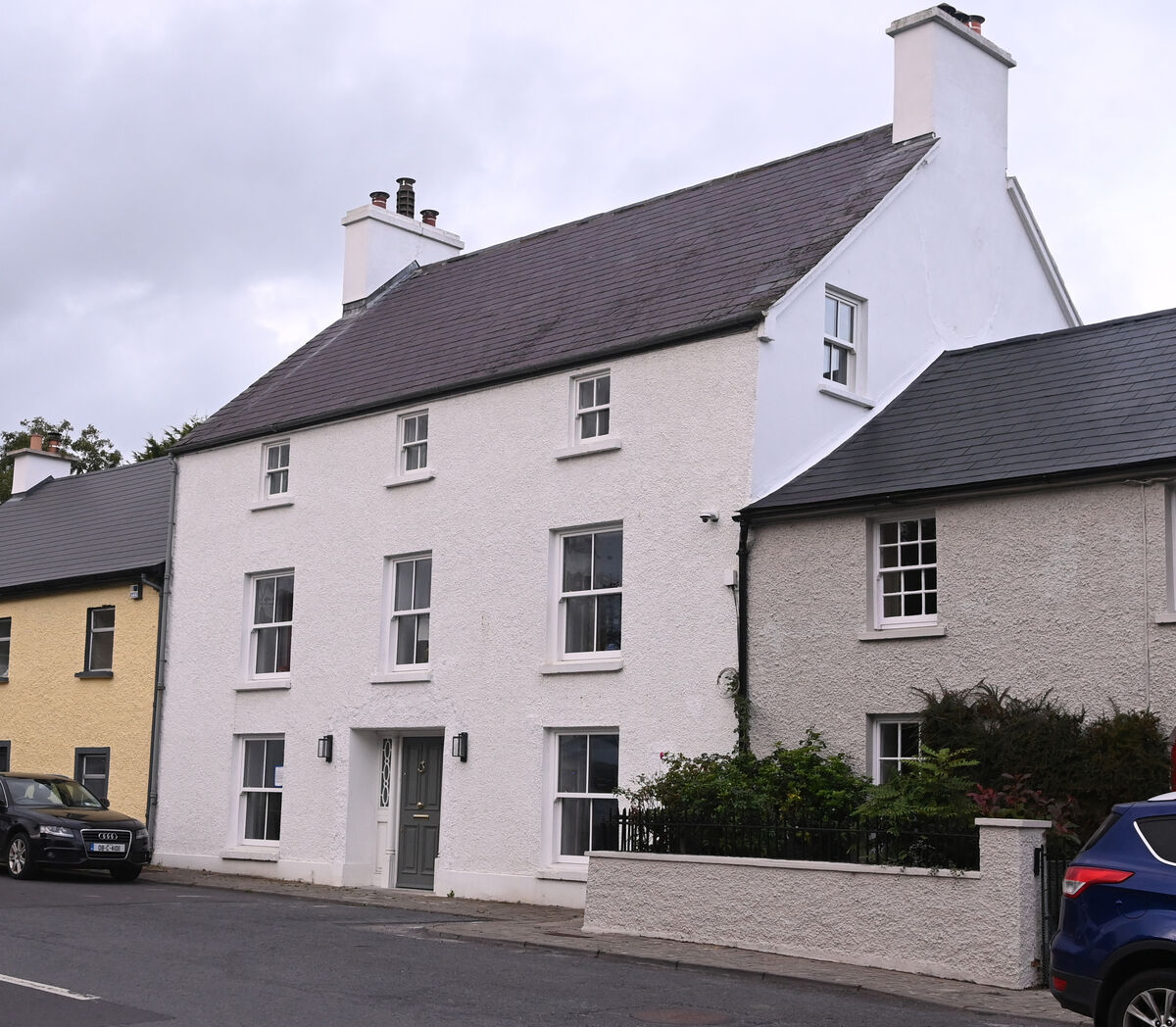
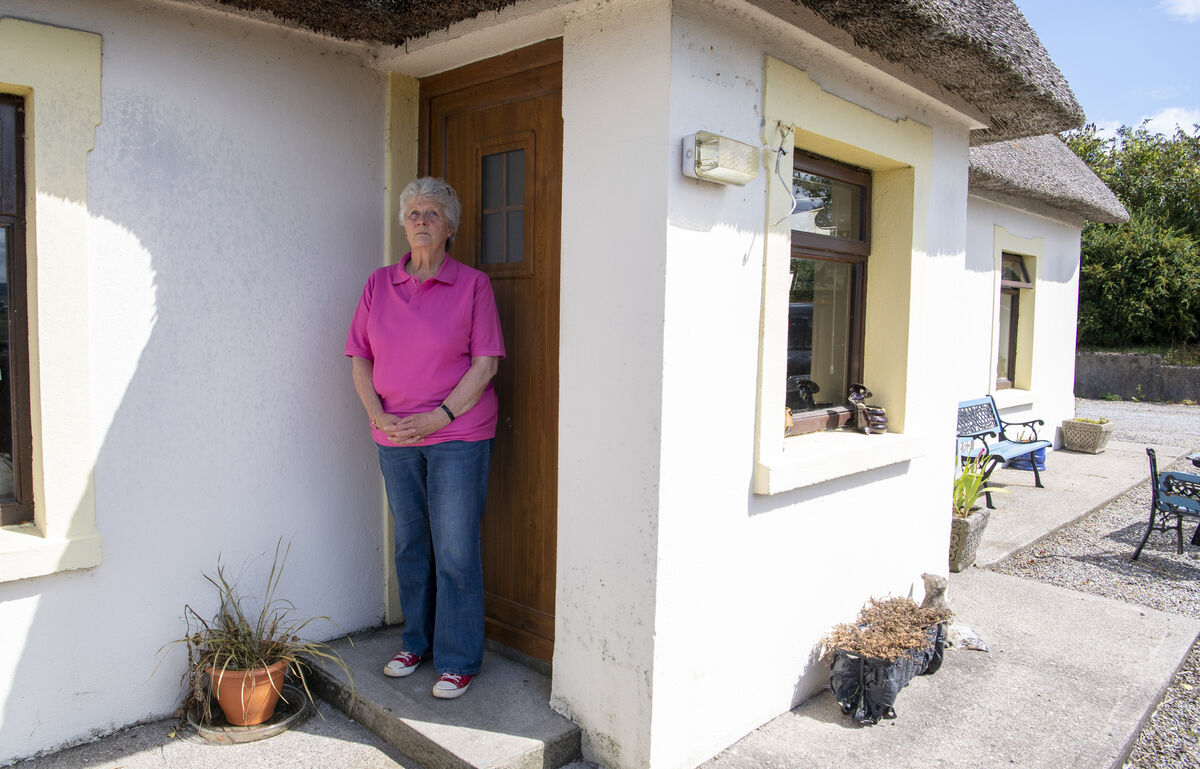
Today, Nicola Beresford Minihan lives in rented accommodation several miles from her home village of Stradbally, in her second rented home in eight years. Soon she will relocate to another rented home. She was born into aristocracy – the daughter of a lord, and the grand-daughter of the 6th Marquess of Waterford, Henry de la Poer Beresford.
Ironically, the home she once lived in – Stradbally House – is now also a rental property, listed on the Unique Irish Homes website as a holiday let. Between May and the end of September, the property commands €1,600 per week for holidaymakers wanting to take in the ambience of the refurbished building.
The listing boasts of “a large and unexpected panoramic window looks out across the rear courtyard onto the raised terraced lawn at the back”, with other highlights of the property including “a central stairway directly facing the entrance lobby leads to the accommodation”. This area is where Nicola lived, and the listing explains that the ground floor – previously home to the florist and the garda station – is currently not available.
It is from this home that Nicola moved just a treasured few remnants of her past, including her childhood piano and other reminders of a life more extraordinary as part of west Waterford’s Anglo-Irish ascendancy when she moved into rented accommodation.
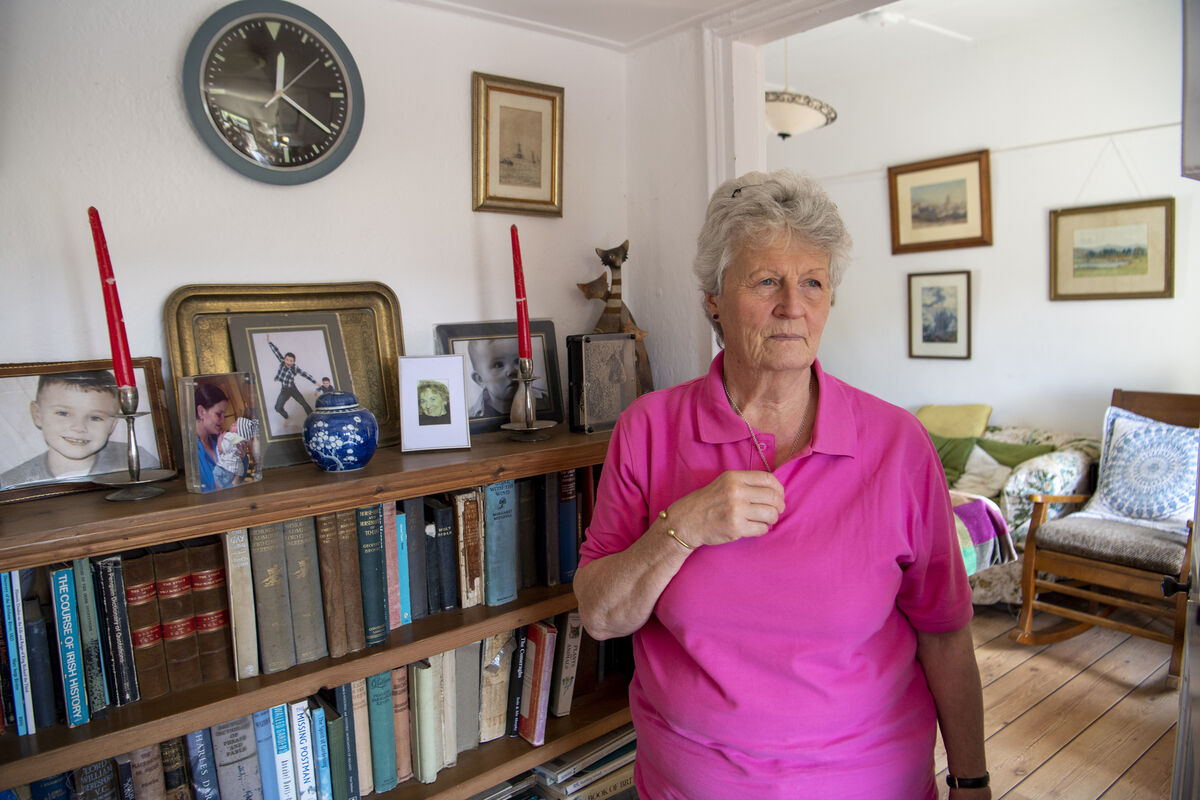
Sitting in her current home, she recalls her association with Catherine O’Brien as being almost familial, describing herself as having been almost like a second mother to Catherine.
But the bond she thought she shared with the Corkwoman was shattered when the trust she put in her was abused as she wonders now what was real about anything Catherine had told her.
Their paths first crossed when Catherine ran a floristry shop on the main street in nearby Dungarvan. They met through a mutual acquaintance and Nicola agreed to look after one of Catherine’s two young daughters. The timing was right for Nicola, who wanted a change from the life she had at that time.
She explained: “At the time, I was living and working on a farm in Englishtown, looking after chickens, hens. And I had come to the end of my tether with that because it was hard work.” The opportunity to do something else was something she couldn’t refuse, and she happily took on her new role.
And as time went on, Nicola even looked after the little girl at times if Catherine was away. What Nicola had thought of as a bond of friendship was growing between her and Catherine. And it appeared that Catherine felt she could trust Nicola in her business – she decided to get Nicola trained as a florist.
Nicola was delighted and when Catherine opened another florist business in Tramore in the early 2000s, Nicola was working there. However, that business did not last while the one in Main Street in Dungarvan also closed. She subsequently opened a florist at the junction of Mary Street and the Square in Dungarvan, but Nicola describes it as the “invisible shop” – people would easily walk past it.
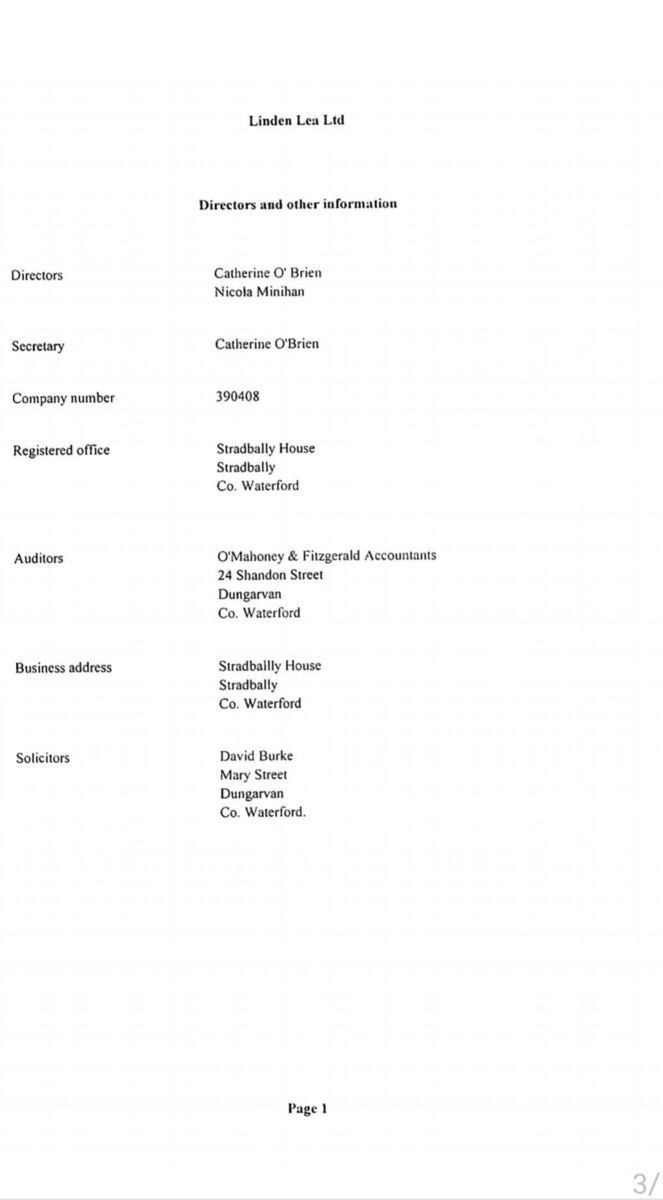
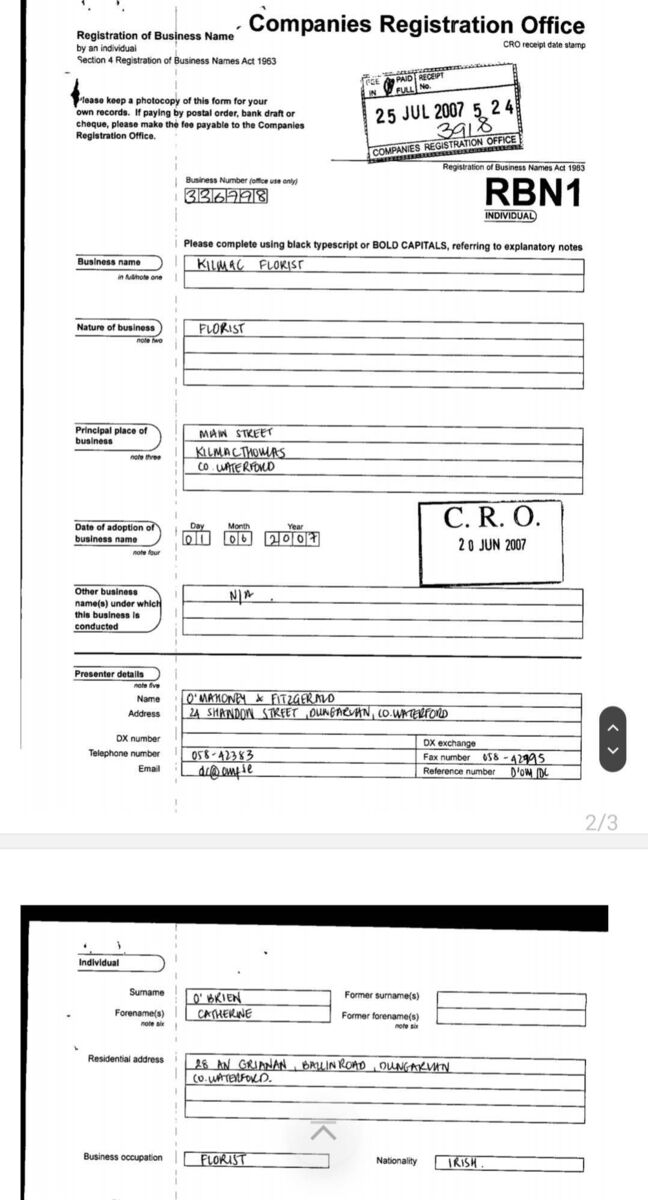
The nearby village of Kilmacthomas was another location Catherine turned to with her floristry business. Kilmac Florists opened on the main street in the village in 2007, and the registration form filed with the Companies Registration Office in June of that year gave Catherine’s address as Ballinroad in Dungarvan.
It also stated her occupation as a florist and listed a company called Linden Lea Ltd as the company name. Accounts for Linden Lea Ltd for the year up to August 2007 were signed by both Catherine and Nicola, with both named on the accounts as directors of the company. Catherine was listed as the company secretary. At that time, Stradbally House – Nicola’s home at that point - was also used as the registered office for the company.
Nicola says the business in Kilmacthomas was successful at the start but then became unviable, as reflected in the accounts. Catherine’s interest in landscaping and floristry had seen her do a horticultural course in Waterford IT. But after a number of ventures in floristry, she turned her head to other things.
Nicola reflects:
She explained that Catherine bought a number of units to open a convenience store in Bóithrín na Mhuileann in Dungarvan’s Abbeyside. The units are no longer there – they are now apartments, with no reminder that the legendary Catherine O’Brien once had a business there.
However, for Nicola, the fall-out from being involved in this purchase will last long into the future – it was this purchase that ended up with her losing the two houses in her native Stradbally.
She explained: “That was when my houses got mortgaged.” The mortgage on one was €150,000 and the other was mortgaged at €300,000 – leaving a figure of €450,000 to be paid back to the banks.
Nicola remembers Catherine dealing with the purchase and says: “At that stage, I trusted her so I didn’t do due diligence about what costs this, etc.” She shrugs her shoulders as she says: “I thought I was going to safeguard my kids’s futures.” Catherine was supposed to give the money to Nicola’s family to pay the mortgage, but it never happened.
She recalls:
The houses were mortgaged with two different companies, including the one which Nicola was living in at the time – the bigger property, Stradbally House. For a while, she had been able to meet some of the payments for the mortgage, with rent she was receiving.
She says: “The downstairs right-hand side was rented by the guards – it was Stradbally garda station. They (the banks) got all the money I was getting from the guards as rent and that kept them happy for a while. But the garda station closed in Stradbally and that revenue was gone.”
Both houses were sold by the banks and Nicola has been living in rented accommodation for the past eight years. While she is at peace with her change in circumstances, she is left with lots of unanswered questions.
Of her current home, she says: “I have been here five years and five months, previously I was somewhere for two years and eight months. So that was eight years in November since we moved.” She is due to move into another house shortly.
She sold some pieces of furniture which had been in her family. She did not think her children would have wanted to keep it.
She says: “I sold some stuff that I did not need – that was shortly before we moved down here.” But she has held on to the piano she played as a child in Woodhouse in Stradbally, which her father, Lord William Mostyn de la Poer Beresford, had inherited. Her father had served as Aide-de-Camp to the Governor and Commander-in-Chief of Malta, and had also fought in the Second World War. He was also the son of the 6th Marquess of Waterford, Henry de la Poer Beresford.
She also has some other pieces, including a military chest “which used to be in my dad’s bedroom – that will be the last piece I will ever get rid of.” The last time she met Catherine was more than five years ago, after she was interviewed by gardaí about her involvement in the veterinary business which Catherine had planned to open in Buttevant.
The business, called Advanced Vetmed Ireland (AVMI) Ltd, never opened but is at the heart of a judgement made in favour of the Criminal Assets Bureau in February about whether a 151-registered Land Rover Discovery which was bought in January 2015 was purchased through the proceeds of “criminal frauds” by Catherine.
Advanced Vetmed Ireland Ltd had no visible connection to Catherine, and a Clare dairy farmer, who recently passed away, was the 100% shareholder.
When the company was incorporated in 2013, the business address was in Dublin, belonging to a company which helps company start-ups. The directors of AVMI at that point were attached to the Dublin company, which has not been involved in any wrongdoing.
Five days after the company was incorporated, new directors were listed on a B10 form for the Companies Registration Office, with Nicola named as the company secretary. She was also named as a director, along with the Clare dairy farmer.
In the Memorandum of Association for the new company, the objective of AVMI was “to carry on the business in providing veterinary and agri sales”.
Eighteen months later, in May 2015, new directors were named on another B10 form for the Companies Registration Office – Nicola (whose surname was spelt incorrectly on the document – Bearsford, instead of Beresford) remained a director, this time along with a Co. Limerick farmer. The Clare dairy farmer was named as company secretary, replacing Nicola in that role.
Nowhere on the documents was there a reference to Catherine O’Brien.
The judgment by Mr Justice Alexander Owens, in February, said: “Catherine O’Brien was not a director or shareholder of AVMI Ltd. She set up this company but she did not want to be a director. She arranged for Nicola Beresford to act as a director. This lady who was in her sixties had previously been involved in a business venture organised by Catherine O’Brien.”
The judgment noted that the previous venture had failed, proving to be costly for Nicola and her family. It added that Catherine O’Brien was not a signatory on the company bank account for AVMI.
The judgment further stated that the paperwork submitted to the motor taxation authorities for the 2015 Landrover Discovery showed AVMI Ltd as the owner of the vehicle. A change of ownership of the vehicle was declared in April 2015 in favour of Catherine O’Brien’s uncle, Ned Hawe.
The judgment continued: “The signature of the owner in manuscript is “Nicola Bearsford (sic) Advanced Vet Med; Kate O’Brien”. The purported signature of Nicola Beresford was not genuine.” The judgment added that Catherine O’Brien “was not entitled to sign a change of ownership form for Land Rover Discovery 151 C 2667 and she was not authorised to put the signature of Nicola Beresford on that form”.
Catherine O’Brien had become acquainted with the Clare farmer through a vet she had met through an online dating site. The High Court judgment by Mr Justice Owens said that the Buttevant woman had introduced the dairy farmer “to a project of opening a veterinary business and of buying property for that business.”
However, the judgment said that on occasions in 2014 and 2015, “she altered and misused cheques” which she got from the dairy farmer to cover, for example, stamp duty and fees to the Companies Registration Office.
The judgment added:
The judgment outlined that she purchased a new Land Rover Discovery in 2014 with a cheque for €47,000 and a trade-in vehicle valued at €8,500. After the deal was finalised in mid-April, she contacted the dealer to ask him not to present the €47,000 cheque to the bank, claiming that her handbag had been stolen.
The vehicle, for which she specified that the customer was “(Kate O’Brien) AVMI Ltd”, with an address in Buttevant, was eventually paid on May 7 with a cheque. The judgment stated: “The source of funds was the ledger balance of client funds” which was held by solicitors for AVMI.
The judgment revealed that although Catherine had written out a cheque for €47,000 for the vehicle, examination of her Permanent TSB current account statements from April 17, 2014, to May 7, 2014, “shows that this account held insufficient funds to meet a cheque for €47,000.”
It added: “The credit balance fluctuated between €6,965 odd and €1,415 odd during that period.” Mr Justice Owens said that the only personal money O’Brien used in buying the €50,000-plus Land Rover, and the 151-registered model she acquired after trading the first one in, was €1,000 on her credit card.
The 151 vehicle, according to the judgment, was purchased with a cheque written out by the dairy farmer in favour of the Companies Registration Office but which the payee had been altered to the word “Cash”. The amount on the cheque was €21,000 – even though the corresponding stub in the cheque book from which it was taken noted that its value was for €27.
The judgment continued:
In an interview with gardaí, she denied altering any cheques. Once again, the forms relating to the sale stated her name and also “AVMI limited” at Main Street, Buttevant, County Cork. On documents related to the company, Catherine was neither a shareholder or a director of AVMI.
In his judgment, Mr Justice Owens stated: “Catherine O’Brien was not a director of that company (AVMI) or a signatory to the company bank account which was opened in December 2014. She was not entitled to buy or sell motor vehicles on behalf of that company or to hold herself out as having authority to engage in these transactions.”
The ownership details for the 2015 vehicle were changed in a declaration to the Department of Transport in Shannon in April of that year, with her uncle’s name, Ned Hawe, placed on it. However, the insurance was in Catherine’s name, with no reference to her uncle on the insurance documents.
She claimed that she gave her uncle ownership of the 2015 Land Rover Discovery as security for a loan of €50,000. However, the February judgment outlined that there was no paper trail to substantiate the loan claim. Sworn affidavits disclose neither the source of funds, the method of payment, receipt of the money, or how it was spent.
During the garda investigation, the dairy farmer told officers that “he provided Catherine O’Brien with money for horses which disappeared”.
He also said he had given Catherine more than €53,000 in cash in Charleville in April 2014, after she said it was needed immediately for payment on a property in Dungarvan for the business.
Mr Justice Owens stated in his judgment: “If this information is correct, cash given to buy the property in Dungarvan was misappropriated and used for some other purpose. It did not end up in Catherine O’Brien’s Permanent TSB bank account and it was not handed to the solicitors in Mallow or used to buy the car.”
In his ruling, he added: “The affidavits of Catherine O’Brien contain explanations which are inherently improbable. Some explanations advanced by her are improbable because they are inconsistent with content of bank accounts or materials in other exhibits which I consider reliable. Other explanations advanced by her contradict her earlier explanations.”
Mr Justice Owens also rubbished claims in affidavits that documents were not returned to her by gardaí.
He declared: “The truth of the matter is that Catherine O’Brien has not bothered to come to collect any remaining items.” He said there was no reason to believe that gardaí “hold any material which would verify her claims relating to the motor vehicles or agreements” with the dairy farmer, or which would otherwise assist her.
He added: “If there was any serious issue about whether these items contain material necessary to vouch her explanations for what happened, there was no difficulty in getting this material from Gardaí and exhibiting anything relevant long ago.” The ruling is another blow to Catherine O’Brien so close to the court decision last year relating to the animal welfare case in Wexford.
However, she is no stranger to court judgments. As a serial debtor, a number of judgments have been made against her in the courts in relation to her finances. Among the most recent is one for just under €5,500 in June 2012, in favour of Payzone (Ireland) Ltd, formerly Alphyra Ireland Ltd.
The Bank of Ireland went to the High Court in 2009 in relation to a loan the bank had given her on security provided relating to land in north Cork.
Meanwhile, earlier this year, Catherine O’Brien was to be the chief witness in a case against two men accused of a single count of demanding money with menace from her under the Criminal Justice Public Order Act 1994.
The alleged incidents were made in the Dungarvan district, in September 2019. However, at a court sitting in April, the defence queried whether the case "will ever come to trial", as the main witness was nowhere to be found. It was also heard that she is a suspect herself in a number of active cases involving €100,000 and lesser amounts.
The progress of the trial is now dependent on the chief witness – Catherine O’Brien - turning up to give evidence.
There has been an evolution of Catherine O’Brien over the past two decades from a young mother to an apparent businesswoman whose exploits have led to a Proceeds of Crime judgement.
In between, she has taken lots of different routes in different businesses – involvement in a pub, genealogy, numerous attempts relating to floristry businesses in west Waterford, veterinary-related operations and most recently, connections to the thoroughbred horse world.
She is in essence the mistress of reinvention. As one person put it, “she was dizzy in keeping up with herself”.
But in her schemes were people like Nicola Beresford Minihan, whose lives were a million miles away from where Catherine led them – into debt, losing property, and having to fight for their good name.
For example, as the activities of Catherine came under the radar of gardaí, the paper trail with Nicola’s name led to her being interviewed by investigators. She was glad to be able to show gardaí her bank account “with feck-all in it”, to prove there was no wrongdoing on her part.
After both women were interviewed about the Buttevant business operations, Nicola says that Catherine called to visit her. Nicola refused to allow her in, telling her former employer and friend that gardaí and her solicitor had advised her against having anything to do with Catherine.
Nicola recalls Catherine putting her foot in the doorway to stop her closing the door but the meeting ended quickly. She recalls seeing her in Dungarvan on two occasions after that but they have never met since. She describes Catherine as a chameleon, and says her personality is an odd mixture.
While on the one hand Nicola lost two houses because of Catherine, the Cork woman was the one who found her a rental property to move to when that happened. There were other touches of generous gestures at times – including a trip to Lapland for Catherine, her daughters and Nicola, which Catherine paid for.
Nicola recalls: “There were sleigh rides pulled by huskies. There were amazing houses that were made out of logs.
She added that all she needed to contribute to that trip was spending money.
Those happy or generous gestures have all been overtaken now by the fact that Nicola’s life has been changed irrevocably by her dealings with Catherine. But she says she is sorry to have lost touch with the daughter she had been looking after for Catherine and often wonders how she is.
Nicola has tried to move on, but admits she has cuttings of newspaper articles about Catherine over the years, a catalogue of the life of someone she thought she knew. Now she knows she never knew her at all.
She is frustrated that people who had suspicions about Catherine O’Brien never tried to warn her when they knew the pair were in business together.
She says: “I wish somebody had told me. Why didn’t somebody tell me? It would have been nice if somebody had said not to get involved with her.”
Of Catherine, she reflects: “I was like a second mother to her, minding the girls and I think that is what kills me more. Somebody I considered a friend could do that to me.”
And she has one train of thought which keeps going through her head: “Where is the money? Where did it go? What did she spend it on?”
CONNECT WITH US TODAY



Be the first to know the latest news and updates