Jordan Peterson: Culture warrior or self-help guru?
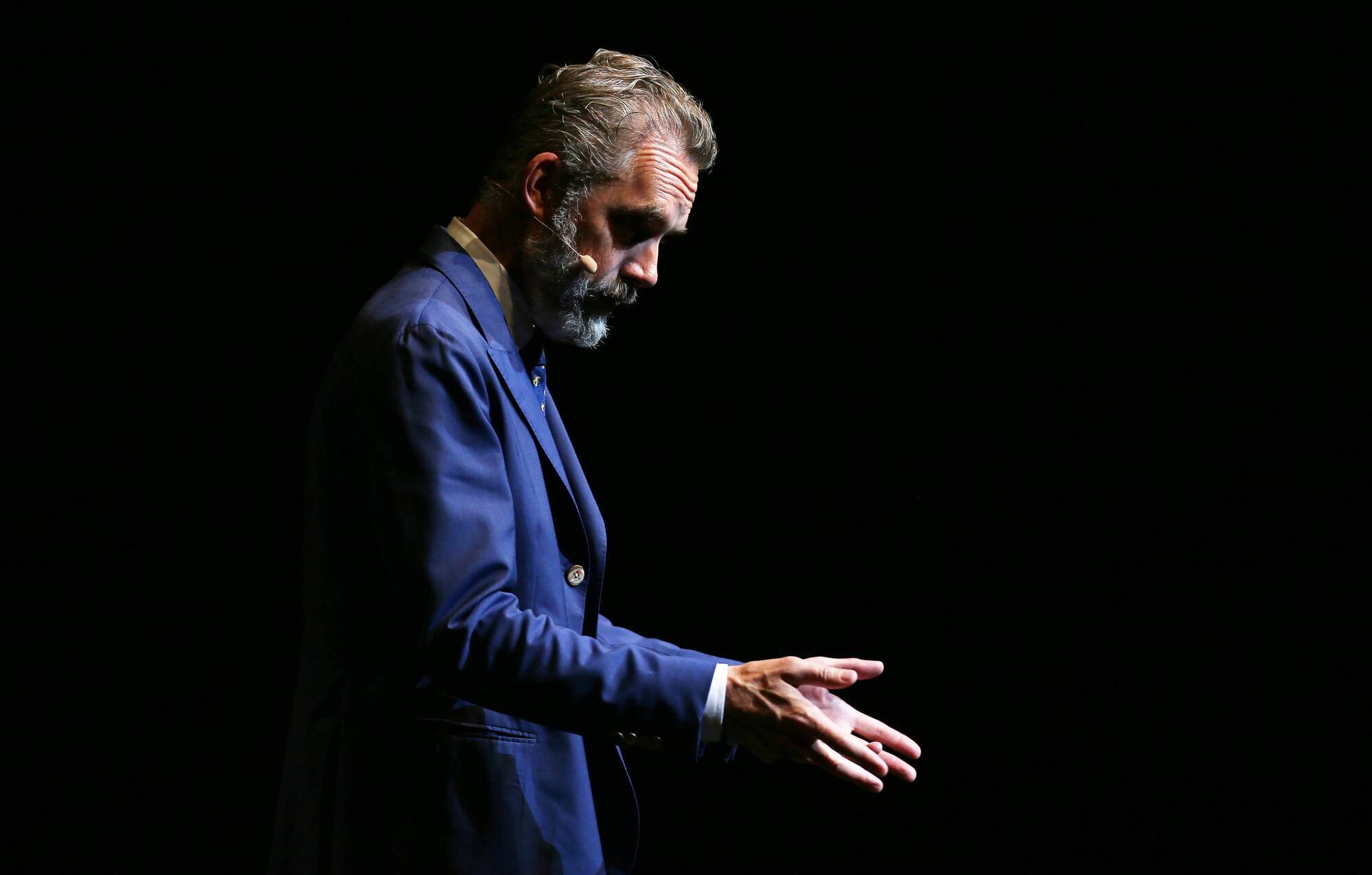
Jordan Peterson: Some consider him to be the most influential public intellectual at work today. For others, he is a dangerous enabler of far-right philosophy and hatred. File picture: Don Arnold/WireImage
Jordan paused, as he often does, to consider his thoughts. “I have too low a resolution of the situation in Ireland to wade into that abyss,” he said.
And then he waded into the abyss, pointing out that unity requires peace and not just peace between people but peace within people’s heads and without peace you can’t have unity but unity is peace. He went on in that vein for a few minutes, finishing with, “peace is something you discover in your own heart”.
Depending on your perspective, the answer was a considered meditation on personal psychology in the context of political difficulties or a large dose of mumbo jumbo.
For 90 minutes preceding the Q&A last Sunday, Peterson prowled the stage at the 3Arena in Dublin, dispensing his nuggets of wisdom on how to tackle the vicissitudes of modern life.
He is in an exclusive club globally, an individual who can fill the 8,000-capacity venue for what was essentially a lecture. Some consider him to be the most influential public intellectual at work today. For others, he is a dangerous enabler of far-right philosophy and hatred.

His polarising persona is largely down to the positions he has taken in the so-called culture wars.
For instance, just last week he put his oar into the case of Enoch Burke, the teacher from Co Mayo who was imprisoned for contempt of court.
When the news went viral, Peterson posted to his 4.3m followers on Instagram: “I said very clearly in 2016 that the first people jailed for ‘pronoun misuse’ would be dragged through the courts and then hit with contempt charges. ‘Nobody will be jailed for pronouns’ was the reaction. Wrong.”
Peterson’s contention that Burke was imprisoned over his refusal to recognise the pronoun of a transgender pupil is entirely inaccurate, but it fed into the Canadian’s broader thesis that the West is being dominated by a leftist cultural agenda that is doing serious damage to young men in particular.
As with much on both sides of the culture wars, accuracy and nuance are regarded as weapons rather to be used or ignored as suits.
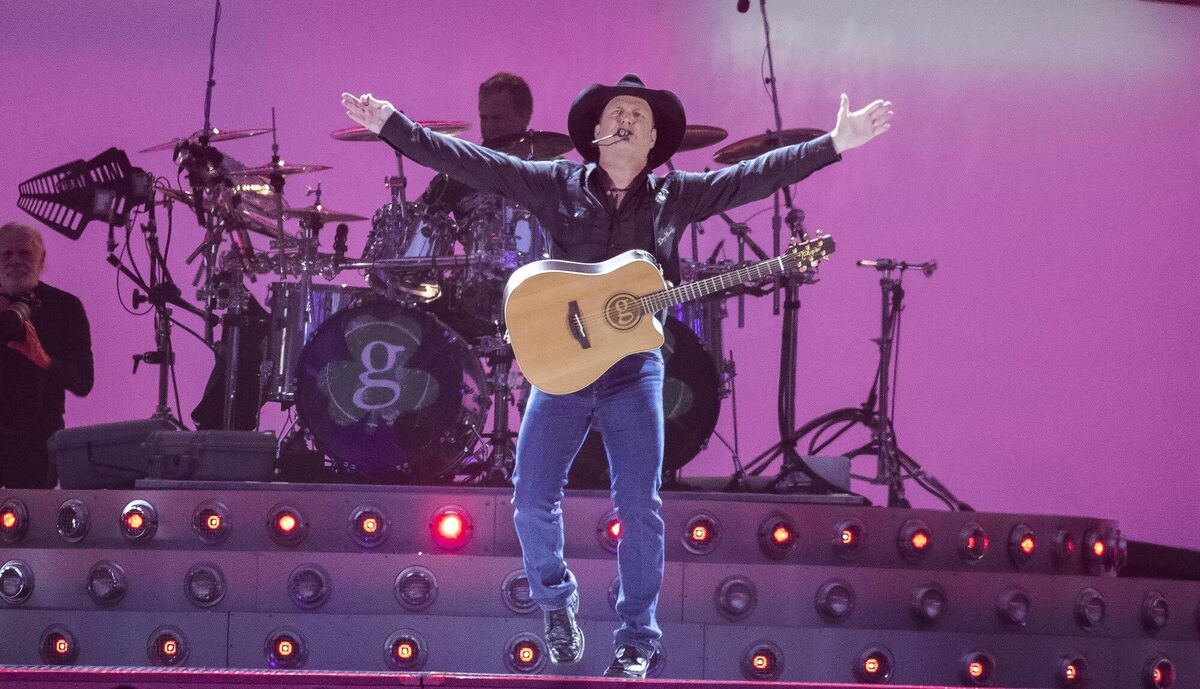
Peterson certainly has pulling power but last Sunday he was completely overshadowed by Garth Brooks. In and around the 3 Arena there were a few stray Stetsons, some who perhaps made a weekend of it in Dublin, checking out the philosopher in Croke Park on the Saturday followed by a dose of hard reality from the professor the following evening.
The demographic of those in attendance, each shelling out €76 a skull, resembled that of a heavy metal concert. There was about two to one males, maybe a little more, with an age profile stretching right through adulthood.
For some young men, he offers a few pointers in negotiating modern life. There are older males attracted to his contempt for what is often dismissively referenced as “political correctness”. The cohort of women was a little surprising as his musings are accused of being deeply misogynistic.
And it undoubtedly is the case that some who were present find him a breath of fresh air. If anybody was in attendance to witness him spit bile and hatred, they would have been sorely disappointed.
Before he arrived on stage, two big screens projected his image, in which he had the appearance of a mafia don, all swept-back hair the colour of iron filings, hooded eyes and a mournful countenance acknowledging how bad the world is. He was introduced by his wife Tammy, a neat, petite woman who speaks softly about her husband, “the professor”.
Jordan walked on to huge applause, started off by saying he never knew there was “such an excitable bunch of Irishmen”, as if he was entering a pub back in the ‘60s from which women were either excluded or ignored.
Pretty soon he was into his stride, talking about his rules for life outlined in his first book, , and more in his most recent tome, .
He gave over a huge amount of time to riffing on the importance of “play”, both in terms of child development and how the formative years impact on adulthood. This was worthy stuff but would have been far more appropriate as a talk to parents at a primary school than dispensed by the leading public intellectual of the day.
His patter was top heavy with cute little phrases, such as: “Are you willing to act in your own best interests? Would it really be so terrible if my life wasn’t miserable?” He also dispensed various nuggets like: “There are a lot of ways to randomly walk, but only one good pathway.”
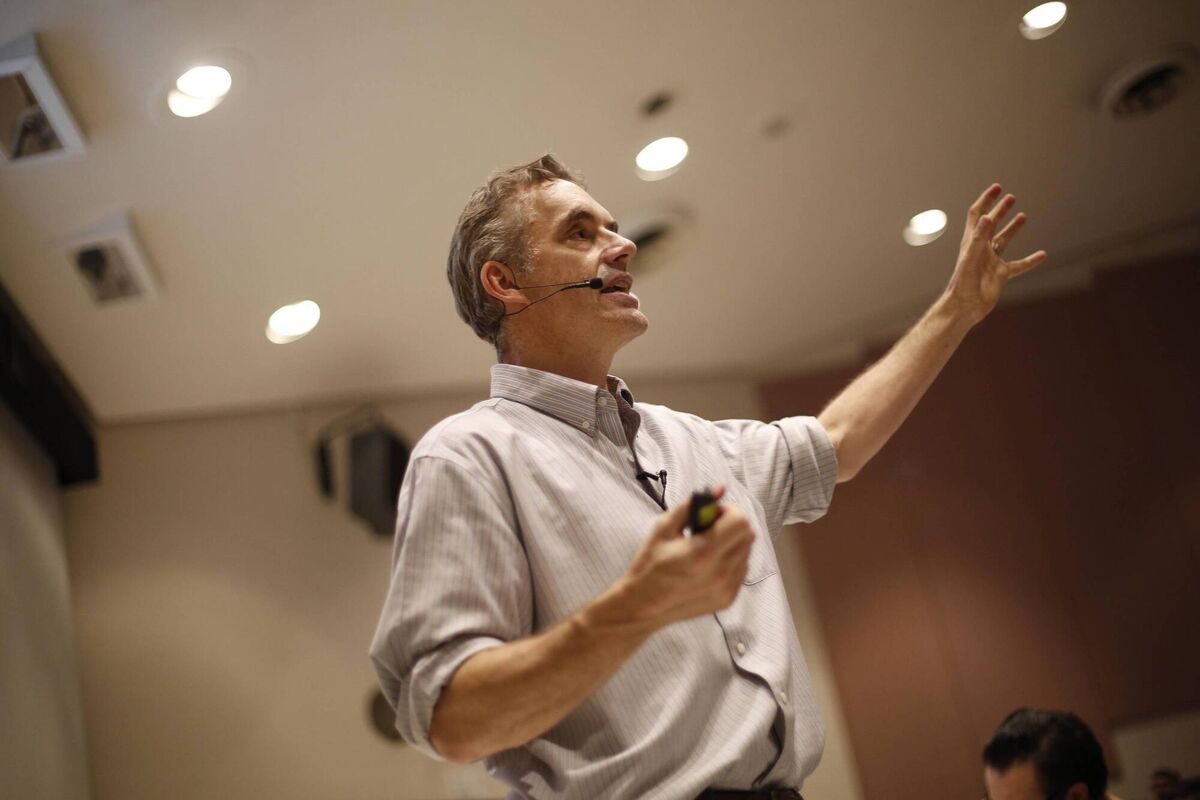
And this: “It’s very useful to compare yourself with who you were yesterday, not somebody else’s today.” (And what do you do, as the other philosopher over in Croker might have asked, if tomorrow never comes?)
Self-help was the constant theme. There was no red meat thrown out about the culture wars, or his retro ideas on the respective positions of men and women, or even climate change, of which he sounds a sceptic.
There was no mention of the Burke case, perhaps because he fully informed himself of the issue following his inaccurate hot take the previous week. There was nothing here to justify his reputation as some form of professorial ogre who is spreading hate against minorities, women and transgender people.
Peterson first came to prominence in 2016 when, as a professor at the University of Toronto, he objected to a proposed law which sought to include “gender identity and gender expression” in a human rights act. He saw this as an attack on free speech and gave a series of lectures on the issue which went viral.
Soon after that, he published his first book which took off. His timing was perfect as his shtick was made for YouTube, short bursts of apparent wisdom informed by endless data. And to be fair, he does have a grasp on data to inform many of his theories.
The combination of his own obvious intelligence and communication skills with a little mythology thrown in all contributed to his celebrity taking off for the stratosphere. His book sold nearly 4m copies and he embarked on a roadshow across the world, including a previous appearance at the 3Arena in 2018.
He lashes out at what he describes as “cultural Marxism” which attempts to flatten natural hierarchies. He has the odd pop at transgenderism, which is, of course, the most prominent battleground of the culture wars.
His retro views on masculinity have been interpreted as misogyny, all of which has seen him elected as the standard bearer for reactionary views some claim veer over into the dark space occupied by the far-right.
He rejects this view of his work. It is the case that much of his appeal is not down to his reactionary views but his role as what amounts to a self-help guru with a focus on the plight of young men.
On one level, it’s nearly as if he sees togging out as a culture warrior as a splendid marketing tool. That would be highly cynical, but hardly surprising.

He ended the main part of his performance with a flourish and left the stage. The audience got to their feet. Then Tammy came on and announced there would be a Q&A. Before kicking that off she gave mention to their daughter, Mikhaila, who is running the Peterson business.
Once the united Ireland question was out of the way, they got down to the really meaty stuff. “What is Ronaldo like to meet?” Tammy asked on behalf of another audience member.
Recently, the footballer released a photo on social media of the pair of them all loved up.
“I spoke to him for two hours,” Peterson said. “We talked about his team and what he wants… he’s very youthful looking, which is important because he is an athlete. He had his picture taken with me, as reprehensible as I am.”
While the encounter was of mild interest, it would have been fascinating if it was Roy Keane and not Ronaldo who had broke bread with the great man. (“Call yourself a psychologist? Fail to prepare?”).
There followed a question about alcohol and young people and here Peterson did offer some real wisdom on the dangers of booze and how it can impair any prospect of reaching one’s potential as a human being.
Peterson has had his own experience with addiction, but interestingly he declines to categorise it as such and instead references his “dependency”.
In 2019, at the height of his simultaneous fame and notoriety, he became addicted to the painkiller, benzodiazepine. He was under serious pressure at the time, dealing with his global status, but more importantly, Tammy had been diagnosed with a deadly form of cancer (she has since recovered).
Surprisingly, for a man steeped in science and data, he eventually opted for a whacky form of treatment organised by Mikhaila. He recovered and returned to work last year. He refused to accept he was addicted, and observers have noted this would undermine the stoic masculine message that is central to his philosophy. Neither has he apparently been chastened by the experience in terms of softening his views.
At the end of the gig — lecture, awakening, whatever — he waves and leaves the stage with Tammy. The lights come on and it’s all over. Outside, there are some differing views on the experience.
Brendan Dennehy travelled from Cork with a friend to attend.
“It’s no different from what you get if you watch on YouTube,” he says. “He’s very intellectual and I found myself drifting off halfway through — you’d want to be fresh and alert to get the most out of it. I thought the atmosphere was a bit subdued. He could have brought more Irish things into it. He talks a lot about mythology but he didn’t mention any Celtic mythology which would have been good.”
Karen Cummins from Dublin was more upbeat. “He was great,” she said. “I would have liked more passion and there was nothing really new in it but he was really good.”
Evan Linn, from Brosna in Kerry and Brian Cox from Rockchapel in Cork said it was their first time seeing Peterson. “I suppose he lets you have a better look on life and stuff like that that you can use every day,” Evan said.
“I feel that I can implement the things he said,” according to Brian.
Another attendee, Anna, who declined to give her last name, was holding fire. “It was good but I think I have to wait and read the book before I make my decision on him. I don’t have a decision yet.”
In that, she is highly unusual. Most people who are aware of Peterson have long made their decision on him. Many of those who attended appear to bestow on his the status of shaman, a figure who has the key to improving their lives in a world increasingly difficult to negotiate.
The self-help industry is booming and lucrative and all across the world some people will attest that their lives have indeed been helped if not transformed by individuals such as Peterson.
There are undoubtedly also those who nod with approval at his some of his reactionary and discriminatory opinions, but one suspects they do not form the bulk of his fandom.
Then there are those on the opposing side who see him as the devil incarnate and by extension have little more than contempt for anybody who subscribes to any elements of his philosophy. For these culture warriors, the world is black and white and Peterson is up there with some of the worst bad guys.
As somebody who attended the 3Arena out of curiosity, and at times fought hard against the beckoning of sleep, my verdict is slightly more prosaic.
I should have gone to Garth Brooks instead.

CONNECT WITH US TODAY



Be the first to know the latest news and updates