Cannabis report: Data shows it's the drug most commonly detected in roadside tests
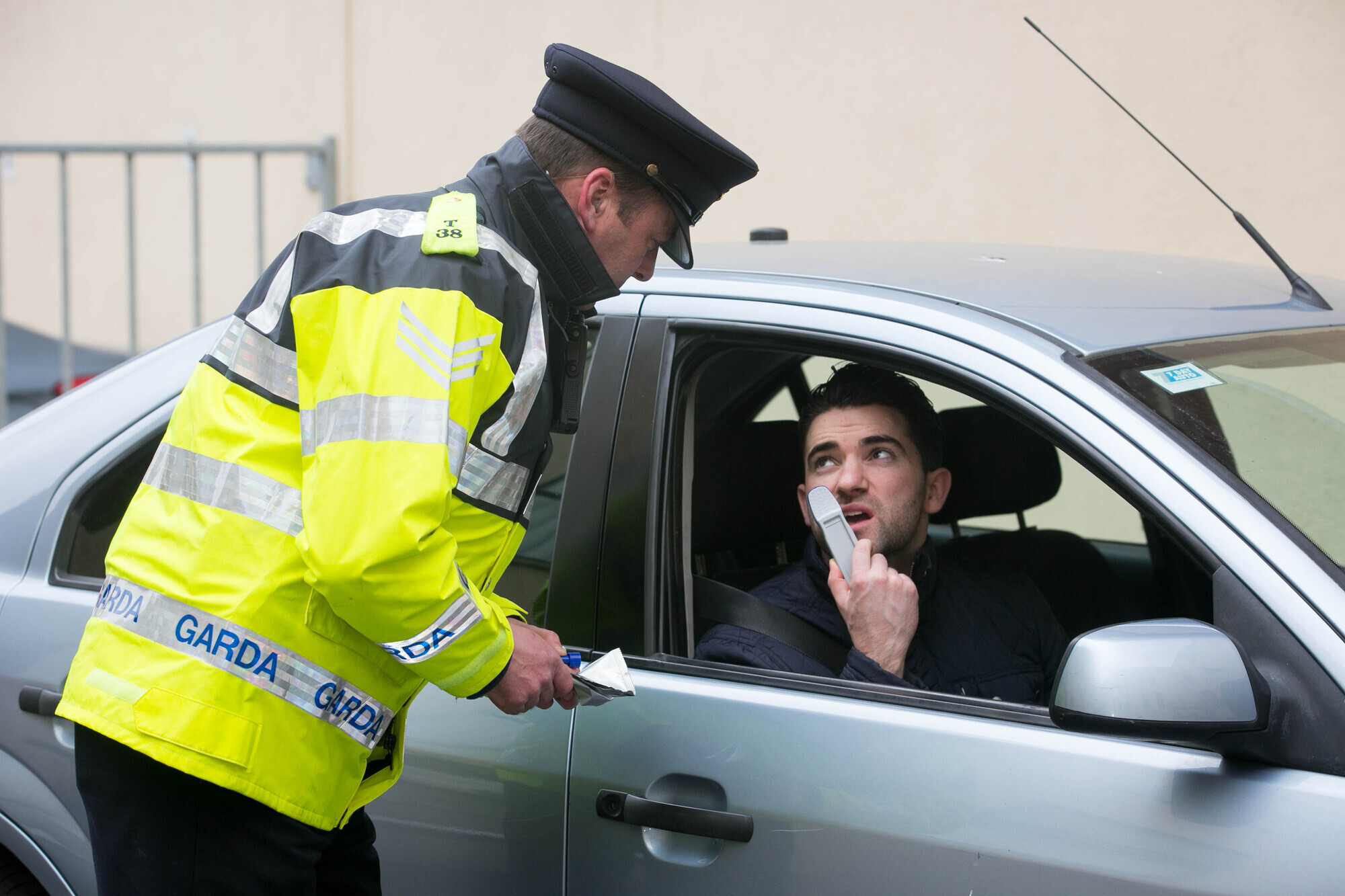
Garda Sergeant Shane Henry and actor Gavin Greene demonstrating the Drager Drug Test 5000 during a simulation to show how roadside drugs tests are conducted. Picture: Gareth Chaney/Collins
In January, the Medical Bureau of Road Safety published its 2020 report, which showed that cannabis is the most common drug found in roadside testing.
The report said that, of the 2,151 positive cases, the prevalence of drugs detected by the DT5000 was as follows:
- 67% were positive for cannabis (66% 2019, 72% 2018, 64% 2017);
- 46% were positive for cocaine (43% 2019, 41% 2018, 35% 2017);
- 8% were positive for opiates; (8% 2019, 8% 2018, 8% 2017);
- 5% were positive for benzodiazepines (4% 2019, 7% 2018, 5% 2017).
Roadside tests for drug driving are carried out with a device that analyses saliva for the presence of opiates, cocaine, benzodiazepines, or cannabis.
According to gardaí, polydrug use is a huge concern for roads policing units, as there have been incidents where drivers have been detected driving under the influence of a number of drugs, including cocaine, cannabis, and heroin.
The Road Traffic Act 2016 gave gardaí stronger powers on the roadside, allowing them to require a driver to provide a sample of oral fluid. Previously, a driver could only be required to provide a sample of their breath for the purpose of testing for alcohol.
Drivers convicted of drug driving face a minimum of a one-year disqualification, although the judge has the discretion to disqualify the driver for a longer period if the facts of the case merit it.
A fine of up to €5,000 can be imposed, as can a period of imprisonment of up to six months.
This article is part of a series in the 'Irish Examiner' — print and online — outlining arguments for and against regulating cannabis as a medicine. Click here to read the rest of the series.
A report published by the Health Research Board in June examined substance use among young people. It outlined that it is illegal to drive under the influence of drugs (including prescription drugs) if your driving is impaired to such an extent that you do not have proper control of the vehicle.
It continued: “In addition, a person cannot drive if they are over the specified limit for cannabis, cocaine and heroin, even if your driving is not impaired.
“In its annual report for 2020, the Medical Bureau of Road Safety reported that those aged 24 years or under represented 24% of arrested drivers providing blood and urine specimens for drug and/or alcohol testing.”
The report outlined that, of the 139 road user fatalities aged 15–24, 123 (88%) had a toxicology result available. Of these 123 road user fatalities, 16 (13%) had a positive toxicology for cannabis.
Of the 123 road user fatalities aged 15–24 with a toxicology result available, 80 were driver fatalities. Of these 80 driver fatalities, 12 (15%) had a positive toxicology for cannabis.
The National Drug Treatment Reporting System 2014-2020 drug treatment data report was published by the Health Research Board last July.
It highlighted that while opioids remain the most common drug among cases treated for problem drug use in Ireland, the number of cocaine cases continues to increase.
According to the report, cannabis was the third most common main problem drug reported in 2020. However, the data showed that the proportion of cannabis-related cases treated had decreased from 27.6% in 2014 to 21.9% in 2020.
There was a drop too in the proportion of new cases reporting cannabis as a main problem — down from 44.9% in 2014 to 35.2% in 2020.
CONNECT WITH US TODAY



Be the first to know the latest news and updates