'She shouldn't be alive': the story of the Cork hit-and-run victim who ran the marathon
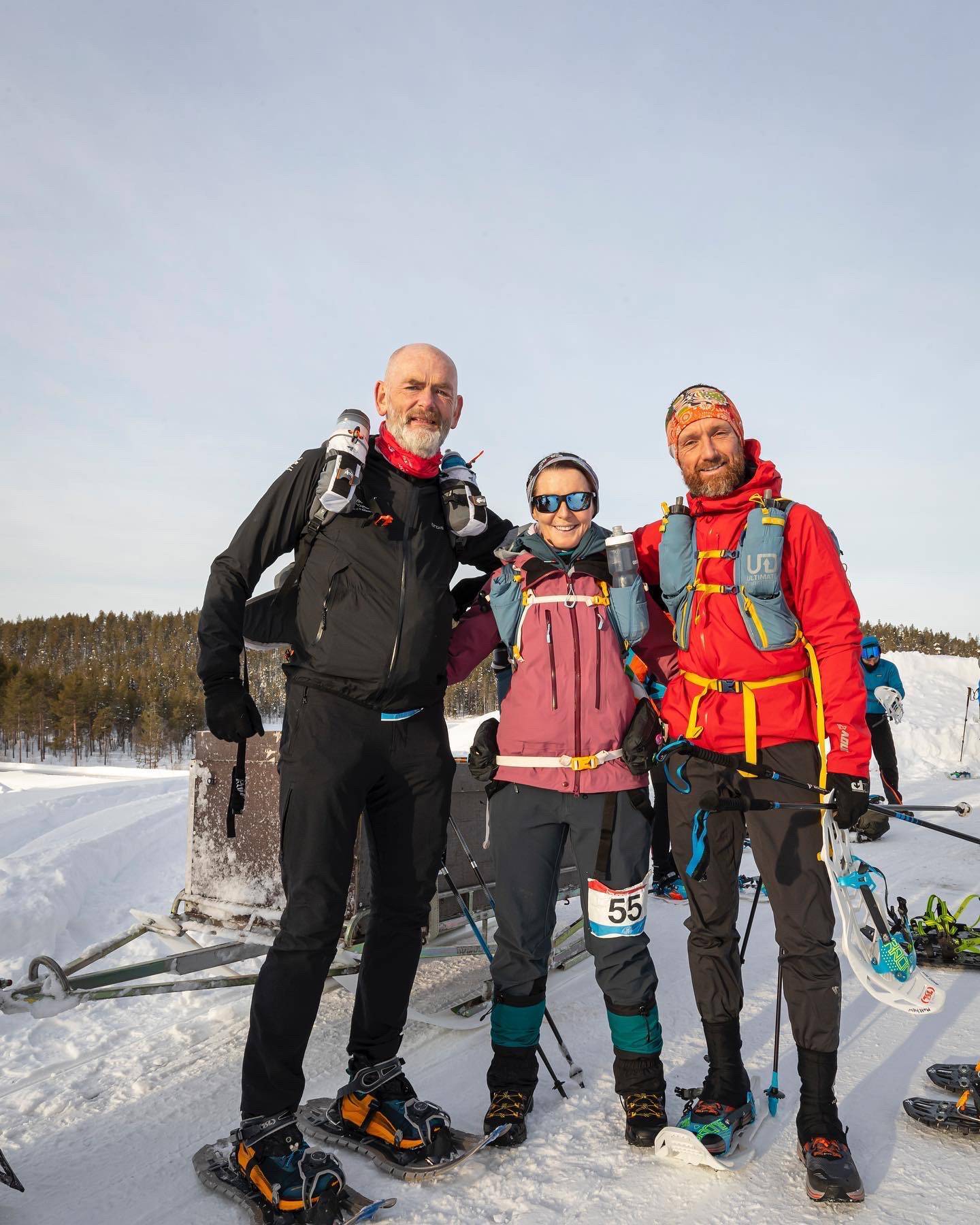
Olivia Keating completed a five-day ultra-run across the Arctic in February this year. Picture courtesy of Olivia Keating
Olivia Keating shouldnât be alive.
She was catapulted 10ft into the air, headfirst into a metal road sign after she was hit by a car driven by an elderly hit-and-run driver.
So, when she crossed the finishing line at this yearâs Cork City Marathon, it was a moment she will cherish forever.
Pre-hospital emergency critical care physician Dr Jason van der Velde, one of the doctors who helped save her life, crossed the line with her.
In doing so, he helped her mark the end of a six-year-long journey of operations, rehabilitation, and recovery after she suffered horrendous injuries in the accident in 2016.
âI was just trying to hold back the tears,â the 43-year-old, who still has a hole in her head from the accident, said.
âI was so proud of him completing his first marathon, and I was so happy with myself.

âI said to myself, as I stood at the finish line, âhere I am doing this race and I shouldnât even be alive in the first place, and Iâve done it with one of the people who saved meâ.
âIt was a very emotional thing.âÂ
A short video of the two of them at the finishing line on June 5 was viewed just under 90,000 times and ended up trending on Twitter.
Watching the video, there is no hint of the scale of the injuries Ms Keating sustained.
They included more than 27 fractures to her face and a broken back. The handlebars of her own bike went through her left leg, which still has âchunks of it missingâ.
She required hundreds of stitches and suffered fractures to her arms, her legs, her pelvis, and ribs.
When Dr van der Velde got to her at that roadside on the morning of June 2, 2016, she had already been loaded onto a stretcher and put in the back of an HSE ambulance.
GardaĂ were redirecting traffic and an advanced paramedic was busy stabilising her.
After years in his line of work, Dr van der Velde doesnât shock easily but when he saw Ms Keating, he almost immediately put her into an induced coma.
âShe shouldnât be alive,â he said, looking back.
âI was at work in the emergency department at Cork University Hospital when the call came in.
âIt was clear she had struck her head against the side of the road sign at the top of a pole.
âHer head had bent that sign and then she had landed up against a stone wall.
âSo, as you can imagine, she was in a bit of a heap.
âShe was unconscious, she had massive injuries all the way down her left side â massive facial injuries.
âThe whole left side of her face was completely loose, and the left leg was in bits.âÂ

He remembers little else about what he saw that day.
That has much to do with the fact that he sees a lot of trauma on a weekly basis.
Last year alone, for example, Dr van der Velde saw 330 patients on 283 callouts where the victims needed his critical care skills to help save their lives, often arriving at the scene in a distinctive pickup jeep, which is funding by the life-saving volunteer charity, West Cork Rapid Response.
The care he gives is akin to the sort of care you would expect to get if you had arrived in an emergency department, except he provides it at the roadside.
But while all his emergencies tend to blur into one, there is one set of injuries Ms Keating sustained that day that he does remember as he tended to her at the roadside in the back of the ambulance.
âHer face was pretty horrific,â he recalled.
âTo put it into context, I was putting the tube into her windpipe to help her breathe and her whole face literally lifted off, and that was with all the breaks and the bones underneath.âÂ
The intervention of Dr van der Velde and his HSE colleagues not only gave Ms Keating the best opportunity to survive but also to have a meaningful recovery.
âThe one thing that is so poignant about Oliviaâs case is that she had these devastating injuries, any one of which could have killed her or led to permanent disability,â he said.
âBut she has never given up and she literally has been through six years of rehabilitation to get her to the point of that finishing line in the Cork City Marathon.
âThat is the testimony to the human spirit and also to extremely good medical care.
âIt is the HSE working properly.
âAnd when she crossed that line, that was her drawing a line under that whole episode.âÂ
All Ms Keating recalls of that day on June 2, 2016, is that she was cycling on a straight piece of road, and it was sunny.

Visits by the 43-year-old back to the scene since have not jogged any memories.
âAll I remember thinking was that it was a lovely day to get a tan,â she said.
âAnd then it is just blank. Nothing.âÂ
She had been on the road because she was training for that yearâs Cork City Marathon.
Although she had already completed 26 marathons all over the world, she had always missed the Cork one.
But she had been determined she was going to do it in 2016.
At the time, she was an ultra-fit athlete and had even been the first Irish person to complete a notoriously gruelling 230km course across the Amazon jungle.
She had also planned to take part in a five-day ultra-run across the Arctic â which she eventually completed in February this year.
But just two weeks before the date of the Cork City Marathon, she had strained an Achilles tendon and decided to cycle to train instead of running to take the pressure off the tendon.
On the day of the accident, she was doing her usual Clonakilty to Bandon and back cycle before starting work as a customer services manager in a video conferencing company at 10am.
Coming behind her as she neared a turning to Ahiohill on the N71 between Bandon and Clonakilty, Co Cork, was a man in his 80s.
He would later say he didnât see her, that a fly in his eye had distracted him, and that he did not even know he had hit her.
But the car he was driving hit her bike from behind with such force that it propelled her up into the air, sending her crashing headfirst into a speed limit sign and then into a stone wall where her shattered body slumped like a rag doll.
She lay there unconscious before a driver behind the elderly hit-and-run driver suddenly pulled over and called the emergency services.
Luckily for Ms Keating, an advanced paramedic arrived a short while later.
While the incident itself is a blank, not everything about it is.
âOne of the most bizarre things was I got a phone call probably a year after the accident from this lady,â she said.
âGod, I said to myself, I recognise her voice.
âAnd it turns out she was actually one of the people who stopped that day.
âShe was living in Bandon at the time and she managed to find out who I was and made contact with me.
âShe sent me a message first and then she rang and straight away, I recognised her voice.
âIt was the most bizarre thing and it was a very comforting feeling when I spoke to her.
âBut I do remember her voice.
âI definitely remember her and it was the same when I was in ICU.
âI remember doctors and nurses that worked and it was a voice, it wasn't their looks.
âAnd when I went back to say thank you before I left, I could tell who had worked on me by the sound of their voice.
âAnd I could actually name them all, even though I was out of it at the time.
âIt just goes to show you that when somebody's hurt or injured, keep speaking to them.
She added: âThat lady told me that she was holding my hand after the crash.
âAnd she told me that I was totally out of it but at one stage, she was just about to get up and move away because when they were working on me she said she was just getting up, and I squeezed her hand.
âShe said with that, she said 'Okay...' and she said she sat down and God love her because I think she was about six months' pregnant at the time.
âSo she sat there and she said that was it, she just kept holding my hand and she was speaking to me while they were walking away until she couldn't do it any longer and they needed to take me away.âÂ
She bears no ill will towards the driver.
Aged 84 at the time, he drove to his sonâs house and his son â who noticed the damage on his fatherâs car â then drove back to find there had been an accident and alerted gardaĂ.
His mother had an appointment in Clonakilty, and he took her to it but wanted to check the route on the way, to see if there had been a crash.
The son was curious about what had actually happened to his fatherâs car as his father did not appear to know.
âThat man was 84 and I know for a fact that he didnât go out to hurt me or anybody that day,â Ms Keating said, speaking about the driver for the first time.
âAs soon as I found out what happened, I gave him forgiveness straightaway.
âIt was an accident, and yes, I will have to live with this forever, but I didnât want him to go to jail or be prosecuted.
âI donât dwell on the whys and what ifs about what he did, or why he did not stop.
âI also didnât want to be causing any trouble for anybody.âÂ
The pensioner, who lived locally, was later given a one-year suspended jail sentence and banned from driving for 10 years after he pleaded guilty to careless driving, causing serious bodily harm, to Olivia Keating at Tillig, Ballinascarthy, Co Cork, in 2016.
According to gardaĂ, he had led an unblemished life and was active in his local community as a farmer and GAA member.
It was noted later in the June 2017 court case that Ms Keating, in a written statement about her injuries, said she did not want to see the defendant jailed.
In November 2018, she settled her High Court action against both the owner of the car and the driver of the car.
While she credits Dr van der Velde and his colleagues with saving her life, she also gives credit to her cycling helmet.
It was one of three things returned to her after the accident.
She said: âThe bike unfortunately was destroyed beyond belief.
âAfter the case was over with, one of the guards who was dealing with it told me she had the helmet, a tyre for the bike, and my right shoe.
âSo I got them from her.
âI have a gym in my back garden, at the back of my house and I have the helmet hanging up the wall.
She has become evangelical about the need to wear a helmet while cycling, so much so that she grabbed the hand of a friend of hers and placed it on the hole in her head.
Her friend had been one of these cyclists who hardly ever wore a helmet.
âUnfortunately, as drivers, we do not pay attention,â she said.Â
âWe do not remember there are cyclists out there.
âI see him cycling around town without his helmet on.
âI went into his office one day about a year ago and I grabbed his hand and I made him feel the hole in my head.
âI was wearing a helmet and it has taken me five years to go through this.
âI said âplease, if you wonât do it for you, will you do it for your family?â.
âI think heâs too scared now to go out without it on in case I see him without it on.âÂ
Ms Keating has so far raised over âŹ5,000 of a âŹ10,000 GoFundMe goal for the West Cork Rapid Response charity so it can train volunteers to carry on its work in supporting the National Ambulance Service.
One of the charityâs volunteers helped save the life of a runner in the Cork City Marathon after they suffered a heart attack.
Dr van der Velde and Ms Keating came across the scene as medics worked on the stricken runner.
âI considered stopping but they told me to âjog on â we got thisâ. And they did,â Dr van der Velde said.
Ms Keating is philosophical about her life since the crash and accepts she is no longer quite the person she was before it happened.
âCrossing the finishing line was kind of me at peace.
âI suppose it's basically me saying to myself âOK, you've done what you were meant to do. Now, go off and live a great new lifeâ.
âIâm finally at peace with myself. Itâs over. I've done the marathon that I was meant to do in June 2016, and Iâve done the Arctic.
âThey were two things I would not let go of.
âOkay, I had to move away from the area where I had lived and I sold my house but I would not give up on the marathon or the Arctic.
âItâs like Iâve lived part one of my life and now Iâm living part two.âÂ
One of the aspects of her new life however, is that she will have to return to work within the next 12 months or so.

The money she got in compensation helped her restart her life and let her buy a house in Kinsale, where she now lives.
But, she admits, she has bills to pay and like everybody else, the cost of living is going up.
She has no idea what she will do but she wonât be going back to sales.
âI have a belief that I can do something good with my life,â Ms Keating, who currently volunteers with the RNLI and the Rebel Wheelers, a sports charity for disabled children, said.
âSometimes it takes something traumatic to happen for you to realise what's really important in life.
âLots of things I will never have again, but that's okay.âÂ
She said she now has a closer relationship with all members of her family, who she sees more and talks to more than she did before the crash.
âI was always trying to get up the next step in the ladder at work and my life was all about having to do this, and having to do that.
âBut we're all replaceable.
âEvery single person, every job is replaceable, at the end of the day.
âFor some of my friends, that ambition is their life and that's fine if that's what makes them happy but for me, lifeâs just not about that sort of thing anymore.â