Transition to nuclear may not be so far into the future
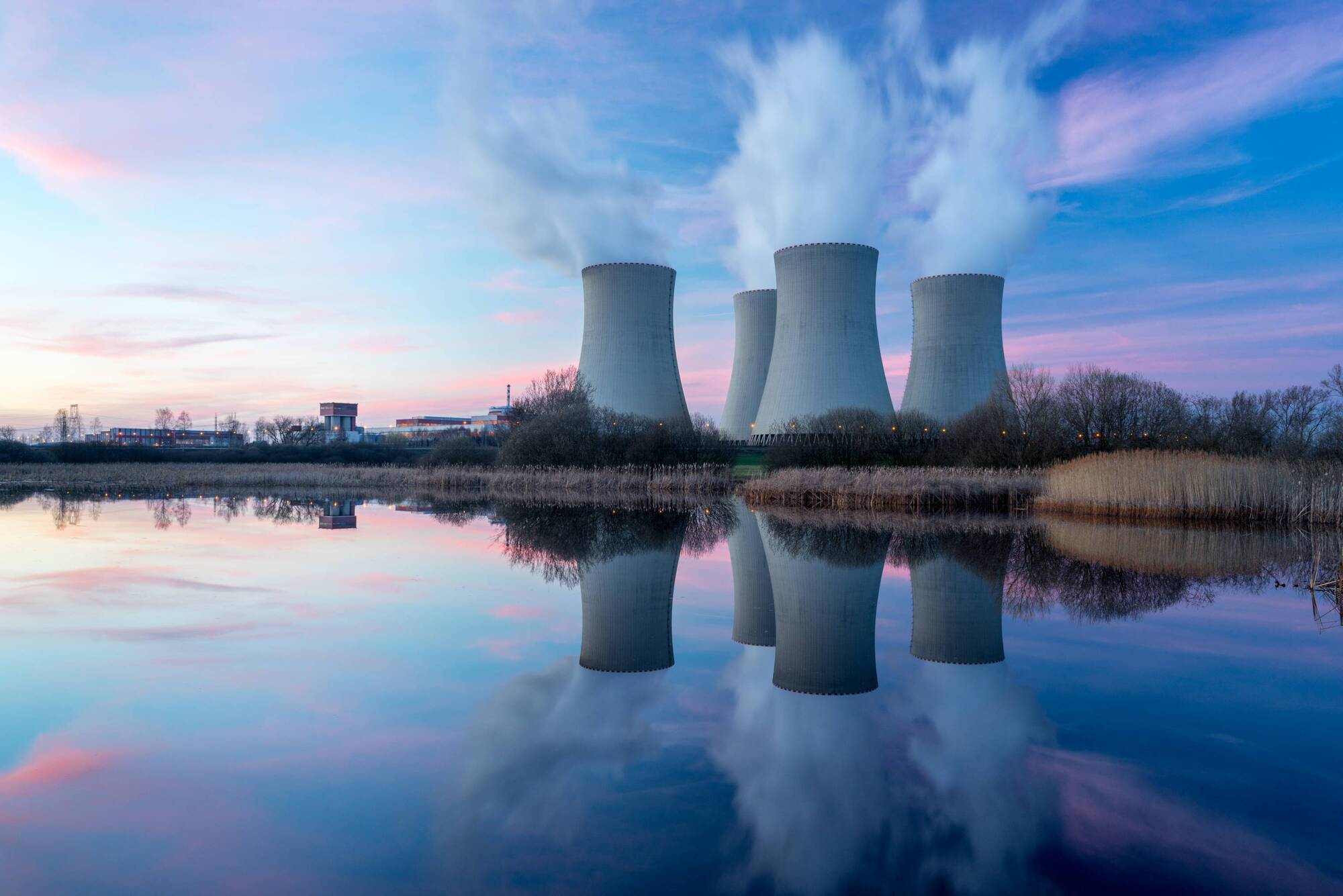
The EU is seeking to reclassify fossil-fuel gas and nuclear as ‘transitional technologies’ for the production of electricity — in other words, that they’re ‘green’ energies
Transition to nuclear may not be so far into the future

Nuclear power plant after sunset. Dusk landscape with big chimneys.


THERE were amhráns, bodhráns, amadáns. There was mighty craic, loads of frolics, pioneers, and alcoholics. No, this wasn’t the Lisdoonvarna music festival as immortalised by Christy Moore, but a different gathering on the east coast of the island around the same time — and Christy was in attendance here also.

Carnsore Point, Co Wexford, the summer of 1978. They came from the four corners to sing and dance and protest. No to nuclear energy. No to Ireland joining the countries that were embracing this cheap yet dangerous method of generating electricity. No to a form of energy that was central to an arms race between two superpowers intent on propelling us all off to hell in a handcart.

Recent archive-footage programmes from the late ’70s have again brought to life the protest against the proposed siting of a nuclear plant in this country. The protest succeeded and nuclear energy was banished and subsequently banned.

Roll it on 40-plus years and the existential threat is no longer itchy fingers in the Kremlin and Washington, but the enveloping doom of climate change. Wherefore nuclear now?

On New Year’s Eve last, a draft “delegated act” was sent from the European Commission to member states signalling intent to enact legislation providing for the inclusion of fossil-fuel gas and nuclear energy as “transitional technologies” for the production of electricity. This would signal to investors that both of these types of energy are certified as being “green” enough to contribute to the reduction of carbon emissions in the short to medium term.

The road to carbon neutral is littered with uncertainty.

If the delegated act is accepted by member states and the European Parliament, it could be a major boost for the proliferation of nuclear energy. Some see this as “greenwashing”.

Others believe it is an inevitable and even welcome development in attacking emissions and saving the planet before the clock strikes midnight.

Fianna Fáil MEP Billy Kelleher is more likely to hang with the latter crowd than the former. “How do we get from carbon dependant to carbon neutral by 2050,” he asks.

"You have to ask whether nuclear and natural gas have a part to play.

"I’m not a scientist but I have studied this and no matter what way you look at it, half of the carbon-free electricity generated in the EU is by nuclear. If we are to get to a stage where we get countries like Poland and Bulgaria off coal then we are going to have to transition.

“We might have to face up to it in this country too. We’re already importing electricity from France that is generated through nuclear energy. We can’t be hypocritical about it.”

The Ireland South MEP’s analysis of the situation chimes with that of some member states — particularly France — but not others, such as Austria, which has banned nuclear energy. 

Two major issues: Safety and waste

There are two major issues around nuclear for those who are opposed: Safety and waste — both of which, says Green Party MEP Grace O’Sullivan, can’t be ignored.

“We are currently facing a triple planetary crisis of climate change, nature and biodiversity loss, and pollution and waste,” she says.

“While arguments for nuclear energy tend to focus on the first issue, relating to how we produce our energy, they ignore the threat that nuclear presents around protecting nature and cutting waste.

"Not a single country on the planet has found a safe and permanent way to dispose of hazardous nuclear waste.

The Chernobyl power plant: A catastrophe that lives on in the global memory.

"Just like with fossil fuels, we have handed the problem to the next generations to deal with.”

There have been three high-profile accidents at nuclear facilities over the years. Three Mile Island in the US had a what was classed as a level 5 incident in 1979 on a scale where level 7 is the most serious. There was no official loss of life recorded from the incident.

Chernobyl occurred in 1986 when Ukraine was still behind the Iron Curtain as part of the Soviet Union. Officially, 50 deaths were directly attributed to the disaster, but the real human cost, including to children born after the disaster, may never be known.

The only other major nuclear incident occurred in Fukushima in Japan in 2011, following an earthquake and tsunami. Again, no loss of life was directly attributable to the incident but it did highlight how things can go wrong even when the best safety measures are taken.

Denis O’Shea is a member of 18For0, an Irish group lobbying for nuclear power. He says the safety issue is overblown.

"There have been three incidents worldwide and all the deaths are down to Chernobyl," he says.

“That was built and operated under the Soviet regime, which might explain that. It actually turns out to be the safest way of generating electricity. On an objective basis, the safety record is the best, bar none.”

Objectively that may or may not be the case but perceptions persist. Chernobyl was such a catastrophe that it lives on in the global memory. On the other hand, advocates note there has never been an incident in the EU despite the location of over 100 reactors within its borders.

Observers have pointed out that categorising nuclear as “transitional” raises questions about how long the transition is going to endure.

Even if the measure was accepted by member states and the parliament, there would be no new reactors in place by 2030.

The commission has proposed that new plants operational ahead of 2045 could be given the nod, but that raises issues over the lifetime of any plant and whether there would ever be a total commitment to renewable energy sources.

Lobbying

Lobbying by some member states and industry has been central to the commission’s move, but it is also the case that some Eastern European countries, in particular, would find it extremely difficult to transition from coal directly to renewables such as wind. That is the main basis on which the relevant EU commissioner, Mairead McGuinness, has put forward the proposal.

Paul Deane, an energy researcher at University College Cork, is in favour of the proposal, but he feels the main focus will be on the gas element of it rather than the nuclear. “It’s backed up by science,” he says.

“It’s unpopular but necessary. Look at the weather for the last three days — dull, cool, overcast, no wind. During those days we need something to generate electricity and the cleanest available fossil fuel is gas. We will need that unless there is some breakthrough to allow for the storage of huge amounts of electricity cheaply or build more onshore of offshore windfarms.

Nuclear is more of a challenge. It makes a lot of sense, it’s as clean as wind and solar but the big challenge for nuclear is waste.

However, even if most of the focus does go on investment in natural gas, there remains major opposition to the idea that it could be categorised as a green entity.

Tara Connolly, a senior campaigner at human rights and climate justice agency Global Witness, says any such categorisation would only come about because fossil-fuel companies are desperate for a green label. 

“If the EU decides fossil gas is a ‘green’ investment it would seriously undermine Europe’s plans to tackle climate change and send a terrible message to the rest of the world that climate-wrecking fossil gas is a sustainable fuel,” she says.

“Gas companies don’t need the money — they are swimming in record profits as energy prices rocket — but they are still desperate for a green label which would help with their greenwashing efforts.”

The ball is now in the court of member states and parliaments. Some see the choice as making a little extra headroom for what is going to be a massively transformative change right across society and economies.

For others, the proposal is merely diluting down strict parameters on what precisely is sustainable energy. All agree that, come what may, there won’t be any new nuclear plants in this country for the foreseeable future. The only problem is that it’s not easy these days to see too far into the future.

x

More in this section

Lunchtime News

Newsletter

Keep up with stories of the day with our lunchtime news wrap and important breaking news alerts.

Cookie Policy Privacy Policy Brand Safety FAQ Help Contact Us Terms and Conditions

© Examiner Echo Group Limited