Nphet 'is no old boys club' — We meet the women behind the acronym
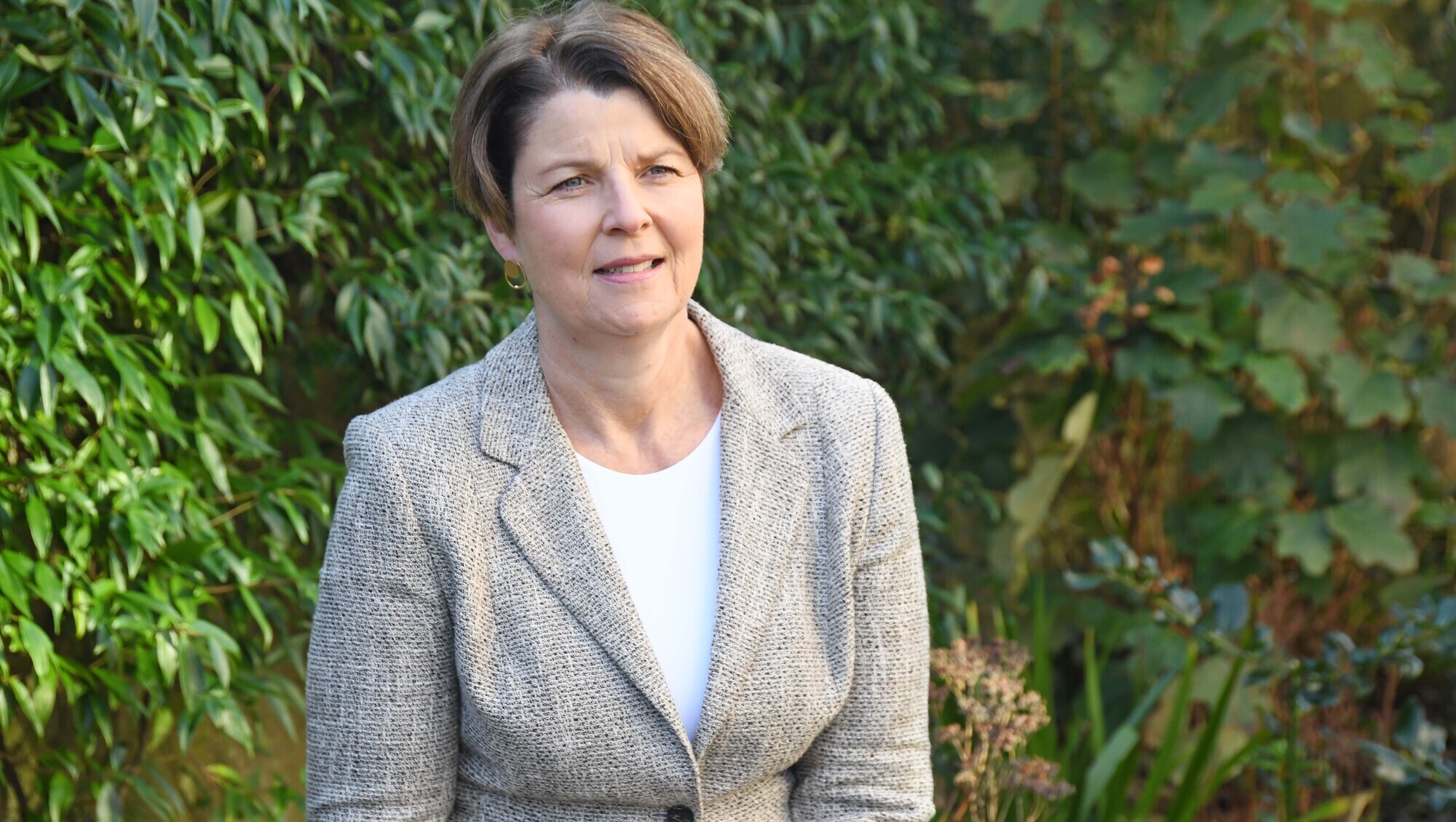
Dr Mary Favier, Covid advisor to the Irish College of General Practitioners and member of Nphet. "I do always try to support public health principles, but I don’t always routinely support the government, because that’s different. And they are aware of that.” Photo: Denis Minihane
When looking back at a crisis, it's often asked if it could have been prevented, or if the outcome would have been different, had women been in charge?
During the Covid pandemic, one charge often put forward is that public health policy is too dominated by men - Nphet in effect is a "boy's club".
However, it might come as a surprise, but at the December Nphet meeting, 24 women were listed, along with 19 men, filling roles from general practice to public health to hospitals to government bodies.
This reflects the findings of a 2020 study which found Nphet among the 15% of pandemic taskforces across 87 countries which had “gender parity” among members.
The high number of women reflects the 78.5% female workforce in the HSE; heavily concentrated in some areas with 90.3% of nurses and midwives female, but moving into other areas with 50.6% of consultants now women.
However, there is a widespread perception Nphet has a blind spot when it comes to certain issues and it has been tagged a boys’ club more than once.
So what exactly do women on Nphet do, and how do they think this perception has come about?

Dr Siobhan O’ Sullivan, chief bioethicist with the Department of Health, played a key role in drafting the Ethical Framework for Decision Making.
She led discussions on uncomfortable questions like who should get an ICU bed if the system is overwhelmed, and more recently worked with medical bodies to decide vaccination priorities.
“There was a focus on solidarity and minimizing harm which was conceived of very broadly, and included physical, mental health and economic harms,” she said, adding she was very aware of the “profound impact” lockdowns had on people’s incomes.
Equity has to mean more than gender, she said saying age, ethnicity and socio-economic status are also important.
“I am very conscious of the disproportionate effect the pandemic has had on women at multiple levels; more women on the frontline often in lower-paid positions, having to assume more responsibility due to the childcare and educational responsibilities.
“This has forced many women out of employment which long-term impacts on their financial security.”
Age has proved crucial in this pandemic with the virus especially dangerous for older people.
“It was about trying to navigate the complex trade-offs in trying to limit the number of deaths from Covid-19 while recognising the cost of the physical and mental burdens for those who were advised to cocoon,” she said.
For Dr Mary Favier social issues came to dominate her contributions as a GP. When the pandemic hit she was president of the Irish College of General Practitioners and is now their Covid-19 lead.
Invited to join Nphet in late March 2020, she said: “I think a GP was not appointed immediately to Nphet because I think at the time – and this has changed – there was perhaps a predictable hospital-centric focus.”
Through interactions with the public at her Cork city practice, Dr Favier knew this pandemic was never only going to be about hospital patients.

“One of the roles I’ve ended up having is knowing I need to advocate for the disadvantaged,” she said.
People with disabilities, with mental health issues and families suffering through domestic violence, migrants who struggled with English-language messaging and people unemployed because of lockdowns should be part of Nphet discussions, she felt.
Unlike many other members, the GP is not employed by the HSE or the Department of Health.
She has become a familiar voice in the media as a result.
“I am one of the few who can speak freely in public. I do always try to support public health principles, but I don’t always routinely support the government, because that’s different. And they are aware of that.”
She points to women she interacts with on Nphet and their “significant” influence but is critical of lack of efforts to counter “ the optics” indicating otherwise.
“There is a narrative that it is male-dominated, and that everyone who makes decisions is in a suit and there doesn’t seem to be much political interest in countering these optics,” she said.
“Some of the most useful contributors are women and I have learnt lots from them.”
Gender balance is not only about having women in the room, she points out it must include the impact of decisions. She has serious worries about the “disproportionate impact of the pandemic on those disadvantaged, particularly women and children”, describing this as “a real societal issue.”
“This is inevitably even more important when you have a male-dominated, well-educated, and well-paid group of significant health decisionmakers such as Nphet, and I’d include myself in a lot of that.
“But it is most particularly significant in relation to the political sphere which serves to set the tone for commentary and emphasis and support. Gender balance is a small part of a bigger issue.”

Expanding health to focus on the prevention of problems is also a key concern for Professor Breda Smyth, HSE director of public health in the West.
She was initially invited onto Nphet because of her background in epidemiology and modelling, having led the Planning for Health team previously.
“Investment in public health is money very well spent, prevention is better than cure, it increases efficiency and it has significant value for money,” she said.
She talked about how important it is to have someone on Nphet who could bring an understanding of what the public might need to modelling scenarios, saying this helped “translate it (data) into potential solutions or challenges that may arise”.
Referring to the lifting of restrictions in December 2020, she said: “there was a sense of foreboding, you could say ominous really, with regards to the lifting of those restrictions at that time.”
That ‘meaningful Christmas’ ultimately contributed to a tragically-high death rate.
“On evaluation the data was clear that our baseline wasn’t low enough for the lockdown to be lifted to that extent. By lifting the restrictions there was inevitably going to be increased socialisation, which there was, which led to the third wave.
“Nphet was clear on the recommendations at the time, the recommendations didn’t change. I was part of that consensus.”
She is hopeful closer and more “robust” relationships developed because of the pandemic between different branches of the health service will remain, saying this is what will tackle “health inequalities”.
On gender roles within Nphet, she said she would consider every person around that table being equal and each contribution equally valuable, irrespective of gender.

Numbers also played a role in bringing Dr Darina O’Flanagan back from retirement to become a Special Advisor to Nphet.
Formerly director of the Health Protection Surveillance Centre, in 1998 she set up the surveillance system now well-known to anyone following charts with Covid cases and outbreak numbers.
“When we see evidence there is a wave coming, I think we have moved sooner (than other countries).
“People talk about the economic impact, but I think the evidence shows if you control a wave better there is less overall in the long-term economic impact.”
She sat on the Rapid Testing Expert Advisory Group which produced a contentious report last year.
“I think there was a lot of misinterpretation of what I was saying,” she said.
“The reason I didn’t sign the report was because I didn’t feel it was a balanced report, and didn’t necessarily cover all the disadvantages as well as the advantages of antigen testing. My view was you should use them in high prevalence-situations.”
At the time she felt the HSE should control the roll-out of antigen tests.
“Antigen is for a time of high prevalence when the PCR system is under high pressure, when we can make better use of them."
Like other women interviewed, she feels attendance or non-attendance at televised briefings has given people a false idea of how Nphet works.
“It’s true the two people who are speakers and communicators are male, but I believe it is important you have trusted communicators so you don’t need too many people, that is really important,” she said.
One person who works mainly behind the scenes is Chief Nursing Officer Rachel Kenna. She took up this role in June 2020 with a background of 28 years as a nurse mainly with children.
“There is a very large communication system throughout the nursing and midwifery network, a key role is to advocate for patients,” she said.
This network fed information to her which she brought to Nphet, she said, describing it as a “direct line” between patients and decision-makers.

However, it is no surprise she describes staffing and workforce planning as “a huge concern” during the pandemic. She worked to “influence” decisions around funding for agency staff and other supports.
She is hopeful patients will benefit from some changes the pandemic brought about such as improved access to nurses or midwives outside of hospitals including for end-of-life care.
“We have dealt with death on a scale that has never been witnessed before, and the importance of empathy, kindness and comfort for people (is clear),” she said.
Coming from a strongly female workforce, she saw the female expertise on Nphet as “significant", saying many of them were also home-schooling or caring for older parents during the pandemic.
“Any of the decisions we were making, there were well-rounded supports for women and children in that, I feel.
“Nphet has to make decisions for the wider population so it might sometimes feel it is a boys club or people haven’t been thought of, but I’m satisfied that all groups are represented fairly. The decision mightn’t feel like that because they are restrictive decisions necessarily.”
From inside the hospitals, Dr Anna-Rose Prior represents the Irish Society of Clinical Microbiologists on Nphet.
She joined last February, and described the beginning as “a bit intimidating” and “incredibly busy” as hospitals, including Tallaght University Hospital where she works, struggled with the virus.
“I brought a hospital infection control perspective, the pressures on the laboratories in terms of testing, but infection control particularly in a hospital setting – that would have been my biggest contribution,” she said, adding more understanding of the resources needed to prevent hospital-acquired cases of Covid was needed.
A study she led in 2020 found that 20% of healthcare workers surveyed had Covid-19 but one-third had not realized this, indicating the need to take account of asymptomatic infections.
She said she hadn’t realized the number of women who sit on Nphet until she joined.
“I think the big figure that people see, the names they recognize, they are men. It’s probably fair people might think it’s a boys’ club.
“Since I’ve joined Nphet, I’ve realized a lot of (social) issues are discussed, it is not purely just we need to restrict, we need to get the numbers down.”
Dr Siobhan Ni Bhrian was also feeding information on social health issues into Nphet, as the HSE lead for Integrated Care.

The impact on young people was particularly “significant”, with mental health services telling her of increases in eating disorders for example.
“Being very involved and supportive of the moves to get children back to school was very important to me, that felt like a massive achievement,” she said.
Dr Ni Bhrian described Nphet as a “vocal group” and said: “there is no old boys club about it.” She said people may not appreciate the care taken behind the scenes to ensure all groups from society are included in some way.
Wider campaigns for the public around public health guidelines were run by various units linked to Nphet.
Fidelma Brown as HSE head of campaigns and programmes said the pace of the information cycle has been the most challenging part of her role.
“We were asking people to change their behavour really dramatically, really quickly. Asking people to wash their hands, to stop hugging, to begin to wear masks,” she said, describing the response in Ireland as “remarkable”.
One change she picks out was the new focus on multi-lingual communication, saying this was not the practice before Covid hit, and describing it as “definitely a bigger challenge”.
She expects this to continue, which should give migrant communities more of a voice in health services.

Her counterpart in the Department of Health is head of communications Deirdre Watters who also talked about the sheer volume of information which they needed to get out very quickly as businesses and families faced huge change.
She led the project team which developed the yellow colour scheme now seen on signs from supermarkets to airports, in partnership with a branding agency Zinc Design, coincidentally also run by women.
“We have been listening to different cohorts of society to understand how they are being impacted by the pandemic, and we are very conscious of the disproportionate impact the pandemic has had on women who are more likely to be healthcare workers; single parents negatively impacted by restrictions; looking after young children and/or older parents,” she said.
Does knowing the real level of female participation soften the edge of those monotone men-in-suits-photographs for lockdown announcements? Maybe, or maybe not.
One issue gently raised by some women interviewed for this story is that historically women did not get to take on senior health roles.
However, based on the experience so many young women are having now on the frontlines of this pandemic, the next Nphet could look very different - behind the scenes and in front of the cameras.