Ballynoe families in fresh call for nursing home inquiry
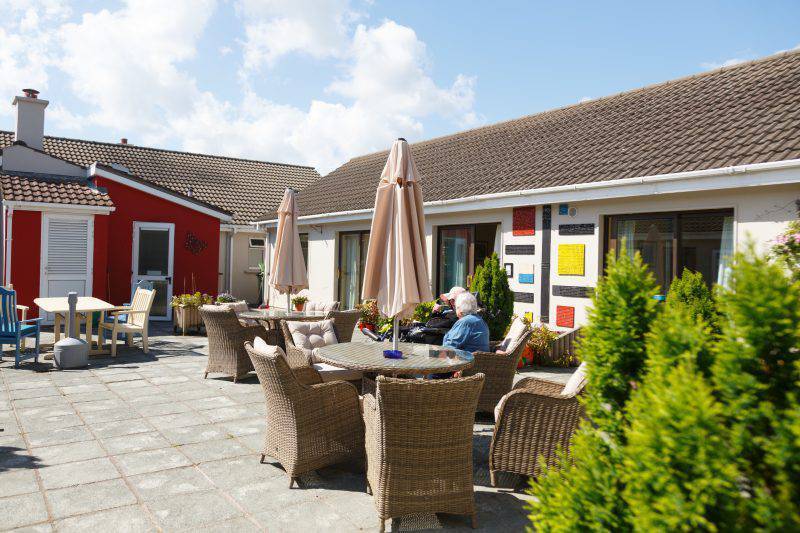
Ballynoe Nursing Home: 21 residents died in January and February of this year. Picture: Carechoice.ie
One of the many things the late Veronica Coyleâs family agonises over is a phone conversation her husband Pat had just days before she died at Ballynoe Nursing Home.
The softly-spoken former postman was informed by a member of staff that the 64-year-old, who suffered from dementia, was in âgood spiritsâ and âall her vital signs were goodâ.
The same staff member went on to tell him that the mother-of-three, who died on February 8, had just had a âniceâ walk around the main hall of the Upper Glanmire home.
âI was very shocked because my wife hadnât walked for years,â Pat, 67, recalled.
âWe had actually bought a special wheelchair for her because she spent so much time in it.
Stories of similar confusion are shared by many of the families of the 21 residents of Ballynoe that died in January and February of this year.
Some of those who shared their stories with the Irish Examiner earlier this year will feature in on Prime Time tonight.

They included Teresa Mulcahy, whose mother Margaret Kelleher died in the home on February 6.
On the programme, which featured the testimony of three whistleblowers â one of whom described her concerns about Ballynoe Nursing Home â Ms Mulcahy echoed her previous calls for answers.
Also looking for answers is the family of a former resident whose file contains details of temperature checks on days she wasnât even in the home.
The woman had been in Ballynoe Nursing Home with her elderly brother but begged her family to take the two of them out of the home.
Their families found another home for them both, but sadly, although she survived Covid-19 and moved out, he died there.
After she got out, the woman â who has requested anonymity â asked Carechoice Ballynoe Ltd to return her medical records.
As she is still alive, the company returned them.
What's most noticeable in them are three morning observations of the woman, who entered the home for the first time around 4pm on Wednesday, December 23, 2020.
The observations say she had her temperature taken on the morning of Monday, December 21, and it was 36.3.
It was also taken on the morning of Tuesday, December 22, and again, it was 36.3.
The notes also say her temperature was again taken on the morning of December 23 â many hours before she was even in the home.
According to the notes, her temperature was up slightly, to 36.4.

Arlene Walsh, whose beloved 81-year-old uncle Jimmy Lee died on February 3, 2021, tried to get his medical notes after he died but her request was refused by a senior member of staff who wrote to her in March.
In the letter, she was told: âI regret to say we are unable to release the records requested due to the duty of confidentiality owed to Jimmy Lee.
âWhile it is not our intention to be obstructive, we are obliged to act in accordance with our duty of confidentiality to residents and former residents.
âThis duty of confidentiality is referenced, for example, in the Medical Councilâs Guide to Professional Conduct and Ethics for Registered Medical Practitioners, which provides that âpatient information remains confidential even after deathâ.
âWe also note the Nursing and Midwifery Board of Irelandâs Code of Professional Conduct and Ethics provides that âPatients have a right to expect that their personal information remains private'.
âUnfortunately, due to these requirements, we are unable to provide you with the records sought."
Mrs Walsh is one of the 13 families taking legal action against the home through solicitors PA Duffy.
She was the first relative of someone who died at the home to also make a complaint to gardaĂ. They have been asked to help find some of Jimmyâs possessions which have gone missing.
Mrs Walsh isnât the only person whose loved ones' possessions are missing.

Sisters Anna and Nicola, for example, are still trying to solve the mystery of their mother Anne Chandleyâs thick gold wedding band.
While a smaller ring on the same finger was returned, they were told it was the policy of the home to leave wedding bands on.
âIf that is the case, they would have had to take the wedding band off to take off the smaller ring and then they would have had to have put the wedding band back on,â Anna said.
âThat does not make sense to us because we did receive back the smaller band.
Among a number of other questions, she mentioned the missing wedding band in a letter to CareChoice (Group) Ireland on March 3.
In reply, CEO Gerry Moore told the family: âHer wedding band was not removed when she passed, away as is normal practice.â
Like other residentsâ families have said previously, Anna and Nicola say they found out their mother had Covid-19 by accident.
âA nurse rang to give us an update on our mother on February 2 and it was like a bolt out of the blue to be told she had Covid-19,â Anna said.
The family say they were then promised they would get regular updates every night, but instead â like so many other families â say they had to routinely chase the home for an update on their mother.
And when they did speak to someone, they say they were regularly told their mother, who had suffered a stroke before entering the home, was fine.

Despite this, however, they say their mother called them around 10.45pm on February 6 and asked to be taken out of the home.
âJust after she asked to be taken home, a male voice came on the phone and told us not to worry, she was âjust a little lonelyâ,â said Anna.
âIt was all very unusual for her to call.â
A day later, a nurse rang to say their mother was refusing her medicine and that she was âa bit distressed and lonelyâ.
The family last saw their mother alive on February 8.
They had been called on and the family, who were dressed in PPE, were given 15 minutes.
âShe was lying in the bed sideways in the bed, fully dressed,â Anna recalled.
âShe was semi-comatose and her eyes were glazed.â
What also mystified the family as they were led into their motherâs room was the fact that there was music playing in the room, which the family likened to âfuneral home musicâ.
Since her stroke, Mrs Chandley hadn't listened to the radio or watched TV because the sound hurt her ears, which were very sensitive to noise.
Anna recalled the last moments the family had with their mother.
âWe are told we couldn't touch her, even with our PPE on,â she said.
âWe were told we couldnât even hold her hand or rub her forehead.
âTears were falling down her cheeks as she lay there.
âShe knew we were there, and at one point she even tried to lift her arm.â
Carechoice Ballynoe puts the high death toll in the home down to a highly transmissible variant of the virus in the third wave.
And it has again apologised for its failure to communicate properly but insists that was down to the âferocityâ of the virus.
And it has also praised the âheroicâ work of its staff in tackling the virus.
The company, however, declined to address any of the other issues the raised with it this week.
This was because it did not want to comment âon the care of individual residentsâ, the company said.
And a spokesperson said: âWe continue to engage directly with families and always remain available to discuss any concerns they may have.â

Of the deadly outbreak, it told the Irish Examiner: âThe third wave of Covid-19 led to enormous tragedy in Ballynoe Nursing Home.
âLike so many hospitals and nursing homes, Ballynoe was faced with unprecedented and extraordinary challenges as a result of the third wave of a highly transmissible, deadly variant of the virus.
âAs the Covid outbreak unfolded in Ballynoe, almost all of our regular staff either tested positive for Covid-19 or were close contacts of confirmed cases and had to be replaced.
âTo agency staff and staff from our other homes who heroically stepped in in the most trying of circumstances, we offer our sincere thanks.â
It added: âThe speed and ferocity of the particular variant of the virus was faster, at times, than our ability to communicate as we would have wished and we are sorry for the added distress that this caused to families.â
Majella Beattie, whose Care Champions advocacy group is the main force behind making public most of the abuse allegations, said: âNeither the Government, nor other relevant authorities, can claim to be surprised by the findings of (the) programme.
âThe Irish Association of Social Workers alerted the Government [and] the HSE during the pandemic of the increased risks of abuse posed by the prolonged cocooning of residents behind closed doors of nursing homes.
âDespite warnings and opportunities to intervene, the Government failed to take adequate measures to prevent what happened.â
Socialist Party TD Mick Barry said: "Reports are accumulating of neglect and mistreatment of elderly people in some nursing homes during the Covid period â these need to be investigated.
"The argument that all measures possible were taken to safeguard health and lives in all nursing homes has been challenged by many relatives and needs to be investigated also.
"How much longer can Stephen Donnelly keep stalling on a national inquiry into nursing home deaths and the treatment of nursing home residents in the course of the crisis?"
In March, the reported that abuse of nursing home residents could be as bad as the notorious Ăras Attracta care home scandal in 2013.
This was according to Dr Sarah Donnelly, assistant professor at UCD's School of Social Policy, Social Work and Social Justice.
Dr Donnelly said too few people know what exactly has been going on behind closed doors in nursing homes during the pandemic.

The Irish Association of Social Workersâs Sinead McGarry said she and colleagues like Dr Donnelly met with Minister of State for Older people Mary Butler in March.
It was an hour-long meeting over Zoom.
As for Teresa Mulcahy, tonight's was a deeply emotional milestone as she still grapples with the deep grief she feels.
"I just hope that now that the issues raised have made it onto the national broadcaster, that the Government will do something," she said.
"What happened in our nursing homes has done untold damage to so many families."