Getting the goods part 3: Toilet roll shortages and Ireland's largest warehouse
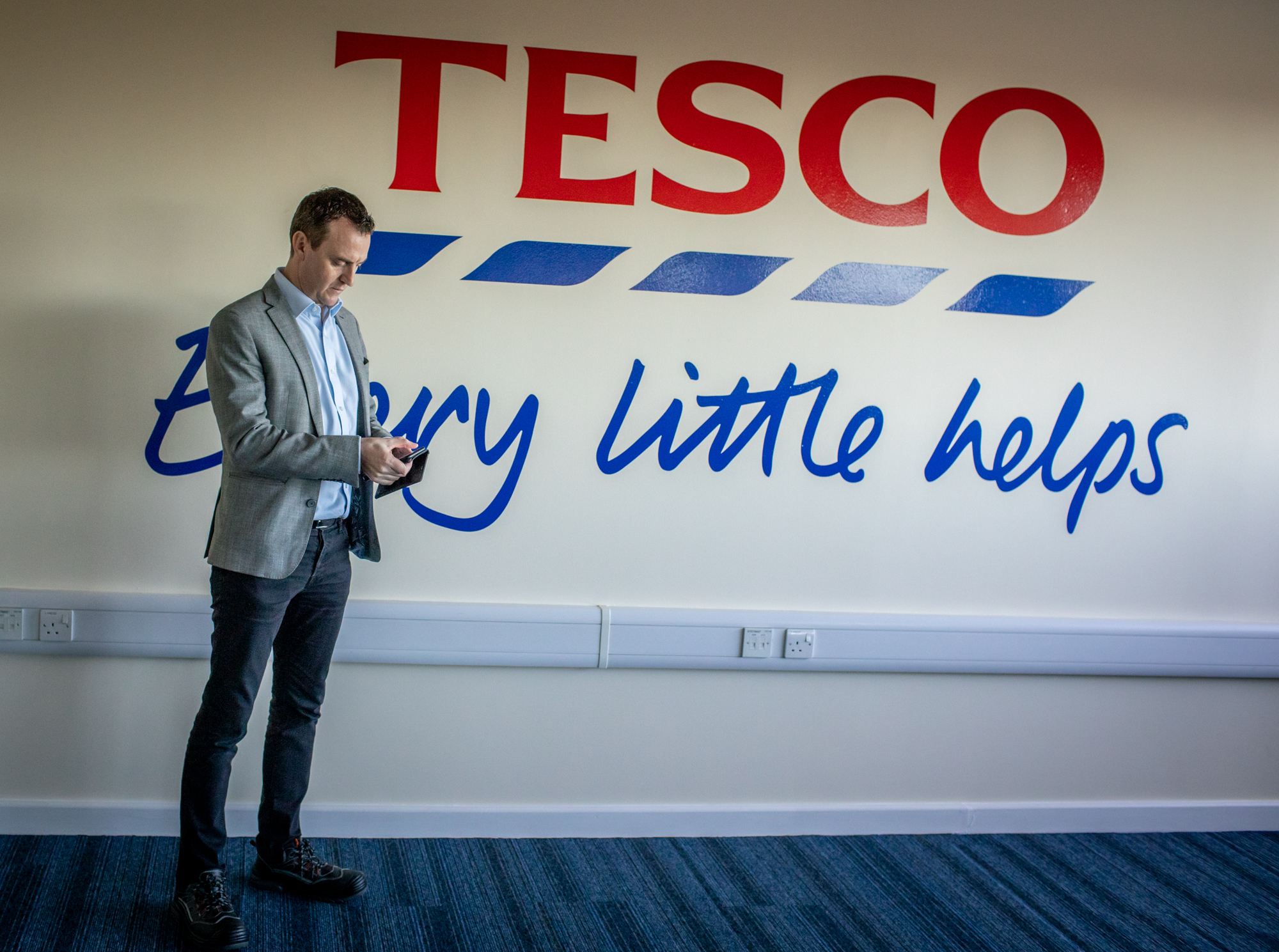
Ian Logan, Tesco’s Retail and Distribution Director: "We never really viewed it (the toilet roll shortage) as a crisis. "Photo: Neil Michael
The end of February last year will forever be etched on all our minds.
At the time, there were still fears that the world might be on the verge of a pandemic. It quickly became a time of panic buying.
As a stockpiling crisis duly hit supermarkets around the world, people started to hoard hygiene products, tinned food and pasta. The hysteria started in Asia, crossed to Australia and then spread quickly throughout Europe and then eventually Ireland.
Soon toilet paper emerged as an icon of mass panic for the pre-pandemic zeitgeist.
Videos started emerging on social media of people fighting over toilet roll, along with endless photos of empty shelves that were once used for toilet roll.
So when his staff started getting repeated calls from around Ireland about toilet roll shortages, Tesco’s Ian Logan could be forgiven for getting nervous. Did alarm bells start ringing in the Tesco stock system?
Ian, Tesco Ireland’s Retail Support and Distribution Director, lets out a hearty laugh: “No, but the system was going ‘Are you having a laugh?’.
“That fad for buying lots of toilet paper started in Australia and to this day, I don't know how it ever happened but it did.
“The staff on the shop floors began to notice it here first. Our problem wasn’t that we didn’t have the product, it was just that we couldn’t get it out fast enough.
“At the end of the day, if you're getting a daily delivery of something like toilet roll, then you only really hold enough stock to see you through for a day or two in the store.
“So then you have to intervene because it became a crazy, and self-fulfilling thing, especially as it was on the news and everybody was getting more and more panicked.
“The reality is that we were always able to supply toilet roll, it just might not have always - at the height of the panic - have been every single variety.” He adds: “To many, it will probably always be one of the biggest supply crises at the start of the pandemic.
“But we never really viewed it as a crisis.
“We always had toilet rolls to sell.” There would, however, have been a bigger crisis for Tesco if the chain had run out of bread.
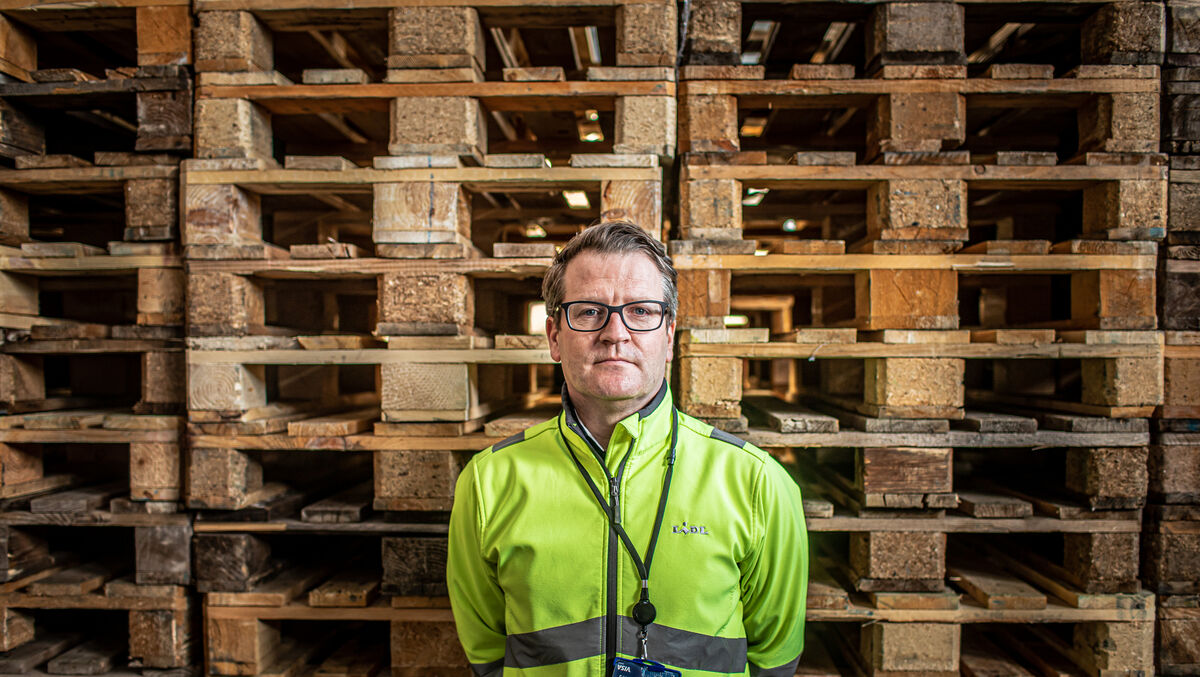
Philip Doherty, Regional Logistics Executive for Lidl’s Newbridge Regional Distribution Center (RDC) in Co Kildare, is of the same view.
“We found out about it the old-fashioned way,” he recalls.
“Our store managers called us and told us. When the first lockdown was announced, it created panic in the market because customers didn't realise they would still be able to go and shop.
“So panic buying kicked in. The situation changed literally overnight.
“But the challenge then was for us to get back-up supplies on trucks and into the stores as fast as possible, and we were able to do that within 12 to 24 hours.” How Lidl handled the toilet roll “crisis” - or “spike” as he would prefer to call it - is the same way they handle all other spikes.
And during the pandemic, these have included demands for kitchen towels, dry pasta goods, tinned products, and home baking products.
“The challenge wasn't a supply chain issue, as it wasn't the case that we didn't have the product,” he said.
“It was physically getting the products moved to the stores fast enough to meet demand.” It’s when you take a look at the distribution centres behind Tesco and Lidl’s operation you see why neither Philip or Ian were terribly phased by the toilet roll “crisis”.
Both men run a very slick operation that is based entirely around them knowing exactly what their respective customers are buying on a daily basis.
And at the core of their operations are their two flagship distribution centres.
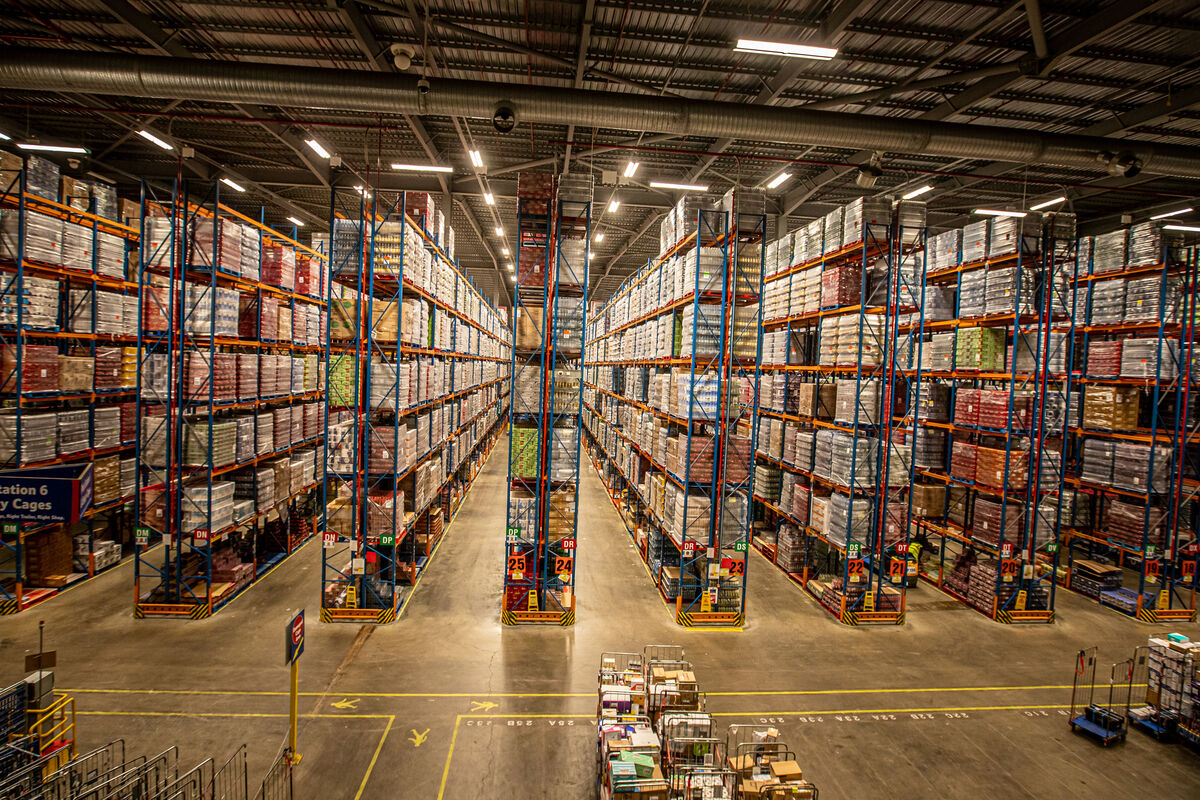
Tesco distribution centre in Donabate is 750,000 sq ft and when it was built in 2007, it was the third biggest building in Europe.
It is also apparently so big that it is the only building in Ireland you can see from space. It has 92 aisles, and stores 78,500 pallets at any one time.
Each aisle is so big that if you laid out each of the pallets in an aisle side to side, it would stretch to six miles.
Lidl’s €100 million Kildare RDC is also pretty formidable, at 625,000 sq ft, and can generate equally mind-boggling statistics and aisle sizes.
Both sites have anywhere between 900 and 1,200 truck shipments in and out each week, and both run a 24-hour operation. Of the hundreds of companies that supply them, both also have around 260 Irish suppliers - a far higher number than people might realise.
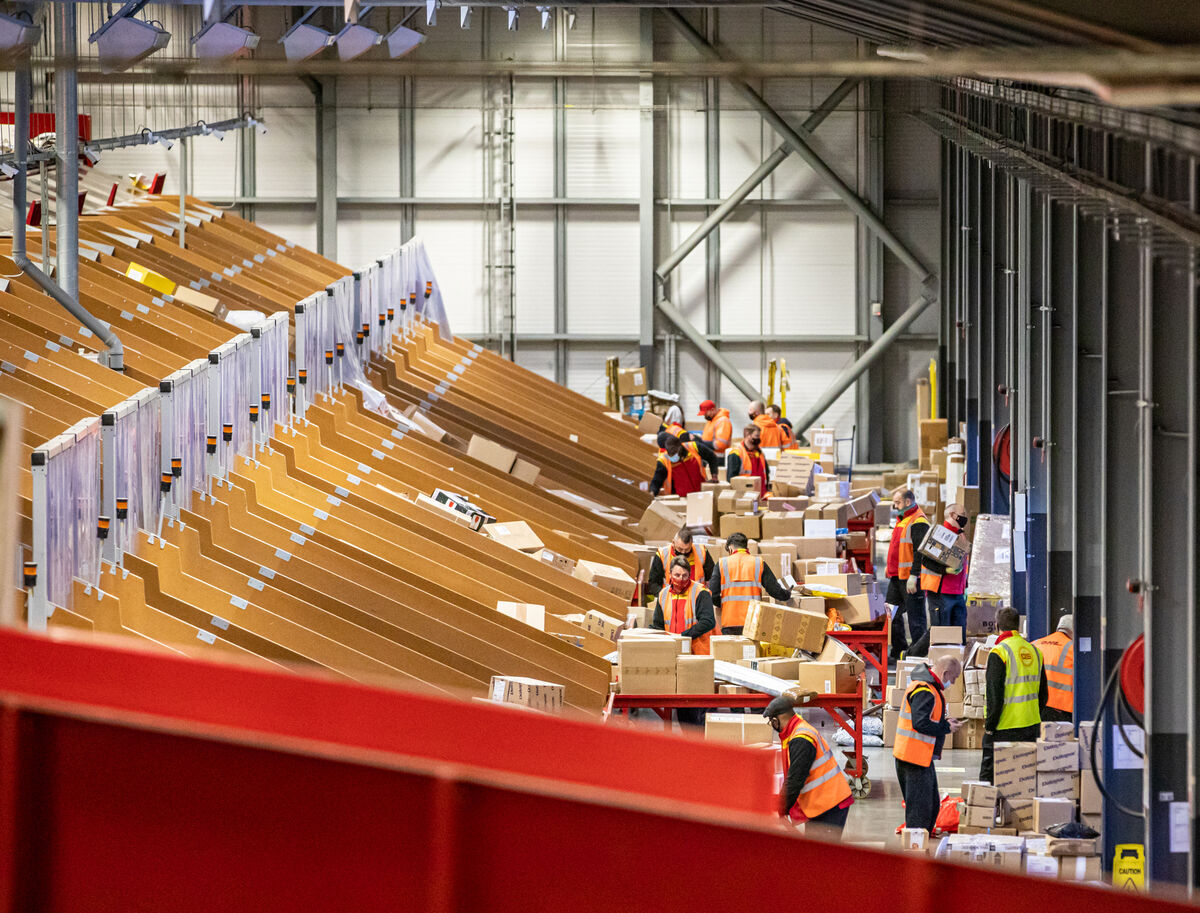
Both centres also have small armies of “warehouse operatives” who fulfil a variety of roles. The bulk of them are divided between the Goods In staff - who take in each delivery and store them.
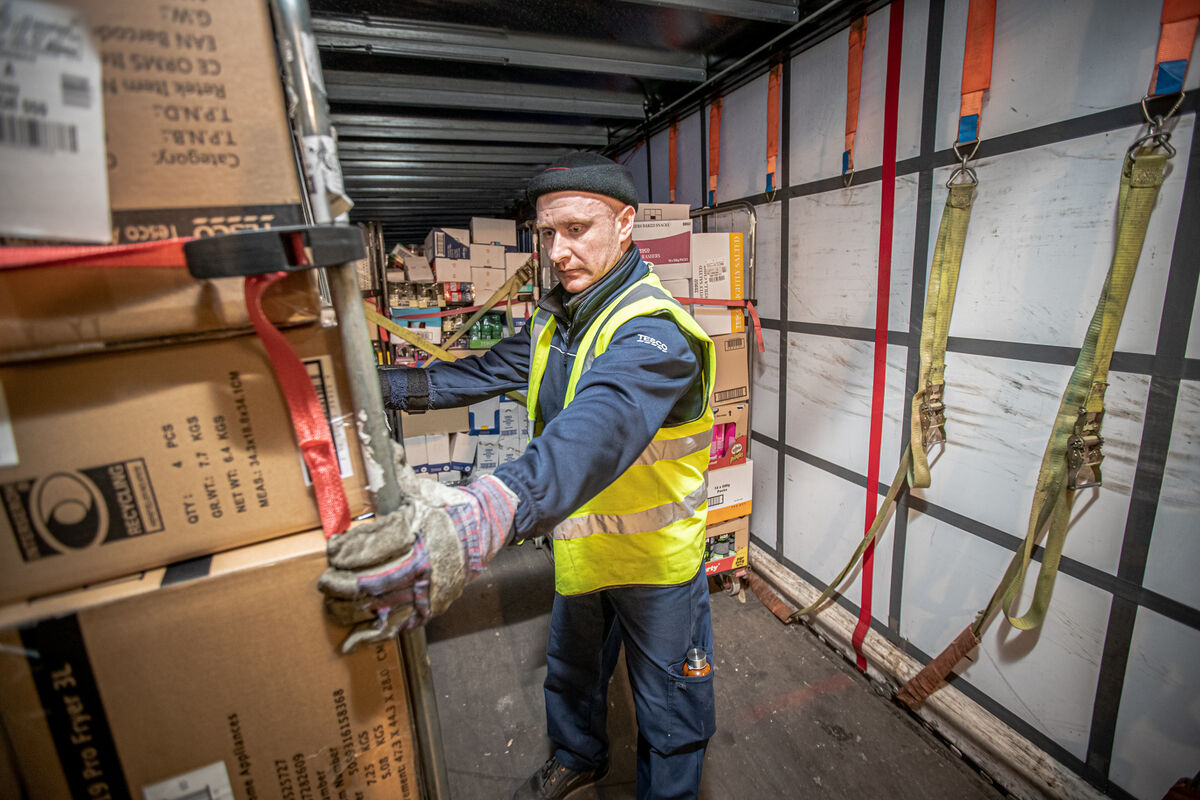
Then you have the pickers, who pick goods from where they are stored, and put goods in cages, which are then delivered. In Tesco’s case, they zip around its vast warehouse on battery powered bulk movers, pausing occasionally to check where they need to be and what they need to be picking up from.
This information is related to them via an electronic device attached to their arm. In Lidl’s case, it is the people you see with headsets on them, as they talk to the manager of whatever store needs new produce.
Ever been in a Lidl store, seen a member of staff walking around and talking into their headset, and wondered who they are talking to? Industry secret? It’s not the wife.
It’s one of their colleagues in one of the company’s four Regional Distribution Centres (RDCs). Siobhan Harris, who has been working for Lidl for 20 years, works in the Kildare RDC for Goods In, and operates a bulk mover.
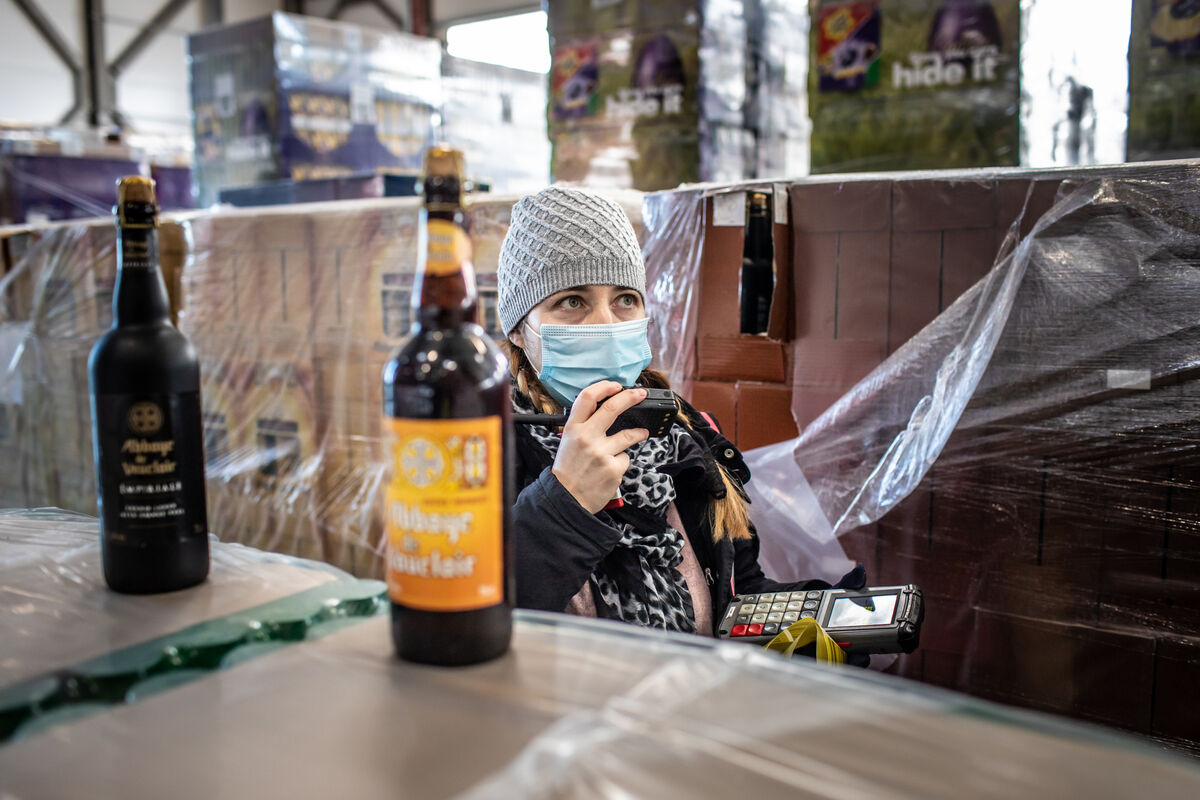
She started as a picker but has worked in Goods In for most of her career with Lidl. “It's a huge place,” she says, stopping briefly.
“You have to be doing one thing and thinking of something else. You are constantly on the go.
“I'm doing this and I'm checking on that and thinking of something else that I know I have to do and then something before that, do you see?
Covid hasn’t made the 44-year-old married mother-of-two’s job any easier, but she is now used to it.
“It’s still the same but everyone keeps their distance and you have to wear a mask and that’s not as friendly. The environment is different.”
Over at Tesco’s Donabate store, there are, among the 26 nationalities in the 600 people working there, around 300 bulk movers.
Among them is Robert Voitilla, otherwise known as the Holy Man, or The Pope.
This is on account of the fact that his grandfather Gustav's cousin was Pope John Paul II.
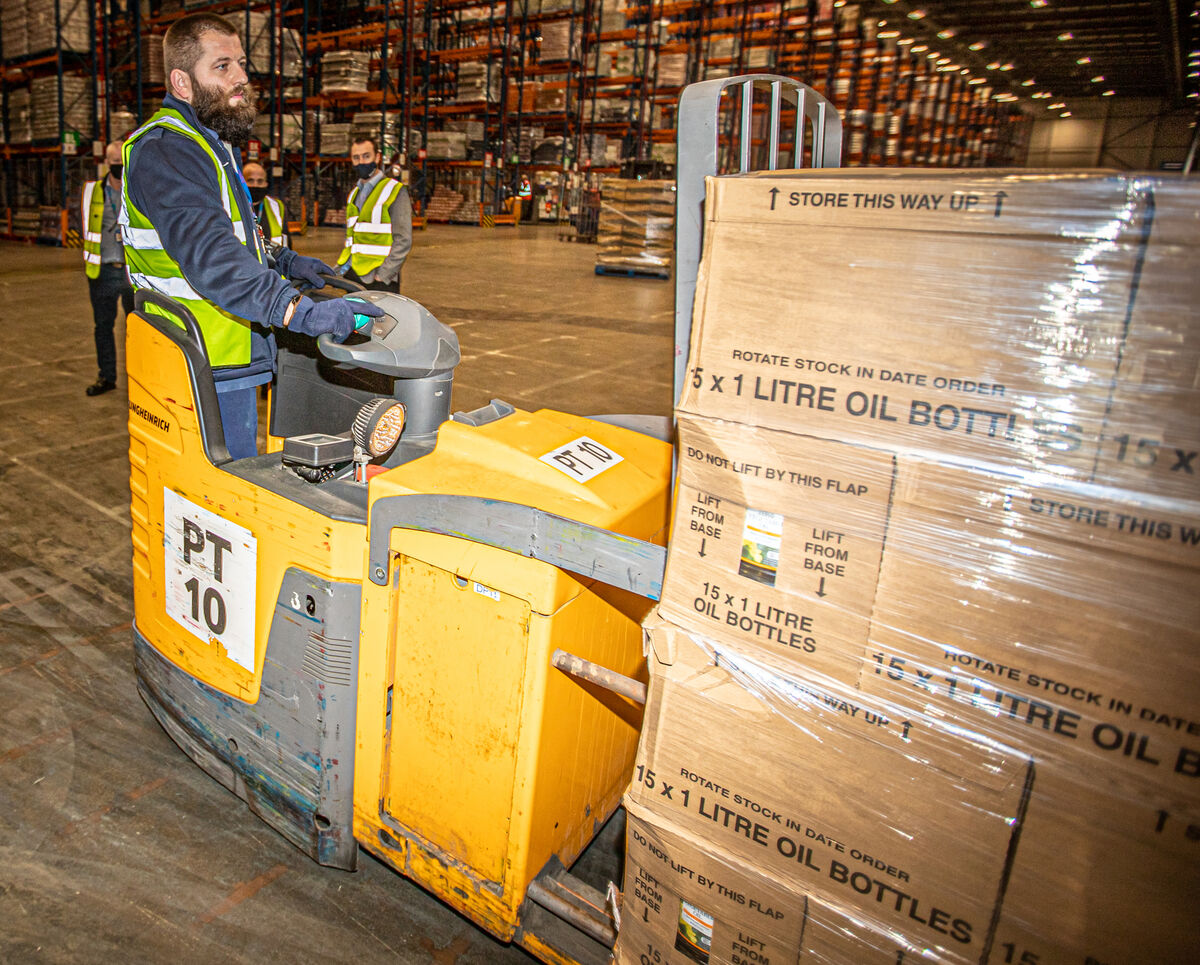
“I have lots of nicknames but mainly the Holy Man,” he laughs.
Originally from Poland, he has lived in Ireland and worked for Tesco since 2008.
“It was my first job in Ireland and I'm still here,” he says proudly.
“It's like a long-term friendship right? It is very busy, especially in Covid.
“A load of people are shopping at Tesco, so we have loads of jobs to do.” And with that he initiates a fairly swift circular manoeuvre in his bulk mover and whirrs off into the distance.
Ian can rattle off a rake of statistics about warehouse assemblers working in Donabate, they spend, for example, 46.6% of their time physically getting the product off the pallets and onto a cage for delivery.
They spend 34.5% of the time travelling around the warehouse on their vehicle, and they will easily cover 20 kilometers a day.
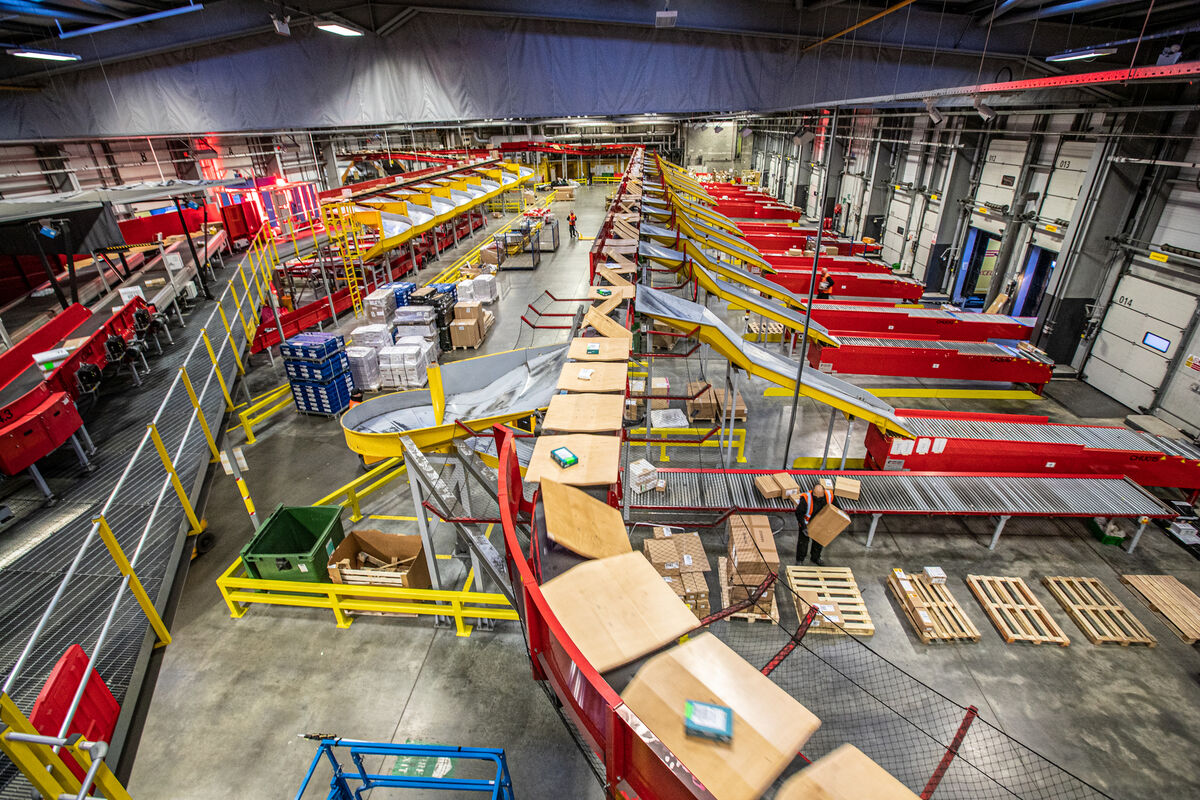
Some 8.5% of their time is unloading and loading the pallets, and then 10.4% of their time is on a break.
“That is how calculated all this is,” Ian says.
A former manager of the Tesco store in Wilton from 2003 to 2005, he moved into distribution management at the end of 2017, just two months before the so-called Beast from the East, Storm Emma “and all the fun that came with that”.
“It was a good thing to be honest,” he recalls.
“You learn a lot very quickly in a crisis and you also learn how dependent the whole country is, never mind our business, dependent on distribution and the logistics of it.
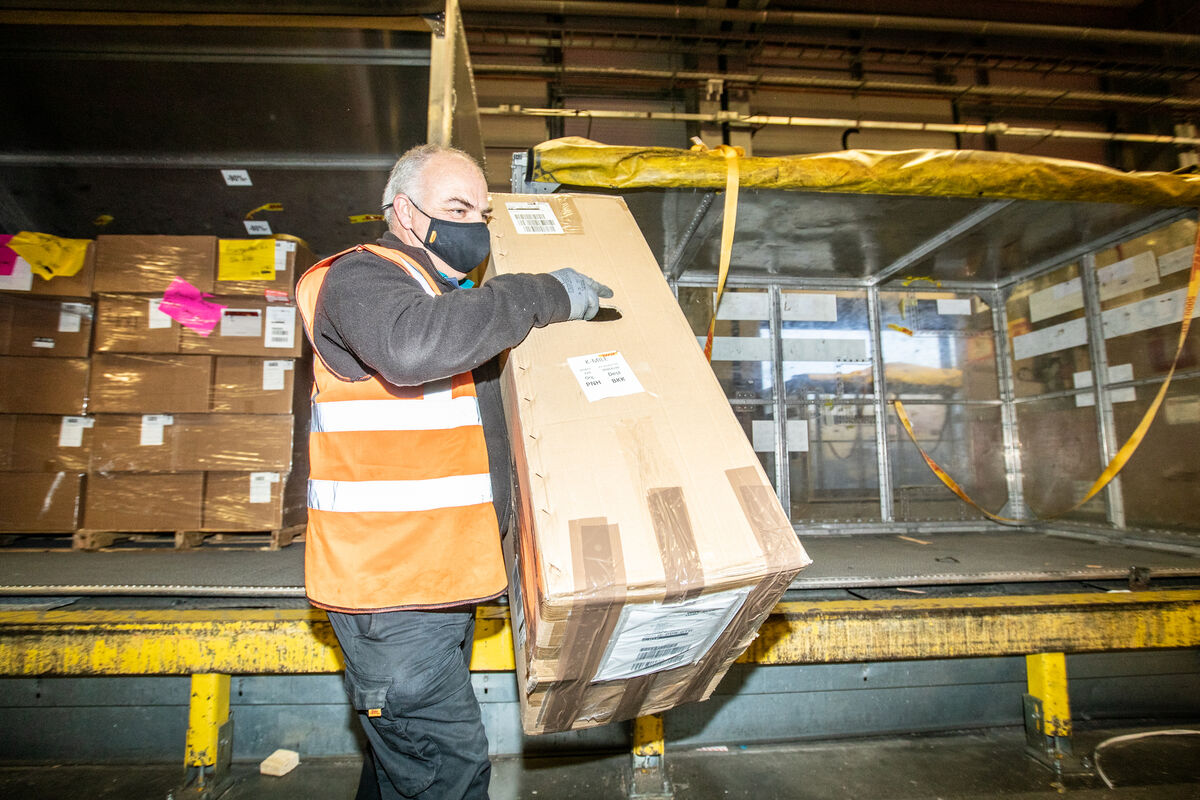
“The issue that you always had during the crisis was being able to get flow of product in weather conditions that were not safe to drive in, not safe to sail in and not safe to operate in.
“You had large parts of the country that were in red zones for weather. When that happens you can't do a lot of travelling and you have to break supply.
“Once you break a day or two in a cycle then stock keeps coming into the system. And you have to make a decision based on not knowing what the next day is going to be like from the weather point of view.
“Do you halt or reduce supply and at that time you were dealing with a lot of unknowns.
“We took a decision to keep supply coming on the system and learnt a lot of lessons from that but it all worked out very well in the end.” So, getting back to toilet roll supply issues, you can now understand why he wasn’t phased about what happened in February 2020.
He adds: “After Storm Emma, we got everything back on the road again and working properly.
“But there is a lot to be learned from Covid-19, and of course, Brexit.”

CONNECT WITH US TODAY



Be the first to know the latest news and updates