Non-Covid highlights of Irish Examiner 2020 coverage, part 2
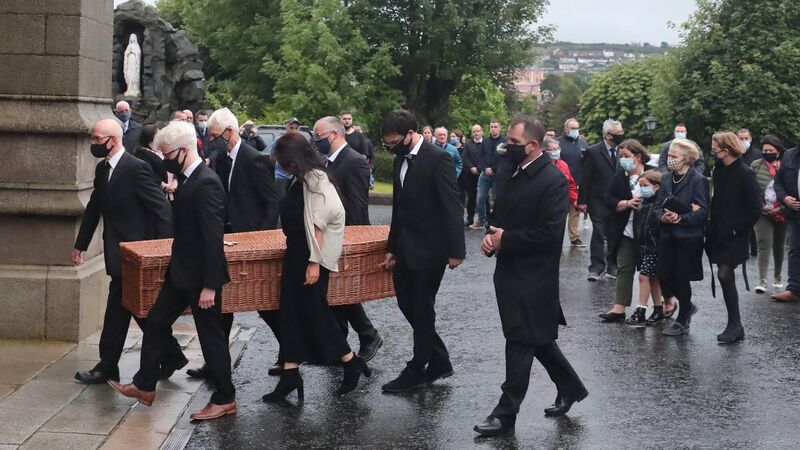
Family members form a guard of honour as the coffin of John Hume is taken into St Eugene's Cathedral in Derry ahead of his funeral on August 5. Picture: PA
On Monday we reproduced some of the best writing published in the Irish Examiner, in print and online, this year. Here's more.
It is perhaps an impertinence to suggest the two words that should be carved largest on John Humeâs headstone, but Iâll do it anyway. John Hume wasnât just a peacemaker. He was peacemaker.

But he ploughed a lonely furrow for a long time in the process. He had the support of a staunch partner in Seamus Mallon, and throughout those early years, he had the backing of successive Irish governments and a host of diplomats. But the mountain he climbed then, in the late 1970s and early 1980s, would not have been scalable without his persistence.

But there was nothing new about any of that. The peace process that led to the IRA ultimately putting down their guns happened a quarter of a century into John Humeâs career. It was a career that started in peaceful protest, centred on civil rights for nationalists. He became the undisputed leader of constitutional nationalism in Ireland, and watched in frustration as the divisions forged by violence drove the two communities of Northern Ireland further and further apart.

However, it would be a mistake for us in Ireland to condemn whatâs happening in America without taking a good, hard look at ourselves. A study undertaken by the European Union Agency for Fundamental Rights in 2018 showed that Ireland ranked as the second worst in the EU for racial violence against black people, with 51% of black people here saying they have been harassed in the form of verbal, physical, or online threats.

There is more than one pandemic happening right now. All it takes is the modern-day lynching of George Floyd, his life stolen from him under the knee of a cop, for the seriousness of racism to be recognised.
In our house, Bessborough is a dirty word. It stands for lies and deception and attempts to bury the truth, keep it hidden as if it were some sort of âshamefulâ little secret.

She was told a number of basic âfactsâ by the nuns and not to ask anything else: that her mother, also called Mary, was 19 when she came to the home to give birth, had left shortly after for England and then the United States to make a new life.

Maybe her birth mother wouldnât have wanted to be reunited, or maybe she would have welcomed my mother with open arms.

All of this could, and should, have happened 20, 30, 40 years ago.
At age 82 my mother found seven half-siblings ... donât seal the records.
It might appear flippant to itemise Eoin OâSullivanâs extraordinary story in the context of club hurling matches. But Eoin wouldnât see it like that.

The Irish Examiner streamed it live. The ball hadnât travelled 10 yards before Cork legend Ger Cunningham delivered his verdict in commentary: âHe has it! The minute he struck the ball, the hand was up: He knew it was on its way.â

âAfter losing the final, youâre not yourself for a couple of weeks. I put it on the long finger again. And by that time it was actually bleeding. So if I had a white sock on, there would be a dot of blood. Looking back, itâs a bad sign. It means itâs ulcerated.â

And Conor and Orla, the brother and sister. And everyone at the club. The friends who can talk about it and the ones who canât.

The Reach Foundation Stynes helped build is dedicated to inspiring young people to believe in themselves and get the most out of life.

âMy consultant never wants to tell me over the phone if thereâs anything bad, but I donât care now. I donât need to sit down to hear it either. Iâm kind of used to it. Basically, he said you need to go and get this special type of radiotherapy.

âSo Iâve done four sessions of radiotherapy in the Bons, at the new centre there. The consultant Paul Kelly is excellent.