Shared Island Initiative, Day 2 - Thorny issues must be met head on before any unity talks
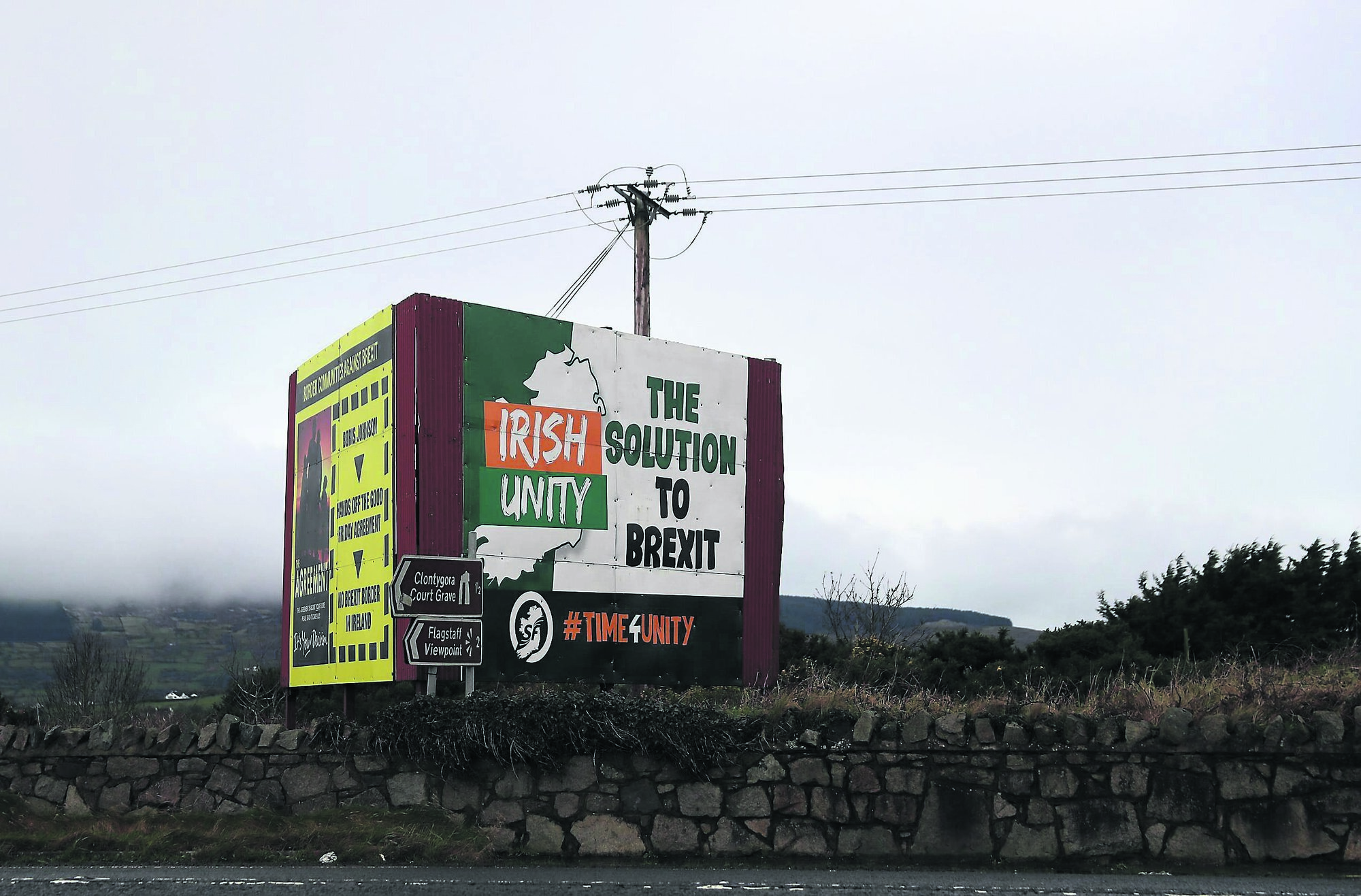
An anti-Brexit billboard proposing a united Ireland as a solution to Brexit at the border between the Republic of Ireland and Northern Ireland. Tanaiste Leo Varadkar has warned that if the UK fails to keep to EU standards, its access to the European market could be threatened. Pictute: Brian Lawless/PA Wire
There’s a popular phrase that the quickest way to get Irish listeners to turn over is to mention Northern Ireland.
The tongue-in-cheek adage is an accurate reflection of the general disregard of some citizens in the Republic to their estranged brothers and sisters in the north.
With this in mind, it could be argued that Micheál Martin is either brave, foolish, or tone-deaf to the mood of the nation by creating an entire unit in his department to talk about the north.
The Shared Island Unit is viewed by some as a trojan horse for reunification, while others say it’s a diversionary tactic, merely being seen to acknowledge that due to Brexit, among other factors, that united Ireland at some point in the future is a credible prediction.
Either could be seen as a win-win for Micheál Martin. If the country is ever united, he can claim this was the first step on the journey, while claiming in the meantime it has nothing to do with the constitutional question.
The issue that the unit will continue to face by dancing around the elephant in the room is that it’s quite clear from his own party’s politics that there is only one acceptable view of and in Northern Ireland and those who reject it are part of the problem.
The Taoiseach spoke of the need for “more reflection and engagement” in the south and it’s well documented in each of the interviews carried out in this newspaper that more of both will be essential.
Micheál Martin is right, that without dialogue there would be no peace process, however, dialogue only works if everyone is invited to the table, which is why it took the peace process so long to get off the ground.
The Irish Government may not want to acknowledge it, but their responsibilities that have been neglected, and throughout the unit’s series of “dialogues”, there is already a risk that the only unionists invited to the conversation are the ones who say the right things.
Inviting stakeholders and students, church and civic leaders may righty be labelled as preaching to the choir, because it is not these people who will decide on the island’s future.
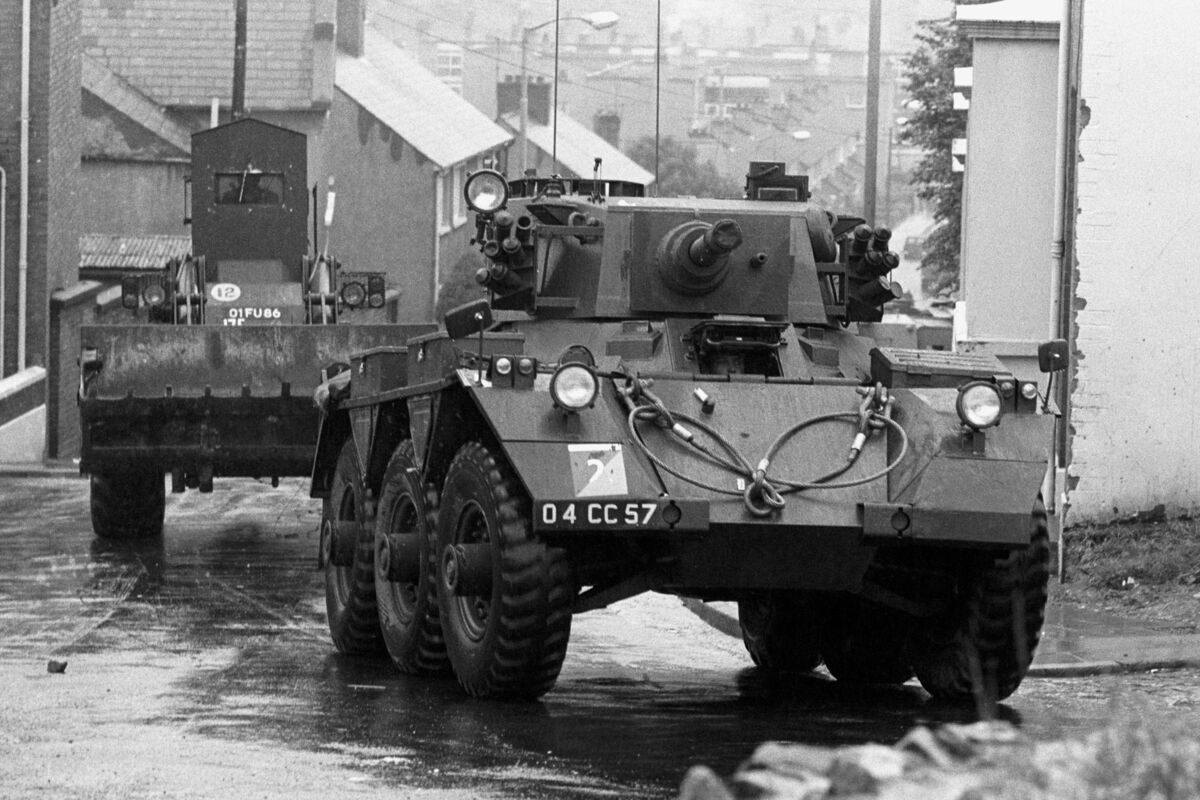
If you have grown up with foreign soldiers raiding your house in the dead of night, or have attended the funerals of children shot in the back, why would you believe that Dublin, in 2020, has seen the light and that maybe you are worth helping now?
You have never seen proactive help from those who claimed you would never be left behind again and as the coronavirus raged through the island, you didn’t see cooperation appearing on the horizon from Merrion Row.
Likewise, unionist communities have no affinity for Dublin and feel further removed from Leinster House than they do of the dysfunctional entity that resides in Stormont.
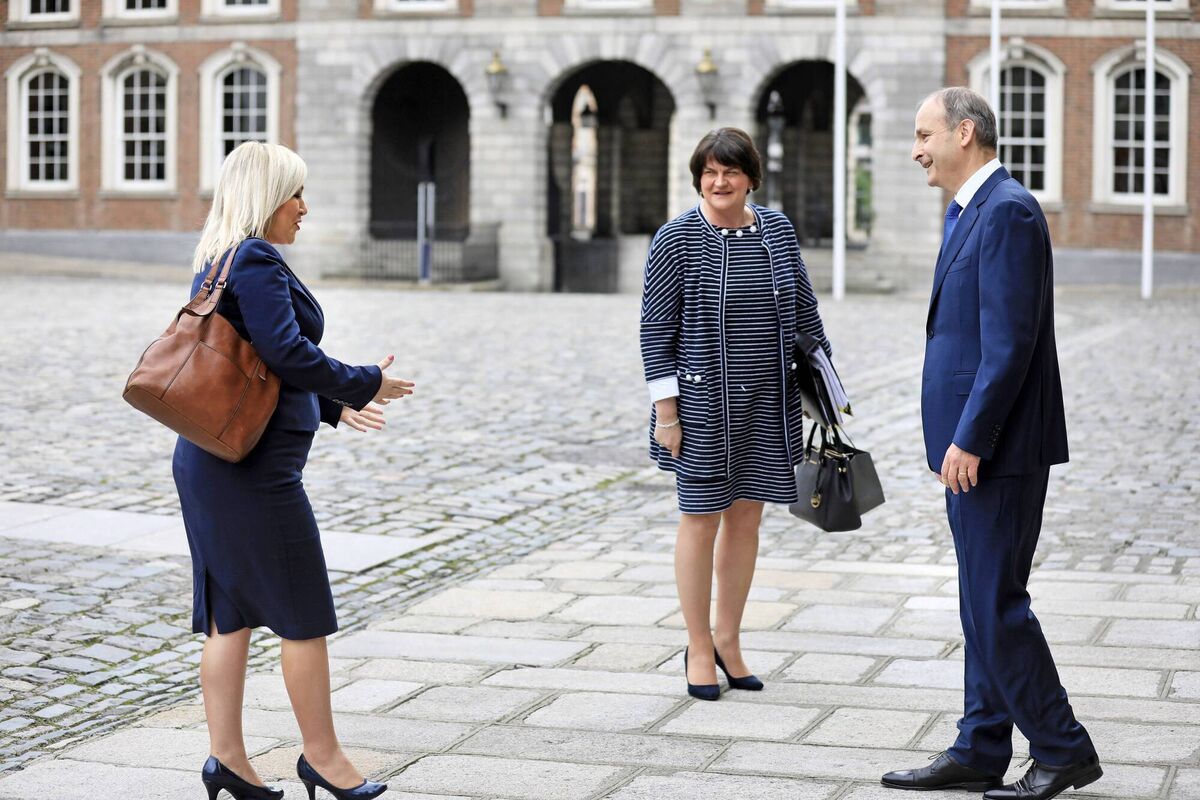
They have their own beliefs about collusion, they see no willingness to address their sense of alienation give or take a few photo-ops with the queen and Arlene Foster.
Both communities have their own grief, loss and baggage and pretending that those who want to deal with the past by staring it in the eye and shaking everything loose, are the ones who “can’t move on” is insulting in the extreme.
Whether Dublin likes it or not, there are communities across the north that do not subscribe to Leinster House’s middle of the road “both sides” view of their home.
The avoidance of talking about flags, anthems or anything we traditionally link to identity in the north is the reason many will not take it seriously.
The very real threat of paramilitarism and the scourge it leaves on Northern Irish society will not be mended by warm words, but opportunity and prosperity. The €500m in funding should be welcomed with open arms and is a clear signal from the government in Dublin that they are willing to put their money where their mouth is.
The communities where paramilitarism offers a chance of some fast cash and a sense of purpose will not be aided by conversation alone, only through tangible improvements to lives and society will young men and women begin to turn away from criminality and have hope for the future.
These communities however will not take kindly to having their core beliefs and identity criticised by those who only took an interest in their plight in 1998, who know nothing of Tory-led austerity or turning down a job or a much-needed house due to intimidation from inside or outside your own community.
It’s easy to criticise a community for their lack of willingness to cooperate or even join a police force when no one ever beat down your door in the dead of night and you’ve never seen someone drop to their stomach on gravel to check under their car for explosives.
Those entrenched in their views do not enjoy being condescended to by those who have not lived or loved or lost in the darkest days of the Troubles and will not be dissuaded by a Zoom meeting headed up by civil servants.
To that end, what stands out most starkly is that there is no commitment to legacy or any real involvement with survivors. Those who have suffered in some of the worst episodes of our troubled island’s history say themselves that they hold the key to pushing us forward.
The fact that this group of people do not play a front and centre role in the discussion series betrays that those most affected by the region’s poisonous politics are not the target audience.
The project speaks at length about inclusivity, Micheál Martin says he wants it to reflect “the full diversity of society on this island” yet neglects to acknowledge that his unilateral assertion that a border poll is “divisive” and ruled out one in the next five years, excludes a large swathe of Irish society.
The Irish government is a co-guarantor of a Good Friday Agreement, and the decision to call a border poll is not in Dublin’s gift anyway, so it betrays a larger political goal not to mention the very real prospect of a united Ireland while organising a project that many believes is laying the groundwork for just that.
There is a way to go to convince either side of the argument what this unit actually is, or plans to do, but it might be Micheál Martin’s hope that he is simply caught trying.
The Shared Island project may ultimately be seen as just that, a vanity project for a risk-averse Taoiseach, but with a bit more ambition in its sights, it could be just what this troubled island needs.
Loyalism and unionism have been the dominant communities in Northern Ireland for 100 years.
In the 2011 census, those who considered themselves “British” counted for 48% of the population, 28% were Irish, and 29% were Northern Irish. Despite historical dominance, the tides have turned in terms of demography and measures of success since the foundation of Northern Ireland.
An academic report in 2019 examining Northern Ireland’s peacetime progress found that working-class Protestant boys still struggle the most with education.
The report stated: “While there is under-achievement among working-class pupils generally (and this is worse among boys) working-class Protestant boys continue to have lower educational attainment than Catholic boys.”
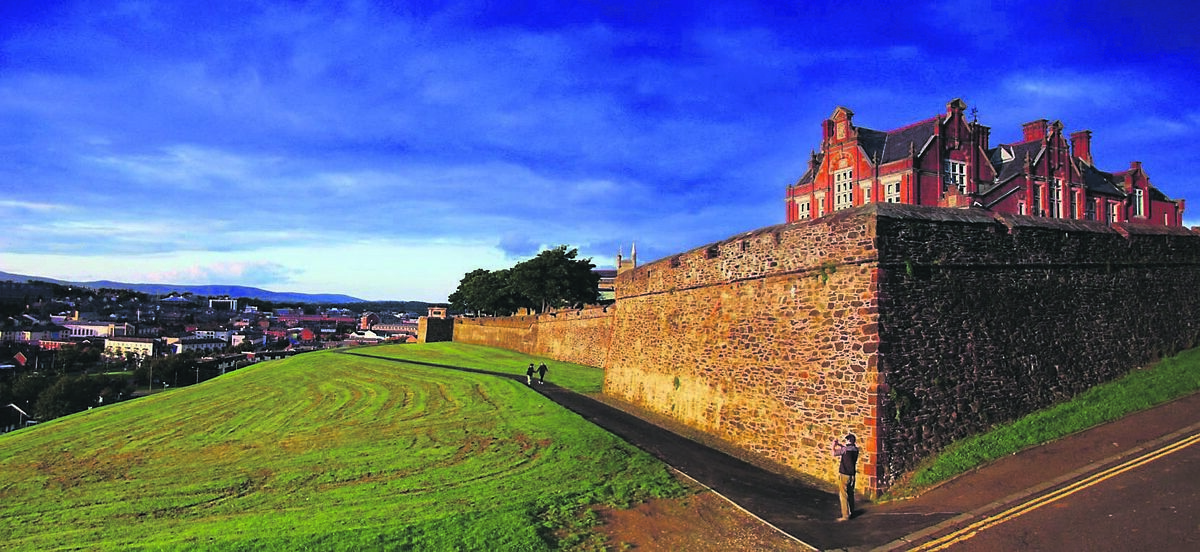
Meanwhile, in traditionally nationalist heartlands, things look equally as grim. In 2019, Derry as a whole remained in the top three most deprived areas of the North, alongside West Belfast and North Belfast.
Years of unemployment and lack of opportunity due to proximity to Troubles flashpoints has deprived these areas of the same employment and educational opportunities than their peers.
It could be argued partition has failed due to the economic outcomes alone. The North is the slowest growing economy in the UK and Ireland.
There is a greater number of low paid jobs in the North than in any region in Britain, and the wages in these jobs are also the lowest of any region.
Sinn Féin recently published a document on the economic benefits of reunification, saying: “A United Ireland offers the best opportunity to tackle these issues in a way that can economically advantage the people of the island of Ireland. Unity makes sense and will create new opportunities and new prosperity for all the people of the island of Ireland.”
However, for many on both sides of the border, the money message if critical, and with a gap of roughly £10bn (€11bn) between tax revenues and public expenditure in Northern Ireland, could the Republic afford to take on the north? And at such an expense, would it want to?
It’s long been pointed out that poverty and deprivation only helps breed paramilitarism, with children often the targets of violence and recruitment.
While official statistics are collected on paramilitary-style attacks such as beatings and shootings, due to consistent underreporting over fear of retribution, these figures are thought to seriously underestimate scale and frequency.
Based on the statistics available, Professor Liam Kennedy of Queen’s University Belfast revealed that between 1990 and 2013 there were 167 recorded shootings of children and 344 recorded beatings. Between 2015 and 2018, 1488 households presented as homeless due to paramilitary intimidation.
Without tackling the issues that lead to paramiltarism, the issue cannot be tackled as a whole. There is
an estimated 12,500 members of loyalist paramilitary groups in NI.
Based on PSNI and MI5 intelligence the assessment says there are about 7,500 people in the UVF and 5,000 in the UDA. Dissident republican groups have considerably less membership, with a stronghold in Derry and parts of East Tyone and Belfast.
It’s reported that the different groups have fewer than 1,000 members in total but have carried out a number of bomb attacks in recent years and most famously, shot and killed writer Lyra McKee while shooting towards police during a riot in the Creggan area in Derry.
Set up by the Irish and British governments, the Independent Reporting Commission warned last month paramilitary groups still pose a “clear and present danger”.
Both these groups recruit in areas that feel left behind by Stormont and the peace process, rife with poverty and debt.
How would these communities be served on a Shared Island? Would attainment and success be more likely in a united Ireland for the children in these areas, and would two staunch traditions be able to mingle side by side if we were able to share the island north and south?
Read More
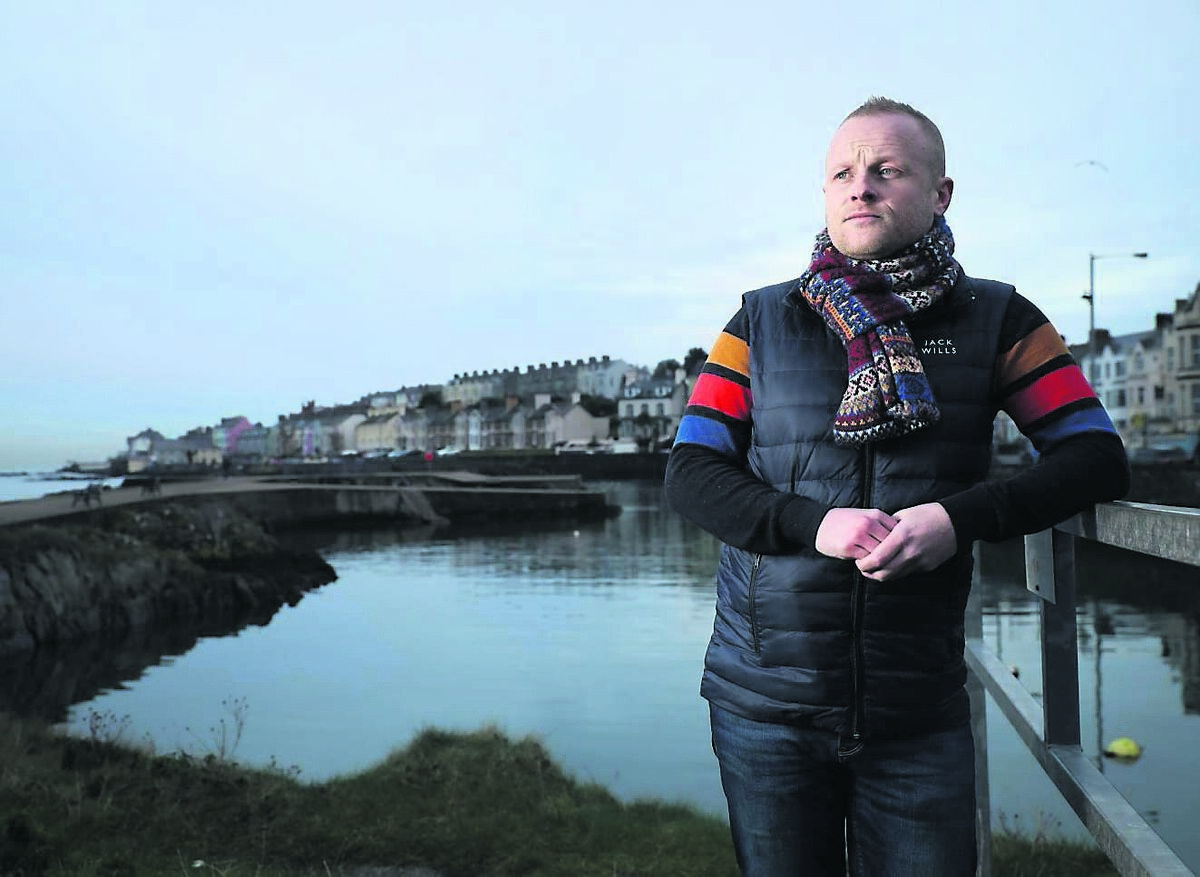
Jamie Bryson is a loyalist activist in Northern Ireland who originally attracted media attention as a leading figure in the Belfast City Hall flag protests.
He says his community feels left behind by the Good Friday Agreement.
“All loyalists describe themselves as unionists, but not all unionist are loyalists.
“Working-class communities traditionally in the Troubles were, if not supportive, not opposed to what was perceived at times to be paramilitarism - it’s fair to say sections of the loyalist community had a sneaking regard for paramilitaries during the conflict offering community support, unionism always tried to stand apart from that.
“Big house unionism privately were more than happy and not too upset about it at all,” Mr Bryson said.
“In my mind in a loyalist working-class community, we feel totally dehumanised and isolated as it is, Sinn Féin have dedicated themselves on agitating on every issue, whether it’s parades, flags or bonfires, if that’s the situation we are in now, it’s folly to believe a new Ireland would herald a new tolerance which hasn’t been displayed so far.
“I don’t think they would understand, I’ve seen nothing to convince me from the Irish Government.
“I assume nationalism see themselves on the ascendancy, we see the attitude in nationalism that the oppressed has become oppressor and there is a culture war on unionist culture.
“All of the institutions are against biased against unionism and were set up that way.” Mr Bryson does not believe his community would ever take part in any vehicle that they believe would usher a united Ireland.
Read More
“I think a lot of the momentum on a so-called united Ireland, perceived momentum, is often contrived by those whose agenda it is to push that narrative and a lot of it stems from social media.
“Social media is heavily biased in favour of nationalists and liberals, they are highly active online, while the loyalist community isn’t as active in that way and you get a skewed narrative.
“Political discourse ends up being driven by social media and believing mistakenly that it’s is reflective of what going on. I think that’s where it stems from.”
Mr Bryson says that unionist communities often reach out to the other side, but the favour is not repaid and the Government uses the peace process as a cover for political gain.
“I think there has been significant outreach and what I call pandering to national surrogate groups, Arlene Foster meeting the Taoiseach for instance,” he said.
“There wasn’t the same level of engagement with the loyalist community.
“The problem is unionism and loyalism is always going to see the Irish Government as a bastion for Irish reunification, it would be difficult for genuine engagement as there would always be a well-founded suspicion it’s only going one way, so what is the point?
“We don’t ever want to be in a united Ireland, we believe in the union and that’s the basis for our politics, so why would we concern ourselves trying to placate those who want to force us into something we don’t want?
“Would any nationalist or republican engage in dialogue about how we could strengthen the union?
“Why would we ask loyalists to undermine our core political belief? Certainly, the very right of Northern Ireland to exist.
“I don’t think any self-respecting unionist or loyalist is open to discussing a united Ireland, no matter if the lord himself came down and advocated for it.
“However, the party who represented the IRA, who spent 30 years murdering our community, it’s a little bit extra appalling to hear Sinn Féin lecturing on rights and respect and for which they never apologised, and it sticks in the throat to hear them pontificating to us.”
Read More
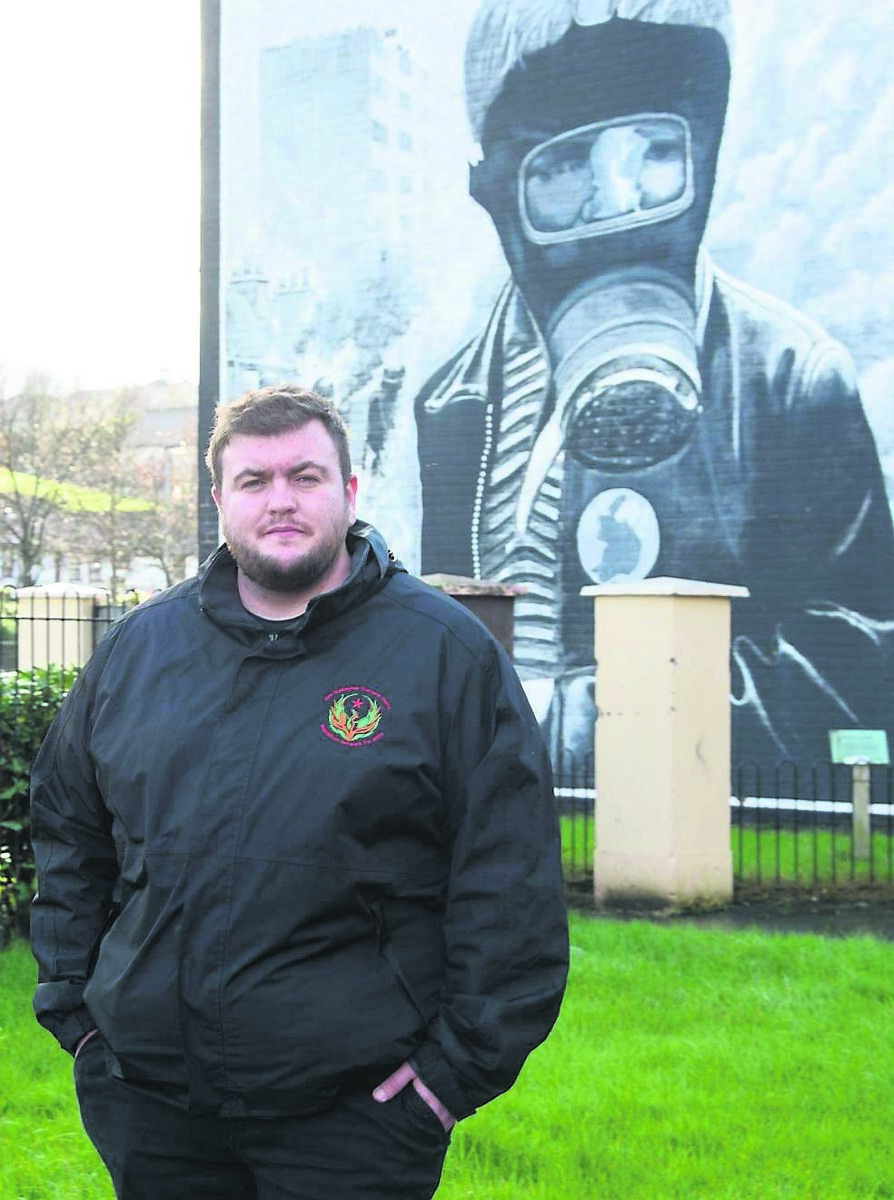
Dissident republican ex-prisoner Martin McLoone from Derry was 21 when he was sent to Maghaberry prison for weapons charges for six years.
After prison he says he turned away from “armed struggle”.
Nowadays, he is a member of the dissident republican grouping Republican Network for Unity (RNU), which claims to have hundreds of members across the north.
Originally set up as Óglaigh na hÉireann (ONH), an armed militant group, which has since given up arms and now says it does not advocate for violence but for community empowerment in republican areas in order to help communities which it says have been neglected by Stormont.
The group operates breakfast clubs and patrols the River Foyle as a mental health crisis continues to grip the city.
It says the Good Friday Agreement has failed in its aims, and that republican and nationalist communities would not vote for unity in its current form.
“There’s no real interest from Leinster House and this administration, no matter what party it is,” said Mr McLoone.
“They engage with wee funding schemes here and there, but as regards coming across and saying, ‘a united Ireland, a single unit, this is the best for all people,’ overall, they’re not going to say that.
“What the Taoiseach’s more interested in is engaging in sectarian politics as a whole. Saying I don’t want to antagonise unionists, so I can’t say
what I want, and that’s disingenuous.
“It’s a valid fear from the nationalist community, it’s definitely not unfounded that because of happened in the past in the Troubles.
“If you take the Dublin administration and extended their power to the north. you will have the north abandoned; the northwest would be crippled like the rest of the west down the island.
“Look at Donegal, with Derry next to it, we’d definitely be forgotten.
“There are links between Belfast and Dublin, but that’s not changing the system, that’s expanding it, that’s not what we want.
"What we would be advocating for is top to bottom reform.”
McLoone says the spectre of dissident republican violence will always exist while British involvement in the north remains.
“It’s always present, and will always be present, and that’s what people need to realise, there’s always going to be a presence within our communities until the British presence is removed, or at least will always been an alternative for some people.
“We don’t condemn it but we’re trying to convince people that we don’t have to do that.
“The only way forward is a completely reimagined state, people can see the problems in the south and that uncertainty is a flaw for people too.”
Read More
One major issue with the Shared Island Unit for TUV Councillor for Bannside Timothy Gaston is that he has never heard of it.
“I’ve briefly heard about it, but I couldn’t tell you depths of it,” he said.
A councillor and a constituency worker for Assembly member Jim Allister’s office, he says not “much detail” about the unit has ever passed his desk.
“Covid-19 has shown and built a case for the union, Covid has put border poll years down the line.
“Brexit is something north Antrim was very supportive but I have major concerns over the Northern Ireland protocol and the implications it will bring. We joined as one nation but we’re not leaving as one nation.
“There has been less hysteria about a hard border but people have taken their eye off the east-west border, down the Irish sea, as a unionist, I would oppose any sort of border between us and Great Britain.”
When asked if a hard border was a price he’d pay for unity with Britain, he said ”there doesn’t need to be a hard border anywhere, we have the technology to monitor things between the north and the Republic.
Mr Gaston says the biggest selling point for the union is being part of the fifth biggest economy in the world and the benefits of the NHS.
“I believe when you spell out the benefits in financial terms, any call for this mythical united Ireland would be heavily defeated by unionists and nationalists.
“The British government are very generous to the people of Northern Ireland and I trust that will continue, people are far better off in the UK than a forgotten six counties.
“In any united Ireland we would be a poor relation, I think that the Republic has a long way to go to convince us we’d be welcome, and have done nothing to convince me as a unionist I would be welcome.
“Regardless, I’m a unionist at heart, and regardless of what they’d do I’d still see myself tied to the union.”
- Continued tomorrow
CONNECT WITH US TODAY



Be the first to know the latest news and updates