Michael Clifford: Child of the revolution glad to see last embers of Civil War quenched
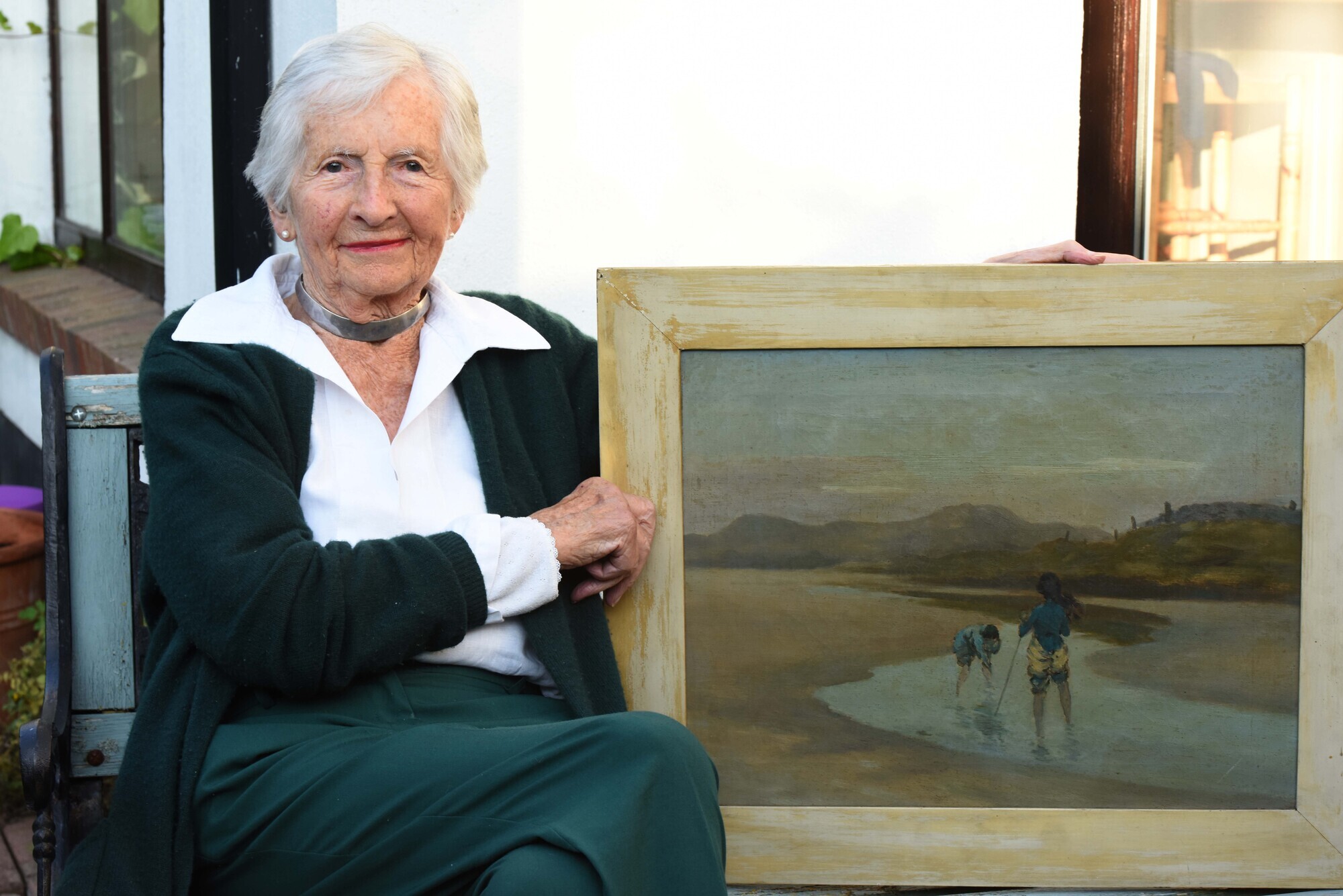
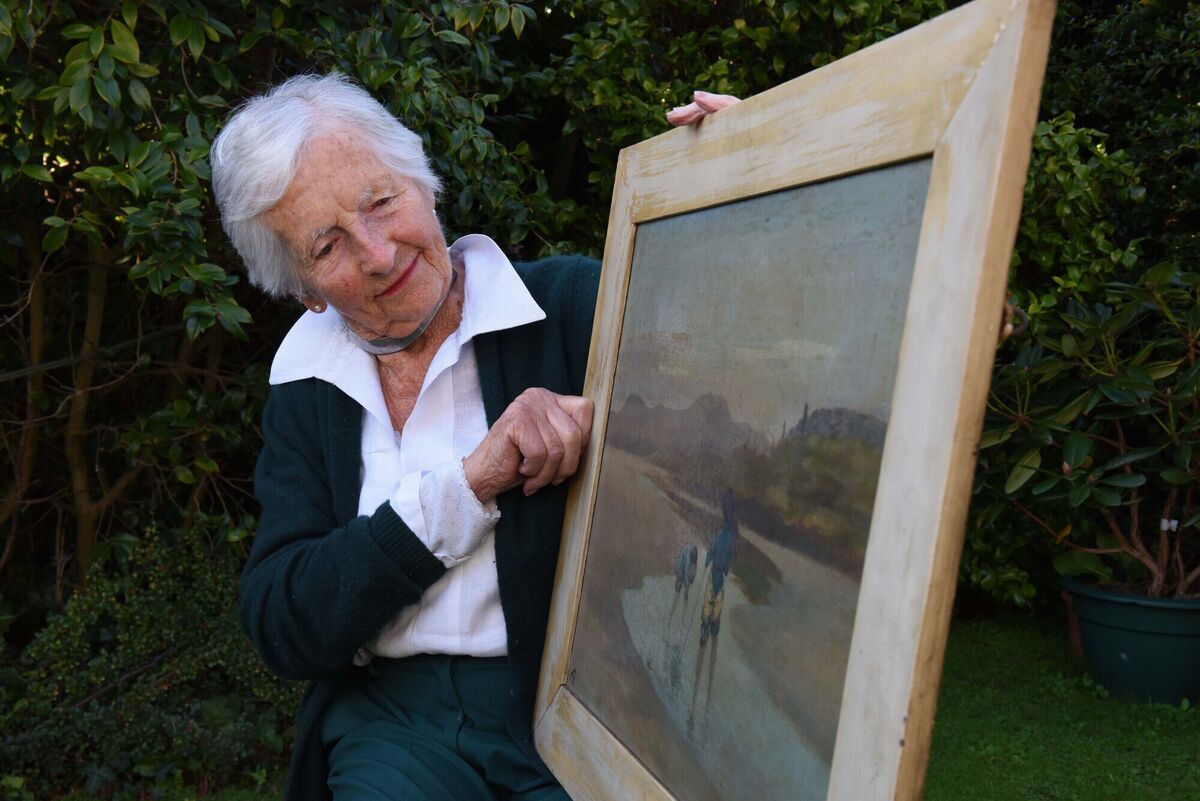
Elizabeth Berney, 99, from Dublin with a painting by AE Russell which was given as a wedding gift by Countess Marckievicz to her parents Min Ryan and Richard Mulcahy, founding member of Cumann na nGaedheal and later leader of Fine Gael. Photo: Moya Nolan
Elizabeth Berney wasn’t invited to the big commemoration event last year to celebrate the centenary of the first sitting of Dáil Eireann. But her nephew David managed to get his hands on a couple of tickets and off they went.
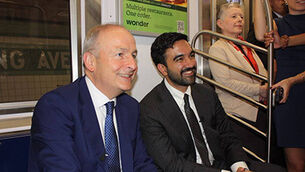
“We went into the Mansion House, bold as brass, we were,” Elizabeth laughs. She had a good time. She met Leo Varadkar and Micheál Martin.
She remembers the latter being tugged at the sleeve to attend elsewhere but he delayed departure to linger with her. And why wouldn’t he? Elizabeth Berney is a sprightly 98 years of age. She is also a child of the revolution.
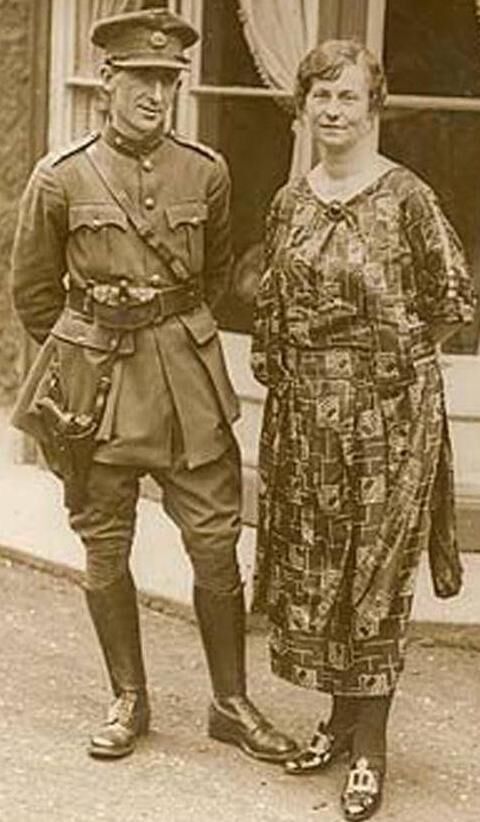
Her father Richard Mulcahy and mother Min Ryan both feature prominently in any examination of the turbulent years marking the birth and early years of the State.
Elizabeth reckons that she and Maire Mhac an tSaoi, the poet and daughter of Sean McEntee, are the only two surviving direct offspring of the young men and women who made history during those times.
One commemorative event that she was due to attend fell victim to the Covid. In June, a park in Wexford named after her mother was opened.
Elizabeth couldn’t make that due to the pandemic, but she is sanguine about any oversights in failures to recognise her direct lineage.
“To be honest,” she says, leaning in as if to a conspiratorial huddle, “in a way I’m kind of glad I haven’t been asked. A lot of them can be quite boring.”
She is older than the State her parents helped found. Elizabeth was born in 1921 when her father was on the run, operating as Michael Collins’ second in command. Five years prior to her birth, Elizabeth’s mother was present at the cradle of the revolution, Kilmainham Jail.
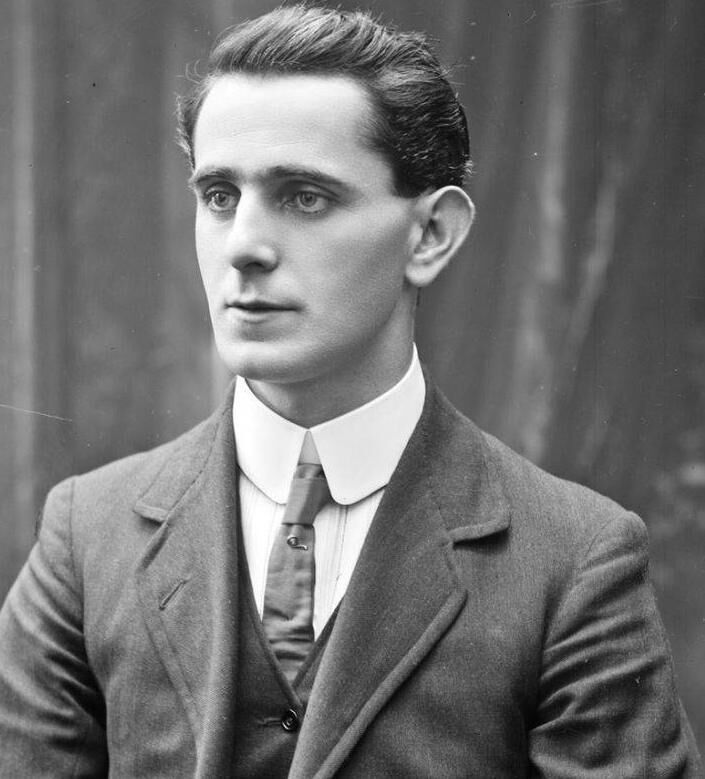
Min Ryan and her sister Phyllis were brought to the jail by request from Sean MacDiarmada on the night before he was executed. She and the 33-year-old proclamation signatory had met first in the nationalist movement to which both had a deep allegiance.
The condemned man sat between the two sisters, arms around them, in his final hours. According to Min Ryan, they talked about everything but that which awaited him at dawn. And then 45 minutes before the scheduled event the Ryan sisters were told their time was up.
“He kissed me and just said we never thought it would end like this although he knew that it would,” Min Ryan said, in an RTÉ interview in 1966 to mark the fiftieth anniversary of the Rising.
“He gave me his ring and muffler off his neck and and he gave me a Rosary beads,” she said.
The scene of one of the signatories of the Proclamation sitting in his condemned cell with Elizabeth Berney’s mother and aunt is freighted with poignancy. MacDiarmada was en route to martyrdom and national icon.
Back in dirty reality, the Ryan sisters would end up on opposite sides of a civil war that was to blacken the birth of a new state, its bitter aftertaste destined to linger for up to a century. And as women, both of the Ryans, educated revolutionaries, were on temporary release during those turbulent years from their designated roles in the home.
“The women were very important in that period but history has not been fair to them,” Elizabeth says.
“Those women, my mother and aunts, they had exciting lives at that time that women before them never knew anything about. They weren’t stuck at the kitchen sink, they were out in uniform in a very different life, just like the men.
“And then when it was over it was back to the kitchen sink. That was the men’s fault. The only one who stuck out was the countess.”
When Elizabeth’s parents married in 1919 Countess Markievicz gave them a wedding present of a painting by AE Russell, the nationalist writer and painter. Elizabeth still retains it as a cherished heirloom.
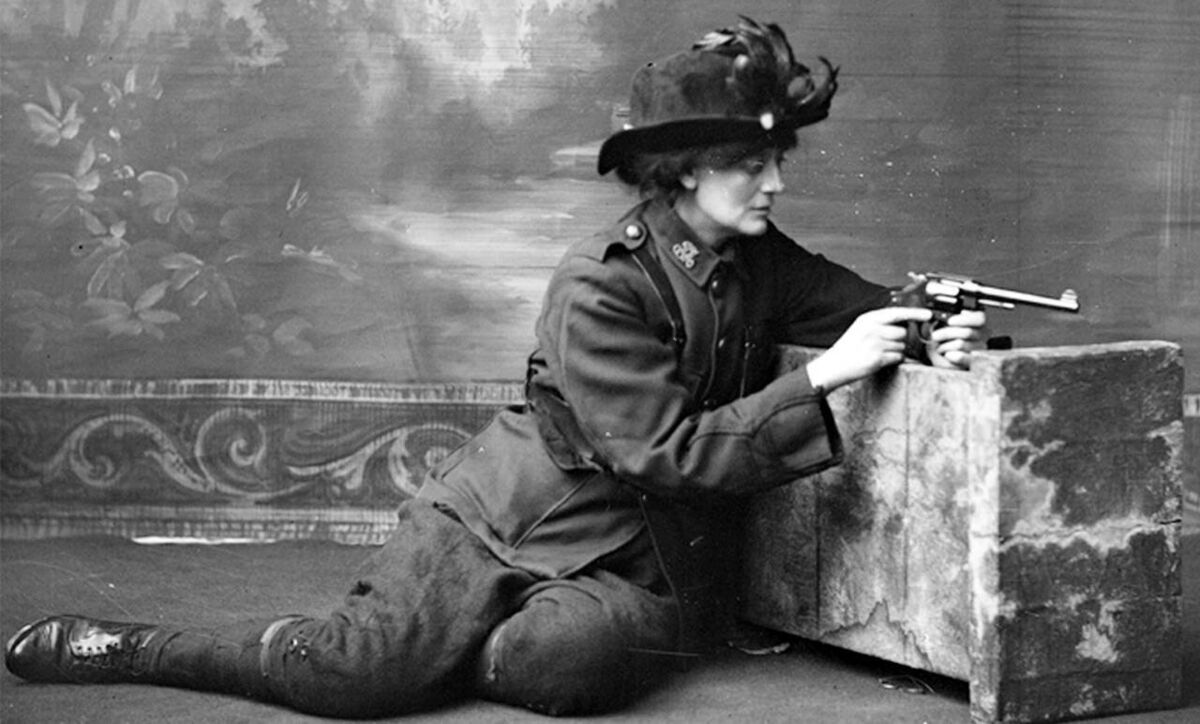
Min Ryan was one of a family of 12 from a wealthy farming background in Tomcoole, Co Wexford.
“My mother’s parents offered all their children third-level education if they wanted it,” Elizabeth says.
"That was unheard of at the time. They got their education and travelled to Germany and France.
Most of the family got involved in the nationalist politics of the day. Jim Ryan, Min’s brother, was in the GPO and would go on to be a founding member of Fianna Fáil and close confidante of Eamon DeValera, serving in a number of cabinets.
Richard Mulcahy was from Thurles, the son of the local postmaster. The couple met in the nationalist and volunteer circles that were bubbling away under the veneer of polite society. During Easter Week 1916, Min was in and out of the GPO with messages. Elizabeth’s father ended up serving in a different location.
“He was an engineer who had come up through the ranks in the Volunteers and on Holy Thursday he was on his way home when he ran into Sean McDiarmada who said, ‘Dick, you can’t go away, we’re having a revolution on Sunday’ as if they were having a party.
“My father said fine and on Easter Monday he cut the communications in Finglas which was his task. But then couldn’t get back into the city so he joined Thomas Ashe in Ashbourne."
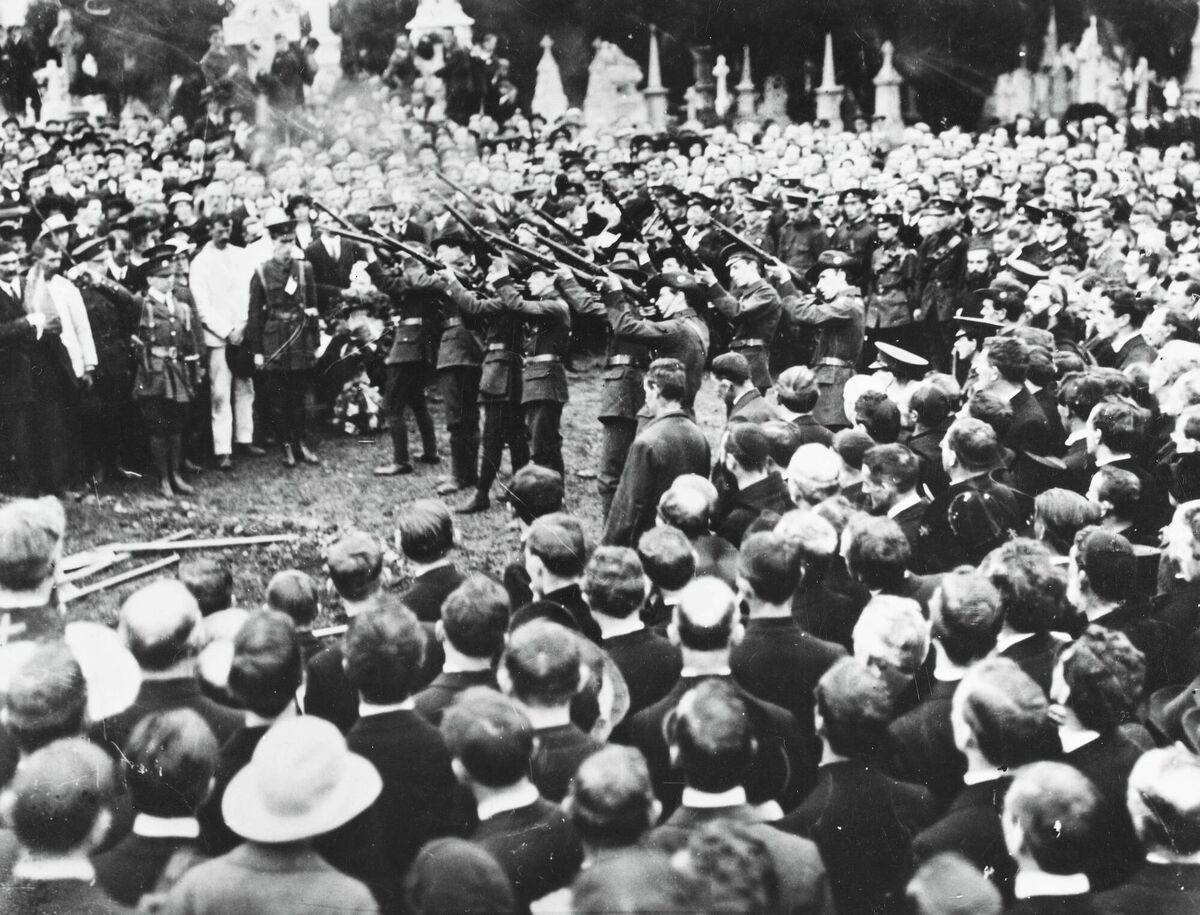
Ashe and Mulcahy pulled off one of the rare military victories during the week. Up to 20 RIC men were captured with a large consignment of weapons. Eleven RIC men and two volunteers were killed in a battle that raged for over five hours. Ashe only surrendered when word was sent out from the GPO that it was all over. The following year Ashe was to die on hunger strike in Mountjoy jail.
Following the Rising, Min was detailed to travel to America to keep John Devoy up to date with what was unfolding. On her return she threw herself into work with Cumann na mBan.
Her husband Richard went on to serve in the War of Independence as Michael Collins’ right hand man. During this time, Elizabeth and her older brother Padraig were born while their father was busy avoiding arrest.
“There was one story that when my mother was living in Oakley Road in Ranelagh and she had me as a baby, the Black and Tans came into the house and she told them to get out, that here she was rocking the baby. She showed that she was nursing and they left her alone. My father had a lot of close escapes.”
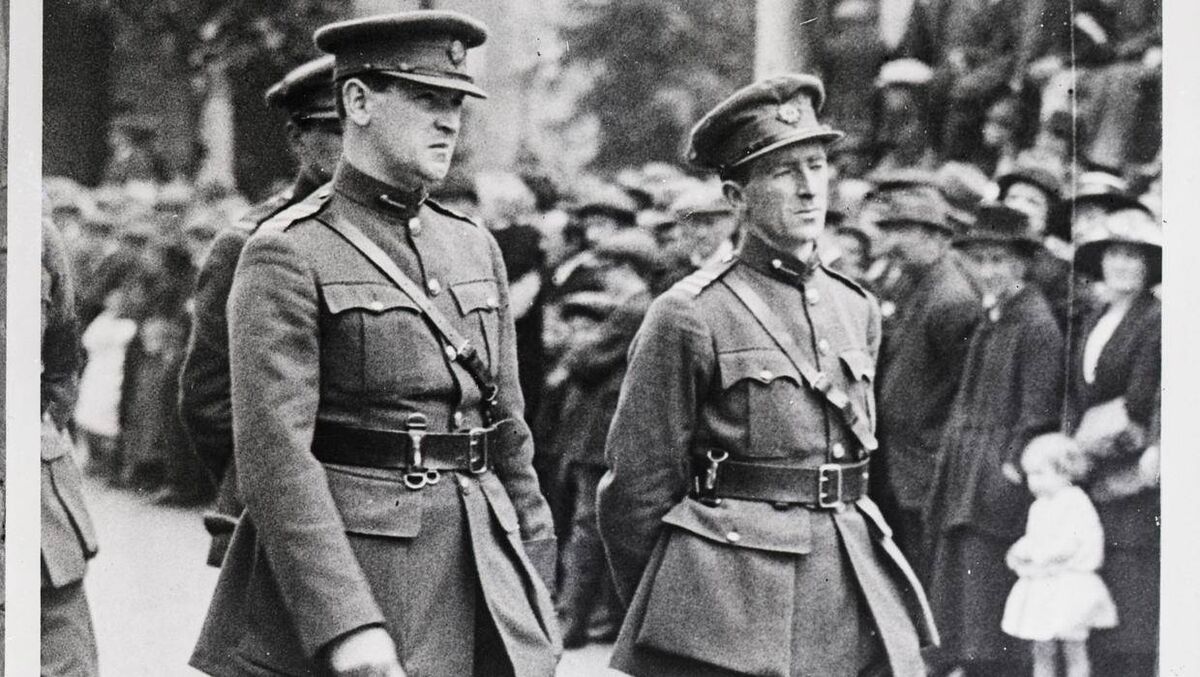
Like many others, he was drawn in by the magnetic personality of Collins.
“My father adored him, they had the most wonderful relationship. Michael Collins was Michael Collins, that big, gregarious person and my father was low key so they worked very well together. They never questioned each other’s decisions. They had great confidence in each other.”
When Collins returned from London having signed the Anglo Irish Treaty, there was never any question of Mulcahy breaking with him.
“As Collins and Arthur Griffith knew, Ireland had no fight left at that stage. They had nobody left to fight. The whole thing was horrific for them.”
Then the great divide opened up in the Civil War. The country, and particularly the pro-treaty forces, were dealt a horrendous blow with the death of Collins in August 1922.
Following that, Mulcahy was appointed Minister for Defence. In that capacity he signed the order that anybody who didn’t have a lawful reason for possession of a firearm would be subject to the death penalty.
“It was a really awful time,” Elizabeth says. "One TD was shot dead (by the anti-treaty side) and the cabinet thought they were going to be killed one by one."
Read More
The executions were one of the real low points of the whole period.
Mulcahy, as the line minister, introduced the legislation to provide a legal basis for it, although his colleague Kevin O’Higgins was seen as the major advocate for the policy. In total, 77 Republicans were executed and many others summarily shot in extra-judicial killings.
The spilt in the country was writ large within Elizabeth’s family. Her father was one of the main figures on the Pro-Treaty side, while all of her mother’s family were with the Republicans.
“The Ryan sisters were all anti-treaty and they were so strong,” Elizabeth says.
“In fact one of my mother’s sisters came to her and said, ‘Min, you’ll have to leave Richard’ as if she ever would.
"Sean T O'Callaigh (who would go on to serve as President of the Free State) had a big influence on some of the Ryan sisters. He ended up marrying one (Kate) and then another (Phyllis).”
And what if Min hadn’t been married to Richard. Would her instincts have been the same as those of her siblings to whom she was very close?
“No, no, she never would have been anti-treaty,” Elizabeth says.
“I think all of them were so traumatised they never spoke about it. The parents of my cousins, the Ryans, who were anti-treaty all adopted the same principle of not talking to the children about it. We had 35 cousins and we all got on great and for years never knew anything about our parents’ past.” (Jim Ryan’s great grandson is James Ryan, who has played rugby for Ireland and Leinster in recent years.)
Mulcahy continued to serve in government after the guns fell silent in the Civil War. In the first election of the new state he stood in Dublin North and received in excess of 22,000 votes, a huge mandate by any standards.
He resigned as minister for defence over the handling by the Executive Council of the army mutiny in 1924 and re-entered government in 1927.
At home, the Mulcahy-Ryan family was growing to eventually include six children. The family lived in Rathmines, near the major army barracks in Portobello.
“Money was always tight,” Elizabeth says.
"My mother was great, she started a mini farm of sorts there and we were very self sufficient.”
Politics was never discussed at home.
“My father could have been going out every day to work on a farm for all we knew,” Elizabeth says.
“We were cocooned, it was like now in that way! We knew absolutely nothing. There would be the odd remark in school from a child who might have heard she’s Mulcahy’s daughter but not much else. And we did have so many cousins who we got on with. It was great.”
Her father and his brother-in-law Jim Ryan were by that time on different sides in frontline politics.
“My father and Jim Ryan did get on ok on occasions when they were at the same event. They didn’t socialise together. And Jim Ryan was a fine, soft man.”
Elizabeth went to college, got a masters in biology and began work as a public analyst, a line of science which involves testing foods for compliance with safety and legislation. She was working for Bird’s Jelly when the Second World War rolled around – The Emergency was it was known in this country.
“We didn’t know there was a war going on except maybe we didn’t have enough butter,” she says
“At one stage I was sent over to Birmingham to Bird’s HQ for training. We went in this tiny plane. They couldn’t bear the Irish over there because we hadn’t joined to war. The only person who was nice to me while I was there was a Russian guy.”
Back home her father became leader of Fine Gael on the retirement of WT Cosgrave in 1944. Then following the 1948 general election, an opportunity arose to unseat Dev who had by then been in power for 16 years.
A coalition of Fine Gael, Labour and a group of smaller parties and independents had the required numbers. But there was a problem. Sean McBride, leader of one of the small parties, Clann na Publeachta, whose father John was executed in 1916, said he would not serve under Mulcahy as Taoiseach. The antipathy was down to Mulcahy’s role in the civil war.
Mulcahy, faced with either holding firm or stepping aside, chose the latter.
I was only mentioning Richard Mulcahy here the other day. He stood aside in 1948 and put the national interest ahead of his own personal ambition. https://t.co/2VmTFeQfCc
— CS Blenner 🇺🇦🇵🇸🇱🇧🇬🇱🇹🇼 (@CSBlenner) August 2, 2019
“There was high drama that week when he made up his mind that it wouldn’t be appropriate for him to be Taoiseach,” his daughter says.
“He was trying to persuade Jack Costello to take it up. Jack was happy the way he was. He was a very successful barrister but my father eventually got him to agree.”
Mulcahy then served under Costello as Minister for Education in the two inter-party governments while retaining the leadership of Fine Gael.
“He never expressed one word of disappointment at not becoming Taoiseach,” Elizabeth says.
“You wouldn’t come across that now. Everybody who reaches that far up wants to be Taoiseach.”
Richard Mulcahy died in 1971 at the age of 85. Min Ryan died in 1977 at the age of 91. Among Elizabeth’s siblings, Risteard was a well-known cardiologist, and Nelle a successful fashion designer who designed the uniforms for Aer Lingus.
Elizabeth married Jerry Berney and they had five children, Mary-Elizabeth, Richard, Anne, Gerard and Catherine. Jerry died 18 years ago.
She was glad to see the last political embers from the civil war that had divided her family be quenched with the formation of the current government earlier this year.
And what of the plan to commemorate the RIC that caused so much controversy last January? Would Richard Mulcahy have been in favour of remembering those against whom he fought?
“He probably would have said yes at this stage,” she says.
“When he was in Ashbourne in 1916 it broke his heart to be killing those RIC men. Most of them were Irishmen.
“For years after when there was commemoration events at Ashbourne he didn’t go. I thought he was wrong in a way but he never got over the fact that so many of RIC men, Irishmen, were killed. It was the first time in his life he had killed anyone.
“He just wasn’t that type of person but he was put in a position where he had to act and do something. That’s how it was in the Civil War too.”

CONNECT WITH US TODAY



Be the first to know the latest news and updates