Daniel McConnell: Michael McGrath in demand from Cabinet colleagues as Covid Budget looms
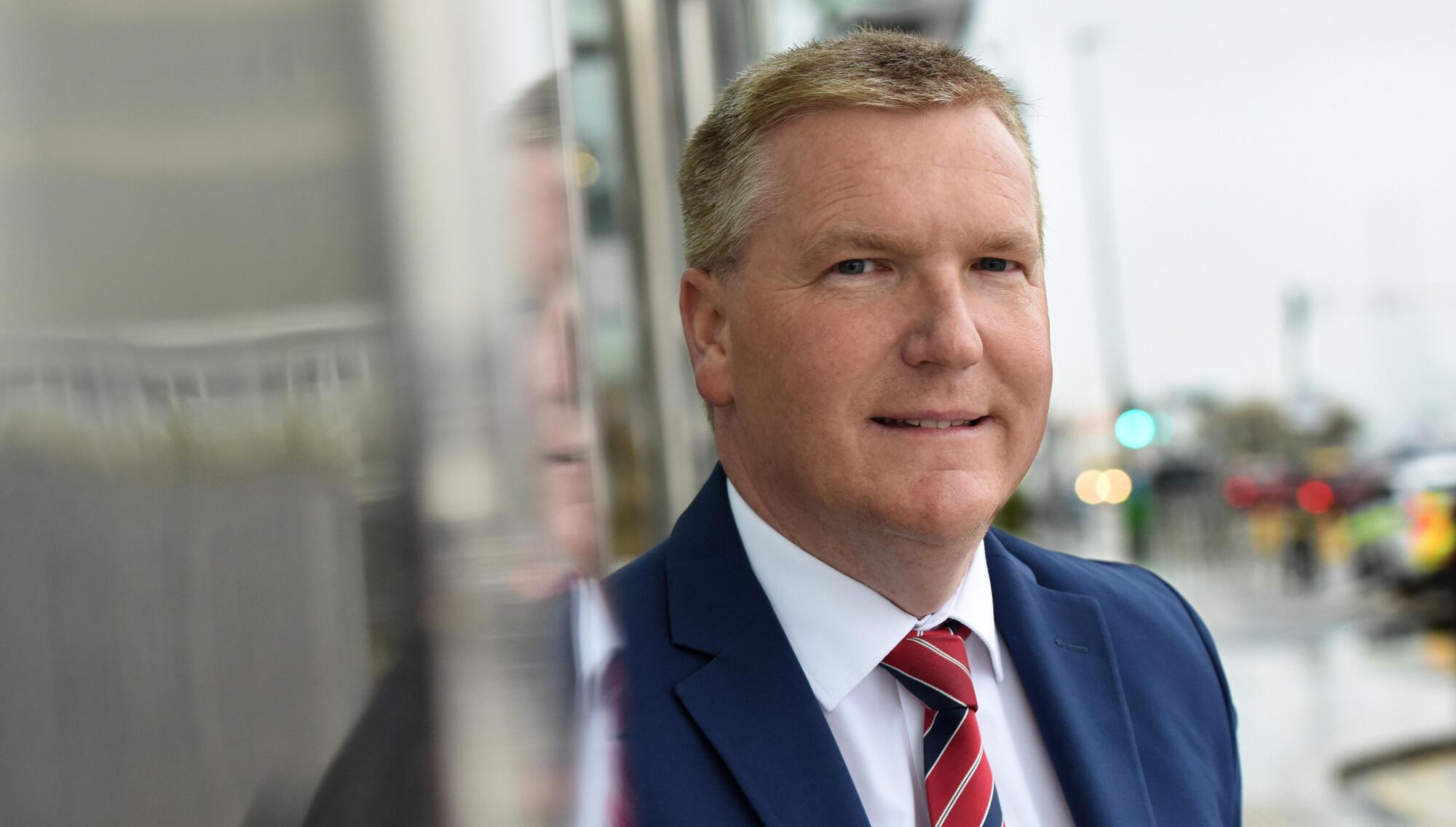
Michael McGrath revealed that his duties as minister have had an impact on his family life. Photo: Moya Nolan

Billed as the most important government announcement in a generation, Budget 2021 or the Covid Budget has a huge amount riding on it.
Not an ideal circumstance when it also happens to be your first budget as Public Expenditure minister.
As Michael McGrath steps out of his car to greet us on the front steps of the Dublin Convention Centre to conduct this interview, immediately his colleague Transport Minister Eamon Ryan emerges and wants a word.
As the government’s money man in the run-up to Budget day next Tuesday week, McGrath is in high demand from Cabinet ministers eager to land the funding for their pet projects.
So, any conversation, even a snatched few seconds in the rain, are invaluable for his ministerial colleagues.
What did he want to talk about? I ask.
“The budget,” McGrath says with a smile. “Eamon has great ideas, full of great ideas,” he adds.
In the era of Covid, there was no honeymoon period for the government. McGrath has been struck by just how central his role in everything now is and just how busy that makes him.
“There has been hardly time to catch your breath,” he says wearily.
“It would have been said to me when I got this role that all roads lead to DPER and I am really seeing that almost everything has to go through DPER at some point.
"Incredibly challenging, this is where you want to be,” he says.
A Cork South Central TD since 2007, the married father of seven has been finance spokesman in Opposition since the death of Brian Lenihan in 2011.
While he says he is enjoying it, he does concede it has been “very intense”, perhaps even more so than he would have imagined.
“On becoming a minister, I was immediately into a mini-budget scenario to July stimulus [worth €8bn] and a lot of bilateral meetings with ministers to get different proposals over the line,” he says.
He also reveals that his duties as minister have had an impact on his family life.
“It is challenging to try to manage constituency work and your national role. I think people will understand that that is challenging. And I'm certainly spending more time in Dublin than I would have been before. So there are changes at a personal level. But it is an enormous privilege,” he says.
McGrath sets out some of the key Budget parameters of what he and Paschal Donohoe will announce on October 13.
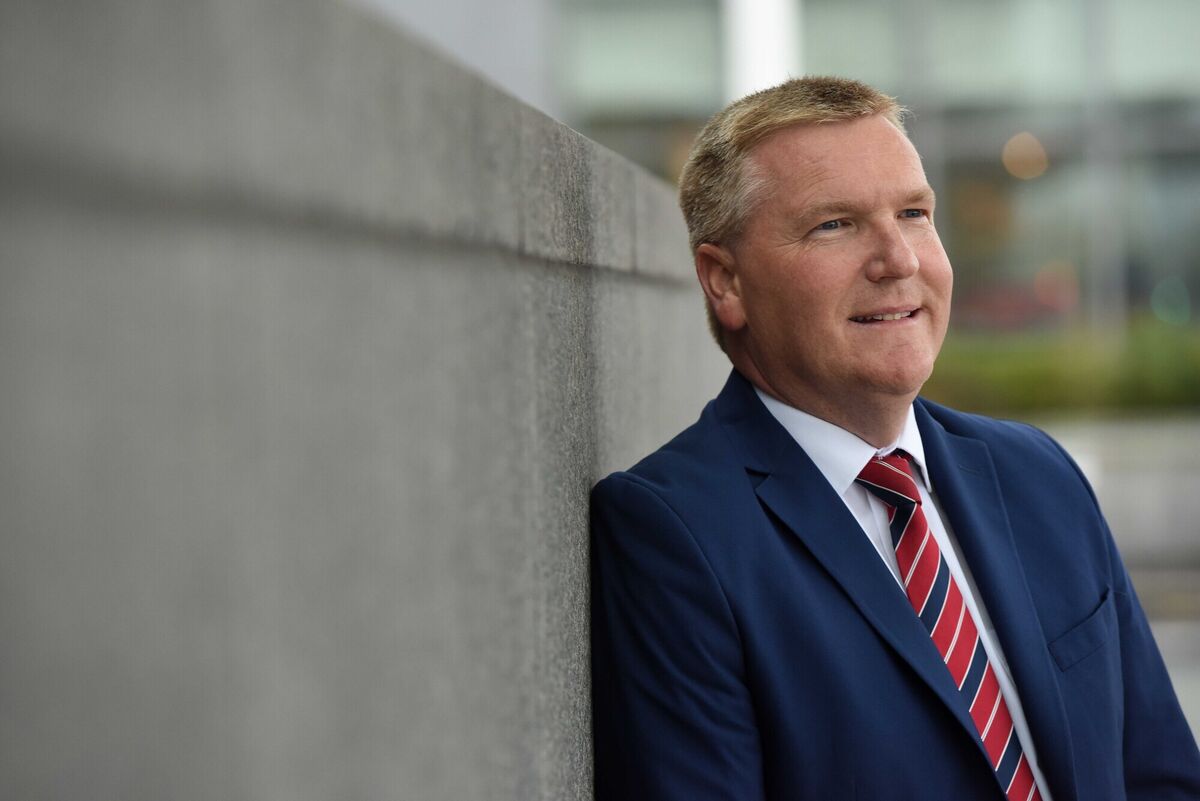
“It's going to be a very challenging time for the economy next year. The amount of uncertainty in the background for this budget is unprecedented. And we also have the assumption of an all trading Brexit on top of it,” he warns.
“It’s not going to be a budget where we are flush with resources to do lots of new things, it is going to be a reasonably steady one,” he says.
He also confirms reports from his ministerial colleagues that he has adopted a zero-tolerance approach to kite flying as a way of forcing his hand into loosening the purse strings.
“I've just been very straight with people I mean all of cabinet has bought into the framework, and the budget strategy. And look, colleagues are generally being realistic amid a very challenging situation,” he says.
In terms of new departures, McGrath reveals that there will be reliefs for self-employed people in the arts and the construction sector who could be allowed to work and still retain their PUP payments.
“One issue I know the Taoiseach was particularly keen to advance is that there would be a degree of flexibility, particularly for self-employed people.
Maybe for those working in the arts, or in construction or in other parts of the economy, who might get a day or two days of work here and there - that they wouldn't have to entirely sign off and sign back on.
"So we are looking at possible options around a degree of flexibility to enable people to do that in a way with the minimum amount of fuss,” he says.
I ask him does he envisage a situation whereby if someone worked one day a week could their PUP be reduced on a pro-rata basis or does he envisage them being able to work and retain the payment in its entirety?
“Those are the very issues that are being examined,” he responds. “But I think we do need to have a social welfare system that is more flexible than in the past, given the circumstances that people are in, and especially for self-employed people.
“And Arts Minister Catherine Martin has made the case very well for people involved in the performances in the arts, and in the events sector, who might only get very occasional work now. So the welfare system has to be dynamic and capable of accommodating the real-life situations that people encounter. So those issues are being examined,” he says.
On housing, he reveals the Government is to announce a major shift away from buying private homes toward homes built directly by county councils in the budget.
McGrath has made clear he thinks councils across the country are not building their own homes and are too reliant on the private sector to help address the country’s housing crisis.
“There are a lot of acquisitions and turnkey homes that are being secured by councils around the country. The focus of government is to try and get councils and approved housing bodies building again, in a much more significant way,” he says.
“Some progress has been made, but I think it needs to be accelerated. And I think there is better value generally - it can vary in different parts of the country - but generally speaking, I believe there's better value in councils building homes directly, and that's the direction that I think we need to underline and the budget,” he confirms.
“We're very keen as a government to shift the emphasis to direct builds in terms of the delivery of public housing. That was always a core value of my party. Through our history, when there were far fewer resources available. So I'm working with minister Darragh O'Brien on that very issue,” he says.
In recent days, several of McGrath’s Cabinet colleagues have made clear there is little or no chance of the old top rate of the pandemic unemployment payment (PUP) returning to €350 per week.
I put this to McGrath and his comments would appear to back such talk up.
“We have to try to be fair to everyone, there are well over 200,000 people on the live register who are on the old rate, which is a weekly rate of €203 per week. And then there are many other social welfare recipients who are not on a basic rate of €300, or €350.
"And I'm thinking of carers and people with disability allowance and so on. We need to examine this, and we need to make sure that it is sustainable in the future. But, no decision has been made,” he says.
He confirms that Covid-19-related spending, primarily on health and social welfare supports will amount to a whopping €9 billion in 2021.
In addition to that, there is about €3 billion of additional spending for next year but just €900 million of that is left to be allocated after the controversial public-sector pay deal and demographic pressures are dealt with.
“If you think about this budget we have the Covid piece, which is an enormous issue.
"We have had to assess very carefully how much of that is likely to have to be incurred again next year. And we've arrived at a figure of around €9 billion that's the current estimate,” he says.
“I am currently working to an overall envelope of around €3 billion, which is split between €2 billion on the current side and €1 billion on the capital. But half of that current expenditure is pre-committed in the form of public service pay, demographics, and so on. That’s how you arrive at the figure of around €900 million,” McGrath says.
McGrath states that the Department of Health is likely to get up to an additional €3bn this year to deal with Covid-19.
“And so the question is how much of that is going to be needed next year,” he says.
Overall, this year he will be looking to borrow between €25bn and €30bn (up from the previous lower figure of €23bn). He hopes it will be in the lower end of that.
But he said before any new policy measures are decided upon in the budget, he will have to borrow up to €19bn next year, a “very significant figure” as he describes it.
Keen to impress upon me the scale of the amounts of money involved, McGrath says: “This is not an austerity approach. Supports are going to be maintained. I want to reassure people that the government stands with them and we are going to have a very elevated level of public expenditure next year."
Read More
CONNECT WITH US TODAY



Be the first to know the latest news and updates