Special Report: Ghosts of Sinn Féin's 2019 defeat laid to rest
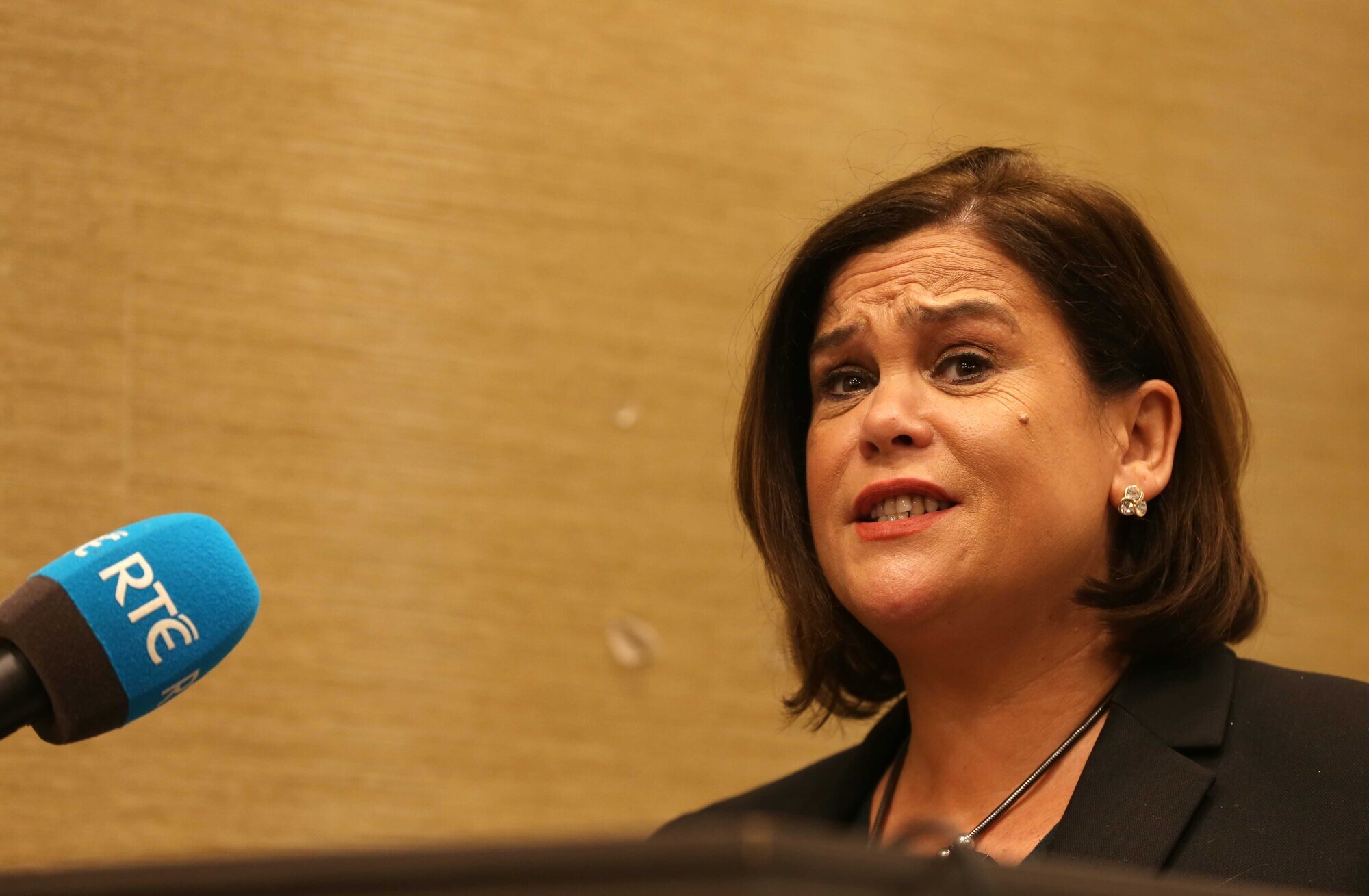
Mary Lou McDonald "took stock" after a disappointing 2019 local and European election performance. Photo: Sam Boal/RollingNews.ie
The surge in Sinn Féin support in last February’s general election was the big story of the campaign.
For the first time, the party delivered on polling day the polling ratings it had promised in the run-up to the election.
After its devastating and disappointing local and European election performance in 2019, the party, under Mary Lou McDonald, appeared to be a busted flush.
It lost more than 100 council seats and two of its three Irish MEPs from the South in Lynn Boylan and Liadh Ní Riada.
“Well, it is absolutely no doubt, it was a tough day out," said Ms McDonald, in January. "We didn't see it coming. And frankly, we should have.”
A deep internal process of examination got underway and the clear conclusion was the naked opportunistic and anger-led approach to opposition was no longer working.
The people had enough of anger, they wanted more.
“Politically, what we have concluded is that there was a bit of confusion amongst our electoral base," she said. "So, what I mean by that is when austerity was at its peak, and when people were under massive pressure and the cuts were really vicious, people understood and understand that you can turn to Sinn Féin to stand your ground to stand up for you.
“But, as the climate changed and an economic recovery is being talked up, and so on, I don't think we were effective enough and saying, look, we also have solutions."
Who was responsible?
“Well, I think, obviously, leaders lead, and lead through good times and bad. And it's your job to navigate the choppy waters and you take the rough with the smooth. So obviously, as the leader, I'm ultimately responsible. And, then collectively, we had a job at work just to take stock, and we did. I think, what a really useful conversation right across the party,” she said.
After the polls closed on February 8 and the votes were counted, it was clear Sinn Féin had bounced back and was the big beneficiary of an anti-establishment swing.
The emergence of a video clip of David Cullinane, the Waterford TD, speaking at a post-election celebration event saying “Up the Ra” and “Tiocfaidh ár lá” undermined the party’s remarkable result.
He quickly apologised.
He described the furore over the remarks as a “storm in a teacup” which, he said, was being used by people who did not like Sinn Féin to make more of it than it was.
“I was reflecting back on what was a very emotional period in republican history, the Hunger Strikes,” said Mr Cullinane.
“I was reflecting on Kevin Lynch who was a candidate for the H-Blocks in the Waterford constituency. Obviously, it would have been better if I had not said it, let's be honest.”
He put it down to “exuberance” and it being a celebration of the election result.
“It was a throwaway comment, in some respects, at the end of what, for me, was a very emotional speech talking to Sinn Féin supporters, and I think most reasonable people will see that,” he said.

Returned with 35 seats in the 33rd Dáil, the party led by Ms McDonald demanded to be part of the discussions to be in government, saying they were the party of change.
They found themselves shut out by the other parties, but it was pretty clear that their enthusiasm for power was decidedly limited.
The party’s relevance was again tested with the onset of Covid-19 with the Fine Gael-led government dominating the agenda at a time of crisis.
Sinn Féin found itself harping in from the sidelines.
Once the new Government was formed on June 27, Ms McDonald moved quickly to reshuffle her front bench with some surprising decisions.
Primarily, the move of Louise O’Reilly out of the health brief, where she had excelled, into the backwater of enterprise surprised many and led some in the party to think Ms McDonald was not the one making the decisions.
According to some sources, there was a sense that Dawn Doyle, the party’s general secretary, had a hand in deciding on portfolio, to some annoyance.
With the new three-party Government formed, Sinn Féin assumed the role of the main Opposition party with Ms McDonald getting the prime slot at leaders’ questions, the pick of committees, as well as prime speaking slots in debates.
For example, for the first time, Sinn Féin holds the right to appoint the chair of the powerful all-party Public Accounts Committee, with Brian Stanley assuming the role of chairman.
Poll ratings for the party have, by and large, held pretty steady and, with Ms McDonald seemingly recovered from her own bout of Covid-19, the start of the new term looks to be a promising one.
The fallout of ‘golf gate’ undoubtedly has damaged both Fine Gael and Fianna Fáil, and Sinn Féin TDs have said their position will only strengthen as the Government seeks to deal with the budget and their increasingly divisive approach to dealing with the pandemic.
With Fianna Fáil’s ratings down sharply to alarmingly low levels, as it would see it, it is clear Sinn Féin is cannibalising old traditional heartlands previously dominated by the Soldiers of Destiny.
With Ms McDonald boosted by some admirable performers around her, including Donnchadh Ó Laoghaire, Pearse Doherty, Eoin Ó Broin, and Louise O’Reilly, the ghosts of the 2019 defeat appear well and truly laid to rest.

Since Mary Lou McDonald was elevated to the position of Sinn Féin president in early 2018, she has tasted both heavy defeats and stunning success.
Stepping into the shoes vacated by Gerry Adams, an iconic figure in republicanism (for right and wrong reasons) was never going to be easy, and the woeful presidential election campaign and the thumping defeat suffered by her party in 2019 at the local and European elections cast huge doubt over her capacity to lead.
It was not meant to be like that.
Ms McDonald, the posh, southside, privately-educated, Trinity student, was supposed to be the shinners’ deliverer to the previously unattainable middle-class votes.
Firstly, the decision to challenge the unassailable Michael D Higgins, who shares many of Sinn Féin’s views on social issues, backfired spectacularly, as did their choice of candidate Liadh Ní Riada, and the lateness in launching her campaign.
Ní Riada never recovered and lost her European seat, along with Lynn Boylan, in 2019.
Secondly, despite the Fine Gael and independent government being increasingly unpopular, Sinn Féin’s vote collapsed in the local elections, resulting in them losing scores of councillors.
The plan was not working.
Anyone who studied Ms McDonald's demeanour in the RDS on the weekend of the count in May 2019 saw a battered and bruised party leader, who appeared out of her depth.
The major issue of puzzlement for many was how would she seek to maintain her control and authority over her all-island party when she had not held the Armalite in her hands, as the previous generation had done.
But, in those troubled early days, it was not the northern factions, or the boys from West Belfast, who muttered about her leadership, it was her own party down south which greeted her ascent which a muted tolerance.
Many within the party felt, and some still feel, that Pearse Doherty would be a more effective and dynamic leader.
But from soundings from within the party, Ms McDonald did not suffer from Adams seeking to direct traffic, but more from very powerful officials both in Dublin and Belfast.
What is clear is that Ms McDonald, perhaps driven by the weakness of her position, was forced to confront some harsh home truths about herself and showed she was open, at least, to learn the lessons of those early defeats.
Not only did she appear willing to front up to her angry troops and ship the blame for the mistakes, Ms McDonald initiated what proved to be a telling internal examination of what went wrong.
It was concluded by many who have spoken to me that the party’s overly hostile and negative approach was fine for 2014 when the country was austerity-weary and angry.
“We seemed unable to move past the anger into the recovery mode. Mary Lou had made her name taking Enda Kenny and others to the cleaners but she and we all realised a new approach was needed,” said one TD.
It has been suggested that the sharpening of the party’s new message was centred in a return to left-wing socialist republicanism.
Concentrating on core issues like health and housing would be the plan.
The party’s early attempts to soften its tone and messaging, and its new desire to avoid going to war with a previously hostile media, initially came over as confused and mistimed but, by the time February’s election came about, Sinn Féin was buzzing.
The scale and success of Mark Ward’s election in the by-election in November 2019 gave a demoralised battalion a welcome shot in the arm, and such renewed vigour transmitted throughout the party.

Many political commentators concluded Ms McDonald’s front bench — Pearse Doherty, Louise O’Reilly, Eoin Ó Broin and Donnchadh Ó Laoghaire — was a more potent force than their Fine Gael and Fianna Fáil counterparts. Ms O’Reilly and Mr Ó Broin did succeed in making life very difficult for the ministers they were marking, Simon Harris and Eoghan Murphy.
Ms McDonald also appeared to rediscover her mojo in the general election campaign.
Her honing in on the pension age issue set the agenda in the early days, and her success in winning access to the key RTÉ leaders’ debate, having originally been excluded, was a PR dream for the party.
By the time polling day came about, having made the running during the campaign, it was clear Sinn Féin was on course for a very good day at the polls.
The party returned with 37 TDs and cemented itself as marginally the second largest in the State, a remarkable result.
In the wake of the people’s verdict, Ms McDonald wasted no time in demanding her seat at the main table, only to find herself blocked by the old guard who were forced to come together to shut her out.
As the country fell into the grip of the Covid-19 pandemic, Ms McDonald found herself at the heart of the story.
Firstly, her children’s school, Scoil Chatríona in Glasnevin, had one of the first confirmed outbreaks of the virus in Ireland and then she herself tested positive.
Ms McDonald had been tested for the coronavirus on March 28, and received a positive diagnosis 16 days later.
After she recovered, she said her experience of being ill with Covid-19 “floored” her, and that she had “never been as sick”.
She said it required “real effort” for her to be able to sustain a conversation while she was ill.
“I’ve never experienced anything like it,” she said.
Some in her party said it took her several months to recover, saying her performances in the Dáil in the opening weeks of the new Government were “decidedly flat and uninspiring".
Others, too, have said her lack of authority over some elements in the party remains an issue, pointing to the reshuffle which many suggest was directed by senior officials, rather than the leader.
Ms McDonald is now playing senior hurling, as Seamus Brennan famously said, as the main opposition leader.
With Fianna Fáil in turmoil and Fine Gael on its last lap in Government for a while, Ms McDonald and her party are well placed to be in power at the next election.
The big question is whether she can convince people she is actually worthy of being taoiseach.
Should she do that, then the hype around her since she first arrived on the scene will have been justified.
Read More

There was a giddiness in the air in February when the 17 first-time Sinn Féin TDs gathered with their party colleagues on the Leinster House plinth for their first family portrait.
The images taken on that day of deputies bouncing through the gates with family members and supporters now seem alien and we have grown so accustomed to social distancing that the bunched-up group shots almost feel dirty.
However, that was a different time.
It was the first and last hurrah before a pandemic struck and the same TDs were evicted from their new home. Sinn Féin entered the 33rd Dáil with significant momentum behind them. Mary Lou McDonald's party had surged in popularity and after seeing candidates top polls in domino style across the country her biggest challenge ahead was to retain and build on the groundswell of support.
However, Covid-19 has sapped that energy and prevented the new batch of TDs from making the real impact they had hoped for.
The pandemic has severely thwarted the work of the parliament and, seven months after the general election, the various Oireachtas committees have yet to convene, opposition spokespeople, in a lot of cases, have yet to question ministers and offices have yet to be properly set up.
The Dáil met only a handful of times in Leinster House before TDs decamped across the Liffey to the airy and expansive surrounds of the Convention Centre, giving a new meaning to the term echo chamber.
Sinn Féin's 37 TDs have gathered together sporadically in a large meeting room in the convention centre, Zoom calls have become the norm, and deputies have tried to keep in contact with constituents through social media and over the phone. However, the opportunity to gel as a parliamentary grouping and develop the cohesive approach needed to succeed as the main opposition party has not been available in this Dáil.
One returning TD said: "I feel very sorry, not just for our TDs but for all new TDs. They had their first day in the Dáil, and it's a very special day for a first-time TD, but then the curtains came down.
"We are seven months on from the election. By this stage in 2016, new TDs would have been well bedded down, they were on committees and had made contributions in the Dáil, the nerves would have been gone and the constituency work would have been well underway," the Sinn Féin TD said.
Party officials have worked hard to put new structures in place to help their deputies, but for former MEP and first-time TD Matt Carthy it has been extremely frustrating and very difficult to manage work. He pointed to the fact that TDs still have their offices and staff based in the Dáil so are constantly over and back from the Convention Centre.
Among any large intake there will always be a small cohort who show potential. Meath East's Darren O'Rourke; Claire Kerrane of Roscommon-Galway and the Galway West TD Mairead Farrell were all thrown in at the deep end and given high-profile portfolios. However, the opportunity to show off their ability and grow into their roles has been stymied.

Mr O'Rourke, who worked with former TD Caoimhghín Ó Caoláin, has experience of the mechanics of the Oireachtas but he says some of his fellow first-time TDs have missed out.
"You can't get experience of publishing legislation or raising legislation if it's not going through the Dáil or if you are not being given the opportunity to raise it yourself," he said.
Mr Carthy said: "From my own point of view, an added frustration is the fact that technically since June there have been five people in the position of agriculture minister. So, as agriculture spokesperson I haven't had a single opportunity yet to put a question to an agriculture minister since the Government was formed. That adds to the bizarre nature of where we are at the moment."
For others, such as Wexford's Johnny Mythen, who finally claimed a Dáil seat after numerous attempts, the current disjointed Dáil must be disappointing.
There is a real frustration within Sinn Féin that TDs have not been able to establish themselves properly as the main opposition party and their influence has undoubtedly been diluted.
As well as getting to grips with the workings of the Dáil and Oireachtas committees, another TD also said that the cohort of new TDs have missed out on "the craic" of Leinster House and learning the ropes from more experienced party members.
"That kind of contact is limited and that learning from others and learning from experienced TDs is also limited," said one party member.
The type of constituency-based work that Sinn Féin prides itself on and excels at came to a halt when the pandemic struck. Looking to capitalise on their election success, rallies had been organised around the country but again a number of these fell victim to the virus.
"We are a dynamic party and we work best on the ground. Our TDs, in the first instance, are champions for their own communities and in order to be able to do that effectively you need to be meeting people on the ground and engaging with them," said Mr Carthy.
Mr O'Rourke added: "A huge element of politics is engaging with people, whether they are constituents, members of the public, community groups, stakeholders or the NGO sector and, for a period, that was impossible to do, constituency offices were closed."
However, Ms Farrell, who is the party's spokesperson on public expenditure and reform, puts a different spin on things.
"When you start something new you don't know what it's going to be like, so for me this is now the norm," she said.

Even in normal times the optics weren't good.
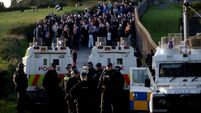
But, at a period when the entire country was pulling together by staying apart, the images of almost 1,800 men and women in matching black trousers, white shirts, and black ties, lining the streets of west Belfast, were particularly galling.
Behind the uniformed guard of honour stood thousands more who came out to pay respect to Republican figurehead Bobby Storey. At the centre of the spectacle was the Sinn Féin leadership.
The sight of party president Mary Lou McDonald, deputy first minister Michelle O'Neill, and other Sinn Féin leaders walking behind the cortege at what was akin to a State funeral jarred with the sacrifices that others had made and are still making.
Afterwards, Ms McDonald quickly moved to apologise for any hurt caused but refused to admit any wrongdoing and said there would be "no punishment" as calls mounted on Ms O'Neill to step down.
Yes, the group that walked behind the coffin may have been in compliance with public health guidelines, but it smacked of one rule for them and another for us, and raised questions around whether shadowy figures are still lurking and pulling strings in the background.
“I do understand that looking at the images of very busy pathways in west Belfast, and taking all of that in obviously has jolted and has caused some hurt among some of those families, and for that I am very sorry," Ms McDonald said, in a bid to diffuse the issue.
Before Covid-19 struck, Sinn Féin was looking ahead to a historic time for the party. It was preparing to enter the 33rd Dáil as the largest opposition party, having returned 37 TDs in the February general election, 17 of them entering the Dáil for the first time.
There is no handbook on how best to navigate the upside-down world of a pandemic and all of our political parties have had to change drastically the way they operate.
Back in March, as we looked to Italy, where thousands of people were dying each day, we prepared for a similar terrifying spike in cases that would put untold pressure on our health service.
Sinn Féin showed maturity and put the usual sniping and posturing aside in the national interest.
Agreeing with Government goes against the very basis of what it means to be in opposition, but Sinn Féin took the responsible route and rowed in behind the unprecedented measures introduced to stop the spread of the virus.
Of course, detractors will say that they had no other option, and accepting public health advice was the only choice to flatten the curve and prevent thousands of deaths.
But Sinn Féin again took a mature stance and refrained from calling for a scalp when revelations about Barry Cowen's drink-driving offence emerged.
After initially calling for a full and frank explanation from the former agriculture minister, Ms McDonald told the Dáil that she had been "reluctant" to raise the matter in the chamber as she accepted that "everybody makes mistakes, that people learn from those mistakes, and that they move on".
"We wanted to give the minister with responsibility for agriculture, Deputy Cowen, every opportunity to address all of the matters concerned, to draw a line under them and to move on at a time of huge health and economic challenges, not least for the farming community," she said.
It could not have been more of a contrast from the tone struck in the midst of the Garda whistleblower email controversy which eventually led to the resignation of Frances Fitzgerald.
Back in 2017, Sinn Féin had responded by threatening to bring down the government by tabling a motion of no confidence in the then-tánaiste and justice minister.
Party members say this measured response has been a deliberate strategy as the party looks to position itself as a strong and credible alternative to the current Government.
However, a leopard cannot change its spots, at least not overnight, and the Bobby Storey funeral and Sinn Féin members' dogged defence of their actions showed that.
Of course, there is a significant difference between attending a golf dinner with 80 other people and paying respects at what became a very crowed public funeral. But neither were right.

At the time, Ms McDonald claimed she and others, including Donegal TD Pearse Doherty and former leader Gerry Adams, had attended at the request of the Storey family.
Members of the party claim it would have been impossible and disrespectful to turn down that invitation.
"I was very, very honoured to be asked by his family to attend the Mass," said Ms McDonald. "I was one of a very small number of people there to do a reading, actually, at that Mass.
"There was a limited cortege. There were numbers lining the streets."
Party members remain adamant that Sinn Féin had worked with the PSNI and the community to limit numbers, but nothing would have stopped the people of west Belfast from coming out to honour the former IRA man who was a key figure in the peace process.
"And I believe that those organising the funeral did their very best to maintain social distancing.”
The party again showed an arrogance and a casual adoption of the rules when, in the wake of the Storey funeral, Ms O'Neill travelled to Dublin's Convention Centre, where the Dáil was meeting to vote on the next Taoiseach.
It provided an easy opportunity for Tánaiste Leo Varadkar to get a dig in.
"Micheál Martin became Taoiseach and his family could not travel from Cork to be with him," Mr Varadkar said.
“In contrast, Michelle O’Neill turned up for the photo-op. It does show a different attitude to public health. Sinn Féin are different to other parties, but not in a good way.”
As we enter a new phase of this pandemic, where views on the next steps are diverging, Sinn Féin must reclaim the position usually occupied by the lead opposition party.
It now needs to prove that it is credible, that it can take on the responsibility that comes with having 37 TDs, and cannot fall back into bad habits of the past.