Ollie Rehn: Ireland facing a brighter horizon but no time for complacency
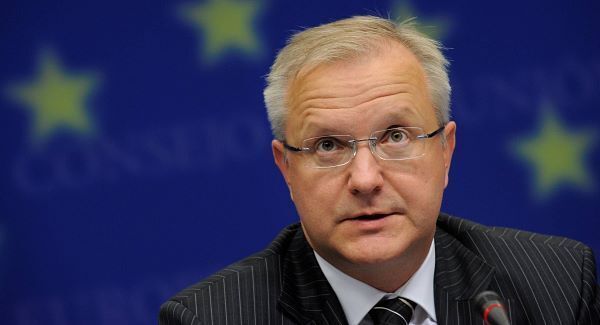
The past few years have been difficult but the end of the bailout programme is in sight. Olli Rehn looks at how the future is looking bright for the country.

Ollie Rehn: Ireland facing a brighter horizon but no time for complacency

Olli Rehn, vice-president of the European Commission, responsible for economic and monetary affairs

THE high temperatures we have been experiencing in Ireland and the rest of Europe in recent weeks stand in stark contrast to the harsh winter of late 2010.


Back then, as Ireland entered its three-year EU-IMF programme, the country stood at the edge of a precipice: Deep in recession, with an alarming rise in unemployment and evaporating financial market confidence.

The past few years have been difficult for the Irish people. The collapse of the credit-fuelled property bubble in 2008 led to a banking crisis, a structural reduction in tax revenues for the budget, the need to reallocate labour from construction to other sectors, and further challenges.

Today, the end of the programme is in sight, and not only the weather has changed. Sentiment towards Ireland has turned, the country looks set to achieve a third consecutive year of economic growth in 2013, and there are encouraging signs of stabilisation in the domestic economy, including the labour market. A critical element in this turnaround has been the Government’s solid track record in implementing the programme.

Repair of the financial sector has been a key element of the programme. While much has been achieved in this area, banks have not yet reached their full capacity to support the recovery through new lending. A key constraining factor has been the high level of mortgage arrears and the consequent need for banks to work through their impaired loan books. While progress in this area has been slow up to now, recent developments — such as the Government’s announcement of targets for mortgage restructurings by the banks — should allow things to accelerate.

Banks are now expected to press ahead in finding durable solutions for borrowers in unsustainable arrears situations, while restoring debt service payments in other arrears cases.

Resolving unsustainable debts of SMEs is critical, given their key role in job creation. Related to this, it is essential that viable businesses can access credit at affordable rates so that they can make investments critical for the future. This is a problem common to several eurozone countries, and the commission is working closely with the European Investment Bank on ways to boost lending to SMEs, making the best use of its capital increase which came into effect in January.

The boom in Ireland encouraged a rapid rise in public spending over the course of the previous decade, based on what would turn out to be temporary increases in property-related tax revenues. This created a large budget deficit which it became impossible for the Government to finance through borrowing from the market.

A good start has been made on the structural reforms that are essential if Ireland is to return to sustainable growth. Opening up sheltered sectors to competition can yield significant benefits for consumers and businesses, who continue to pay high prices for some goods and services. In this respect, the timely passage of the Legal Services Regulation Bill 2011 — a key element of Ireland’s programme — would be an encouraging sign that vested interests are being confronted and are contributing to the adjustment. More could also be done to ensure better value-for-money in the health sector.

Furthermore, while the labour market is beginning to improve, unemployment remains unacceptably high. Increasing the resources available to employment services can ensure a meaningful engagement with the unemployed.

IRELAND’S solid progress under its EU/IMF programme also needs to be seen in the context of the ongoing, wider correction of the imbalances that built up in the eurozone in the pre-crisis period. Whether the outcome of an unsustainable accumulation of private debt, as in Ireland or Spain; or of public debt, as in Greece; or of a long decline in competitiveness, as in Portugal or Italy; to address the crisis, bold measures were needed both at national and European level. Parts of the eurozone have been through a protracted recession, and while we are now seeing signs of stabilisation, the situation remains very difficult indeed for millions of Europeans, above all the unacceptably high numbers of unemployed.

Much has been done to address the underlying causes of this crisis: Strengthening the regulation and supervision of Europe’s banks; restoring sustainability of public finances; and addressing bottlenecks to growth and job creation in the form of protected sectors, overly rigid labour laws, and unnecessary red tape that hinders investment. Much more needs to be done to create the conditions for a sustained recovery. That’s why we must stay the course of reform and sound public finances and make further progress towards a deep genuine economic and monetary union in an inclusive and profoundly democratic process.

Financial assistance from Europe and the IMF has allowed Ireland to phase its fiscal consolidation over several years; without this assistance, the adjustment would inevitably have been much more difficult. Ireland has consistently met its budgetary commitments. In addition, a number of favourable developments — including the arrangement found for the promissory notes and European decisions to lower interest rates and extend loan maturities — have reduced Ireland’s financing needs in the decade ahead.

This, in turn, has been rewarded by an impressive turnaround in investor sentiment. The decline in Irish Government bond yields since their peak in mid-2011 has been remarkable. Yet the debt and deficit are still high and these gains remain fragile. As the end of the programme is in sight, Ireland needs to sustain the renewed trust of international investors.

Maintaining fiscal consolidation in line with its commitments is the best way for Ireland to show its determination to keep the economy and its public finances on a sustainable path and safeguard the improvement in funding conditions that is essential for a lasting recovery.

More in this section

Lunchtime News

Newsletter

Get a lunch briefing straight to your inbox at noon daily. Also be the first to know with our occasional Breaking News emails.

Cookie Policy Privacy Policy Brand Safety FAQ Help Contact Us Terms and Conditions

© Examiner Echo Group Limited