Scoliosis care inquiry will not 'solve complex service delivery problems', minister says
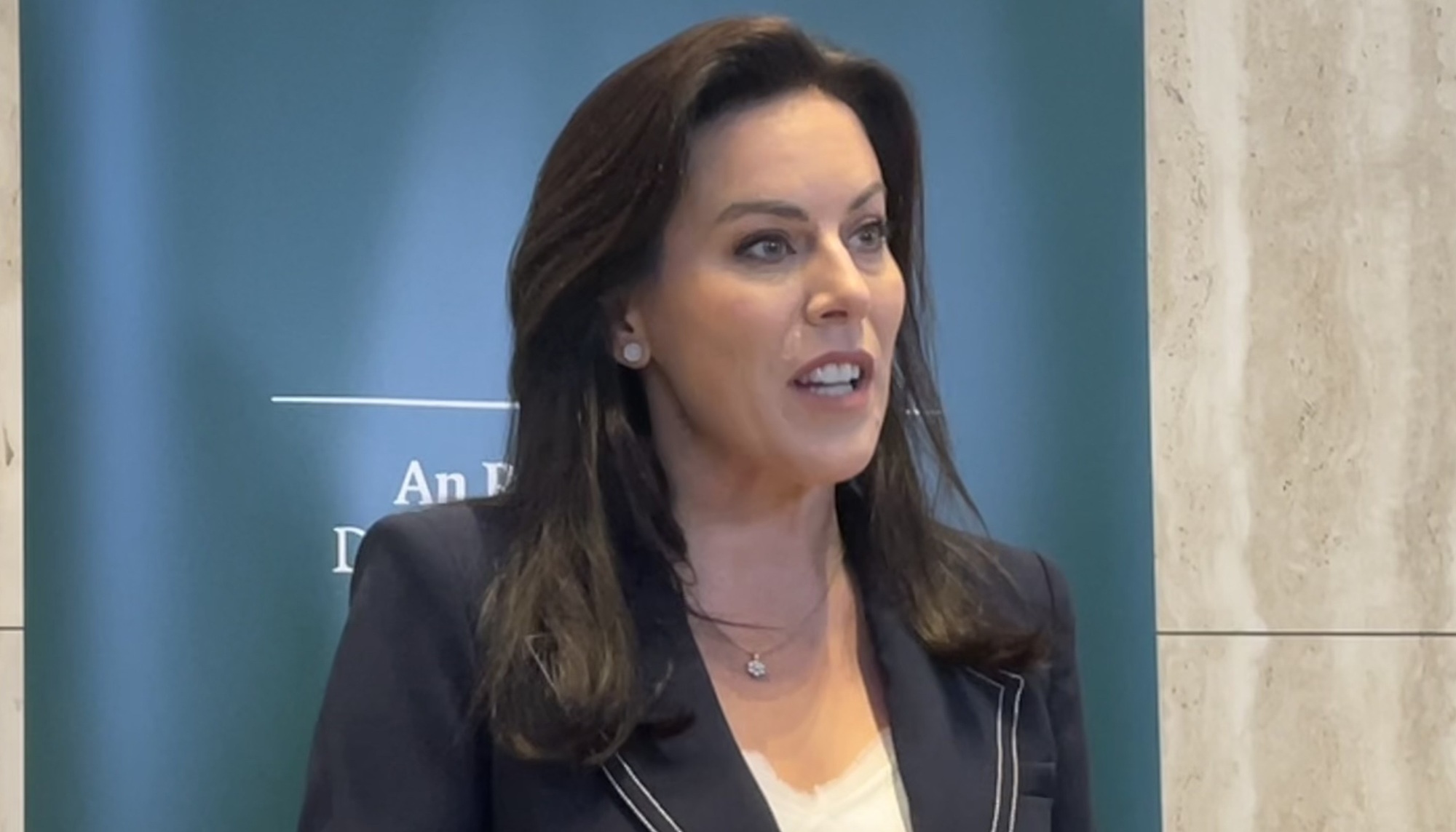
Health minister Jennifer Carroll MacNeill said the statutory commission of inquiry 'can investigate events, it can identify failings, it can make generally broad recommendations, and crucially, it can improve public understanding.' File picture: Grainne Ni Aodha/PA
Health minister Jennifer Carroll MacNeill has warned that a statutory inquiry into failures in spinal surgeries in Children’s Health Ireland (CHI) will not “solve complex service delivery problems or implement reforms”.
Despite the minister telling the Dáil that the statutory commission of inquiry will be held in both public and private, Sinn Féin’s health spokesman David Cullinane expressed concerns that senior CHI decision-makers will be able to hide from public accountability.
In September, a commission of inquiry into scoliosis and spina bifida care at CHI was recommended by barrister Remy Farrell SC following a scoping exercise. The hearings would be in private, with a report published.
The inquiry will examine care for scoliosis, spina bifida and hip dysplasia in four modules. This includes:
- waiting list delays and communication with parents;
- spinal surgery, including who in CHI knew about the plan to implant springs into some children;
- hip dysplasia care in CHI at Temple Street and Cappagh hospitals;
- the treatment of the so-called Crumlin Orphans, who received lesser care than children in Temple Street.
Parents and advocacy groups have called for a fully public tribunal.
During statements in the Dáil, Ms Carroll MacNeill said a tribunal will not be held, while managing expectations about what a statutory inquiry can achieve.
She said that Mr Farrell has advised that it will “primarily” identify what went wrong in the past.
“It can investigate events, it can identify failings, it can make generally broad recommendations, and crucially, it can improve public understanding,” Ms Carroll MacNeill said.
“However, it is not designed to solve complex service delivery problems or to implement reforms.”
Ms Carroll MacNeill said that the commission will allow for public hearings but will have private elements. She said that if a tribunal were held, it would be wholly public.
Mr Farrell advised that as it is children’s personal and medical information, and there is a “relatively finite number of children”, there is a “significant risk that children may be identifiable”. She later said that she does not want to see parents cross-examined by solicitors or doctors during a tribunal.
Mr Cullinane argued that the private element of the commission could also protect wrongdoing.
“Some parents may be able to give evidence publicly as part of a specific module, but the concern here is that CHI senior decision-makers and those actions of people who are under scrutiny will not be required to account for themselves in the same public way, and that's a real difficulty,” he said.
“If this inquiry is to rebuild trust, there can be no hiding places for anybody.”
Parents have also called for the timeline of the commission of inquiry to be extended beyond its current 2019 to 2025 time limit. Mr Farrell recommended 2019 as this is when CHI was established.
Mr Cullinane said that the “failure did not begin in 2019”. Labour’s Marie Sherlock said that there are “reports going back to 2014 in Temple Street”.
“I don't think it is good enough that we limit ourselves at this point in time to a narrowly framed commission that has been promised to families to finally give them answers,” she said.
“It's a failure if they walk away from today feeling that they're not going to get the answers from something that's going to cost the State a lot of money and going to take a long period of time.”
- Louise Burne, political correspondent

CONNECT WITH US TODAY



Be the first to know the latest news and updates