Justice minister says he will not reverse legal aid changes despite solicitors' action
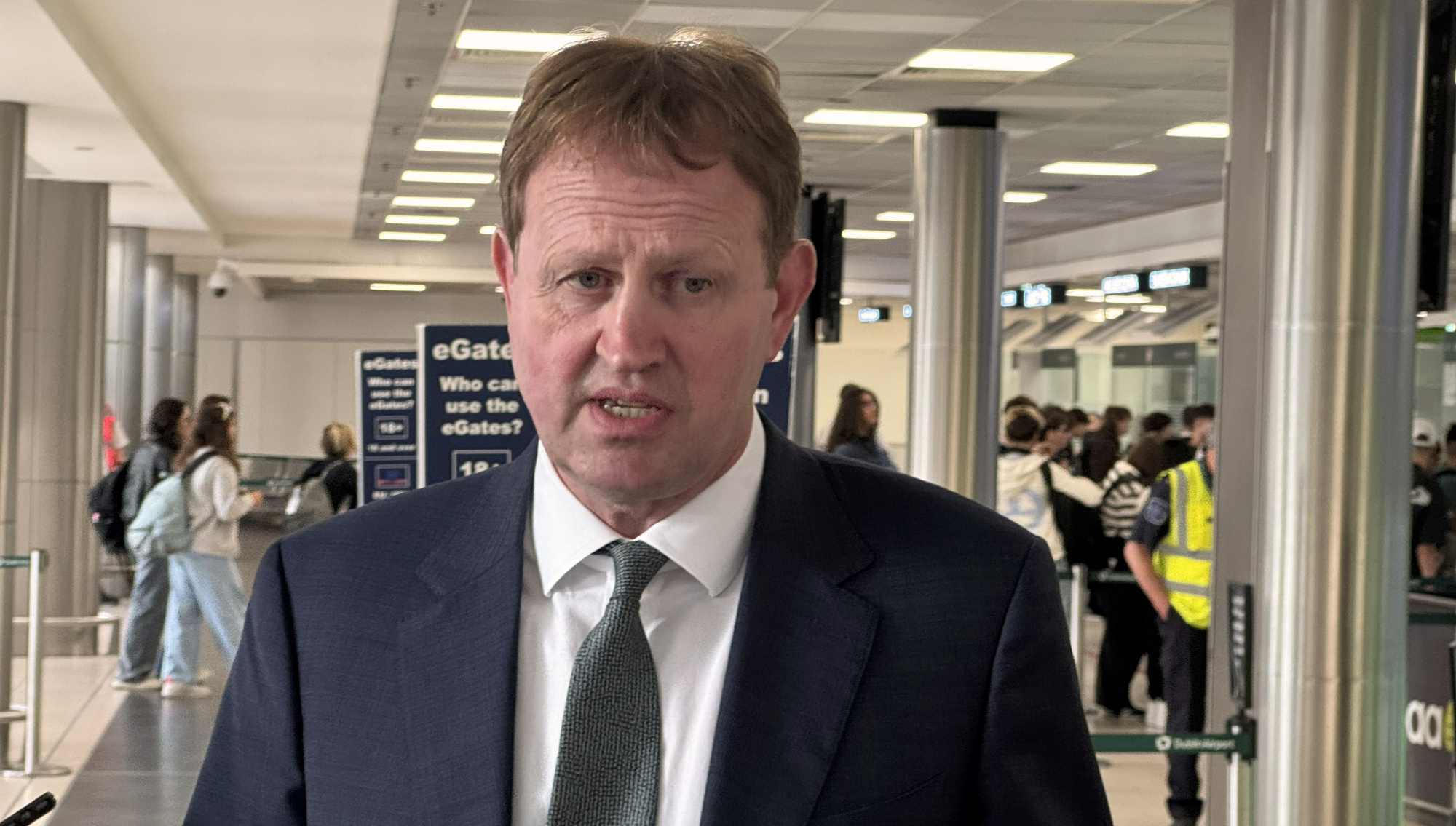
Justice minister Jim O'Callaghan refuses to reverse legal aid reforms amid solicitors' dispute. Picture: PA
The justice minister has said he will not reverse his plans to overhaul the criminal legal aid scheme, while insisting he has no difficulty meeting solicitors to discuss the dispute.
The comments come as solicitors across the country have withdrawn legal aid services in large numbers amid the ongoing row with the minister, with neither side showing any sign of backing down.
Last month, solicitors began industrial action in protest against the new flat-fee model introduced on July 1, under which they are paid €520 per case.
The new system replaces the previous per-appearance model, which paid €240 per defendant for the first two cases, €144 for each additional case on the first day, and €60 for each subsequent hearing day.
Read More
With the criminal court system facing significant disruption, the justice department has been accused by the Law Society of Ireland of seeking to “downplay the scale of this disruption”, rather than “engaging constructively” with solicitors.
Mr O'Callaghan claimed the previous system allowed solicitors to exploit the payment structure by applying for "more than one certificate for one accused just before the District Court".
"For instance, if an individual is charged with 15 counts of theft, what's happening at present is that a solicitor is sharing the 15 charges around the solicitor's firm and ensuring there is the fee of €240 for each count," he told RTÉ's on Thursday.
"Now, that is permissible under the rules at present. I have to change that. I'm not prepared to allow that system to continue and that's why I am changing it," Mr O'Callaghan added.
Mr O'Callaghan also said that, compared with when he started as a barrister 30 years ago, the criminal legal aid system is “now a well-remunerated system”.
"But the reason why I am introducing these measures is not that I'm trying to be antagonistic towards the financial interests of solicitors. I'm trying to improve the system for the public and for the court user," he said.
Mr O'Callaghan said that, although he had been portrayed as “intransigent” and unwilling to meet, he had engaged with the Law Society.
"I met them in May. My officials met them in January, March, and June of this year. The first time I got a request since I introduced the regulations to meet with the Law Society was last night," he said.
"I will meet with them. I have no difficulty meeting with them, and I'm sure there are some areas in terms of where they can make points to me that I will accept and engage with them," he added.

CONNECT WITH US TODAY



Be the first to know the latest news and updates