Irish public acting together more effective in halting spread of covid than lockdown restrictions, inquiry told
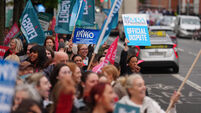
'What really mattered was people could see the situation was serious, could see there was a potentially effective response that, if everybody did, we would all be better off and then if they could see that everyone else was doing it too, they were then more likely to do it.' File picture: Denis Minihane
The covid-19 evaluation’s final discussion event has been told the spirit of people acting together was more effective in combating the spread of the disease than deterrents imposed on the public.
The group also confirmed its final report is now expected by the end of December.
Monday's discussion also heard people were “kinder and more resilient” during the pandemic than expected.
Professor Ann Scott, the evaluation chair, is examining what worked during the pandemic and where the gaps were, she told the roundtable session on Monday.
“Thousands of lived experiences and impacts have been shared with the pandemic evaluation team, from the public generally and as part of tailored consultation with children and young people, and with people impacted by the pandemic in long-term residential care,” she said.
Many people, she added, carried “significant grief and trauma”, including those affected by deaths or isolation in nursing homes.
Prof Scott has met former leaders including Taoiseach Micheál Martin, Tánaiste Simon Harris, former taoiseach Leo Varadkar and former health minister Stephen Donnelly.
Meetings were also held with the then chief medical officer Dr Tony Holohan and acting CMO Dr Ronan Glynn, among others.
The evaluation is currently on track to deliver its final report at the end of the year.
Professor Pete Lunn, the head of the Economic and Social Research Institute's Behavioural Research Unit told the discussion: “It was a big argument at the time about punishment and deterrents, again we found the deterrents effect was really, really small on people’s actual behaviour.
Read More
“What really mattered was people could see the situation was serious, could see there was a potentially effective response that, if everybody did, we would all be better off and then if they could see that everyone else was doing it too, they were then more likely to do it.”
He added: “Why? Because the public understood instinctively they were in a collective action problem and that, for any emergency in the future, is almost certainly going to be true.”
He called for principles behind collective action to be considered in guidelines, saying this did not always happen, especially at the start of the pandemic.
People need “repeated, clear communication”, he said.
“The stronger the group identity is the better, and the more equality there is the better,” he said.
He described as “corrosive” the impact of exempting people from rules, saying it was vital leaders also follow rules.
He also advised having a trusted source of information “that cuts through” would be even more vital now the media landscape is more fragmented in Ireland than pre-pandemic.
Brendan Kelly, author and professor of psychiatry at Trinity College Dublin said: “It turns out overall that human beings are more resilient than we give ourselves credit for.
He said, for example, “the psychological experience of restrictions was very different for someone with secure employment, adequate housing, secure relationships than someone experiencing poverty, overcrowding, social isolation and other kinds of discrimination".
Nat O’ Connor, a member of the covid-19 evaluation group, said the long-term impact of lockdowns on some groups including teenagers was only now being understood.
“There’s a long-term potential there for impact,” he cautioned, and he called for a focus on a recovery phase in any future crisis.

CONNECT WITH US TODAY



Be the first to know the latest news and updates