Less than half of Government EV charging infrastructure funding spent since 2022
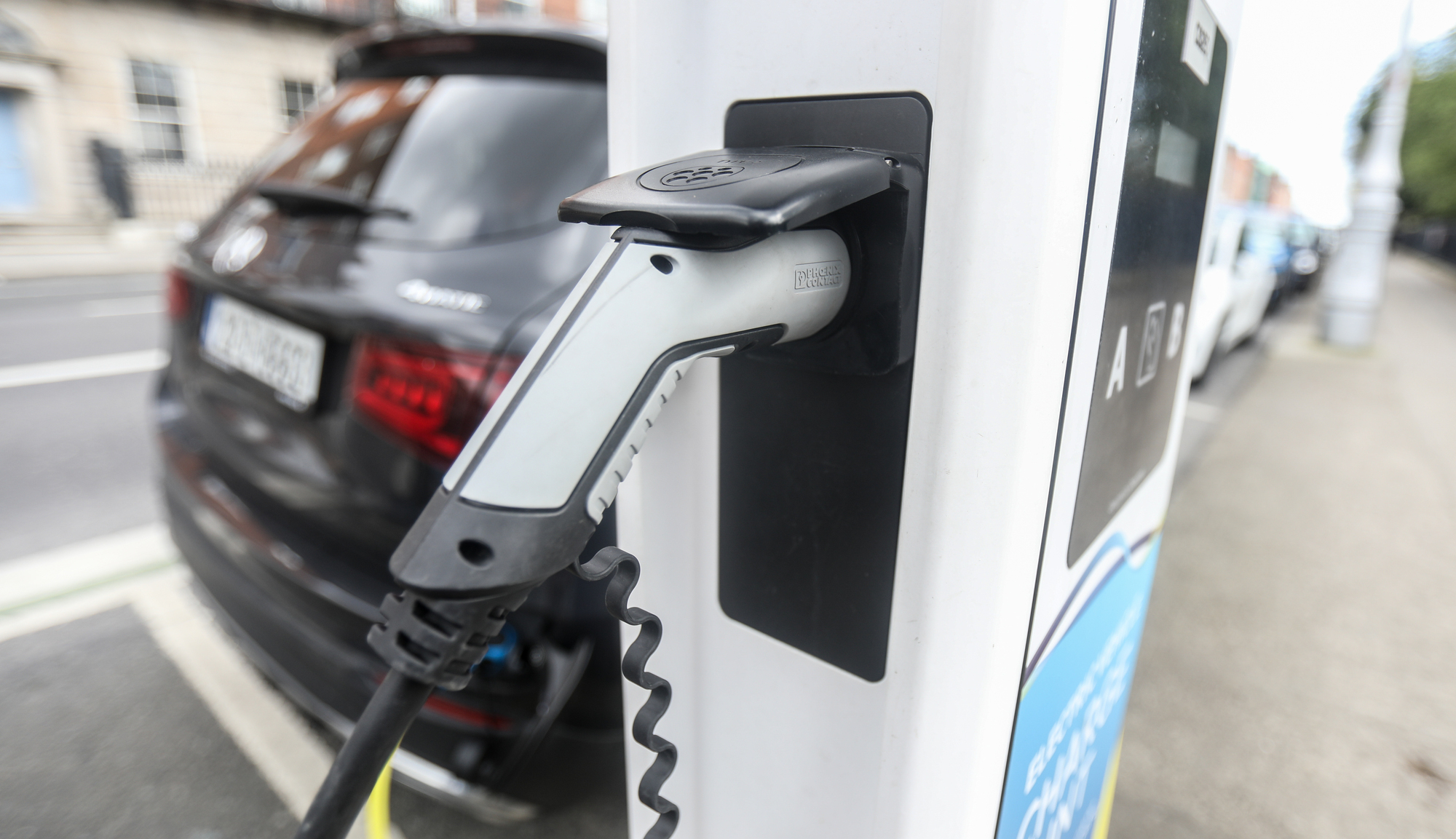
As of April 2026, there were 3,288 public chargers across Ireland's EV recharging infrastructure, according to Zero Emission Vehicle Ireland (Zevi). File picture: Leah Farrell
Less than half of the money allocated by the Government for electric vehicle (EV) charging infrastructure over the past five and a half years has been drawn down.
New figures show that just over one quarter of last year's €40.5m allocation was used, despite supplementary funding being allocated in 2025 due to what energy minister Darragh O’Brien described as "elevated demand" for grants.
As of April 2026, there were 3,288 public chargers across Ireland's EV recharging infrastructure, according to Zero Emission Vehicle Ireland (Zevi).
Zevi has pledged to invest €20m in "new high-power recharging hubs throughout 2026 and early 2027 that will deliver 266 new recharging hubs across motorways, national and regional roads".
Read More
At the end of last month, there were 247,363 EVs registered on Irish roads.
However, figures released to Kerry TD Pa Daly, Sinn Féin's transport spokesperson, show that less than half of the funding allocated for EV charging infrastructure has been drawn down.
Since 2022, €148.36m has been allocated, with just €63m drawn down. The amount drawn down includes funding carried over from previous years.
In 2022, €17m was allocated, of which €11.7m was used. In 2023, €27m was allocated and €16.7m was drawn down, while €12.23m of the €19m allocated in 2024 was used.
However, in 2025, the Government allocated €40.5m for the EV charging infrastructure network. Mr O’Brien confirmed that supplementary funding was made available to "meet programme commitments and maintain support for the transition to electric vehicles" following "elevated demand" for vehicle grants.
Despite the increased budget, just €10.8m was drawn down.
By the end of May 2026, €11.5m had been invested in public charging infrastructure. The allocation for the full year is €44.86m.
In response to Mr Daly, Mr O’Brien acknowledged there had been "underspend in infrastructure due to development of infrastructure schemes under the National Road (2024) and the Regional and Local Plan (2025)".
However, he said there had been "significant progress in EV charging rollout across Ireland".
“To date, almost all public EV charging infrastructure delivered in Ireland has been done so on a commercial basis, with little Government subvention,” Mr O’Brien said.
“This is expected to change in 2026, with a significant step up in delivery of government-procured and exchequer-funded EV infrastructure.”
He also highlighted Zevi’s plans to deliver 162 charging hubs and 516 high-powered charge points across 3,000km of national roads, as well as local authority pilot schemes focused on neighbourhood charging and "renewable-integrated infrastructure".
Mr Daly told the that the "Government’s rhetoric on electric vehicles is not matched by reality".
“These figures expose a fundamental failure of delivery at the heart of Government transport policy,” he said.
“While ministers encourage motorists to switch to EVs, they are failing to provide the infrastructure necessary to make that transition practical, and affordable.
“The minister's own response acknowledges that there has been underspending due to delays in infrastructure schemes on national, regional and local roads.
The Department of Transport confirmed that the funding referenced in the parliamentary question "covers a broad range of schemes", including home and apartment charging supports.
They added: “The difference between funding allocated and funding drawn down reflects the fact that many infrastructure programmes are delivered over a number of years, with grant payments only made when projects reach key milestones and eligible expenditure is incurred.
“The primary reasons for lower drawdown to date include the time required to develop and launch new infrastructure schemes, planning and procurement processes, grid connection requirements, and project delivery timelines.”
“In particular, expenditure on public charging infrastructure has been phased as the National Road EV Charging Programme and the Regional and Local EV Charging Network Plan have been developed and rolled out. Much of this funding is committed to projects currently in delivery rather than remaining unallocated.”
CONNECT WITH US TODAY



Be the first to know the latest news and updates