O'Callaghan says he is 'not for turning' on criminal legal aid reforms
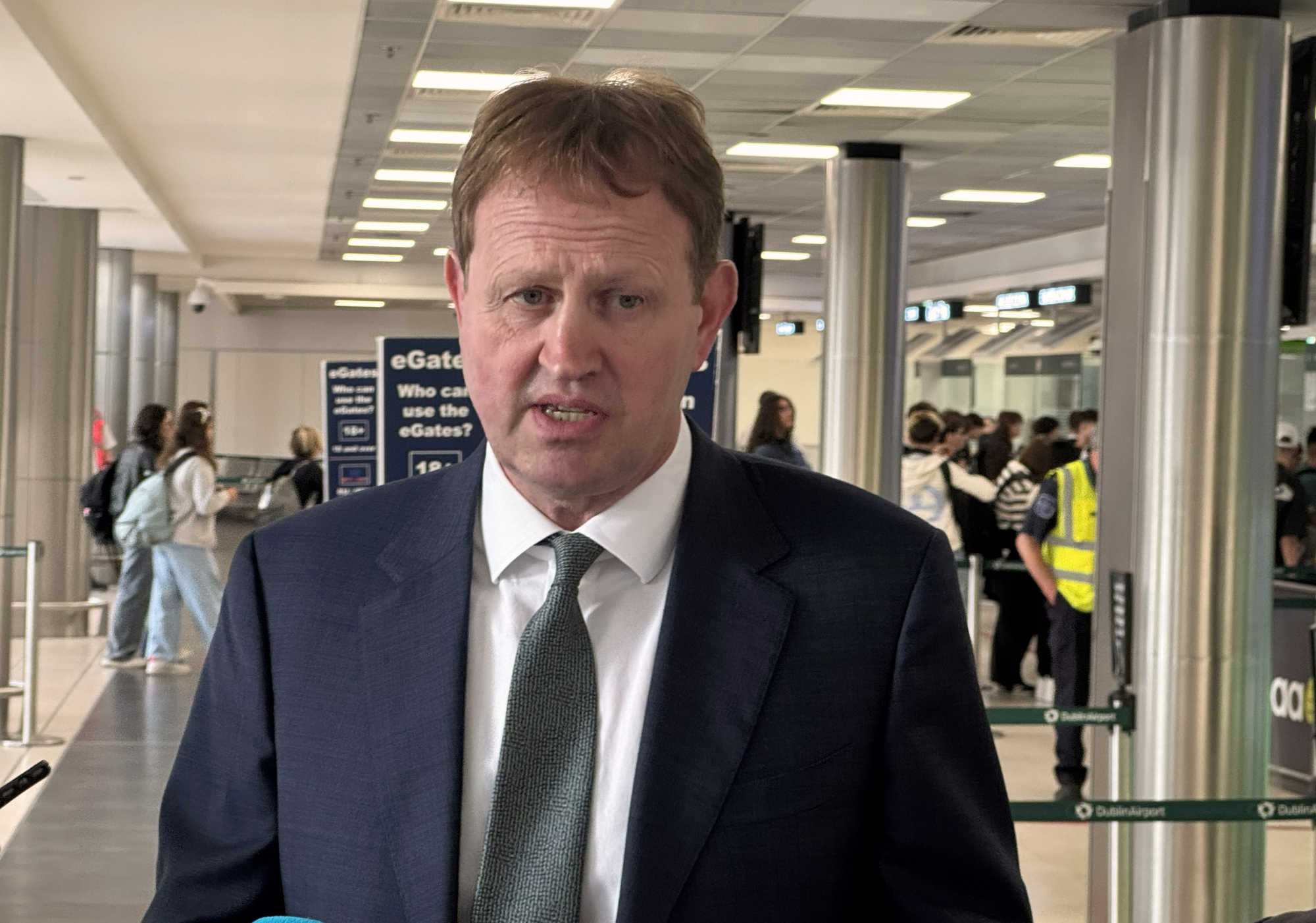
Minister for Justice, Home Affairs and Migration Jim O'Callaghan speaking to the media at the launch of the upgraded eGate facilities at Dublin Airport. Picture date: Monday May 25, 2026.
Justice minister Jim O’Callaghan has said he is "not for turning" on reforms to the criminal legal aid system, despite pressure from solicitors as services continue to be withdrawn from the District Court.
Mr O’Callaghan said he would press ahead with the reforms, arguing that there is "a lot of money" being earned by solicitors and barristers.
“I think it is important to say that we have to ensure that the system operates for the best interests of the Irish public and the people who are seeking access to justice, and that has been my priority throughout this,” Mr O’Callahan said.
“I very much commend the solicitors and barristers for the work they do, but my priority is on the Irish public and ensuring not just that they get value for money, but that there is efficiency within the district court.”
Read More
Pressed on whether he planned to reverse course amid protests by solicitors withdrawing their services, Mr O’Callaghan said: "I'm not for turning."
The changes will introduce a flat fee of €520 for solicitors taking on criminal legal aid cases. Under the previous system, solicitors received around €240 for a client's first court appearance and €60 for each subsequent appearance.
On Thursday, solicitor Eddie Burke accused Mr O’Callaghan of taking his lead from US President Donald Trump, saying there was no meaningful engagement with solicitors.
Asked about those comments, Mr O’Callaghan said he believed they were "unfair".
“Obviously, reform is difficult but having looked at the data produced by my Department and having looked to see how the system of criminal legal aid in the district court operates, I was absolutely certain that there has to be reform in this area,” Mr O’Callaghan said.
The reforms have resulted in more than 1,000 cases, primarily in the District Court, being adjourned as solicitors withdrew their services from criminal legal aid panels.
Mr O’Callaghan said there were around 830 solicitors on the criminal legal aid panel, adding that it was "very competitive".
“There’s a lot of money being earned in it,” Mr O’Callaghan said.
Meanwhile, Mr O’Callaghan rejected suggestions that Ireland's migration system was becoming "tougher and nastier", saying the Government had sought to rebalance the interests of asylum seekers and the State.
“I think what the Oireachtas has done in the International Protection Act is probably shift the balance a bit more towards the interests of the State,” Mr O’Callaghan said,
“I don’t think that was an unreasonable proposal.”
Asked about the prospect of return hubs, under which failed asylum seekers would be sent to third countries, Mr O’Callaghan said the Government would take a "pragmatic approach".
“I have an open mind in respect of it. I’m not prepared to rule Ireland’s participation in them out at this stage. If they operate efficiently and effectively and in compliance with human rights, certainly I would look at them.”
::
CONNECT WITH US TODAY



Be the first to know the latest news and updates