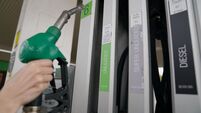
Excise duty and levy cuts set to be agreed on to help with fuel prices
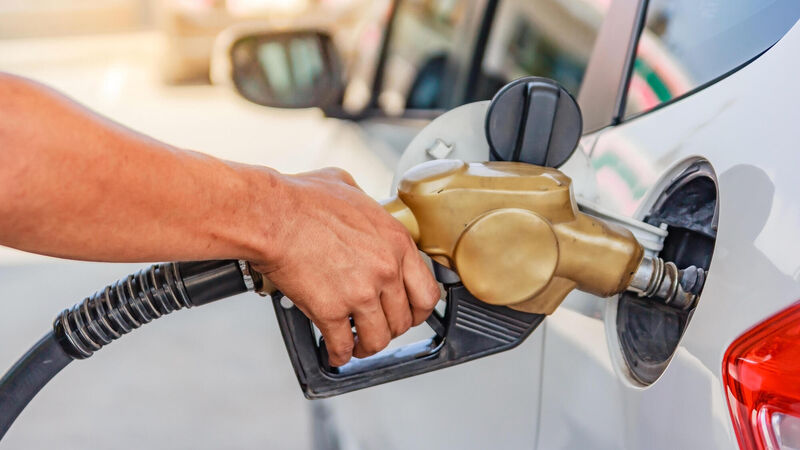
Prices at the pump have jumped sharply since the outbreak of war in Iran, increasing pressure on the Government to act to ease the pressure on motorists.
Government leaders will meet on Monday night to agree on a slate of supports to help with rising fuel prices.
Prices at the pump have jumped sharply since the outbreak of war in Iran, increasing pressure on the Government to act to ease the pressure on motorists.
It is understood that finance minister Simon Harris will recommend a time-bound reduction in excise duty to assist people at the pumps, as well as a rebate scheme for hauliers, with the measures set to remain initially for a number of weeks followed by a review.
It is also believed that a cut to the National Oil Reserve Agency (Nora) levy from two cent a litre to one cent has been considered.
While the initial measures will be short-term, government sources accept they may need to be extended if the Iran war drags on and due to the damage to energy infrastructure already caused by the fighting.
Senior sources have, however, stressed that the Government "cannot shield" people from the full impact of the war, but that Tuesday's package "will be a start".
It is also expected that there will be a double fuel allowance payment to assist pensioners, carers, and people with a disability, and that a cross-government taskforce will be established to respond to the growing economic challenges with a focus on Ireland's need to fast-track renewable energy.
In a statement over the weekend, Mr Harris said the war has already impacted Ireland's finances. He said that he expects the economy "to continue to grow this year, albeit at a slower pace than previously envisaged".
Mr Harris said he believes that any measures introduced initially "should be for a short, defined period, with the option to renew, revise, or adjust them as circumstances evolve".
The Government's move comes as Tehran said it will “irreversibly destroy” essential infrastructure across the Middle East if the US attacks its energy sites, hours after US president Donald Trump threatened to “obliterate” Iran’s power plants unless the Strait of Hormuz was opened within two days.
In a statement, the Iranian military's operational commander, Major General Ali Abdollahi, said Iran would also strike Israel’s “power plants, energy and information and communications technology infrastructure” as well as power plants across the region hosting US bases and companies with US shareholders.
Iran’s president, Masoud Pezeshkian, said “threats and terror” are “only strengthening Iranian unity”, while the “illusion of erasing Iran from the map” shows “desperation against the will of a history-making nation”.
On Saturday, the US president gave Iran 48 hours — until shortly before midnight GMT on Monday — to open the Strait of Hormuz, a vital pathway for the world’s oil flows, or the US would “hit and obliterate” Iranian power plants “starting with the biggest one first”.
- Paul Hosford is the Acting Political Editor of the


CONNECT WITH US TODAY



Be the first to know the latest news and updates