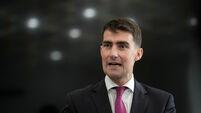
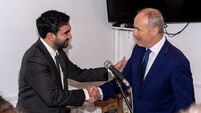
Tánaiste: 'We need to keep channels open' to help resolve Israeli-Palestinian conflict

Micheál Martin is welcomed as he visits the Beitunia Vocational School in Ramallah. Picture: Phil Behan/DFA
The Tánaiste was asked on Wednesday whether he considers the words “Apartheid State” an appropriate term to use when describing the Israeli-Palestinian conflict.
While there is “no doubt” that there is an undermining of human rights for Palestinians, Micheál Martin said, referring to Israel as such does not “add a whole lot in terms of the endeavour to unravel this and to create a proper process”.
“We need to keep channels open, we need to keep engagement going to bring about an improvement to the situation,” he said. “That's the desired pathway forward.”
It was an answer that highlighted the difficult diplomatic task required of the Irish government. While it supports a two-State solution for Israel-Palestine and denounces violence and incursions into occupied Palestinian regions, it also wants to have a dialogue with Israel and stress that Ireland is not anti-Israel nor an anti-semitic country.
Having spoken to the highest ranks of Israeli government on Tuesday, it was an altogether different agenda for the second day of Micheál Martin’s trip to the Middle East on Wednesday, as he visited the occupied Palestinian territories and held talks with the Palestinian president.
Issues around increased Jewish settler violence against Palestinians in the occupied West Bank came to the fore, as did questions around recognising the State of Palestine. Mr Martin also received updates from NGOs working in the region as well as the United Nations Office for the Coordination of Humanitarian Affairs (OCHA) on what they have witnessed in recent months.
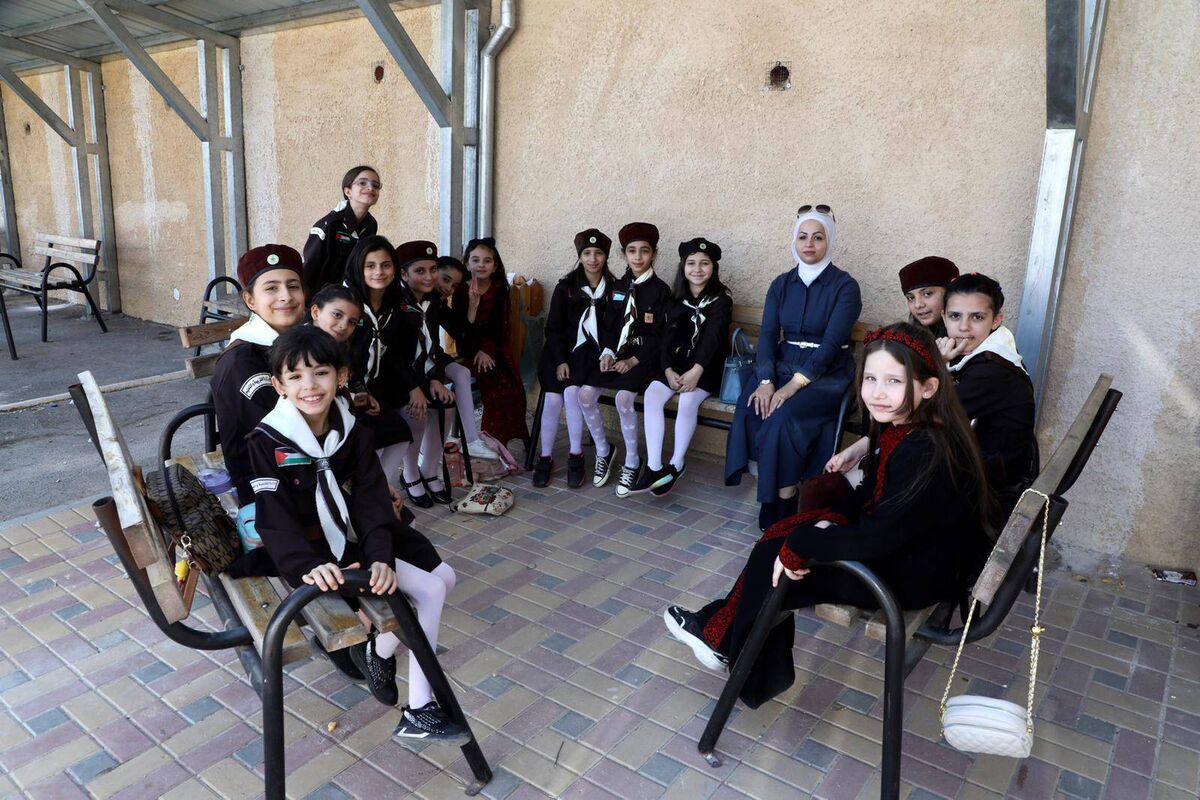
It began with the warmest of welcomes for the Tánaiste, as he stepped out of his vehicle at the Beitunia Vocational School in Ramallah.
A large entourage waited to greet him, as did two lines of young girls who attend the school. Mr Martin shook hands with them as he entered the school.
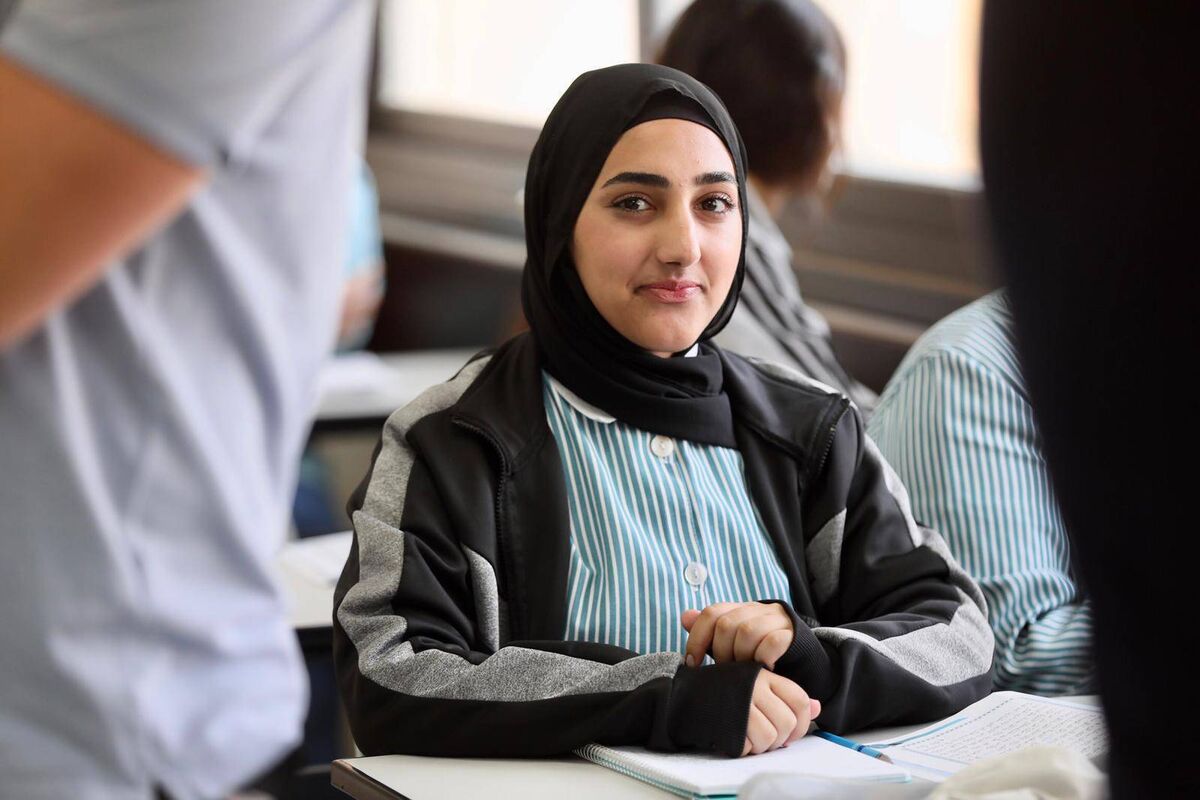
Ostensibly there to see the fruits of Irish support to build schools such as this, he was given a tour of classrooms to see the different kinds of lessons on show. There was hairdressing and dressmaking. But also coding, history and interior design, which seemed to particularly impress the Tánaiste.
“Amazing, absolutely amazing,” he remarked to the art teacher, as he was shown impressive replicas of rooms made by students.
Treated to a scrum of media, ministers and dignitaries, the pupils looked vaguely bemused and embarrassed at all the fuss, sharing glances and a few laughs as they watched everyone file in and out.
The Palestinian Minister for Higher Education, and now acting minister for education after the resignation of the incumbent just a few days ago, Mahmoud Mosa Abu Mouis was certainly happy to receive the Tánaiste.
“Being a foreign minister is an art,” he joked to the Tánaiste on his way through a classroom, and later remarked to some students that the “Irish government always stands and supports Palestinians”.
Among the topics of discussion later with President Mahmoud Abbas, who’s aged 87, was a key one — the recognition of the Palestinian State. While Mr Martin wouldn’t rule out doing so over the life of the Government, as it specifies in the Programme for Government, he was certainly clear that it’s not on the table for now as Ireland wants to move with others in the EU.
“Ireland doing it on its own may not inject impetus, that’s the point," he said. “I think that is why we do believe in discussion with other EU member states to develop a critical mass of member states that would take such action.”
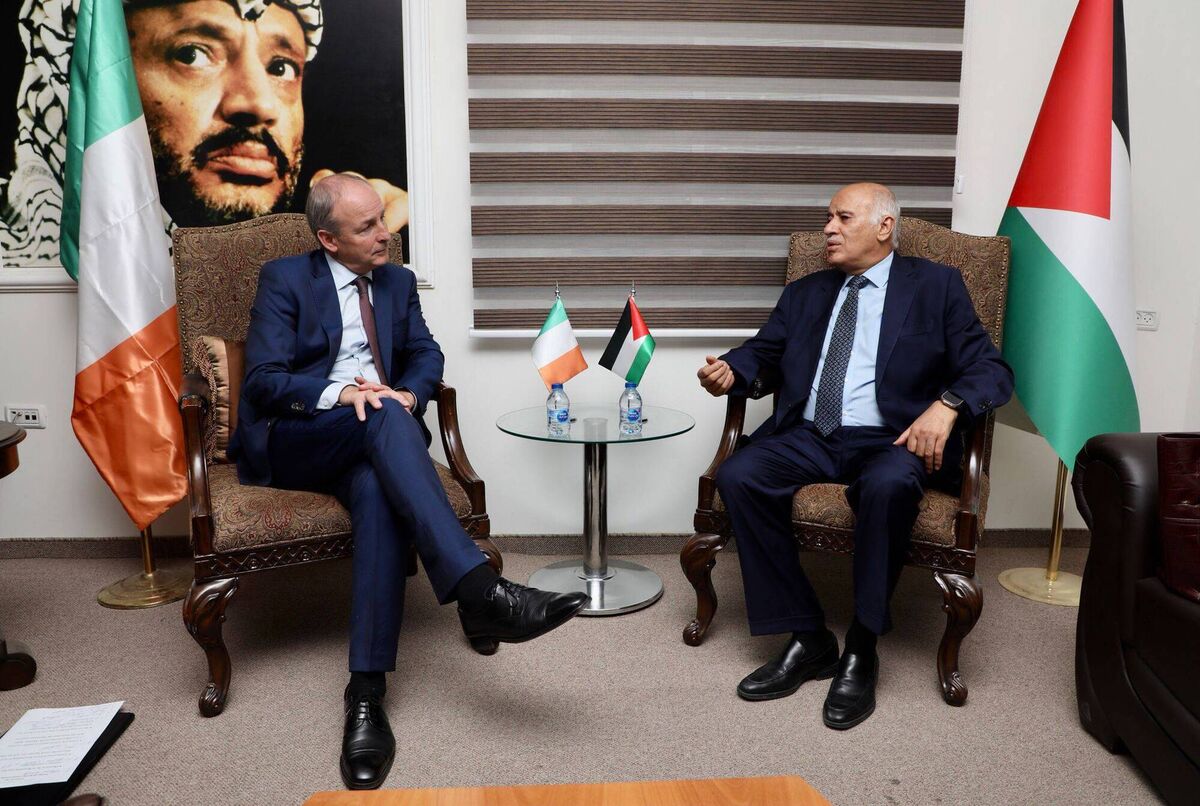
From an Irish and EU point of view, it’s not all one way. The Palestine Authority must act too and one area where progress could be made is elections. The last democratic Palestinian elections took place in 2006. That is “not good and not acceptable”, he said.
Earlier, he had said that Hamas militants should also abandon violence before Ireland or the EU will engage with them, and for the sake of a peace process to develop.
Closing the day, the Tánaiste said he would go and reflect on what he had heard over recent days from all sides.
When asked if he felt hopeful about the potential for progress to be made to reverse the worsening tensions and violence of recent years, he said that “one had to be”. But, at this point, he certainly didn’t sound too convinced.

CONNECT WITH US TODAY



Be the first to know the latest news and updates